
Constituent of antifreeze which can be used as self harming agent. Mild initial clinical effects resemble alcohol intoxication. Indication for request: Investigation of suspected poisoning. PLEASE CONTACT THE DUTY BIOCHEMIST BEFORE SENDING SAMPLES (Ext: 26922 option 2 or Bleep 2607 9am-5pm, out of hours please contact Consultant on call via switchboard).
Tube
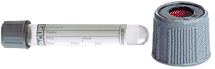
07 (FP) – Fluoride Oxalate Plasma
ID
Tests&Tubes0185
Additional information
The main toxic agent in both ethylene glycol and methanol poisoning is not the parent compound but the toxic metabolite produced by the action of alcohol dehydrogenase. Alcohol dehydrogenase converts ethylene glycol to glycolaldehyde which is then metabolised to glycolic acid which appears to be the principle cause of acidosis. The aldehydes (glycolic acid, glycolaldehyde and glyoxylate) may inhibit oxidative phosphorylation and respiration, oxalate causes renal damage and hypocalcaemia by binding to calcium to form calcium oxalate, crystals of which may appear in the urine.
Therapy for both ethylene glycol and methanol poisoning is aimed at blocking the action of alcohol dehydrogenase by administration of ethanol, which is the preferred substrate, or Fomepizole, a competitive inhibitor of the enzyme. Dialysis may also be required to remove ethylene glycol and its metabolites and to provide renal support. The usual quoted toxic dose for an adult is 100 mL. Severe clinical effects are associated with concentrations > 500 mg/L. Symptoms are as follows: 30-60 mins post ingestion – Drowsiness, nausea and vomiting. In severe cases coma, severe anion gap acidosis and convulsions develop. 12-24 hours post ingestion tachycardia and tachypnoea occur. Mild hypertension has also been reported. Death may occur as a result of pulmonary oedema and CCF. 24-72 hours: oliguria, acute tubular necrosis and renal failure may occur.
Turn around
For urgent samples: within 2 hours from arrival of sample at Birmingham City Hospital for samples received during routine hours.
Send to
Blood Sciences Cross Site
Hand sample straight to BMS. BMS to discuss with Duty Biochemist before sending.
(Test referred to: Birmingham City Hospital toxicology lab. by taxi directly from SJUH or LGI)
Contact
For further details please contact Leeds Pathology customer services: [email protected].
Collection Con
Minimum volume: 0.5 mL
Fluoride oxalate sample preferred, EDTA sample also accepted.
Instructions to lab: DO NOT CENTRIFUGE. Discuss request with Duty Biochemist or on-call consultant. If required, send to Birmingham City Hospital toxicology lab. Ensure QR code is affixed to sample if it will arrive OOH.
Sample REQ
Blood
Ref. Range Notes
< 25 mg/L
Units
mg/L