
Injuries to the arm are very common. Symptoms vary from person to person, but can cause discomfort and reduced movement.
Some common symptoms that can be easily managed are:
- Pain: Use painkillers regularly, for as long as you need to. This is much more effective than just taking painkillers when the pain is bad. If the painkillers are not helping speak to a pharmacist or your GP.
- Swelling: Swelling is normal following injury, it will gradually improve. Moderate exercise of the injured part of your arm with periods of rest will help control swelling.
- Difficulty lifting or pushing through your arm: You will need to increase your activity levels gradually over the next few weeks as pain allows.
You are likely to have a cast, sling or splint on your injured arm. You will be given advice on when these are to be removed either on the telephone, via information leaflets or in person at fracture clinic.
Fractures and soft tissue injuries normally take 6-8 weeks to heal, but can take longer. Remember to use painkillers as required and rest your arm regularly.
Smoking cessation
Medical evidence suggests that smoking increases the length of time it takes for injuries to heal. In extreme cases it can stop the healing process altogether. It is important that you consider stopping smoking, at least during the healing period, to help your recovery.
For advice on stopping smoking and local support available, please go to the website: www.nhs.uk/smokefree or discuss this with your GP.
Activity in moderation
When starting to use your arm again, do not overload it. Start by lifting light objects such as a half full cup or glass and gradually increase the amount you lift as pain allows. Pain is not a bad thing; use it as a guide to how much you can do. As the pain eases, start to do more until it is no longer as uncomfortable.
Exercises
Not all of the following exercises will be appropriate to you.
Guidance on the amounts of each exercise you should aim to do are provided, but let pain be your guide and only do as much as you can within the amounts given. Aim to do the exercises three times a day.
Shoulder – Stage 1
Postural awareness
Stand upright, with your arms relaxed by your side (if your injury allows). Bring your shoulders back and squeeze your shoulder blades together as shown in the picture. Do this with or without your sling on.
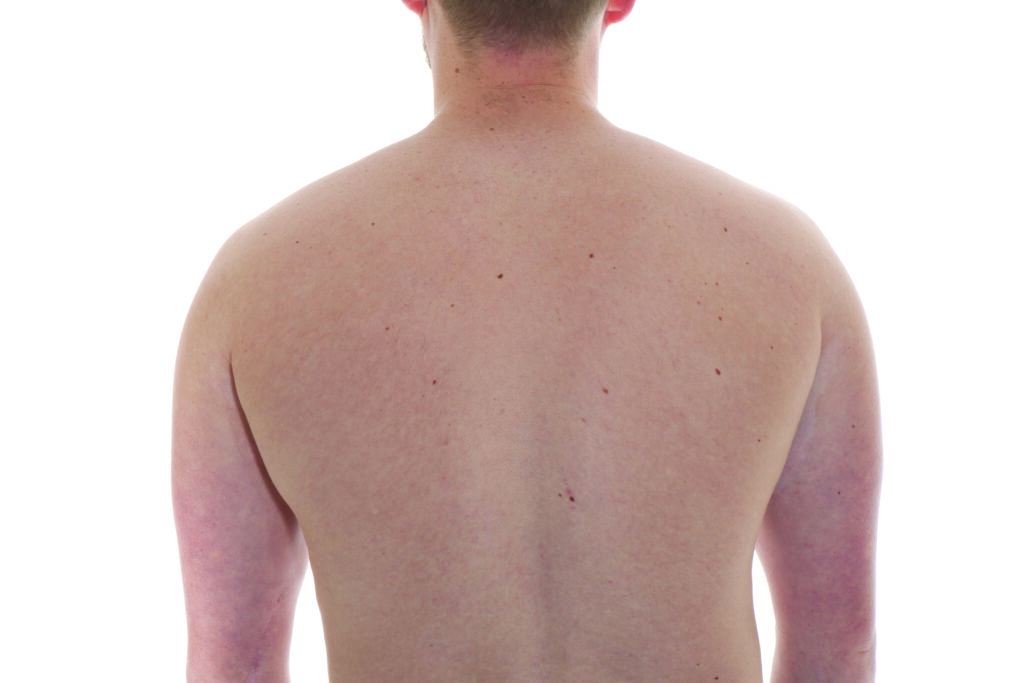
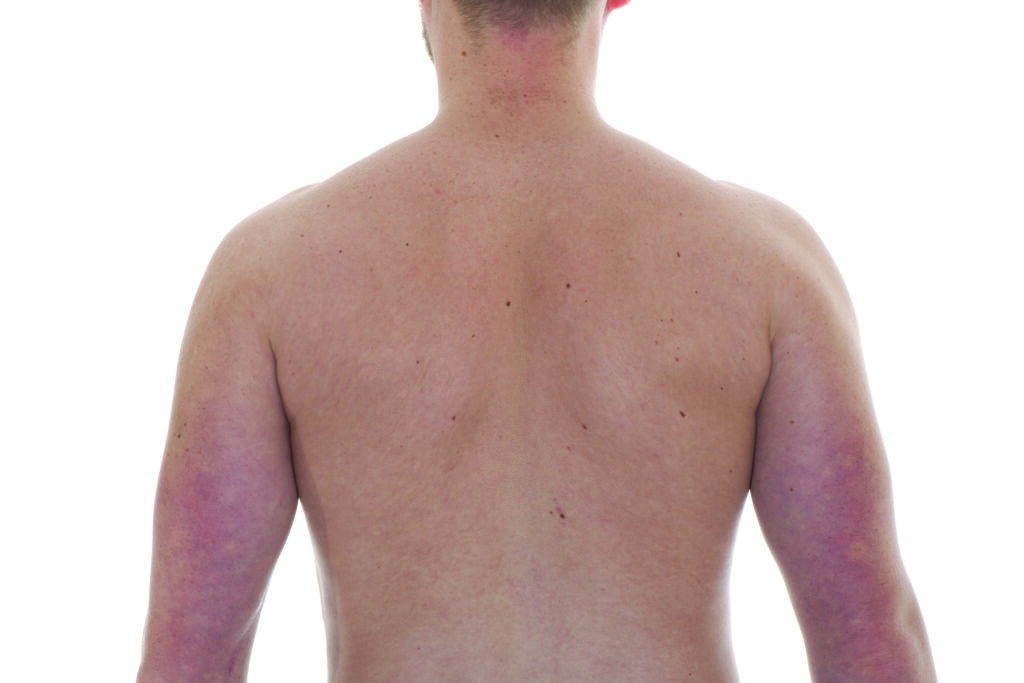
Hold the position for 20-30 seconds and repeat 5 times.
Shoulder pendulum exercises
Stand and lean forward supporting yourself with your other hand. Try to relax your injured arm and let it hang down.
- Swing your arm slowly and gently backwards and forwards.

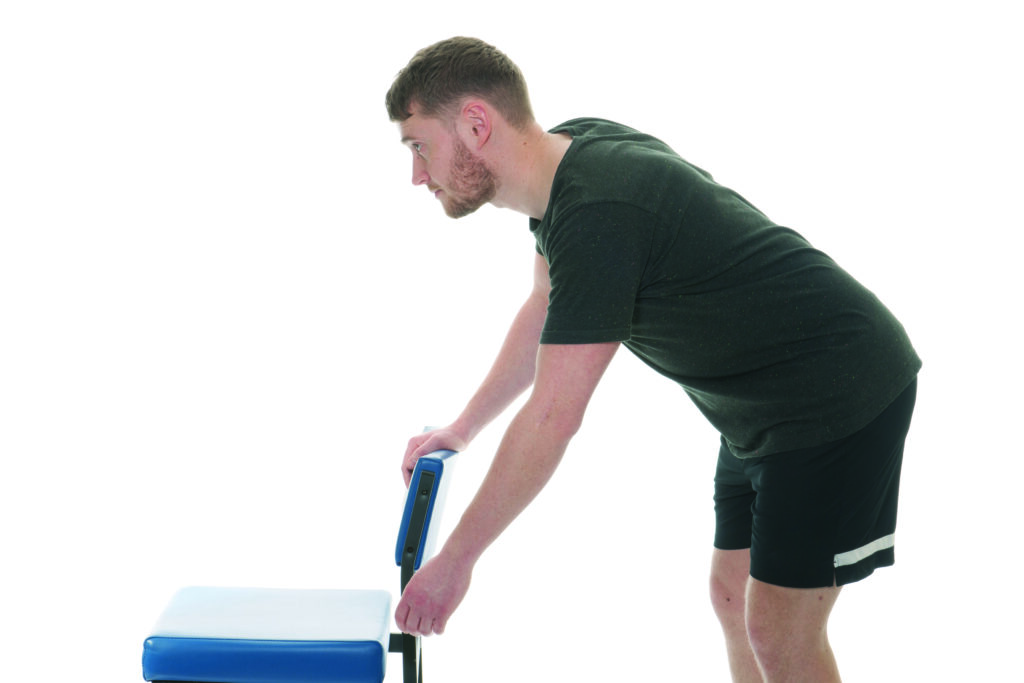
2. Swing your arm slowly and gently side to side.

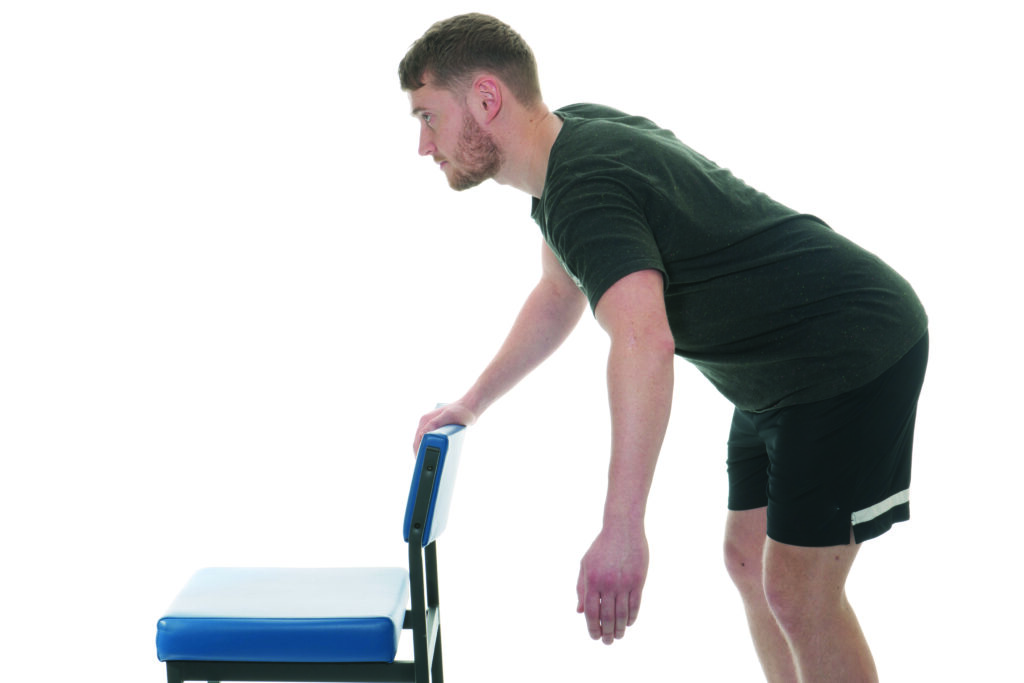
Continue for approximately 1-2 minutes in total.
Shoulder – Stage 2
To be undertaken once Stage 1 can be completed with minimal discomfort.
Active assisted shoulder flexion
Use your unaffected hand to lift your arm up in front of you as shown in the pictures.
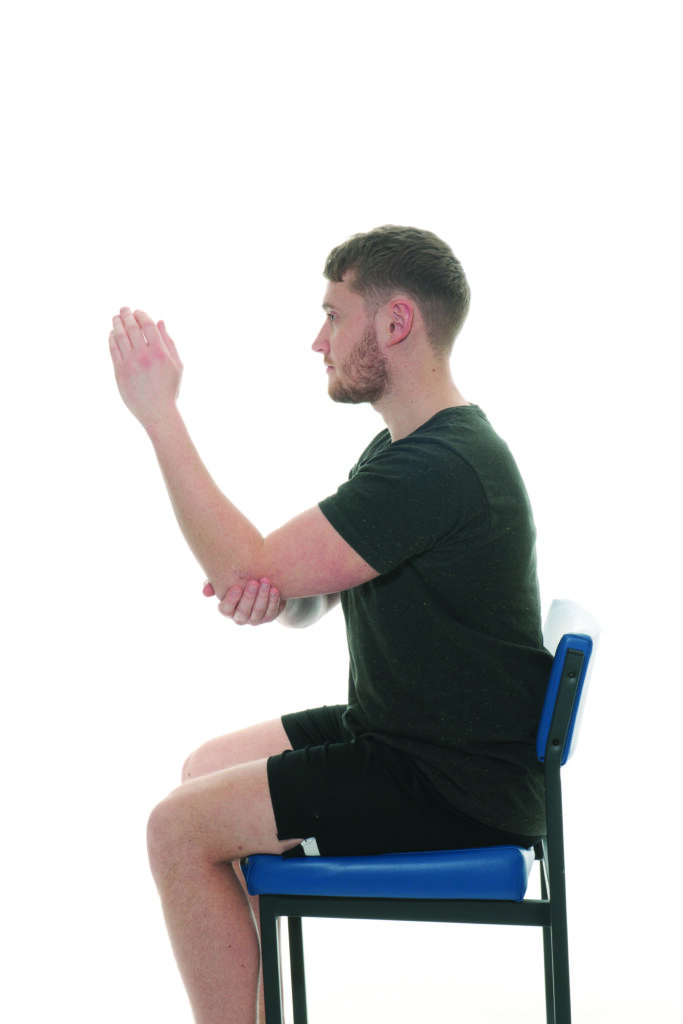
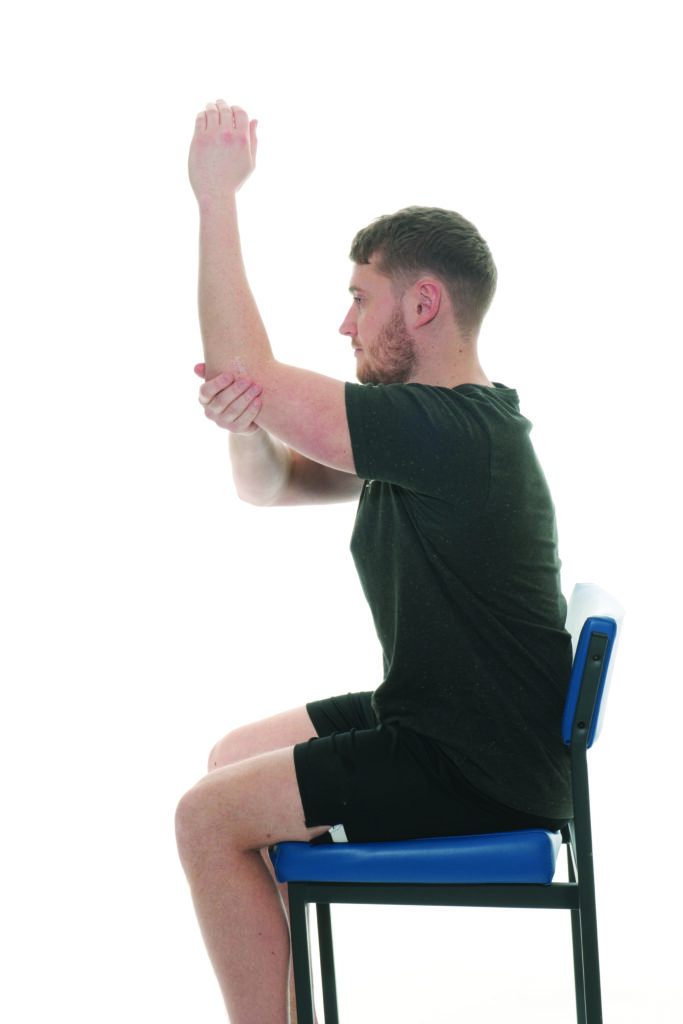
Repeat 10 times
Active assisted external rotation
Keep the elbow of your injured arm bent and tucked into your side. Hold onto a stick or similar.
Use your unaffected arm to push your injured hand outwards.
Push until you feel a stretch.
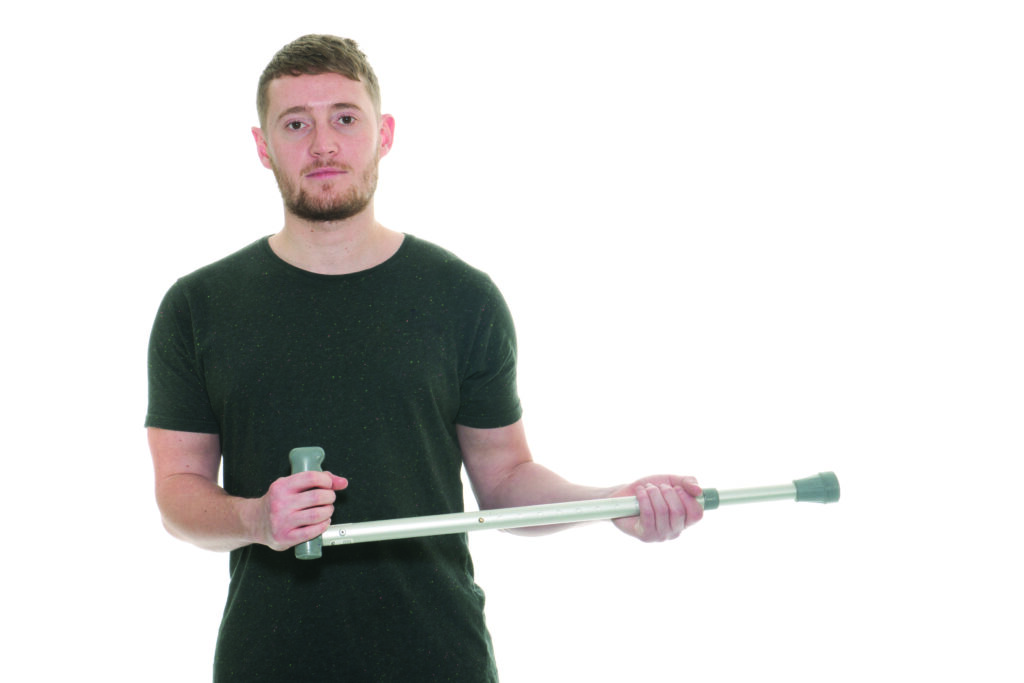
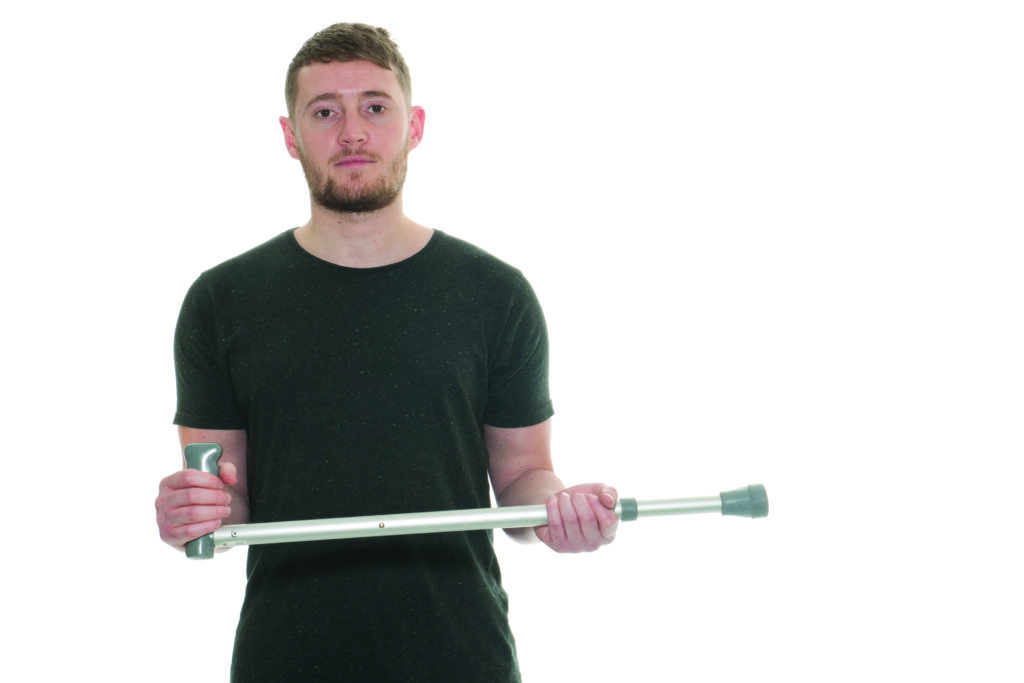
Hold for 5 seconds then return to starting position and repeat 10 times
Elbow
Elbow bend to straighten
Bend and straighten your elbow so you feel a mild to moderate stretch. You can use your other arm to assist if necessary. Do not push into pain, just discomfort.
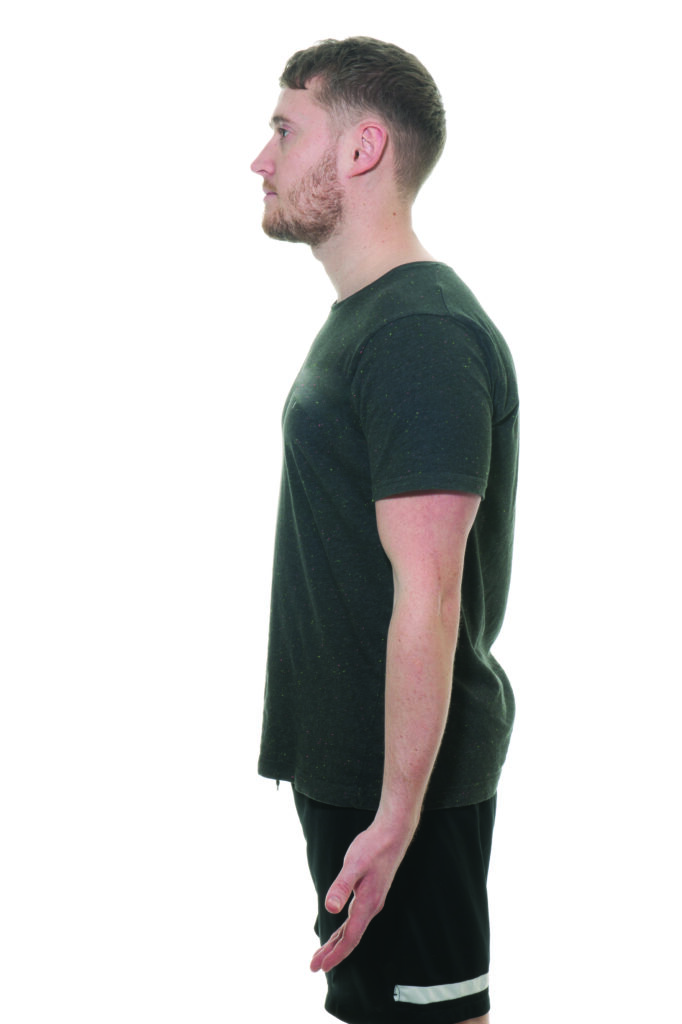
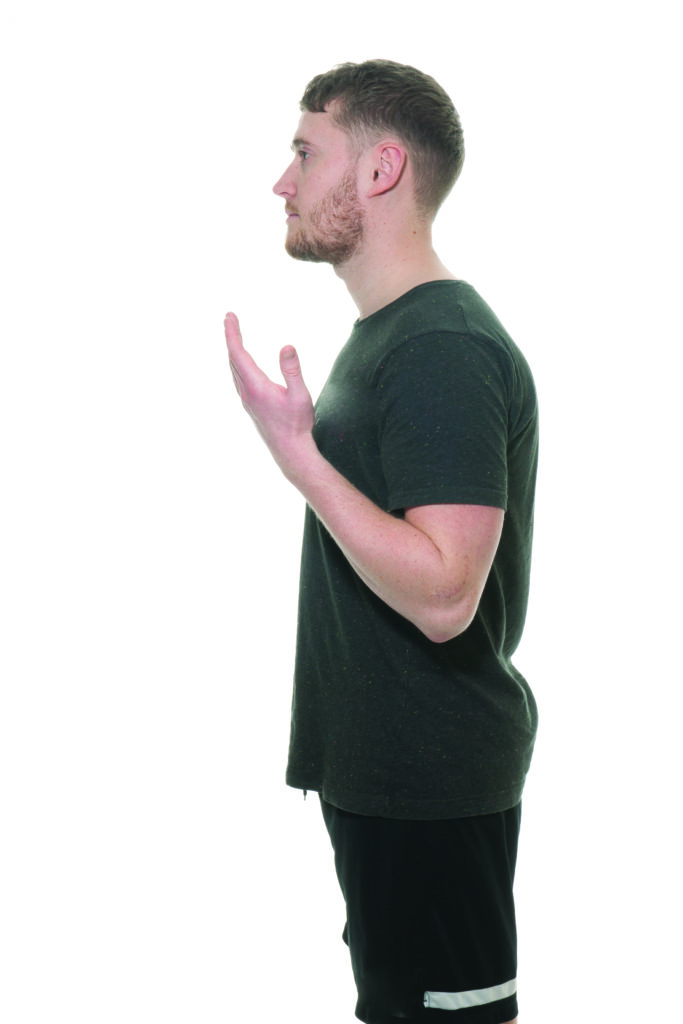
Repeat 10-15 times
Forearm rotations
Put your elbow at your side. Bend it to 90 degrees. Slowly rotate your palm up and down until you feel a mild to moderate stretch. You can use your other arm to assist if necessary. Do not push into pain, just discomfort.
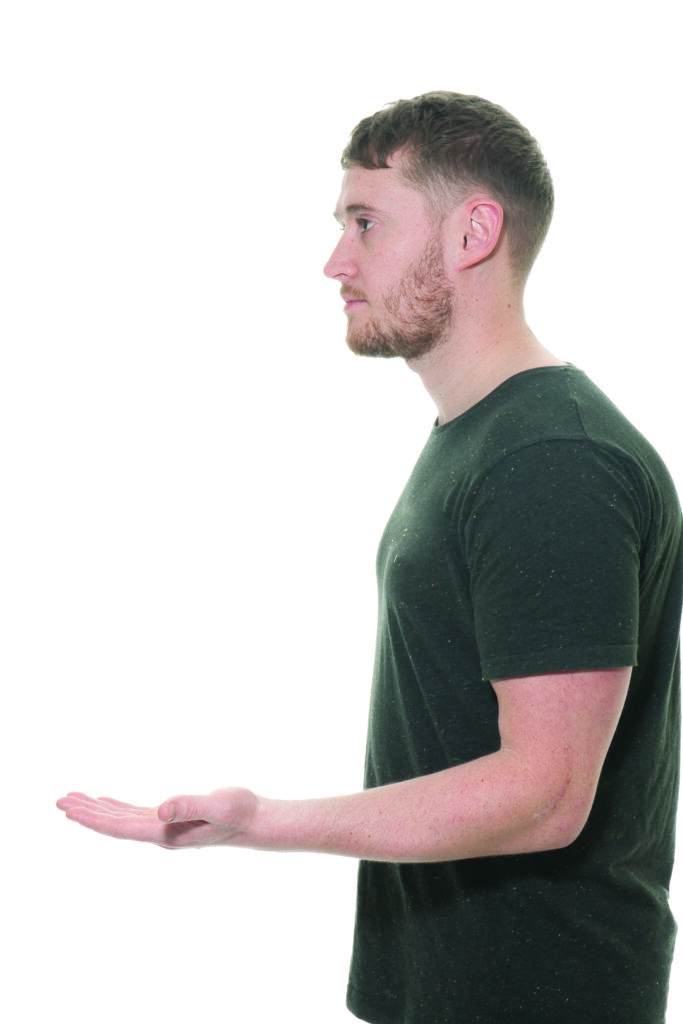

Repeat 10-15 times
Wrist and fingers
Wrist flexion and extension
Move your wrist up and down – you may wish to do this over the edge of a table or chair arm. You can use your other arm to assist if necessary. Do not push into pain, just discomfort.
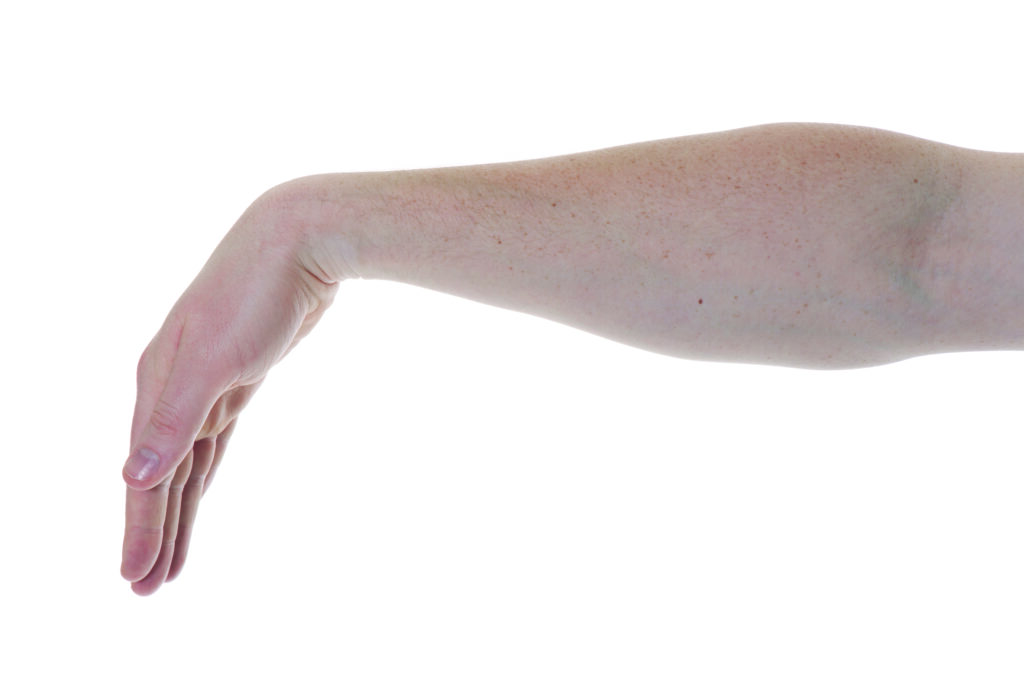
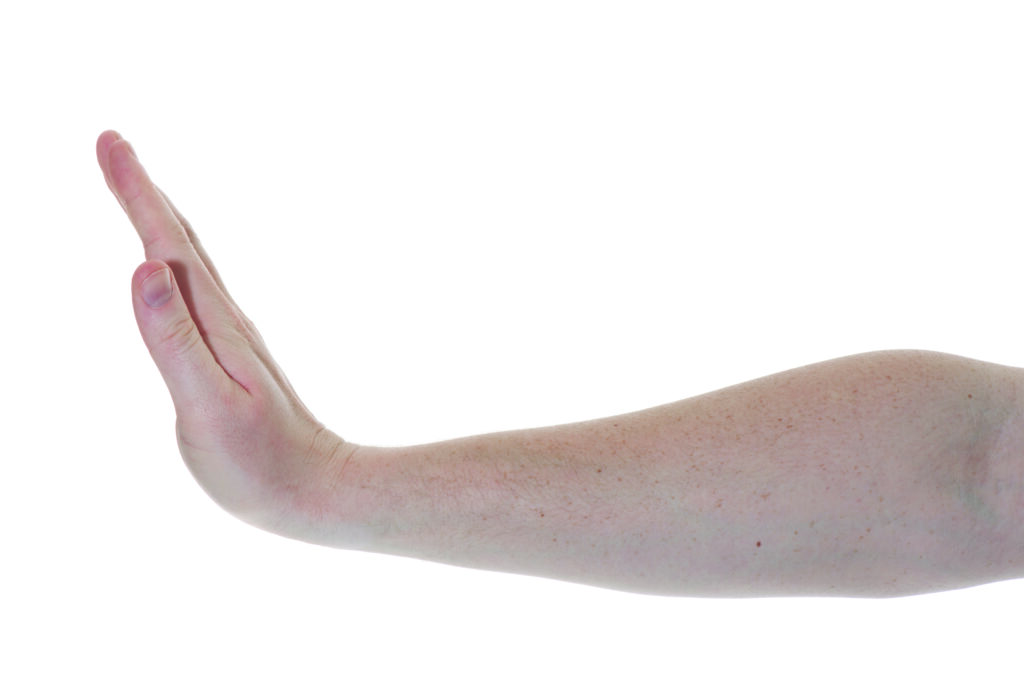
Hold for 5 seconds and repeat 10-15 times providing there is no increase in discomfort
Finger flexion and extension
Open and close your hand as shown 10-15 times.
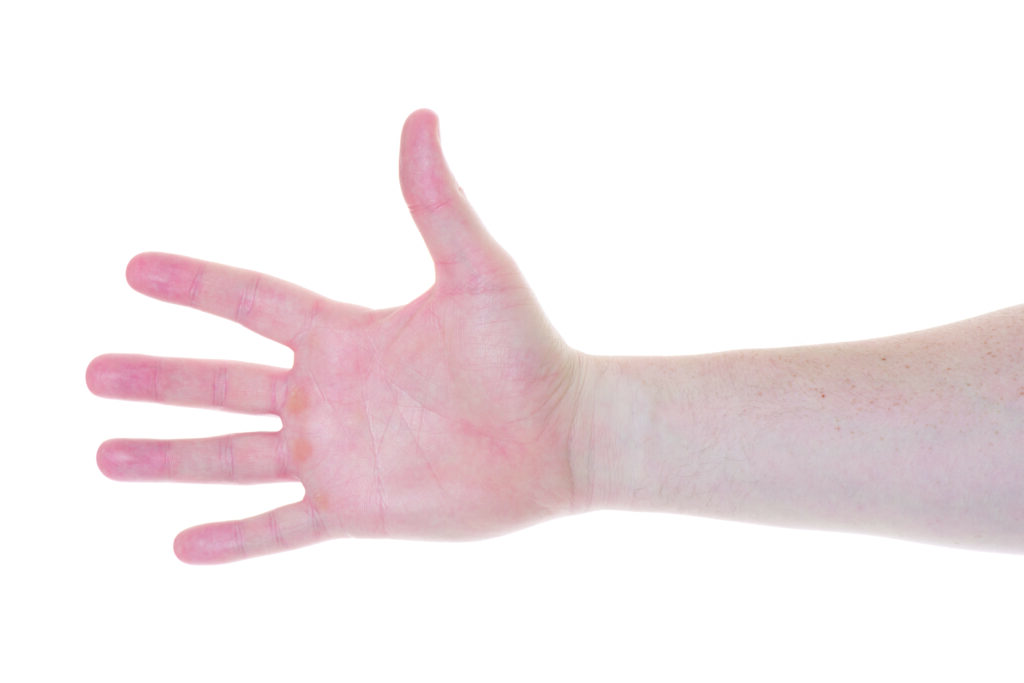
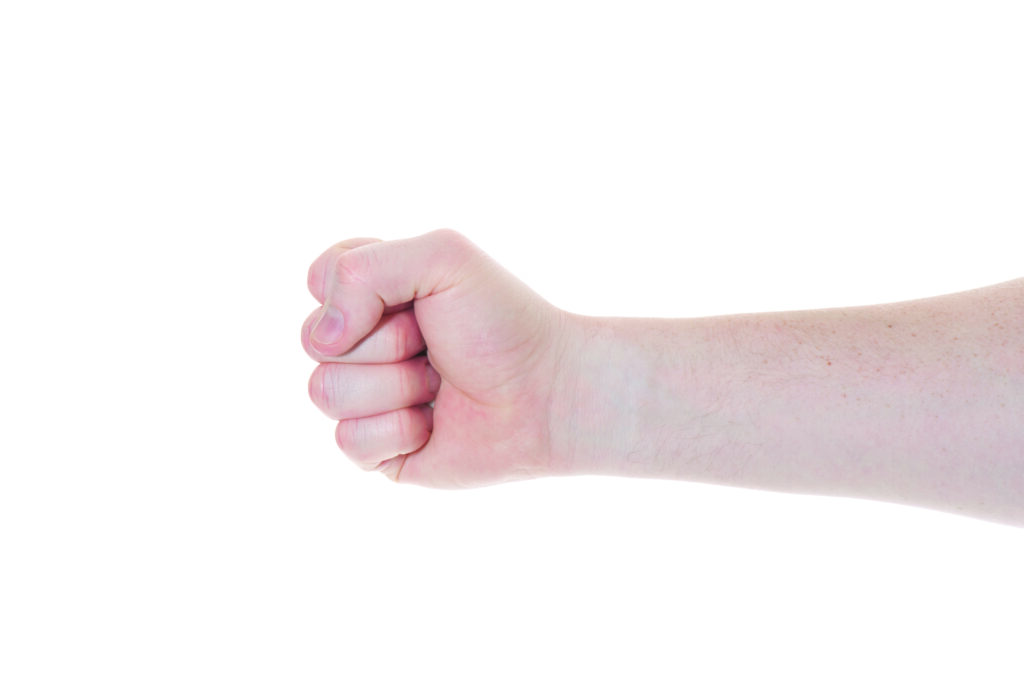
Hold for 5 seconds and repeat 10 times
After a few days, hold a soft ball or rolled up socks in the hand of your injured arm. Squeeze the ball as hard as possible without pain.
Thumb dexterity
Touch each fingertip with your thumb starting with your index finger and working along to your little finger.

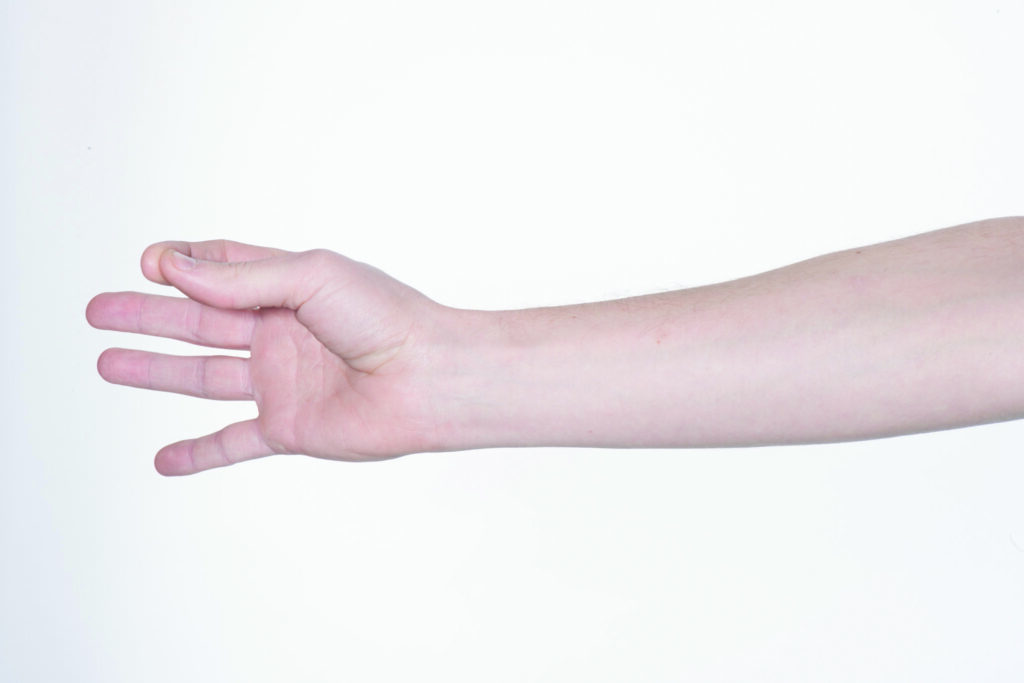

Once you can reach your little finger slide your thumb down the little finger towards your palm.
Repeat 10-15 time
Driving, work and sport
Returning to driving and to work will depend on your individual injury, and what your occupation is.
Before starting to drive you should be able to:
- safely steer the vehicle with two hands
- change gears (in a manual vehicle)
- brace on the steering wheel in an emergency stop situation
Ultimately, YOU need to decide when you are fit to drive and YOU should discuss this with the DVLA if in doubt.
When you return to work you may find that your swelling and discomfort increases. This is normal and is just your body’s response to the increasing demands. Try to have regular rest periods and if possible do lighter or less strenuous duties in the early stages of your return to work.
Before returning to sport ensure that your pain has almost stopped and that the range of movement in both of your arms is the same with equal strength in both. Return to sport should be gradual and you should build up your activity levels over a period of time. For example, start with light jogging and gentle training then build up the amount of exercise over a number of weeks until you feel comfortable to take part in more strenuous activities, including contact sports.