
What is the purpose of a neck collar?
- The purpose of a neck collar is to support your neck and spinal cord, and to limit the movement of your neck and head. They’re typically meant for short-term use while you recover from an injury, surgery, or pain.
- It is very important to wear your collar as advised. The collar should be tight but comfortable. If the collar is not on tight enough, then it will not support your injury. This could cause pain or risk further injury. It may also rub and can cause skin soreness and irritation.
- Leave the collar on 24 hours per day, seven days per week, unless you have been advised otherwise.
For how long do you need to wear your neck collar?
- The collar is usually worn for a period of 12 weeks but this depends on your specific condition and situation. At your 1st appointment, you will be given an expected duration of treatment, although this can change depending on how your injury heals.
- You will be reviewed regularly so that the healing of your injury can be assessed. X-rays may be taken if necessary.
- After your final x-ray, you will be advised if your injury has healed enough for you to be able to remove the collar.
- You will be asked to move your neck backwards and forwards for these x-rays.
What if my injury does not heal?
Treatment in a collar is usually successful in most cases; however, if there is no evidence of healing, then other treatment options may be explored such as surgery.
Movement and Posture
- Move instead of resting or sitting too much. Gentle movement, like walking, can help prevent your neck muscles from stiffening up.
- Focus on good posture. Try not to slouch or hunch over too much.
- Avoid lifting or carrying anything heavy. Also avoid strenuous activity, like running or other high-impact movement.
- The collar will restrict your ability to move freely and see your feet. Take extra care when walking and when going down the stairs.
Driving
You must not drive whilst wearing a collar, as it restricts movement and therefore, the ability to drive safely. You do not need to inform the DVLA once you return to driving following the removal of the collar but we recommend that you inform your insurance company.
Sleeping with a neck collar
- Try to keep your head in a neutral position, not bent forward, backward or to the side.
- Try sleeping on your back with a thin pillow. Using extra pillows can put extra pressure on your neck.
- If you are sleeping on your side, please make sure you support your head with a pillow.
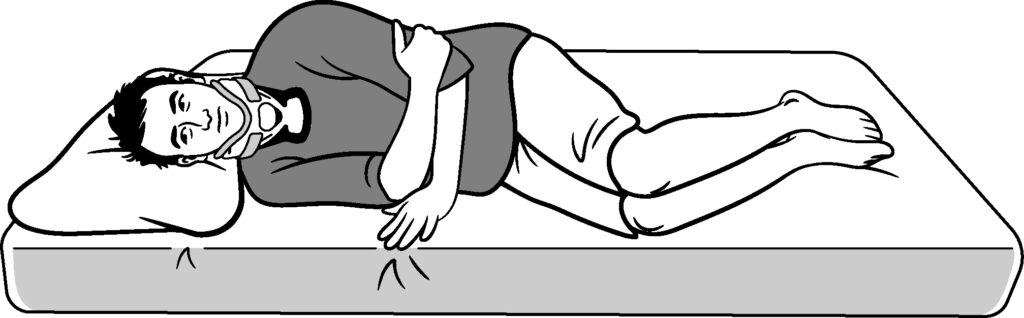
- To get out of bed, first roll gently onto your side. Then, swing your legs over the side of the bed and push up with your arms.
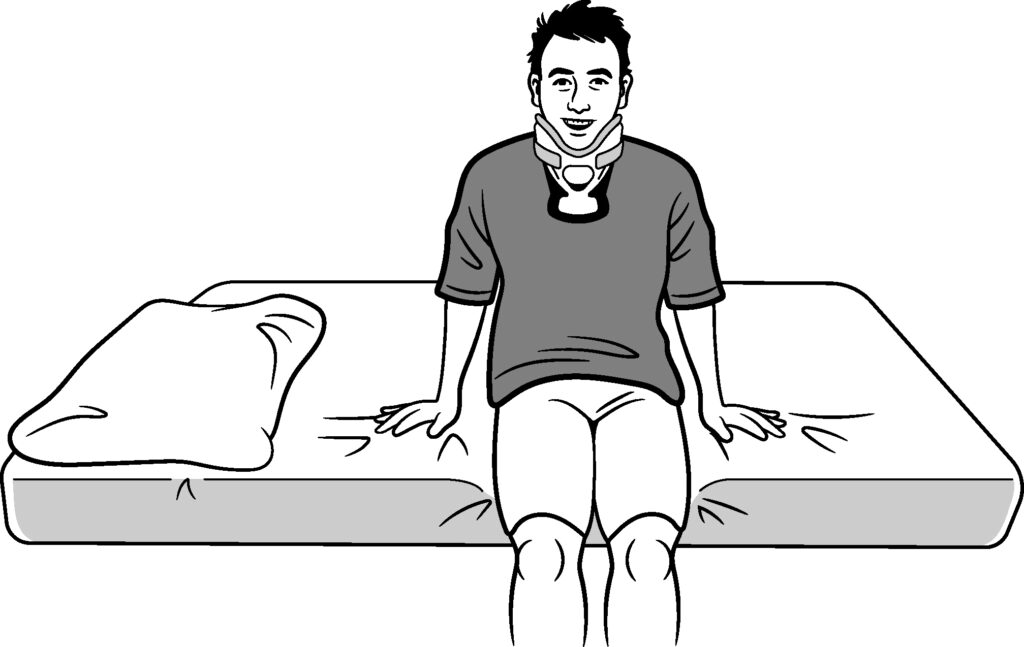
- Unless informed otherwise, you must not remove your collar for sleeping. There is an increased risk of further injury.
How to bathe with a cervical collar
- It’s usually easier to take a bath rather than shower when wearing a neck collar.
- It’s important to keep the collar dry and out of the water. Placing plastic wrap around the collar may help to keep it dry.
- If you do take a shower, you may find using a handheld nozzle easier.
- If the collar does get wet, then it is important to switch the wet pads for dry ones to stop your skin getting sore.
Complications and side-effects
- The collar does not prevent all neck movement, only limits it. It is important that you take extra care when moving.
- Neck collars can rub and cause pressure sores or skin irritation. You may sweat more.
- Long-term use of a collar can cause your neck muscles to stiffen and weaken.
- Eating and swallowing may feel more difficult due to the restricted position of the head and neck.
What happens once my collar has been removed?
- The collar will be removed in clinic following your final x-ray.
- You will be advised on how to introduce new activity safely.
- A referral to physiotherapy may be discussed.
How to remove and re-fit a cervical collar (for carers or those fitting the collar)
To start, the patient should sit upright in a firm chair looking straight a head in a neutral position.
You may need another person to perform a head hold, to prevent any movement of the patient’s neck.
Removing the collar
- Undo the Velcro straps on each side.
- Slide out the front piece and remove the collar, taking care to keep the patient’s head still.
- Inspect the patient’s skin, cleansing and moisturising if required.
- Remove the old pads from the collar, one at a time, and replace them with the new dry pads. Note how each pad has been removed so they are replaced in the same way. The pads should be adjusted to make sure that no plastic will touch the skin. The old pads can be reused. These need to be changed at least once a week or more often if physically soiled. Washing up liquid is usually the best thing to use.
Replacing and re-fitting the collar
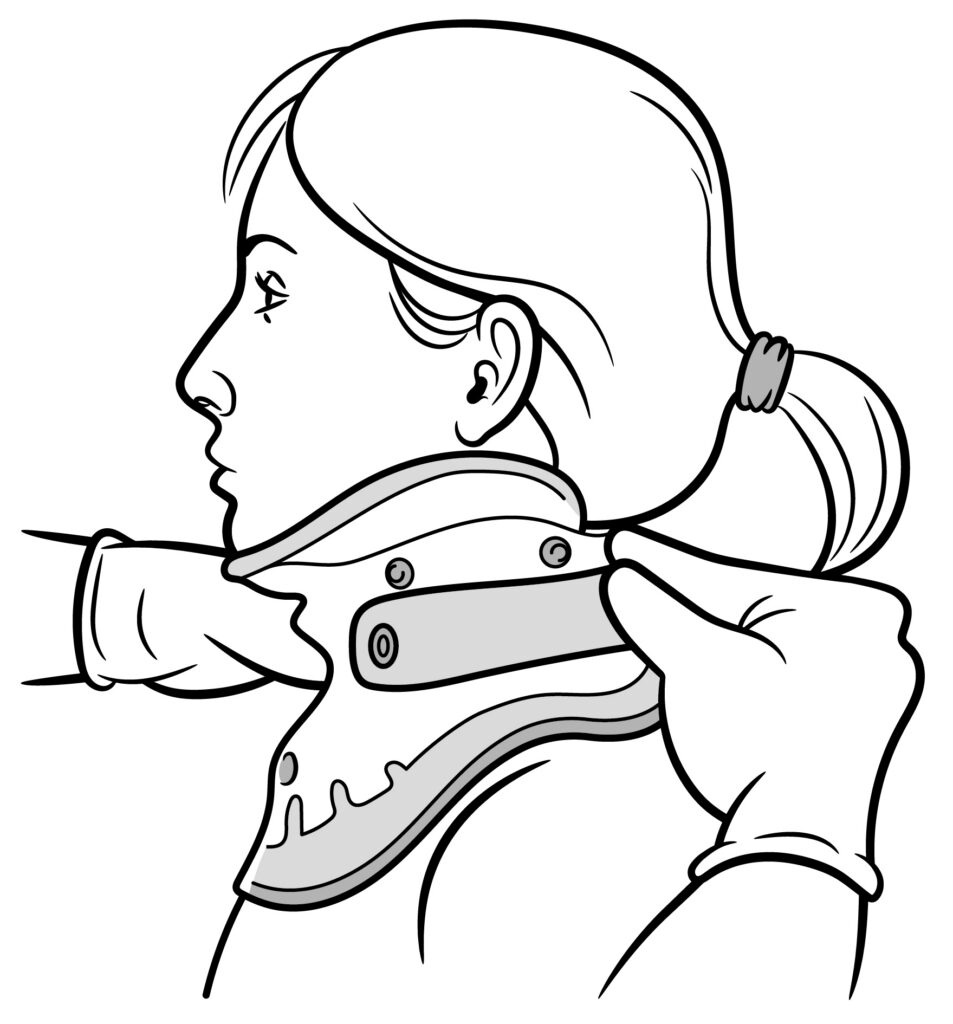
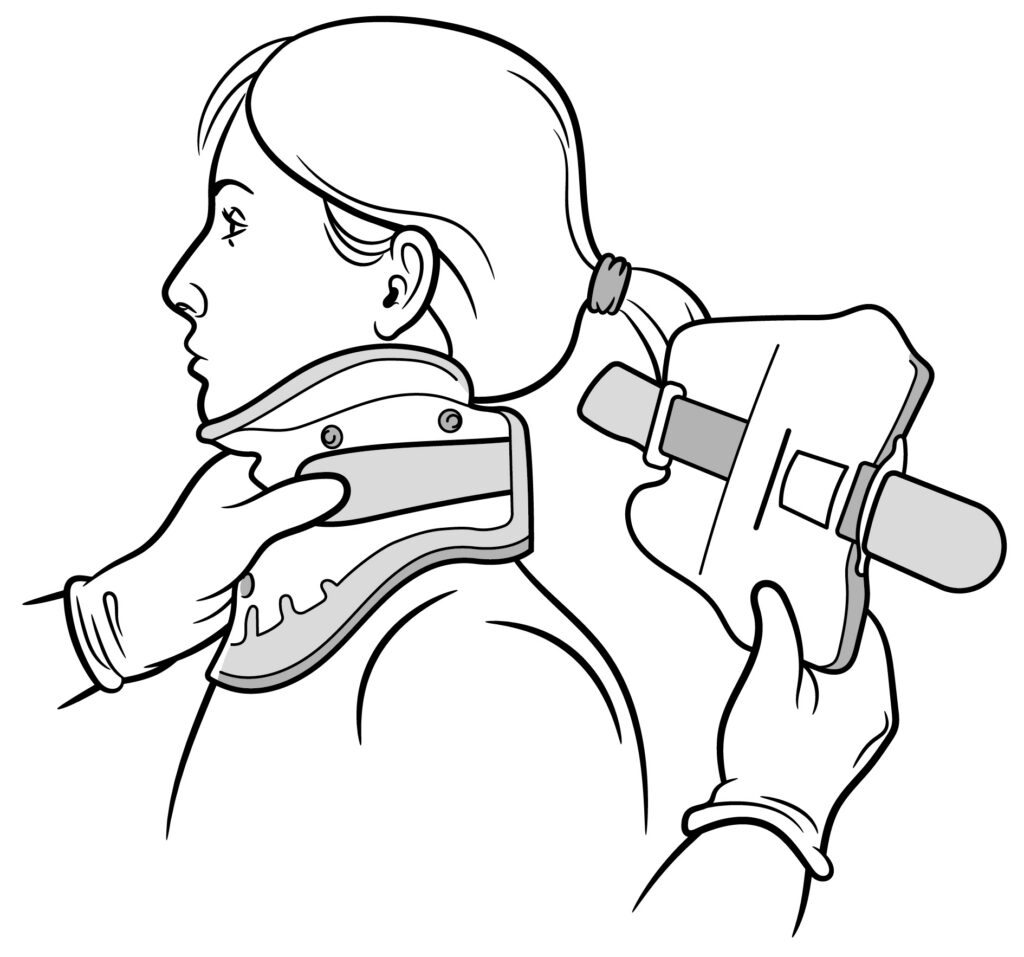
- Ensuring the patient’s head is kept in a neutral position, slide the front panel under the chin, pushing the side of the panel up and over the shoulders.
- Whilst holding the front piece with one hand, centre the back panel and attach both straps to the sides.
- To tighten, anchor your fingers in the collar and peel back the strap on each side, tightening and re‑attaching. Ensure each side is tightened equally to ensure a snug, symmetrical fit. When tight enough, you should be able to fit one finger only between the collar and patient’s head behind their ear.
- If the patient is wearing an Aspen Vista, the fit can be adjusted by pulling the dial towards you and turning left (shortens) or right (lengthens).
- To finish, the patient’s chin should be flush with the end of the collar chin piece, their nose and chin should be aligned vertically through the centre of the collar at the front and the back panel should be in line with the spine. There should be no plastic in contact with the patient’s skin.
Replacement collars and pads
If you require a replacement collar or pads, please contact the spinal nurse team on the number below.
Physiotherapy after treatment in a collar
It is important to start strengthening and stretching your neck muscles once the collar has been removed. It may be helpful to have some physiotherapy to support you with this. If you think this might be helpful for you, then please ask at your hospital appointment.
When and who should I call for help?
For advice or questions about your collar contact the Spinal Specialist Nurses on
0113 392 3870 Monday – Friday, 8am – 5pm.
If not in the office, please leave a voicemail with your name and contact details. Please do not leave urgent messages.
If you experience any of the following, please seek urgent medical advice:
- Severe neck pain;
- Weakness, tingling or loss of feeling in your face, arms or legs;
- Loss of bladder or bowel function;
- Broken skin areas, pressure sores; and
- If the collar breaks or is damaged in any way.
In an emergency, please attend your local emergency department or dial 999.
Back to top