
This page explains why we use chest drains and what you can expect if you are having one put in.
It also answers the most frequently asked questions about chest drains. However, if you have any further questions, please do not hesitate to ask a member of your medical team.
Your doctor will explain why you need a drain and will also take your written consent to have the drain inserted.
What are chest drains for?
A chest drain is a sterile plastic tube that allows us to drain the space between the lung and the chest wall. The medical name for this is the ‘pleural space’.
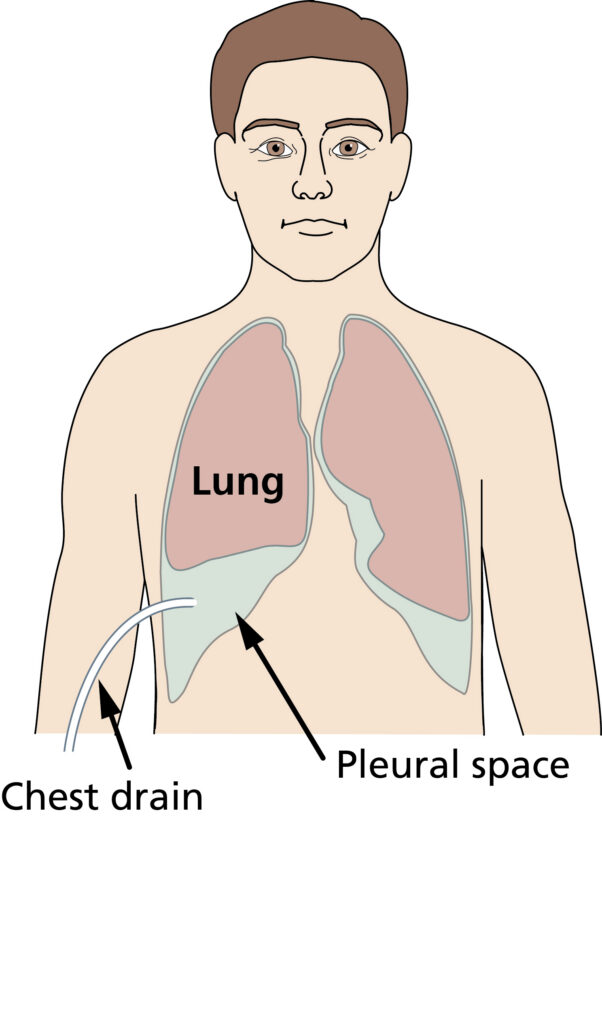
What needs to be drained?
We may need to drain:
| Medical name | |
| Air | pneumothorax |
| Fluid | pleural effusion |
| Blood | haemothorax |
| Infection and/or pus | empyema |
Occasionally the drain is used to introduce medications into the pleural space.
What happens next if I need a drain?
The doctor will decide where to place the drain. This is usually the side of your chest just underneath the armpit. The doctor may use an ultrasound machine to show where best to place the drain. Ultrasound enables the doctor to ‘look’ through the chest wall. A cool gel is used on the skin to ensure good contact for the ultrasound tip.
You will have an injection of local anaesthetic to make the area where the drain will be inserted numb. This can sometimes sting. You may also be given painkillers.
Will it hurt, what should I expect when the drain is inserted and how long will it take?
The anaesthetic injection and/or painkillers will prevent pain. However, if at any time during the procedure you do feel pain, please tell the doctor.
The doctor will explain how they would like you to sit, or lie, whilst the procedure takes place. The doctor will wear sterile gloves and a gown and your skin will be cleaned with an antiseptic to help reduce the risk of infection. You will be partly covered in a sterile sheet. The drain will then be inserted between the ribs in the numbed area and connected to a tube and drainage bottle containing water. The water acts as a one way seal to allow air or fluid to drain out and not go back into your chest.
The whole procedure usually takes about 20-30 minutes.
Who will put my drain in?
Your drain will be put in on the ward by an appropriately qualified and experienced doctor. Sometimes a qualified trainee doctor will insert the drain, but they will always be supervised by a doctor who is already fully trained in the procedure.
How will the drain be attached?
We use both a stitch, to tie the drain in, and adhesive dressing on the skin. However, please move carefully as drains can still be pulled out.
How long will the drain be in?
It depends on why you need the drain. However, your medical team will keep you informed on a regular basis. You may need several X-rays during this time to check progress.
How will the drain be removed?
This is straightforward. Once all the dressings and stitch are removed, the drain is pulled out gently. You may be asked to hold your breath in a special way when this is done. It can be uncomfortable but only lasts a few seconds.
Can anything go wrong?
- We may not be able to find the fluid/air (uncommon). For example if there is not very much fluid or if it has formed into little pockets the procedure cannot go ahead. In this case the doctor will explain if anything further needs to be done.
- Infection may be introduced by the chest drain or around the insertion site (uncommon). This will need to be treated by antibiotics.
- Discomfort is common especially as the lung re-expands or if too much fluid is drained at once. Please let a member of the medical or nursing team know who can assess the drain and give painkillers
- Sometimes air can leak into the skin causing swelling and discomfort (surgical emphysema). This is uncommon and usually settles with minor changes to the drain but sometimes can mean a new drain must be inserted.
- Rarely if a blood vessel is punctured this can cause some bleeding. If this does occur usually no further action, other than checks of your blood pressure and pulse, are required. Very rarely in the event of a serious bleed or internal organ damage a blood transfusion or surgery is required.
- Very rarely complications may lead to death.
Important things to know about your chest drain
- You may see air bubbling out through the bottle. Fluid may also drain from the chest. This is usually straw coloured but sometimes may be blood stained. This is nothing to be alarmed about.
- There is no need for you to be in pain. If you are in discomfort ask for painkillers.
- The drain can come out if pulled or twisted so please take care. If the drain does come out tell someone straight away.
- You need to keep the drainage bottle below the level of the drain (at the point it enters the chest). Usually it is placed on the floor.
- If you feel more breathless, please tell the nursing staff.
The drainage bottle contains water, which acts as a seal to prevent air leaking back up the drain into the pleural space. It is essential therefore that the bottle is kept upright at all times with the tube below the water surface.
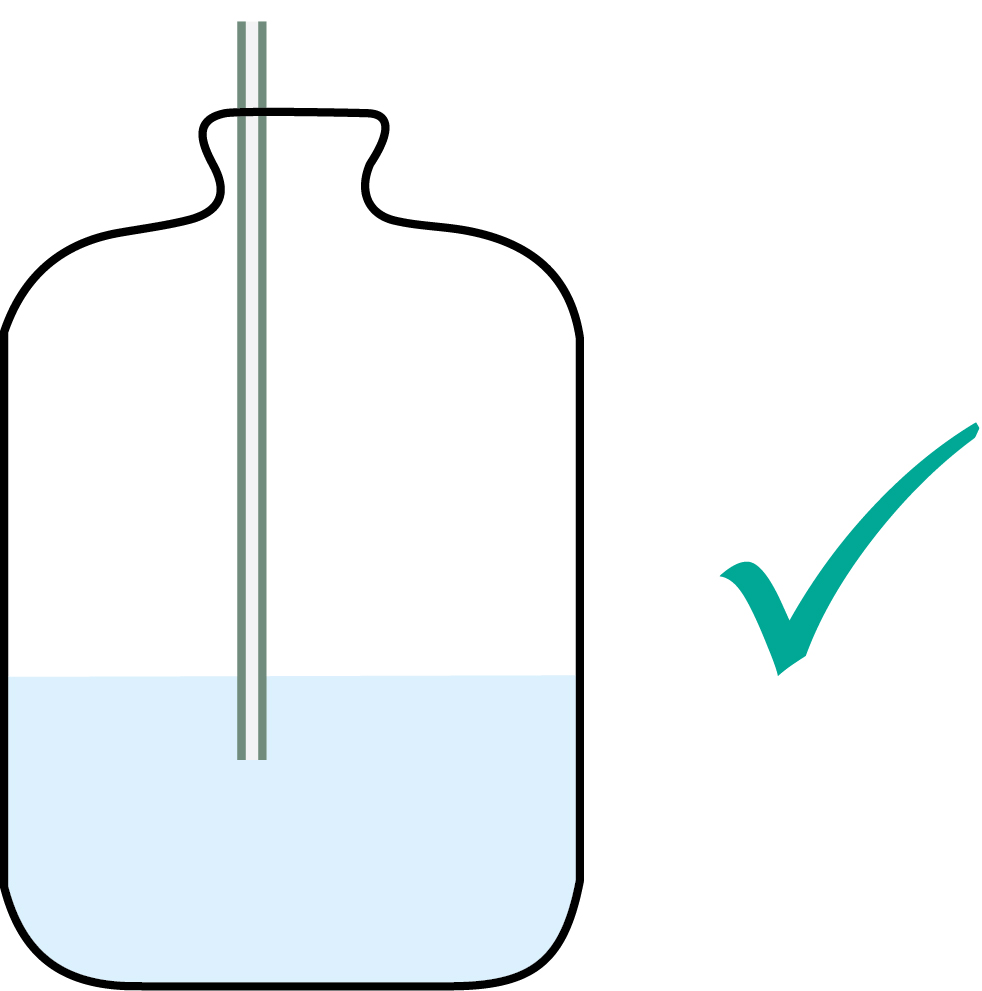
The bottle is upright and the tube tip is under the water
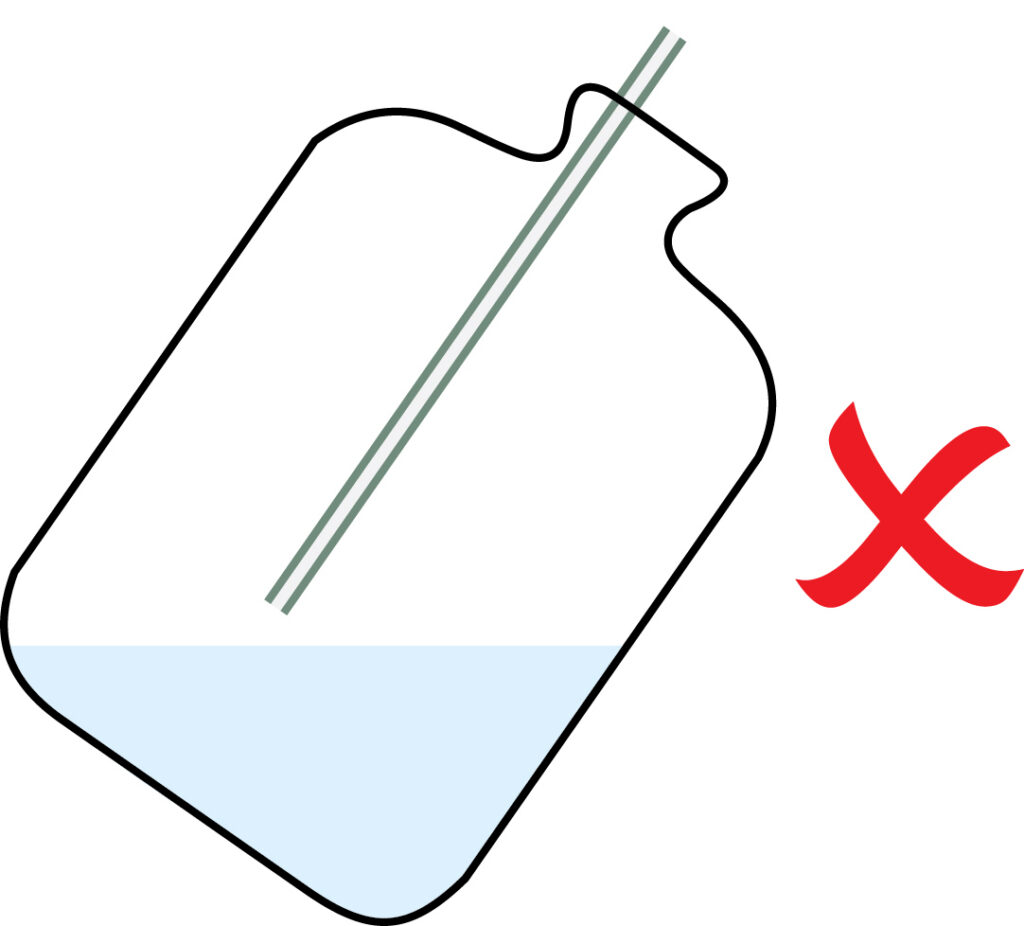
The bottle is tipped and the tube tip is not under the water
What happens after the drain has been removed?
You may have a stitch left in which is usually removed after 5-7 days. Some people have a little pain after the drain has been removed which may be helped by painkillers. If you have a lot of pain, difficulty breathing, or fever please tell a doctor or nurse so they can look for a cause and treat you.
Useful contact numbers
Ward J09

Ward J10
Ward J12
Alternatively please contact your GP or District Nurse.