
We hope the following information will be helpful to you.
What can I expect?
You can manage your own diabetes in the hospital if appropriate or staff in hospital can help to monitor your blood glucose and assist with insulin administration.
Being in hospital is different than being at home so it is likely your medication might change.
Diabetes Team
The specialist Diabetes Team are available to give support with your diabetes management if required.
If you are under 19, please ask the ward staff to contact the young people’s diabetes team. If you have any questions, please do not hesitate to ask your named nurse.
Self-management of your diabetes
As you are the person with the most experience in caring for your diabetes we would encourage you to continue to make your own decisions about your diabetes management.
Self-managing your insulin
If you would like to manage your own insulin while you are in hospital, staff will support you in doing this. This can include both administering and/or determining the dose of your insulin yourself.
Staff will need to ask you some questions about your diabetes and check that all your equipment works, as well as discussing the safe storage of your medications with you. If they feel that it is safe for you to manage your own insulin, your nurse will ask you to sign a declaration form.
If your condition changes (infection, operation etc), the nurse will reassess you and check if it is still safe to self-manage your own insulin.
If this is the case, or if you don’t feel safe managing your own insulin (e.g. too drowsy) for whatever reason, medical and nursing staff will take over the management of your diabetes until you feel well enough to look after yourself.
If you choose not to self-manage the medical and nursing team will take decisions on your behalf but, wherever possible, you will be consulted.
If you wish to take the responsibility of self-managing against medical advice, staff will ask you to sign your care plan and inform the nursing staff of each dose you administer.
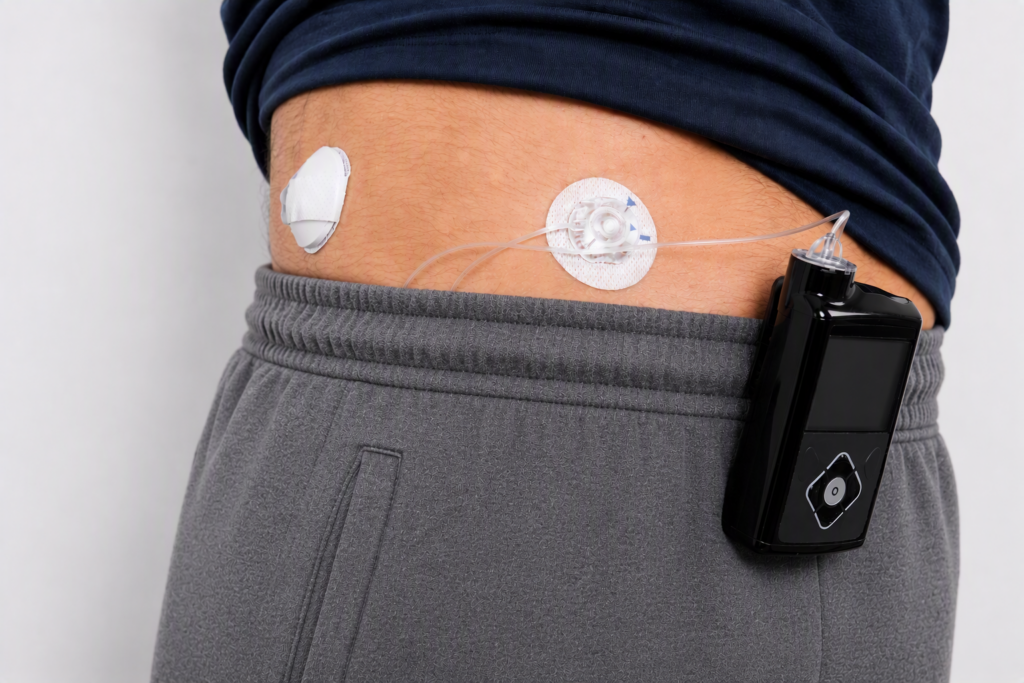
Self-managing your insulin pump (including hybrid closed loop)
If you are on an insulin pump, the medical team need to review if it is suitable for you to continue self-managing your diabetes using your device.
Self-managing non-insulin medication
Self-medicating oral medications may also be suitable but this needs to be assessed prior to self-medicating and the medication needs to be stored securely. There are some diabetes medicines which may not be appropriate to continue while you are unwell or going for surgery for example: ‘flozins’ e.g. dapaglifozin; GLP-1 agonists e.g. tirzepatide (Mounjaro) and metformin. These should be reviewed by the medical or surgical team before you self-administer.
Blood testing, including continuous glucose monitors (CGM) (e.g. Freestyle libre or Dexcom)
To do this yourself, you will need to provide your own test strips and lancets or CGM if used prior to admission. We will also have to check your equipment to calibrate it with the hospital system. Staff will ask you to record your blood results and will show you where to do this so that they are aware of the decisions you have taken. You must inform nursing staff when your blood sugar levels read under 4mmol/L and above 12mmol/L if monitoring your own blood sugars. You will be required to provide minimum two capillary blood glucose reading using hospital glucose machine if you are using your own testing device (this includes use of CGM).
Insulin safety, storage and supply
- Please safely dispose of any needles and clinical waste in appropriate waste bins as agreed by the nurse looking after you.
- Store insulin as agreed with the ward staff in and return any keys on discharge.
- Inform nursing or pharmacy staff if you require more insulin or equipment before it runs out.
- If using your own blood glucose meter, bring your monitoring supplies from home.
Choosing from the hospital menu if you have diabetes
If you are in hospital and you have diabetes, this leaflet is to give you some guidance to help you choose appropriate foods from the menu.
Most people who have diabetes are encouraged to choose a ‘healthy diet’, similar to the one also recommended for the general population which is restricted in fat, salt, added sugar and sometimes restricted in calories (energy), particularly if you are trying to control your weight or to lose some weight.
Items on the hospital menu have been coded to help you choose from the menu and if this type of diet is appropriate for you, the menu is coded for Healthier Choices.
Try and choose items which have the following code against them:
(smiley face) Healthier Choices are lower in fat, salt and sugar, and are suitable choices if you have been advised to follow a ‘healthier diet’; for example, for your diabetes or for your heart health, or if you are trying to lose weight.
Remember, these important points to ensure that you have a healthy diet for your diabetes while you are in hospital:
The DAFNE approach – If you are Carbohydrate Aware (Carbohydrate Counting)
If you have diabetes and have been encouraged to count your carbohydrate/estimate the carbohydrate value of foods you like to eat so that you can match this with the correct insulin dose, then you may find the information about the carbohydrate content of items on the menu helpful. Ask the ward staff or dietitian if you would like this information.
If you are losing weight unintentionally due to your medical condition and treatment
If you have diabetes but are losing weight unintentionally due to your medical condition, treatment or after surgery, it is likely that you may need to choose a Higher Energy diet. In this case you may be advised to choose items on the menu which are coded for Higher Energy, as follows:
(star) Higher Energy items are suitable if you have a small appetite or require food high in energy due to your illness, weight loss or surgery.
Podiatry
It is important that whilst you are in hospital you look after your feet to prevent skin damage, sores or ulcers.
Useful hints
- Wear slippers, even when sitting in the chair, to avoid accidently treading on sharp objects.
- Moisturise daily any dry skin; hospitals are hot and dry and can make your feet dry. Pay particular attention to your heels as they can get sore with lying in bed.
- Avoid picking and scratching your feet.
- ALWAYS ask for help if you are concerned.
If your feet are causing concern, speak to the staff looking after you; they will refer you to the Podiatry Team who will advise, as necessary.
Back to top