
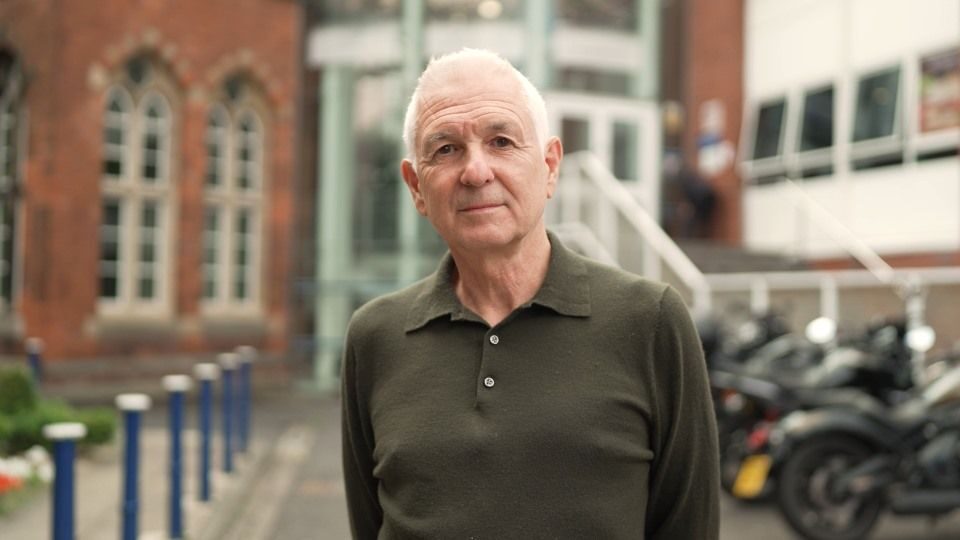
Scott Johnston was cutting down a tree at the bottom of his Horsforth garden in June 2015 when the branch gave way, sending him and his ladder tumbling to the ground. Scott, then 57, hit a retaining wall before landing hard in a concrete gully.
He was taken to Leeds Major Trauma Centre, at Leeds General Infirmary, where medics mended his shattered pelvis, several broken ribs, a punctured lung and torn liver.
Scott’s orthopaedic consultant was Prof Peter Giannoudis, who at the time had recently founded charity Day One Trauma Support to help people like Scott who were recovering from catastrophic injuries. The charity now supports people all over the UK and Scott has become one of its key Peer Support Volunteers – helping give hope to more than 40 people impacted by life-changing injuries through in-person chats and telephone calls. He has also gone on to fundraise by completing the Great North Run.
“Peer support is about listening, sharing what worked for you, and offering a spark of hope. Sometimes that’s all it takes to help someone see a way forward. I’ll keep going for as long as I can.” – Scott Johnston, patient
Scott Johnston, 67, from Horsforth, Leeds, said: “I spent three weeks in hospital whilst they patched me up. Back then, Day One didn’t yet have its peer support programme, but I had a moment that’s stayed with me. A researcher came in, wheeled me into a quiet room and simply asked about what had happened. It was the first time I let everything out: the fear, the frustration, the “I’m fine” façade I’d been showing everyone else. That space to talk, to be heard, meant more than I realised at the time.
“So when Day One launched peer support, I trained as a volunteer. Since then, I’ve supported more than 40 people. And now there are conversations like this happening all over the country, Day One volunteers supporting people whose lives have been turned upside down. Sometimes it’s the first chat, sometimes the fifth, but at some point,
something clicks. A sentence lands, a suggestion sparks an idea, and suddenly someone can see a way forward.
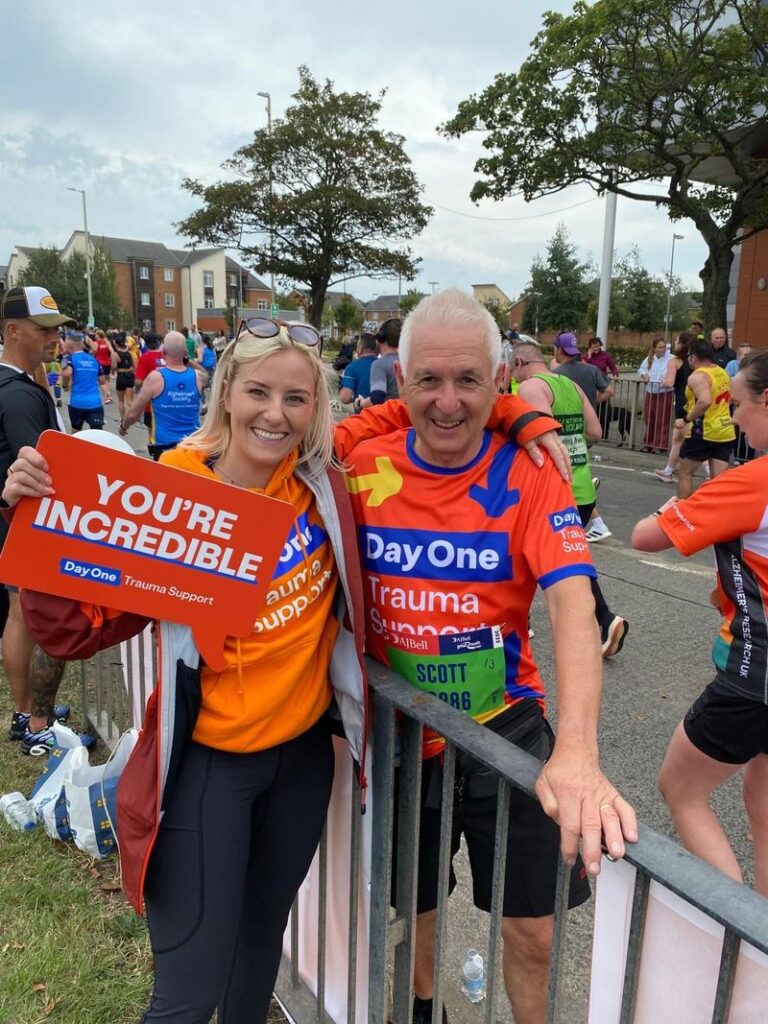
“I’m mostly back to normal. I still have some numbness and a little foot drop in my right foot, but I know how lucky I am. Peer support is about listening, sharing what worked for you, and offering a spark of hope. Sometimes that’s all it takes to help someone see a way forward. I’ll keep going for as long as I can.”
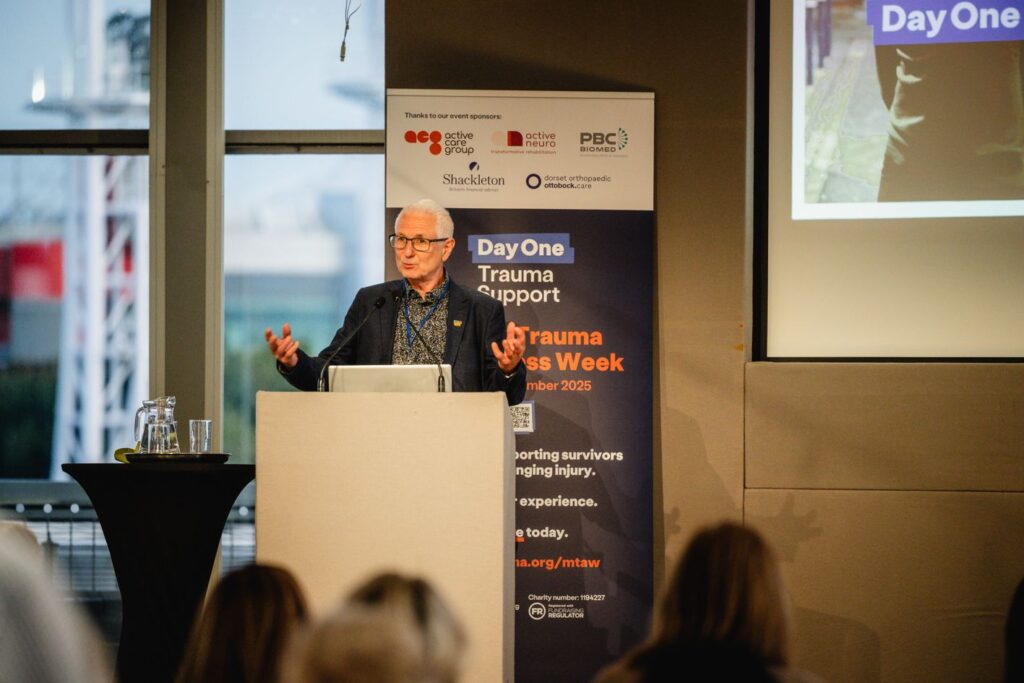
This week, Scott, now 67, is sharing his story to help Day One Trauma Support launch Major Trauma Awareness Week (15-21 September). He is among a group of major trauma survivors who feature in a new video ‘We are Day One’ and is encouraging others to share their messages of hope, which will go on display on the trauma ward at LGI to current patients recovering from catastrophic injuries.
“Scott’s story is one of hope – and it’s made possible by the specialist expertise of many clinicians at the Leeds Major Trauma Centre who work together to bring the possibility of healing and recovery for complex cases like Scott’s.” – Prof. Peter Giannoudis, Leeds Major Trauma Centre
The week is focusing on how the Day One community brings hope and purpose to people after major trauma – a medical term given to the 70,000 people who suffer life-changing injury each year from incidents such as bomb blasts, stabbings, road crashes and falls from height.
Prof Giannoudis said: “Scott’s story is one of hope – and it’s made possible by the specialist expertise of many clinicians at the Leeds Major Trauma Centre who work together to bring the possibility of healing and recovery for complex cases like Scott’s. From the moment a patient like Scott arrives at the Major Trauma Centre, they are on a journey – often a long, difficult one – but a journey guided by the hands of many different specialists, each one providing a stepping stone to recovery. Day One helps make that journey much easier by providing the practical, emotional and financial support to help rebuild lives after life-altering trauma.”
Day One Trauma Support provides the practical, emotional and financial support that goes beyond what the NHS can provide, through a national support line, network of volunteers, and caseworkers based in trauma hospitals, including Marianne Wadsworth in Leeds. Marianne and Scott are joined in the video by ward volunteers Sam Waddington, of Hull, Catherine Clark, of Wakefield, and Fredaricka West, of Pontefract.
The ‘We are Day One’ video also includes former Leeds Major Trauma Centre patients and family members Haile-Mikeal Medhane, of Bradford, Lucie Maguire, of Kirkby Malzeard, Saeeda Ali, of Dewsbury, Rachel Matthews, of Selby, and Rob Smith, of Hull, as well as Day One trustee and Leeds Major Trauma Centre clinical psychologist Dr Louise Johnson.
“We’re grateful to people like Scott and all our volunteers for sharing their personal stories so authentically to demonstrate the importance of hope and how together, we can ensure others are not left to cope on their own.” – Lucy Nickson, Chief Executive, Day One Trauma Support
Every year, around 70,000 people experience major traumatic injuries with the most severe taken to Major Trauma Centres. Three in 10 people are left with a physical disability and one third experience psychological needs such as PTSD, depression and anxiety. Immediate treatment for major trauma costs up to £0.4 billion and the annual loss to the economy, due to people unable to work, is between £3.3-£3.7 billion.
Lucy Nickson, CEO of Day One Trauma Support, said: “Hope is such a powerful word, which for people recovering from life-changing injury creates feelings of self-belief, optimism and positivity about the future during their long recovery journey. Without hope – ambition, purpose and desire are harder to achieve. That’s why this year for Major
Trauma Awareness Week we’re talking about the power of our Day One community and how it brings hope and purpose after life-changing injury.
“We’re grateful to people like Scott and all our volunteers for sharing their personal stories so authentically to demonstrate the importance of hope and how together, we can ensure others are not left to cope on their own.”
The charity currently gives out more than £160,000 in grants and provides vital support to more than 2,200 people each year, but says thousands more aren’t getting the help they need with their emotional and psychological wellbeing due to disjointed and inadequate services that are underfunded.
To leave a message of hope and watch the video, visit the Day One Trauma website.