
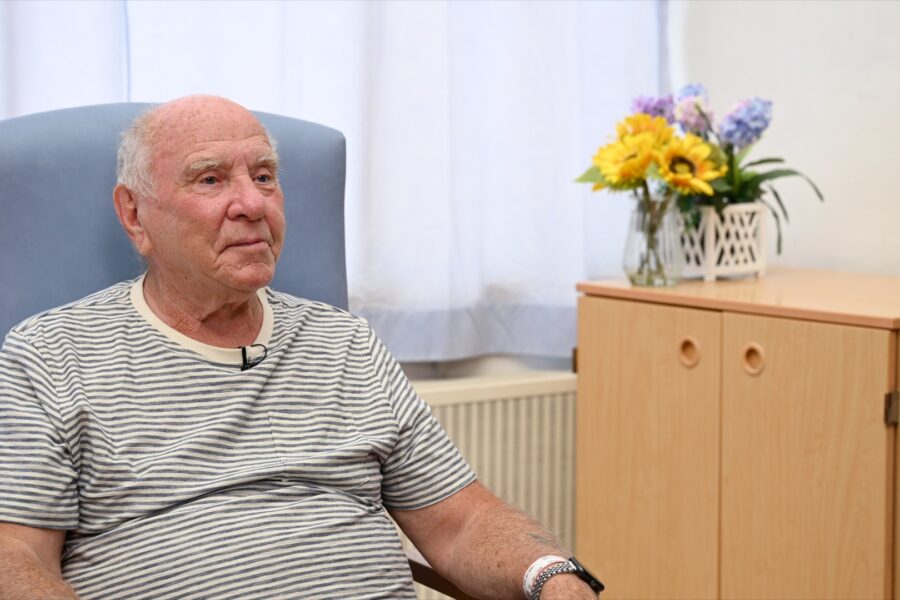
Mr Weeks, from Rothwell, Leeds, said: “I was getting a lot of pain in the lower part of my back, and pains down my right leg. I had a lot of difficulty walking and getting around.
“I spoke to the surgeon, and he said he could change the pain and suffering I was going through, he thought he could help.
“I was a bit concerned about having the operation at my age, it was difficult to me to decide whether to go ahead with it, but they went through all the risks with me, and I decided to go for it. I thought, why not? Fortunately, everything worked out and it all went according to plan.
“Obviously I did the right thing because I’m up and about. The pain that I had is gone. I can move about a lot more.”
The surgery was carried out by Mr Deb Pal, consultant neurosurgeon at Leeds Teaching Hospitals NHS Trust.
He said: “For any age, this would be a big procedure to consider but he’s done remarkably well. He can get back to his normal life.
“Age should not be the only reason not to offer complex surgery. We shouldn’t say, ‘he’s 87, he can live with the pain, he’s too old for the surgery’. Surgery is not just for young patients. If someone of his age is of reasonable health, they can have this kind of surgery. It can be life-changing.”
The surgery involved a two staged procedure with removal of a recurrent herniated disc from the side and insertion of a spacer. A week later the spine was stabilised with screws and rods from the back.
“This type of surgery is usually not offered in the elderly and is more appropriate for younger patients as it is complex, time consuming and has risks,” said Mr Pal.
“But Mr Weeks looked well for his age and certainly much younger than 87. He understood everything including the risks and was very clear he wanted to go ahead with the surgery. I felt that as he had such a positive attitude, and appeared much younger than his age, I should offer him the best chance for symptomatic improvement.
“In general people are living longer and we are seeing more and more elderly people as patients including those in their 90s.
“In patients who have remained reasonably active, it is important that every effort is directed to maintain their quality of life. Provided they are fit and well, older patients should not be denied life-changing procedures.”
He added: “Whenever we carry out complex procedures such as this, their success depends on input from many different colleagues – the theatre team, the ward staff and physiotherapists. We all work together to contribute towards a successful outcome for our patients.”
Mr Weeks said: “I wish I could recommend Mr Pal for some sort of honour because what he’s done for me is amazing. He’s given me my life back.”
He is now hoping to get fitter and more active, and make the most of his new lease of life. “I can’t have much longer at 87 but whatever I’ve got, I’m going to use wisely,” he said.