This leaflet aims to help you and your family understand more about the technique of lympho-venous anastomosis after axillary surgery. It will guide you on how to prepare for surgery and what to expect on your discharge from hospital.
What is lymphoedema?
Your body circulates blood to all of the tissues in the body. Some of the fluid in the blood stream moves into these tissues to help supply nutrients to the cells and to allow waste products to be removed. This fluid is called lymph.
Lymph drains through tiny channels called lymphatics that join up with blood vessels to return lymph into the blood stream.
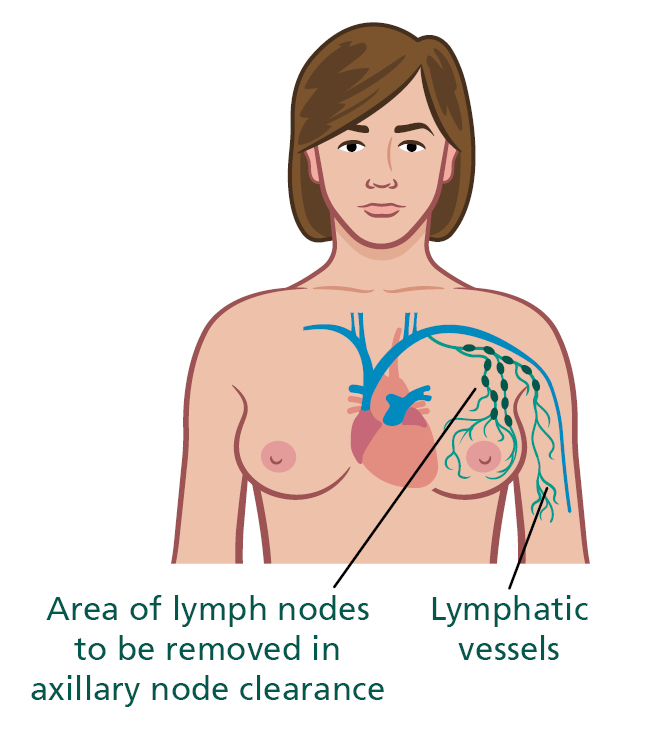
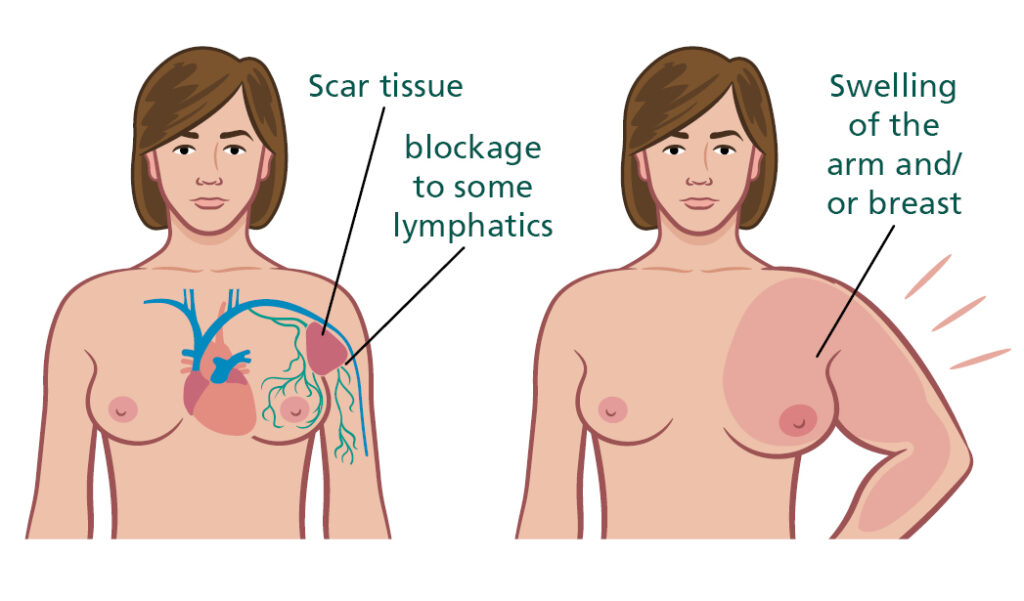
When you have surgery to remove lymph nodes, scar tissue can build up and may, in 1 in 4 women, lead to a blockage in the lymphatics. When these channels are blocked, fluid cannot drain back into the blood stream and it collects in the tissues, causing swelling.
What is lympho-venous anastomosis?
Lympho-venous anastomosis is an operation performed to improve flow of lymph back into the blood stream. It can be offered after axillary node clearance surgery, because the risk of lymphoedema is high.
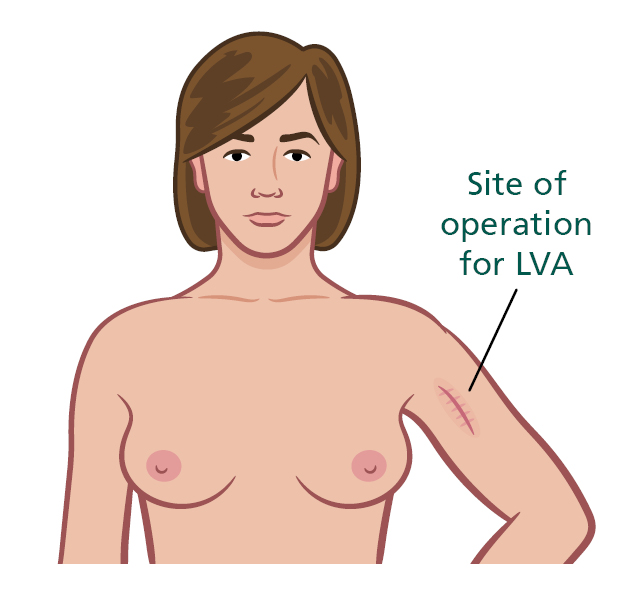
During the operation, the lymphatics are identified and joined onto a vein in the upper arm. This means that any scar tissue in the armpit is less likely to cause lymphoedema.
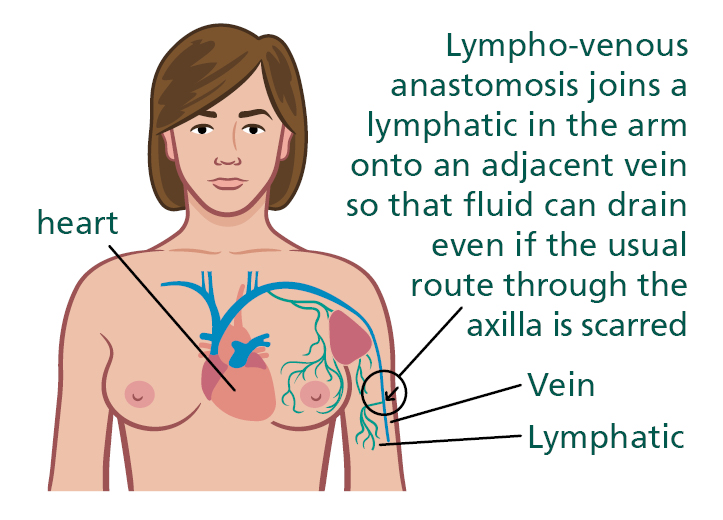
After axillary node clearance, it is estimated that 1 in 4 women will experience lymphoedema. Following lympho-venous anastomosis, that risk reduces to 1 in 20 women.
Who can have lympho-venous anastomosis?
Lympho-venous anastomosis can be offered to women who have had axillary node clearance surgery. It can also be offered to women who have symptoms and signs of lymphoedema, although it may not fully reverse the changes once they become established.
Patients need to be well enough to have a further operation, with no major health problems that might mean that surgery carries higher risks. If you are not sure, you can ask your breast care nurse for further information. If you need to have chemotherapy or radiotherapy, they would usually take place first.
General Information
What to expect after surgery?
Most lympho-venous anastomoses are performed as day case surgery, where you come into hospital in the morning and are discharged on the same day.
Occasionally it is necessary to arrange an overnight stay and your surgeon will let you know if this is required. Sometimes this surgery is combined with another procedure in which case you may need to stay in hospital for longer.
Pain
No surgery is without pain, please ensure that you have over the counter pain relief such as paracetamol available for your discharge home. You will experience mild swelling post-operatively around your wound as part of normal healing process.
Drain
You may have a post-operative drain in the arm, which is a narrow, plastic tube that drains any fluid that may collect under your wound. This will be removed one week after surgery in the plastic surgery dressing clinic. Many people do not require a drain to be used at all.
Dressing
You will have a post-operative adhesive type dressing, that is applied directly to the surgical wound and is used to protect your wound whilst it heals. You may also have a supportive dressing for the limb that will extend from the fingers to the armpit and your arm will be placed in a sling. These will help to minimise post operative swelling. You should remove your arm from the sling after 48 hours and mobilise the arm fully but avoid heavy lifting and strenuous exertional exercise for 44 weeks post operatively.
If you have a supportive dressing around your arm, this will be removed in the plastics dressings clinic one week after your operation. If you have used a compression garment prior to surgery, we would suggest trying without it at this point too.
Complications
Numbness over the wound is common. Lymphoedema is still a risk but that risk is much lower. If you develop symptoms of swelling or heaviness, please contact the lymphoedema team, the breast care nurses or your General Practitioner.
What can I do to reduce complications?
You can improve your surgical outcome by following advice given by medical and nursing staff.
Smoking tobacco, e-cigarettes or any other substances can have a major impact on your recovery.
Smoking also impacts on wound healing and can increase the risk of infections. Therefore, it is advised to not smoke throughout your treatment. Many patients use this treatment as an opportunity to stop smoking and if you require further support, please contact your GP.
What to expect after you are discharged home?
You can do normal activities using your arm after 48 hours of elevation in a sling but avoid heavy lifting and strenuous exertional exercise for 4 weeks post operatively. If you are still doing shoulder exercises after your axillary lymph node surgery, you can continue to do these. You will be seen in the plastic surgery dressing clinic 1 week post-operatively and then in the follow up clinic at 6 weeks post-operatively and your arm circumference will be measured at this time.
You will also be seen six months after your surgery and your arm circumference will be measured at this time. You will also have a lymphoscintigram scan of your upper limbs to assess the results of the surgery. This is where a dye is injected into the hand and x-rays are taken to show how the dye moves through the lymphatics in the arm.
Further Information
Can I shower?
It is advised to keep your dressings clean and dry until your first review in the plastic surgery dressing clinic. You can put a plastic bag over your dressings to keep them dry while showering, or alternatively you can bath keeping your arm dry. You will be advised when you can shower your wound during your discharge from hospital/ at your clinic appointments.
Can I have a sick note for my employer?
If you require a sick note, please ask for this while you’re in hospital. Please contact your GP for any sick notes required after your discharge from hospital.
The Lympho-venous anastomosis team
Contacts
Plastics Dressing Clinic
Phone: 0113 392 3628
Email: [email protected]
Breast Care Nursing Team
Phone: 0113 206 8623
Secretary to Mr Hussain
Phone: 0113 392 2939
Secretary to Mr Bhat
Phone: 0113 392 2864
Getting in touch
Plastic Dressing clinic is open Monday to Friday 8am to 5pm. We do not work Bank Holidays.
Out of hours please contact the ward you were discharged from.
In a non-emergency please contact your GP. If you require urgent medical attention, please attend your local Accident and Emergency Department.