Since September 2024, patients who attend the Emergency Departments at Leeds General Infirmary and St James’s University Hospital and receive routine blood tests are likely to be tested for HIV, hepatitis B and hepatitis C, regardless of symptoms, unless they opt out.
Almost 45,000 people were tested in the Emergency Departments in the first year, identifying 14 new cases of HIV, seven further cases of HIV where the patient was not receiving treatment, 80 new cases of hepatitis B and 47 cases of active hepatitis C.
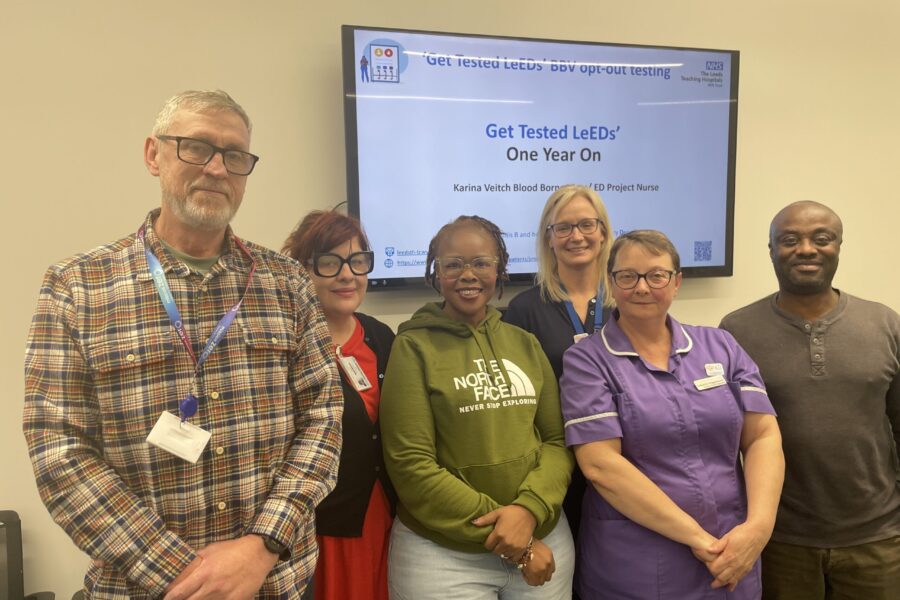
Akhona Ndudane, from Leeds, was diagnosed with HIV in 2016 and attended an event at St James’s University Hospital to support the testing programme as teams marked the one-year anniversary.
She said: “This programme in Leeds is very useful. I live with HIV and I want people to know the facts about HIV. If you have the correct treatment and you take it in the correct way, your viral load becomes very low and the virus becomes undetectable and untransmissible.
“We want to stop discrimination and stigma towards people with HIV, in workplaces, colleges and the community.
“I’m healthy just like anyone else. I’m living a full life, like other people. I hope if people see someone like me, they will have hope, and it will encourage them to get tested so they know their status and they can be treated.”
After Akhona was diagnosed with HIV, she started taking medication and within a month her viral load was undetectable.
“It was not an easy thing, at first I thought my life was over,” she said. “Fortunately, these days there is medication that can treat the virus.”
Dr Emma Page, Consultant in Virology at Leeds Teaching Hospitals NHS Trust, said: “Offering routine HIV and hepatitis tests in our Emergency Departments can make a huge difference to patients – it can save lives and give people access to the latest and most effective treatments.
“Anyone can get a blood borne virus and you may feel perfectly well for many years – you would not know unless you have a test.
“If you are identified as having HIV or hepatitis, there is now life-saving treatment that people can take to control or cure the infection. We can offer care, treatment, support and advice. It really is better to know your status.”
Anyone aged 16 and over who has blood tests taken as part of their emergency care at Leeds General Infirmary or St James’s University Hospital is likely to be tested for HIV, hepatitis B and hepatitis C unless they opt out and decline. Anyone who tests positive will be contacted within two weeks.
The national scheme is being rolled out in hospitals across the country, to offer treatment for thousands of people in England who are thought to be living with an undiagnosed blood borne virus.
HIV treatments can suppress the virus, allowing people to live a normal life and prevent infection from being passed on. Hepatitis C can potentially be cured, and treatments for hepatitis B and C can reduce the risk of developing serious illness or complications, such as liver cirrhosis and cancer.
Posters are available in the Emergency Departments at St James’s Hospital and Leeds General Infirmary, informing patients about the testing, and information is available in a range of formats and languages. The scheme supports the UK Action Plan to end all new HIV cases by 2030 through earlier identification and detection and the NHS England programme to eliminate Hep C by 2025. Leeds is also a ‘Fast-Track City’ – part of a global initiative to end the HIV, TB and viral hepatitis epidemics by 2030.