

Why does my child need a platelet function test?
Platelet function testing is a specialised test to show how well platelets are performing in the blood clotting system. Platelets are the cells in the blood responsible for making blood clot. When a blood vessel is injured, platelets clump together to block the injury site.
The doctors may have requested this test if they think your child’s platelets are not performing properly; this is usually because they have a history of abnormal bruising or bleeding. The test can be used to diagnose inherited and acquired platelet dysfunctions.
Platelet function tests may be performed alongside other specialist blood tests to look at other parts of the clotting system in detail.
How is the test performed?
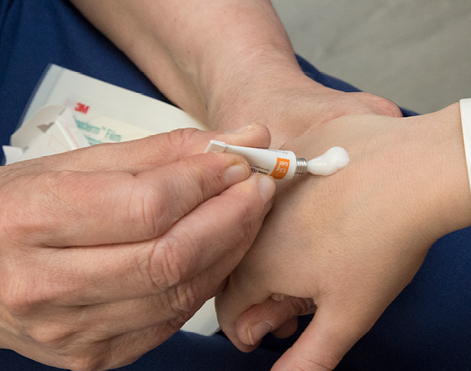
In order to perform the test, we need to take a blood sample. This is similar to a standard blood test except we need to take a few more sample tubes. Occasionally it may take more than one attempt to obtain the correct amount of blood for the test. We will usually use numbing cream at the site where the blood sample is to be taken to ensure it is more comfortable for your child and where possible a play therapist will be available to offer distraction whilst the blood test is being performed. You can assist us with this by making sure your child is well hydrated and warm when they attend their appointment.
The appointment will take place at the Paediatric Haematology and Oncology Day Unit, Level C, Clarendon Wing, Leeds Children’s Hospital. You must arrive for the appointment no later than 09.30 on the appointment date.
How to prepare for the test
If your child has previously experienced procedural distress or is needle phobic, please discuss this with us so we can help to prepare for this.
Platelet function testing is extremely sensitive to any factors that interfere with how platelets work. In order to get the most accurate results it is important to eliminate these factors before the test is performed.
Certain medications can affect platelets; this includes prescription medicines and over the counter medicines, and some alternative and herbal medicines.
Common medicines that can affect platelet function include:
- Drugs used to treat or prevent heart disease or stroke (eg. Aspirin, Clopidogrel)
- Anti-inflammatory drugs (eg. Ibuprofen, Diclofenac, Naproxen)
- Blood pressure medications
- Some antibiotics
- Some antihistamines
- Some antidepressants
- Some alternative and herbal medications
The doctor will give you specific information about which medicines need to stop before the test and when to stop them. Please do not stop any of your child’s regular medications until you have discussed this with the doctor at the Haemophilia Centre.
Certain food and drinks can also affect platelets, these include:
- Alcohol
- Caffeine
- Ginger
- Garlic
- Pineapple
- Fish oil
To help get the most accurate results please ensure your child avoids excessive amounts of these in the two weeks before their appointment.
Are they any side-effects?
Just like any blood test, taking blood for platelet function testing can sometimes leave a small bruise at the site where the sample was taken. Taking blood samples can also cause some children to feel faint, being well hydrated and ensuring they have eaten before their blood test can help with this.
When will the results be available?
These are specialist tests and it takes a long time to get a complete set of results. The results will be discussed with you at your child’s next doctor’s appointment.
Please let us know as soon as possible if you are unable to attend for the appointment so that we can offer it to someone else.
If you have any questions, please do not hesitate to get in touch on the telephone numbers below.
Contact: Tel: 0113 392 6863 or 0113 392 2724