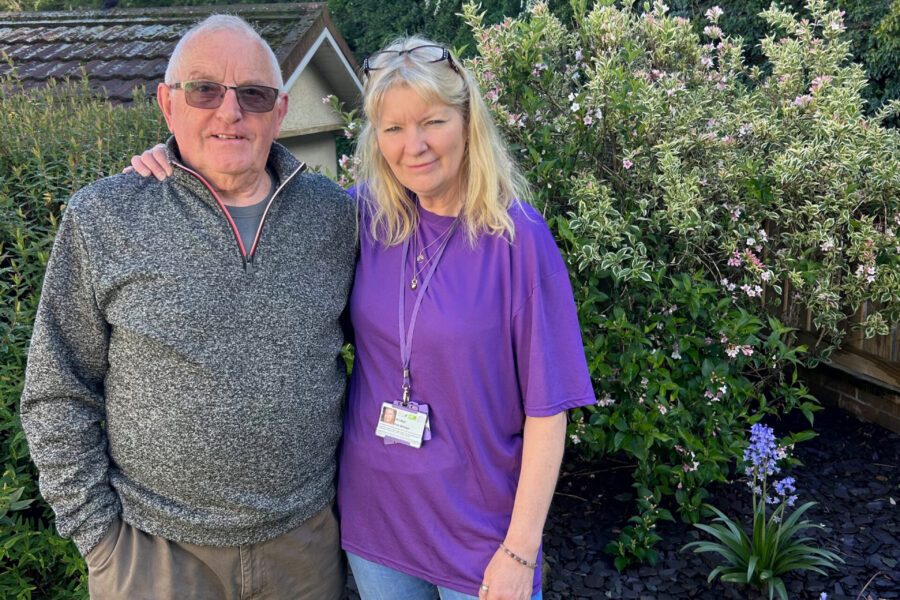
People affected by cancer have joined Trust partners, Yorkshire Cancer Research, this International Clinical Trials Day (20 May) to call for more funding and greater access to clinical research across the region.
By sharing their experiences of benefitting from clinical trials funded by Yorkshire Cancer Research, people in Yorkshire are highlighting the life-giving impact of clinical research; for those undergoing cancer treatment now, and those who will need it in the future.
Yorkshire Cancer Research is currently funding 26 clinical trials, many taking place at Leeds Teaching Hospitals, and is the biggest funder of cancer research study places in Yorkshire, helping more people access the latest cancer treatments and innovations closer to home. However, the charity says more must be done to address long-standing regional inequalities.
People who take part in clinical trials play a vital role in the advancement of cancer research, testing new technologies and treatments to help researchers determine whether they can be used to treat and save lives in the future. Nearly 120,000 people in Yorkshire have had the opportunity to take part in clinical trials funded by Yorkshire Cancer Research.
Spotlighting clinical trials taking place in Leeds
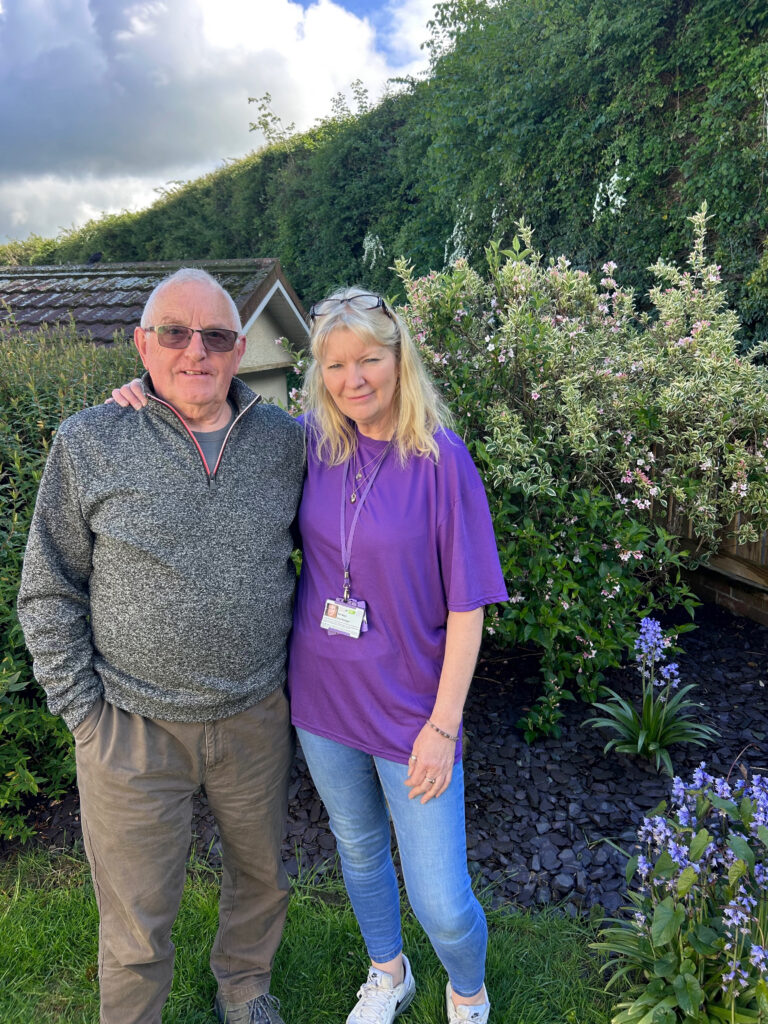
One of these people is 76-year-old Brian Mays from Ripon, who decided to take part in APHRODITE, a ground-breaking bowel cancer clinical trial funded by Yorkshire Cancer Research, after being diagnosed with rectal cancer in autumn 2022. Led by Ane Appelt, Visiting Professor in Radiotherapy Physics at the University of Leeds, and Simon Gollins, Honorary Professor at Bangor University, the trial is exploring ways to improve radiotherapy treatment for people with rectal cancer who are unable, or choose not to, have surgery to remove the tumour.
Through the APHRODITE trial, a pioneering team of cancer experts in Yorkshire and beyond are investigating whether giving these groups of people a higher dose of radiotherapy, compared to the standard dose of radiotherapy, can increase the chance of the cancer disappearing completely, without causing too many additional side effects.
Early findings from the study, presented for the first time this month, showed that more people receiving the higher dose of radiotherapy had no visible cancer after completing their treatment, suggesting this approach may offer greater benefits to people with rectal cancer. People who have taken part in the trial will continue to be monitored to see whether this new treatment also helps prevent the cancer from coming back and improves quality of life over time.
Brian was introduced to the trial by Dr Mark Teo, Clinical Oncologist at Leeds Teaching Hospitals NHS Trust, who explained its aims and the potential benefits it could bring to him and other people with cancer in the future.
Brian said: “Dr Teo talked me through my treatment options, including the opportunity to take part in a new clinical trial. I just thought, someone has got to do it! At the end of the day, it could not only benefit me, but other people as well. We have a strong history of cancer in my family. With so many memories of relatives affected by the disease, I felt the trial offered hope and an opportunity to make progress in cancer treatment.”
After choosing to take part, Brian started the trial in January 2023, undergoing a five-week course of radiotherapy at the Leeds Cancer Centre at Leeds Teaching Hospitals, alongside chemotherapy. Apart from two mouth ulcers, he experienced few side effects.
He said: “Apart from the daily trips to the hospital for radiotherapy, my life didn’t really change – at least not as much as I thought it might when I was first told I had cancer. The care I received throughout the trial was fantastic and I credit the team for making everything feel so manageable.”
After finishing treatment, Brian returned to Harrogate District Hospital for follow-up scans, where he was told the tumour had shrunk enough to be removed without major surgery. Three years on from being told his cancer had gone, he is back to normal life, spending his time gardening and walking his lurcher, Jaz.
He concluded: “I feel APHRODITE is such a positive step forward in the way bowel cancer is treated, and I hope opportunities to take part in clinical trials like this can be available to more people. For me, the limited side effects and second-to-none care means I’m just thankful to have had the opportunity to take part. Both my parents and grandparents had cancer, and sadly most of them died. I’m so grateful for research happening here in Yorkshire, which means my children could see a different future.”
Prostate cancer clinical trial
Thanks to being introduced to an innovative clinical trial by his oncologist, Robert Scott from Thornton in Bradford, was the first person to take part in the POINTER-C prostate cancer clinical trial in Leeds after his cancer returned in September 2025. Led by Professor Ann Henry at the University of Leeds, the £1.1 million cancer clinical trial, funded by Yorkshire Cancer Research, is exploring how radiotherapy can be made more effective for men whose prostate cancer has come back following an initial course of treatment.
Robert was first diagnosed with prostate cancer in April 2017 and underwent radiotherapy and hormone treatment. In 2020, scans confirmed no further treatment was needed. Other than regular check-ups every six months, he returned to normal life, including spending a holiday in Gran Canaria with his wife.
However, in 2025, a blood test revealed his prostate-specific antigen (PSA) levels, which can indicate prostate cancer, had risen again. A PET scan confirmed the cancer had returned in his prostate and he was referred to clinical oncologist and pioneering researcher Dr Finbar Slevin at Leeds Teaching Hospitals NHS Trust to discuss his treatment options. It was during this appointment he was introduced to the POINTER-PC trial.
Dr Slevin explained a team of experts at the University of Leeds were testing an alternative approach to prostate cancer treatment, which involves widening the area targeted by radiotherapy to see if it could be more effective at stopping the cancer from spreading. While this approach is usually provided to people over 20 treatment sessions, Dr Slevin explained the POINTER-PC trial would be testing whether it can be given in just five visits, without increasing side effects.
After discussing the options with his wife, a former nurse, Robert decided to sign up to the trial.
He said: “The alternative would have been standard radiotherapy again, but this trial offered something different that could benefit both me and people with cancer in the future. I’m grateful to Dr Slevin for letting me know about this opportunity to take part in new research which could lead to better treatment for prostate cancer.”
Robert began treatment in November 2025, attending five radiotherapy sessions at St James’s Hospital and finishing in the first week of December. Compared to his earlier experience, he found treatment through the POINTER-PC trial much easier to manage and experienced few side effects.
He said: “The first time round, radiotherapy really took over my life. There were daily hospital visits, meaning lots of planning and travelling, as well as the bowel and bladder preparation required before every radiotherapy session. With the POINTER-PC trial, there were far fewer hospital visits; I’d go in, have the treatment, and carry on with my day. Not long after I finished my final session, I felt well enough to fly to Madeira for our annual winter holiday.”
Alongside radiotherapy, Robert also began a shorter course of hormone therapy, which he is due to finish in the middle of this year. Now, he spends his time volunteering at his local library, getting involved in wildlife conservation and enjoying long walks across the Dales.
Following his experience taking part in POINTER-PC, he has become an advocate for cancer clinical trials in Yorkshire and wants to see more opportunities offered to people in his region.
He said: “If we don’t take part in clinical trials, we’re not going to improve treatment or find better ways of doing things. For me, clinical trials are a no-brainer. You’re helping yourself by having access to gold-standard care, but you are also helping others too. Thanks to research, cancer treatments are becoming more effective and more manageable for people. I feel very positive about the future – not just for me, but for the next generation.”.
Improved treatment in colorectal cancer
Evidence shows hospitals offering clinical research opportunities are linked to greater benefits for people with cancer, including improved survival for certain cancer types, access to high-quality care, and more information to help them understand their treatment. One study led by academics at the University of Leeds showed a 3.8% improvement in survival for people with colorectal cancer being treated at NHS hospitals with higher levels of clinical research.1
Julie Viligiardi from Leeds believes taking part in a clinical trial helped give her a greater chance of recovery from bowel cancer. In July 2024, shortly after her 60th birthday, Julie was diagnosed with the disease following a colonoscopy. She had recently completed a test through the national bowel cancer screening programme and was shocked when she was referred for further tests, having experienced no symptoms.
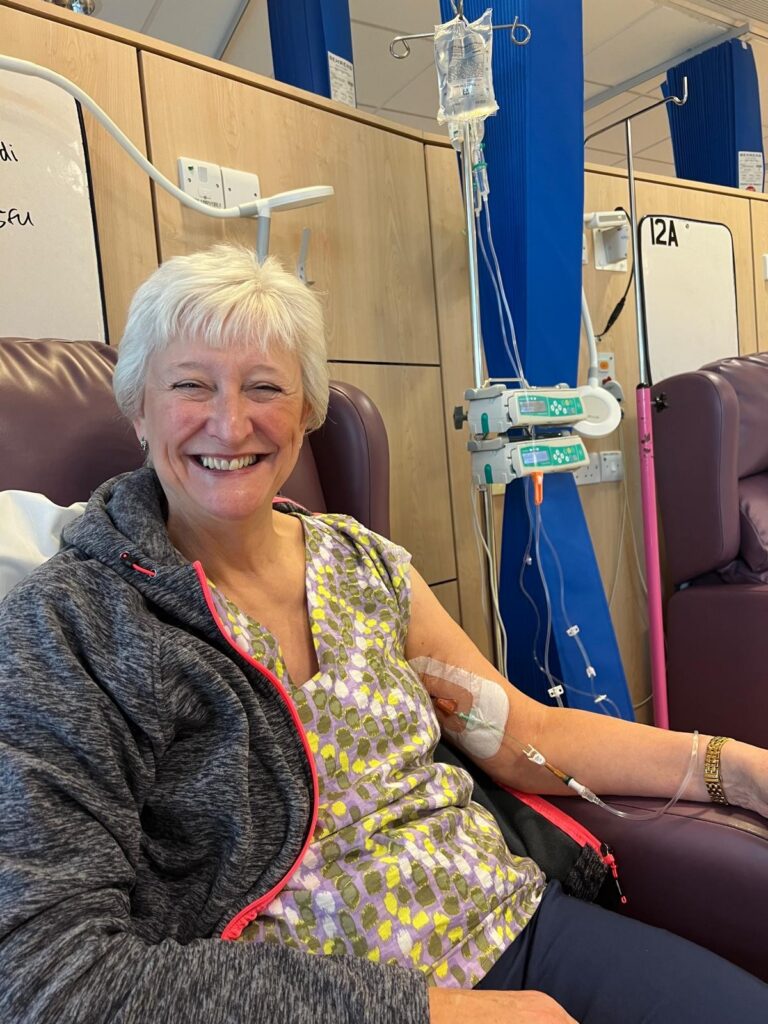
She said: “I didn’t expect anything to be wrong because I felt completely well. I was watching the screen during the colonoscopy and could tell from the change in atmosphere that something wasn’t right. The screening nurse stayed with me when I received the news and was incredible throughout.
“When I received the news, my first thoughts were for my daughter, who has autism. I feared what would happen if I wasn’t able to care for her.”
Soon after her diagnosis, Julie met with Dr James Platt, Specialty Registrar in Medical Oncology at Leeds Teaching Hospitals NHS Trust and Clinical Research Fellow at the University of Leeds, who reassured her that her cancer could be treated. During this appointment, Dr Platt offered her the opportunity to take part in an innovative bowel cancer clinical trial called FOxTROT 3, funded by Yorkshire Cancer Research and led by a pioneering team of researchers at the University of Leeds.
He explained how the FOxTROT 3 trial was building on the success of earlier research, which showed giving chemotherapy before surgery can reduce complications from surgery and the likelihood of cancer returning.
Delivered at hospitals across Yorkshire and beyond, FOxTROT 3 is testing how this approach works for people who are younger and fitter, and able to tolerate more intensive treatment, by offering a combination of three chemotherapy drugs instead of two. After discussing her treatment options, Julie decided to take part.
Julie said: “Dr Platt was brilliant and so informative. When he explained the trial to me, it just made sense. Having chemotherapy first to shrink the tumour, then surgery, followed by more treatment to clear anything that might be left felt like the best possible approach. I felt very fortunate to be given that opportunity.”
Julie began chemotherapy in October 2024. While treatment brought difficult days, including periods where her immune system was weakened and coming to terms with losing her hair, she remained focused on staying positive.
On New Year’s Eve, she underwent surgery to remove the tumour. Although she had been told there was a chance she might need a stoma bag fitted during the surgery, she was relieved to learn this had not been necessary and the surgery had been successful.
She said: “When I woke up after surgery, the first thing I did was check my stomach and I realised there was no stoma. The surgeon came to see me and said everything had gone perfectly and the tumour had been successfully removed. It was an incredible moment.”
After recovering in hospital, Julie returned home, supported by friends and family, before beginning further chemotherapy eight weeks later. She completed her treatment in April 2025. Reflecting on her experience, she believes taking part in the clinical trial was a crucial part of her treatment.
She said: “Finishing treatment was a huge moment because you finally feel like you’re getting some control back. During treatment, everything is on hold. My daughter and I had managed little breaks away in between treatments but it’s nothing quite like the freedom of finishing treatment. I feel very lucky to have been offered a clinical trial. It gave me access to a different way of treating cancer that could make a real difference, not just for me, but for people in the future.”
Julie now wants to share her experience to encourage everyone to take part in bowel cancer screening when invited and consider clinical trials where possible.
She concluded: “I had no symptoms at all, so without screening, I wouldn’t have known anything was wrong. If my cancer had progressed to a later stage, I might never have had the opportunity to take part in a clinical trial either.”
“I feel very grateful for the care I received and for the opportunity to take part in research. It gives you hope things are improving and that better treatments are being developed.”
The call comes as Yorkshire Cancer Research publishes its new policy report, “Delivering more clinical research for Yorkshire: Unlocking regional potential”, which sets out the measures needed to make funding for clinical research fairer and grow research opportunities across the region.
Yorkshire Cancer Research is funding £75 million of vital research and innovative cancer services, giving 182,000 people the opportunity to take part. Thanks to supporters, the charity is finding new and better ways to prevent, diagnose and treat cancer, so more people can survive cancer – in Yorkshire and beyond.
Dr Stuart Griffiths, Director of Research, Policy and Impact at Yorkshire Cancer Research, said: “The clinical trials Yorkshire Cancer Research funds are making a lasting impact both regionally and nationally. The experiences of people including Brian, Robert and Julie highlight just how vital clinical research is – not only in improving treatment, but in giving people access to gold-standard care and time together with loved ones.
“We know how much research matters. It brings hope for a better future, helping people live longer, healthier lives. But where research happens matters too. As well as benefitting those receiving cancer treatment, clinical research brings wider benefits to Yorkshire – attracting investment, supporting a thriving research community and helping reduce pressure on the NHS.
“That is why Yorkshire Cancer Research is calling for change in how and where clinical research is funded and delivered across the UK. Despite the clear benefits, significant regional inequalities still exist, and the charity is committed to changing that so more people in Yorkshire can benefit from life-saving research.”
Professor Susan Short, Co-director of Leeds Cancer Research Centre at the University of Leeds, said: “Brian, Robert and Julie’s positive experiences demonstrate how the clinical trials we lead at the University of Leeds are improving care for people with cancer, providing access to the latest treatments and new hope for the future. We are very grateful to them and everyone who takes part in our trials. They are fundamental to the development of new treatments and help us provide state-of-the-art care for people now and in the future.