
A pioneering pathology technology developed by Leeds Teaching Hospitals NHS Trust is set for international deployment after securing a commercial agreement with Epredia, a global leader in precision cancer diagnostics solutions.
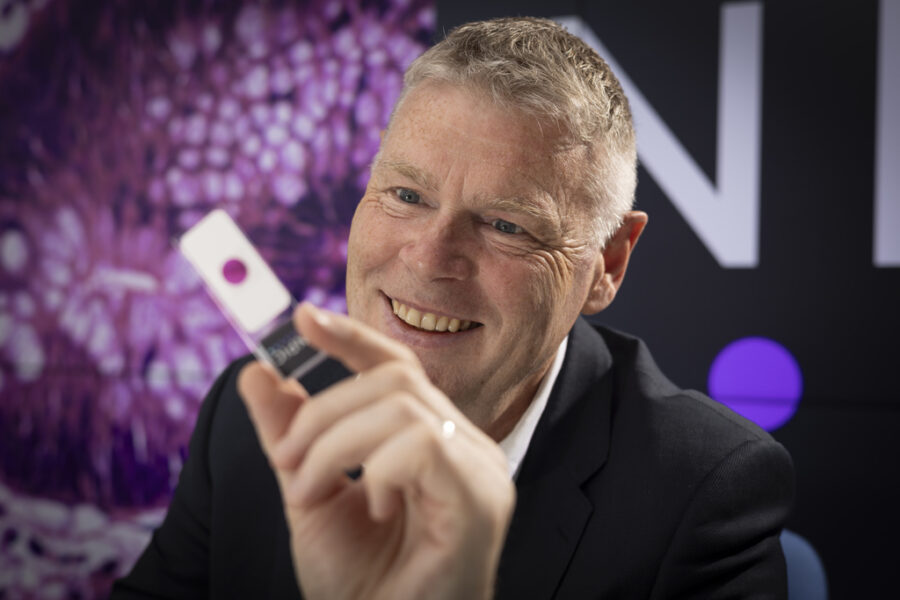
The technology, known as TANGO, is a world-first, laboratory quality tool developed by researchers at Leeds Teaching Hospitals’ National Pathology Imaging Co‑operative (NPIC). Many cancer diagnostic tests rely on staining techniques to make cells visible under a microscope. TANGO supports the adoption of digital pathology and artificial intelligence (AI) in cancer diagnostics by enabling greater consistency and efficiency in laboratory slide staining. The technology has already been evaluated through international research demonstrating how it supports quality assurance across pathology workflows.
Under the agreement, Epredia plans to develop new pathology slide products incorporating TANGO. As the world’s largest diagnostic glass slide manufacturer, Epredia seeks to leverage its expertise in pathology consumables and global distribution to bring the technology to market and make it broadly accessible to pathology laboratories that are adopting digital pathology workflows. This means that TANGO is now available for wider roll-out in the NHS and internationally, while unlocking new investment into UK health technology.
Professor David Brettle, Chief Scientific Officer at Leeds Teaching Hospitals NHS Trust, said: “This is a proud moment for Leeds and for the NHS. TANGO was developed to offer a powerful solution in digital pathology to support clinical practice and this shows how ideas developed on the frontline in the NHS can grow into innovations with global impact. By partnering with Epredia, we now have an opportunity to deploy this technology across the NHS and far wider, helping laboratories to adopt AI-enabled cancer diagnostics and ultimately provide patients with quicker results.”
Steven Lynum, President and CEO at Epredia, said: “We share Leeds Teaching Hospitals’ passion and ambition for driving healthtech innovations and solutions to generate real-world change. Digital pathology and AI have the potential to help accelerate cancer diagnostics speed and quality and ultimately improve patient care. By adding this powerful innovation to our world-class portfolio of precision cancer diagnostics products, we are investing in technologies that can help make that future a reality.”
Antony Kildare, Chair of Leeds Teaching Hospitals NHS Trust, added: “This collaboration demonstrates how partnerships between NHS and industry can accelerate healthtech and life sciences innovations to transform healthcare. It’s an exciting step forward for the Trust and builds on Leeds’ reputation as a centre for healthtech excellence by taking home-grown innovation to the global stage. As well as delivering real-world clinical solutions, the agreement offers strong return and brings economic benefits by creating healthtech jobs in Leeds and driving investment back to the NHS to fund future research and innovation.”
TANGO was developed by Leeds Teaching Hospitals clinicians and researchers Professor David Brettle, Professor Darren Treanor and Dr Catriona Dunn, who identified a widespread challenge in pathology labs worldwide. In diagnostic staining, slight variations can affect how results are interpreted and limit the effectiveness of AI tools. TANGO offers a simple but powerful solution. It uses a specially designed reference slide that acts as a quality control measure during staining, helping laboratories reduce variation, ensure consistent results and supporting faster more efficient cancer diagnostics.
TANGO is the latest addition to Epredia’s comprehensive portfolio of cancer diagnostics solutions for pathology laboratories. This includes the E1000 Dx Digital Pathology Solution, which creates high-resolution digital images of up to 1,500 tissue samples daily for pathologists to review, and the SlideMate Laser printer, which helps laboratories improve sample tracking and efficiency. The partnership brings together NHS innovation and industry expertise, with a shared ambition to improve patient care through more reliable and consistent technologies.
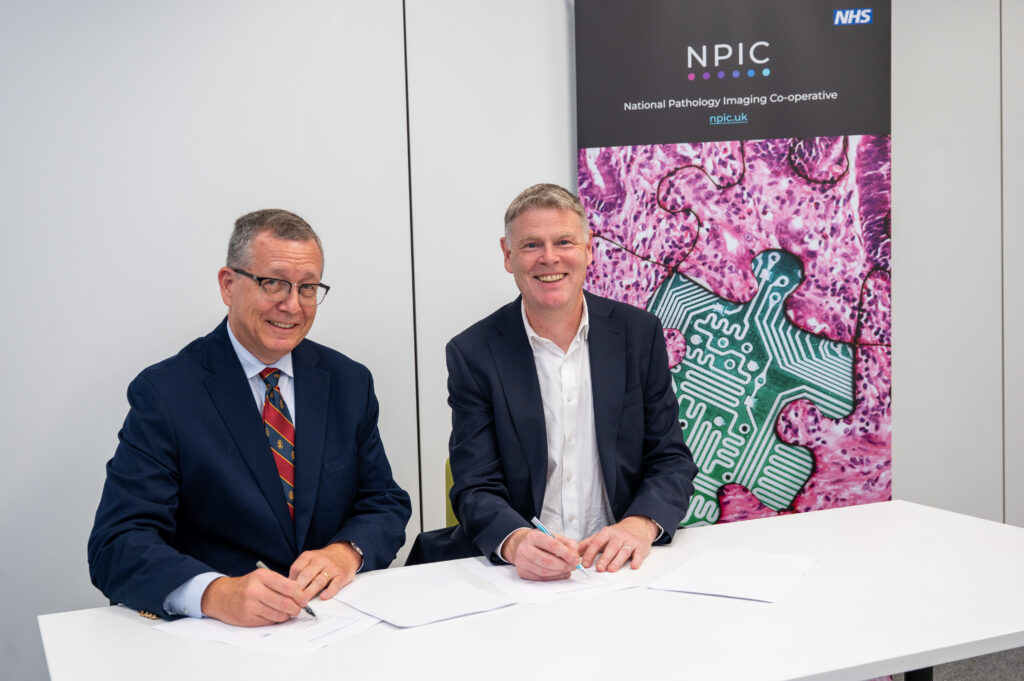
The National Pathology Imaging Co-operative (NPIC) has played a key role in developing TANGO from an early stage, building on initial work at the University of Leeds, creating a viable product and proving its value in real-world pathology settings.
Epredia plans to begin integrating TANGO into new laboratory slides from late 2026. The agreement is expected to generate return on investment for NHS by investing into Leeds-based health innovation activity while creating specialist roles supporting product development, validation and commercialisation.
Tracy Brabin, Mayor of West Yorkshire, said: “As the home of one of Europe’s largest teaching hospitals, a network of over 300 firms and a £160 million investment zone, West Yorkshire is a global magnet for health innovation.
“This is an incredible example of how our world leading hospitals, universities and businesses are working together to drive the development of lifechanging technologies – improving patient care and creating high-skilled jobs for local people.
“Through our Healthtech Cluster Plan and our Business Growth Hub, we’re backing innovators to start, scale and succeed in West Yorkshire so we can build a stronger, better off region.”