
You have been diagnosed with having an aneurysm in one of the arteries in the brain.
We find that most patients have similar concerns, and this patient information is intended to explain some of the detailed aspects of your treatment and hopefully to put your mind at ease.
Leeds Neurovascular Team
The Leeds Neurovascular service serves a population of about 2.5 million people centred on West Yorkshire and beyond. Neurovascular surgery is undertaken in adults and children at the Leeds General Infirmary.
We also accept and treat patients referred from outside the region, including overseas patients. New patient referrals from within the UK require a referral letter from patient’s General Practitioner.
Aneurysm treatment in Leeds is done either through open surgery or via endovascular route with the expertise of neurosurgeons and interventional neuro-radiologists.
Neurosurgery Consultants Radiologists
Mr Kenan Deniz
Mr Ian Anderson
Mr Nick Phillips
Mr Asim Sheikh
Inteventional Neuro Radiologists
Dr Nayyar Saleem
Dr Hamed Nejadhamzeeigilani
Dr Fathallah Islim
Specialist Nurses
Ms Hannah Dawson
Ms Sharon Sullivan
As part of a multi-disciplinary team (MDT), the neurosurgeons, interventional neuroradiologists and specialist nurses work closely.
What is a Cerebral Aneurysm?
An aneurysm is a bulge in a blood vessel caused by a weakness in the blood vessel wall, usually where it branches.
As blood passes through the weakened blood vessel, the blood pressure causes a small area to bulge outwards like a balloon.
Most cerebral aneurysms only cause noticeable symptoms if they rupture. This leads to an extremely serious condition known as a subarachnoid haemorrhage where bleeding caused by the ruptured aneurysm can cause extensive brain damage and could be fatal.
Why brain aneurysms develop?
Exactly what causes the wall of affected blood vessel to weaken is still unclear, several risk factors have been identified.
These include:
- Smoking
- High blood pressure
- A strong family history of brain aneurysms (one or more first degree relatives)
- Certain medical conditions (for example, polycystic kidney disease)
Who is affected?
It is difficult to estimate exactly how many people are affected by brain aneurysms as they usually cause no symptoms and pass undetected. Several studies provide an estimate from 1 in 20 to 1 in 100 people suffering from this condition.
The number of aneurysms which actually rupture is much smaller. Only around 1 in 15,000 people have a ruptured brain aneurysm in England every year.
Brain aneurysm can develop in anyone at any age, but are more common in people over the age of 40.
Women tend to be affected more commonly than men.
Treatment options?
When a brain aneurysm is diagnosed, treatment may be recommended to prevent it rupturing in future.
Most aneurysms do not rupture, so treatment is only carried out if the risk of a rupture is particularly high.
Factors that affect whether treatment is recommended include your age, size and shape of the aneurysm, location of aneurysm, your family medical history and any other health condition you may have.
Some aneurysms will be deemed to have a low risk of rupture. In that case a conservative approach may be adopted. You me be advised to have follow-up scans to monitor the aneurysm.
If treatment is recommended, this usually involves either treating this from within the blood vessels (endovascular route), a procedure performed by interventional neuro radiologists. Or it can be treated by an open operation (microsurgical clipping), which is performed by a neurosurgeon.
All patients are jointly discussed in a multi-disciplinary team meeting before being seen in the specialist neurovascular clinic. This allows for an open and consensus opinion to be offered to all patients.
Endovascular Treatment
Factors such as age, co-morbidities, location and shape of an aneurysm may make them more suitable for treatment by endovascular means. This is performed by Interventional Neuro-radiologists and involves accessing the main blood vessels, either at groin or at the wrist. Wires and catheters are then navigated into the blood vessels of brain and into the aneurysms which are treated by one of the ways mentioned below. This usually allows for early recovery and avoids any open procedure on the head. There is however a small risk of recurrence of aneurysm that may require retreatment.
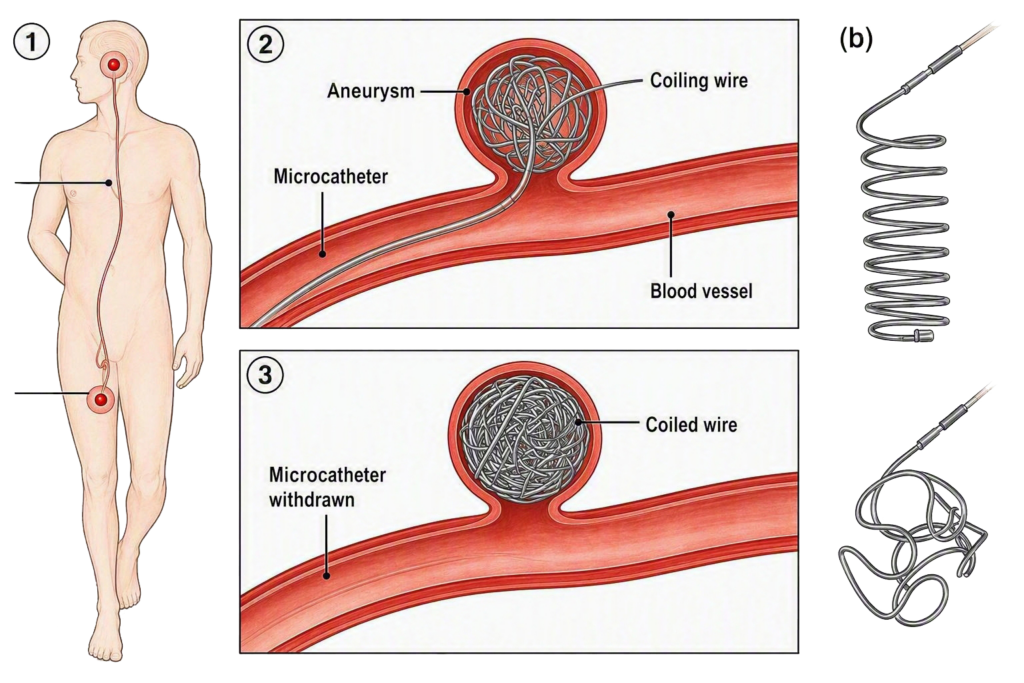
There are different endovascular techniques for the treatment of intracranial aneurysms. The selection of a specific technique is made according to various aneurysm and patient dependent factors, such as age, comorbidities, aneurysm location, complexity and size.
These methods and techniques include coiling alone, use of intrasaccular devices or coiling with a braided stent or flow diverter stent.
The risks of endovascular procedure include, stroke/thromboembolic complications (clots breaking off causing stroke), some strokes can cause permanent disability, intra-procedure rupture or bleeding (this carries risk to life/death), groin haematoma/ damage to blood vessels, incomplete occlusion of aneurysm, and risk of contrast (x-ray dye) toxicity in the brain. The overall risks range from 3-5%, with risk of death 1% or less.
During the procedure, x-rays and contrast dye are used to take images and guide the doctor. X-rays use radiation, and although everyone is exposed to small amounts of natural radiation every day, medical x-rays add a small extra dose. This can very slightly increase the chance of developing cancer many years later, but the risk from such a procedure is considered extremely low. Your doctor has recommended the procedure because the expected benefits outweigh the small radiation risk, and we will keep the radiation dose as low as possible. There is also a risk of reacting to the contrast dye. Mild symptoms, such as nausea, itching or a rash, occur in around 3% of patients. Moderate to severe reactions, such as severe vomiting or bronchospasm, occur in less than 1%.
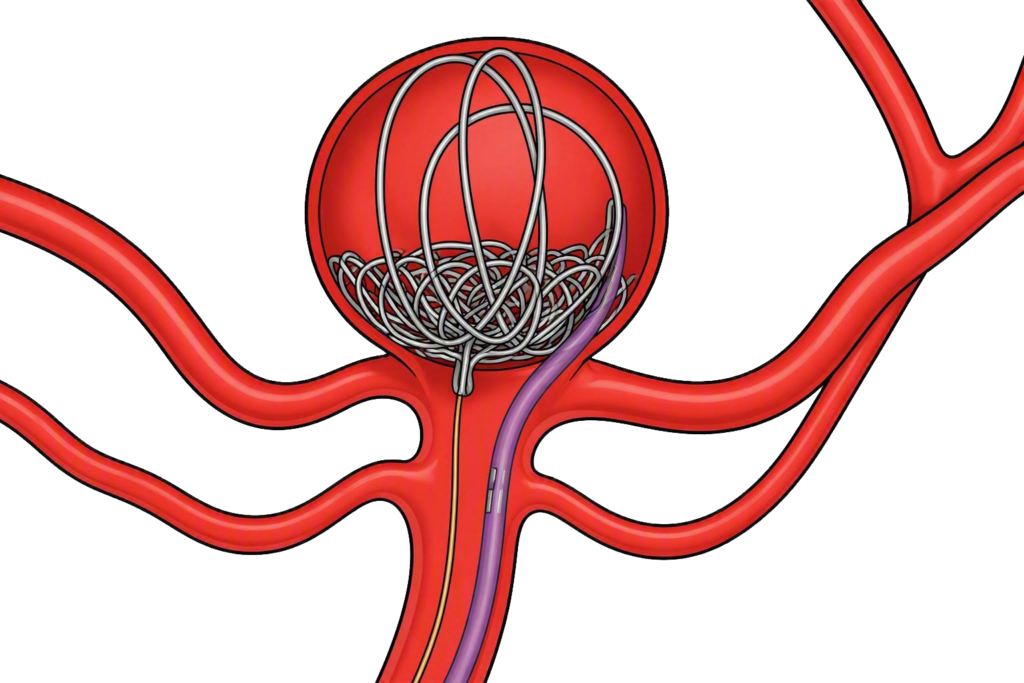
Coiling
During this procedure, access is gained via a blood vessel in the groin or the wrist. Catheters are then navigated inside the blood vessels into the aneurysm. The aneurysm is filled from inside with platinum coils. This can be performed through a single microcatheter if a small aneurysm, but in some instances might require the use of a remodelling balloon to maximise coiling ability and protect the main blood vessel supplying important brain structures. The complete coil mass stops the blood from going inside the aneurysm and promotes clot formation within the aneurysm.
The procedure is performed under a general anaesthetic. Most people recover quickly from the procedure and are able to be discharged home the next day.
You will have a follow-up scan usually by way of an MR Angiogram at six months and two years after treatment. Some aneurysms, due to their location and wide neck, may be more prone to recurrence. The recurrence rate is described between 10-30% in literature with coiling alone. However, not all aneurysms with incomplete occlusion may require repeat treatment as it may be too small or could remain stable on follow-up imaging. The occlusion rates are better in aneurysms treated with balloon assisted coiling.
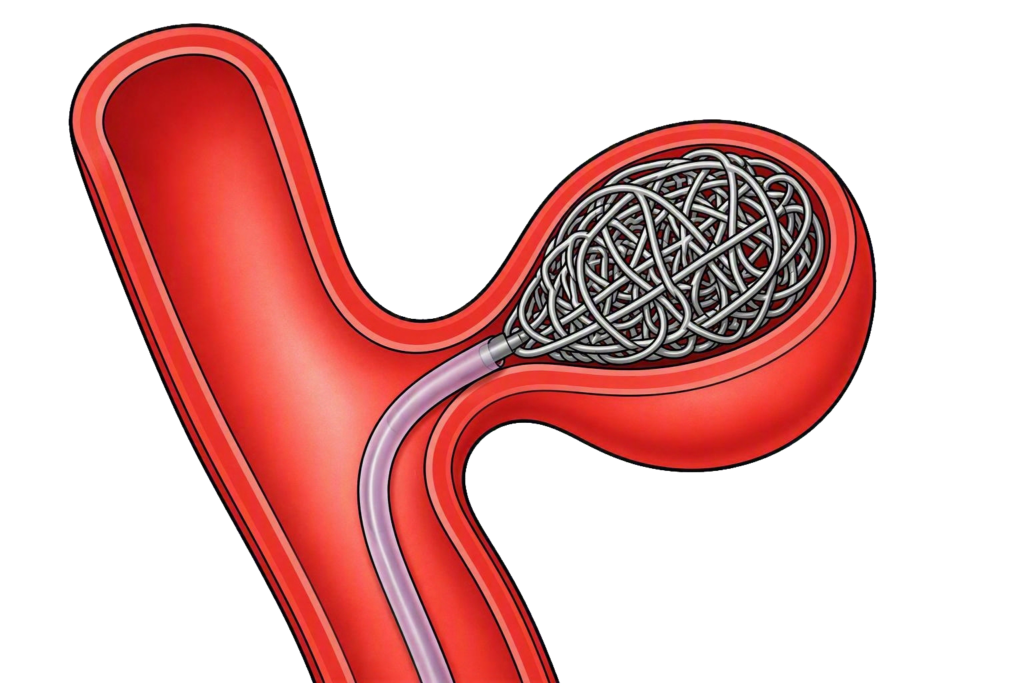
Intra saccular devices
Intrasaccular devices are a new technology that has been developed to make endovascular treatment of aneurysms simpler and safer. The concept is based on insertion a single device that will occupy the aneurysm in total or along the aneurysm neck. The procedure is therefore shortened with less risk of stroke or haemorrhagic complications. The published ischaemic risk of intrasaccular devices is 2-3%.
WEB
A woven endobridge device is a nitinol based electrothermally detachable device that can be placed inside the aneurysm which then diverts flow away from it, thus promoting thrombosis within the aneurysm. This can be used to treat wide necked aneurysms.
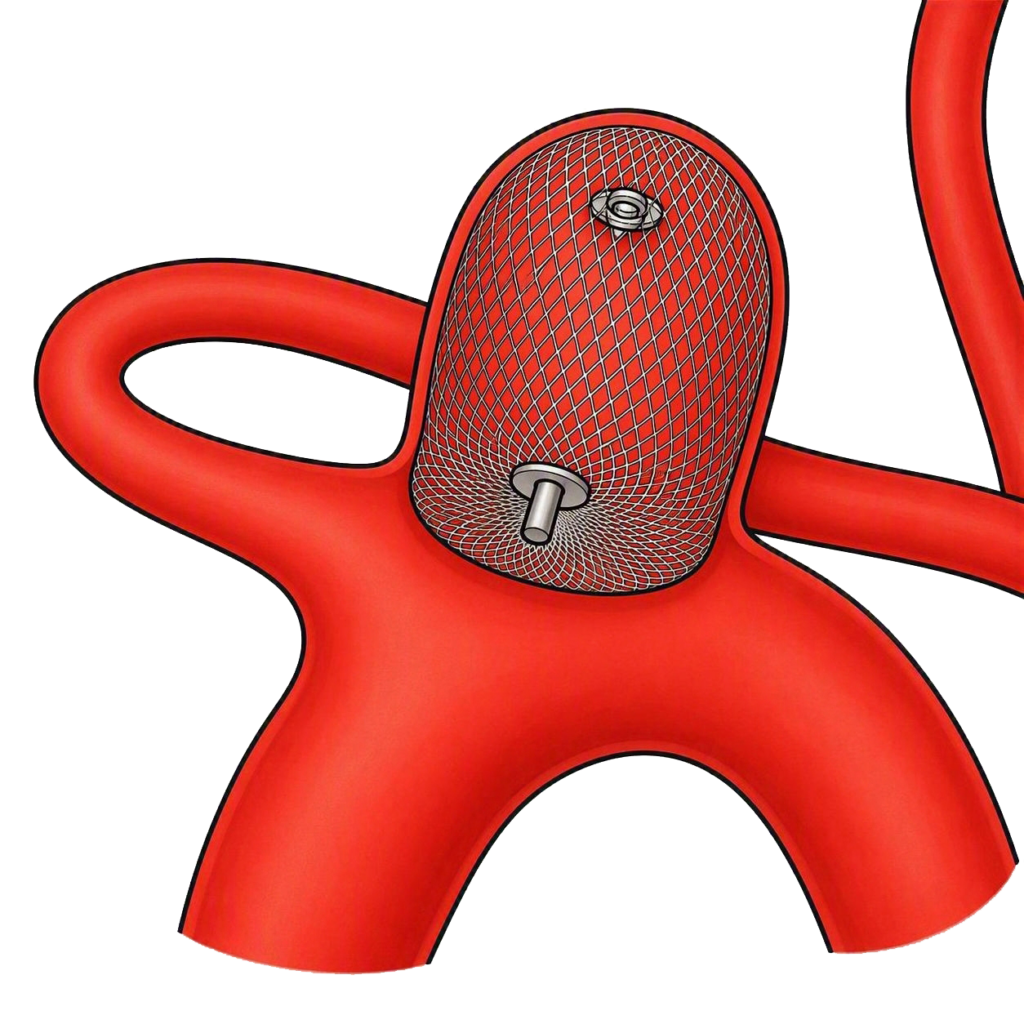
Most recent data estimated that adequate occlusion can be seen up to 80% of aneurysms treated with a WEB device. Up to 15% will recanalize again and an average of 7.5% of aneurysms will require retreatment.
Contour
A contour is a relatively new device which is dual layer, circularly braided construct that is placed within the aneurysm neck. It compliments WEB in the range of aneurysms that can be treated with an intrasaccular device.
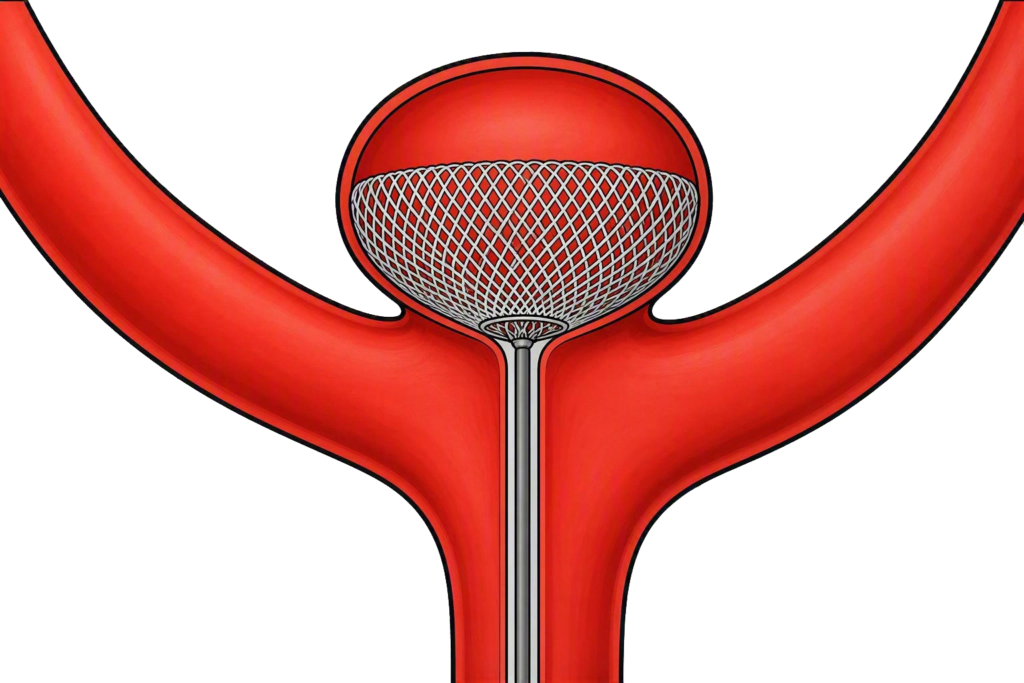
A meta-analysis of 483 patients demonstrated an immediate adequate occlusion rate of 53% and rate of 93% occlusion at follow-up. The procedure related complication rate was 2%. Reported re-treatment rates in the literature are around 5%.
Neqstent assisted coiling
Neqstent is a device, similar in construct to Contour, that can be placed at the neck of aneurysm to help place coils inside the aneurysm securely and achieve good coil packing. This is a relatively new device and some early reported literature reveals up to 90% occlusion rates at follow-up.
Stent assisted coiling
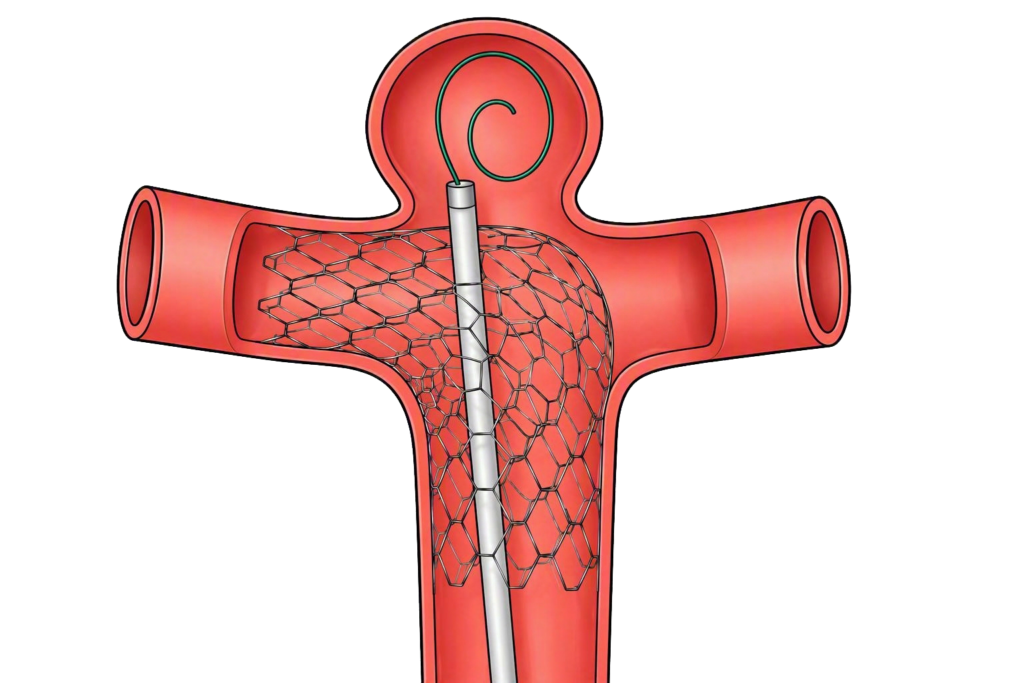
This is considered the most efficacious and successful endovascular treatment for intracranial aneurysms. It provides long-term stability for aneurysms and allows treatment of very complex wide-neck aneurysms.
Some aneurysms require placement of a stent at the neck of aneurysm. This allows for denser packing of aneurysm with coils. Dependent on aneurysm location and the final result of treatment, you may be required to be on lifelong antiplatelet agent such as aspirin for the rest of your life. The ischaemic risk of stent assisted coiling is approximately 3-5% dependent on aneurysm location. The common stents used in our practice are braided stents which provide a flow diverter light effect. The occlusion rate of stent assisted coiling is approximately 90%, with a retreatment rate of 5-6%.
Flow diverters
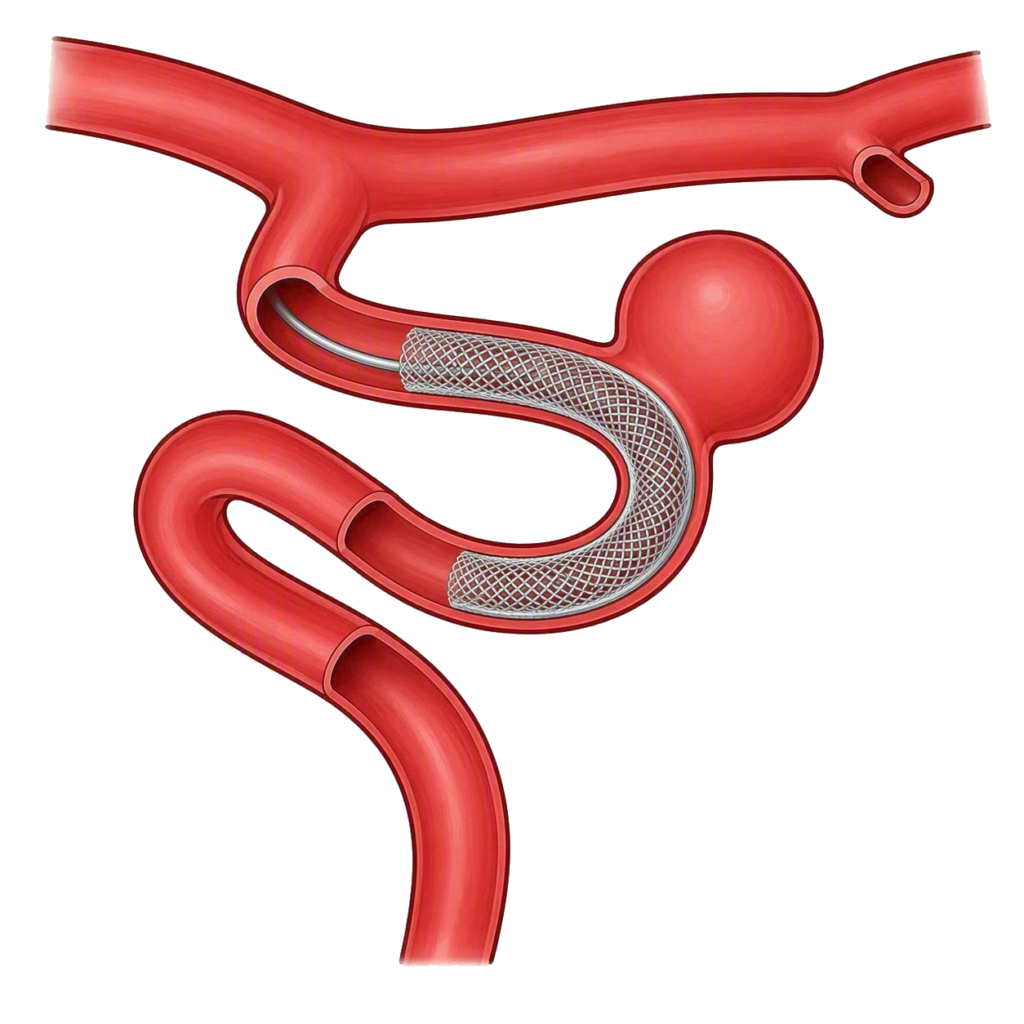
Flow diverters are a type of stent that are placed inside the parent blood vessel across the neck of aneurysms. These flow the blood away from the aneurysm and promote thrombosis within the aneurysm. Some aneurysms with a wide neck, previous endovascular treatment with coils or with a fusiform shape, are more suitable for treatment with insertion of a flow diverter. The patients are required to be on antiplatelet agents such as Aspirin after insertion of a flow diverter. Some patients can stop the antiplatelet therapy after one year, where the flow diverter is placed in the internal carotid artery. The risk of flow diverter treatment is similar to stent assisted coiling at approximately 3-5%.
Persistent aneurysm blood flow can be seen in approximately 5% of aneurysms after treatment with a flow diverting device. This may necessitate future retreatment or additional follow up.
Post operative Instructions
What to expect after endovascular treatment
Contact details.
Neurovascular Nurse Specialists


After hours you should call
After two weeks of surgery, please contact your local GP for advice.
In case of an emergency, please contact your nearest emergency department.
Follow up: (as a guide)
You will be reviewed via telephone clinic with the specialist neurovascular nurses in 2-4 weeks after treatment
You will have a follow up scan in six months and then at one or two years. This would usually be an MR Angiogram, but in certain cases, it could be a CT angiogram or a catheter angiogram. You will be notified of any follow up imaging at the time of discharge. If you have not had a scan, six months after your treatment, please get in touch with the department.
For further information:
Hereditary Brain Aneurysm Support Group
www.hbasupport.orgHeadway – The brain injury association
www.headway.org.ukCerebral aneurysm support group
Telephone: 07791763537
[email protected]References
- Caroff J, Janot K, Soize S, et al. Management of aneurysmal recurrence after Woven EndoBridge (WEB) treatment. Journal of NeuroInterventional Surgery 2023;15:939-942.
- Günkan A, Scarcia L, Ferreira MY, et al. Safety and efficacy of the Contour Neurovascular System for treating intracranial aneurysms: a systematic review and meta-analysis. Journal of NeuroInterventional Surgery Published Online First: 21 November 2024. doi: 10.1136/jnis-2024-022461
- Radomi, A., Goertz, L., Forbrig, R., Pflaeging, M., Kabbasch, C., & Liebig, T. (2025). Safety and efficacy of the Contour Neurovascular System for intracranial aneurysm treatment: a retrospective analysis of 76 patients. Journal of Neurosurgery, 142(1), 145-153. https://doi.org/10.3171/2024.5.JNS232852
- Liebig T, Gal G, O’Kelly C, et al Neqstent coil-assisted flow diverter (NQS) for the treatment of bifurcation aneurysms: the coil-assisted flow diversion safety and performance study (CAFI) Journal of NeuroInterventional Surgery Published Online First: 07 July 2023.
- Chalouhi N, Jabbour P, Singhal S, Drueding R, Starke RM, Dalyai RT, Tjoumakaris S, Gonzalez LF, Dumont AS, Rosenwasser R, Randazzo CG. Stent-assisted coiling of intracranial aneurysms: predictors of complications, recanalization, and outcome in 508 cases. Stroke. 2013 May;44(5):1348-53. doi: 10.1161/STROKEAHA.111.000641. Epub 2013 Mar 19. PMID: 23512976.
- Shehata MA, Ibrahim MK, Ghozy S, Bilgin C, Jabal MS, Kadirvel R, Kallmes DF. Long-term outcomes of flow diversion for unruptured intracranial aneurysms: a systematic review and meta-analysis. J Neurointerv Surg. 2023 Sep;15(9):898-902. doi: 10.1136/jnis-2022-019240. Epub 2022 Sep 23. PMID: 36150896; PMCID: PMC10033458.
The Illustrations in this document have been generated using artificial intelligence (AI) to support understanding of endovascular treatment. They are for educational purposes only and should not replace advice from a healthcare professional.