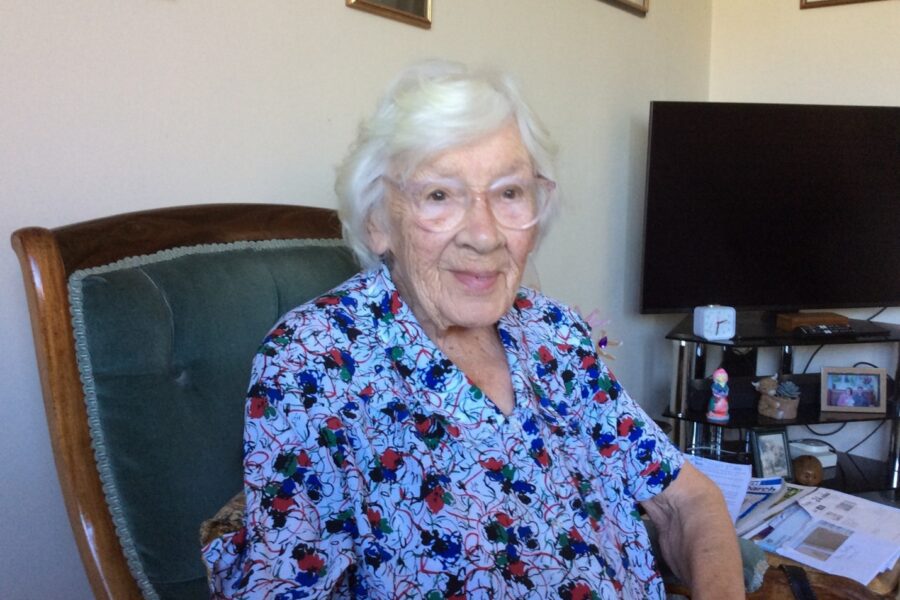
Brenda Iveson was told that surgery, radiotherapy and chemotherapy were not suitable due to the size and location of her tumour, as well as her frailty. But thanks to a specialist team at Leeds Teaching Hospitals NHS Trust, she was offered a new, minimally invasive procedure that has already reduced her tumour by around 80%.
The treatment, known as electrochemotherapy, combines a small dose of chemotherapy with targeted electrical pulses to allow the drug to enter cancer cells more effectively.
In this UK-first procedure, clinicians used robotic needle guidance to precisely place needles around the tumour. This advanced technology helps improve accuracy, particularly for tumours in complex or hard-to-reach areas.
The treatment was carried out under general anaesthetic and is non-thermal (doesn’t use heat), meaning it can safely treat tumours located close to vital structures such as blood vessels and bile ducts – areas that are often too risky for conventional treatments.
Brenda’s tumour was located in a particularly complex part of the liver, making traditional approaches too dangerous.
The procedure was led by Professor Tze Min Wah, Research and Innovation Lead for the Interventional Oncology Programme at Leeds Teaching Hospitals NHS Trust and Professor of Interventional Radiology at the University of Leeds.
Professor Wah said: “This treatment allowed us to offer an option where there would otherwise have been none. The addition of robotic guidance improves precision and opens up new possibilities, particularly for patients with tumours in difficult locations or who are not suitable for other treatments.”
The success of the procedure was the result of close collaboration across multiple specialist teams within the Trust, including cancer specialists, pharmacists, radiology experts and research staff, alongside industry partner IGEA, who provided the technology used during the procedure.
A dedicated clinical and research team coordinated the entire process—from referral through to treatment and follow-up—ensuring the highest standards of patient care and safety.
Leeds Teaching Hospitals is currently the only site in the UK delivering this treatment as part of a major European research study known as the RESPECT trial sponsored by the Cardiovascular and Interventional Radiology Society of Europe (CIRSE).
The study is collecting data from across Europe to better understand how effective and safe this treatment is for patients with liver cancer, as well as its impact on survival, quality of life and pain.
By taking part, Brenda has not only benefited from the treatment herself but is also helping to shape future care for patients worldwide.
Reflecting on her experience, Brenda hopes others in similar situations will consider taking part in research.
She added: “Research may offer real results when there are no other options. You’re looked after so well, and it’s how medicine moves forward. If it helps me and future patients, then it’s worth it.”
Brenda continues to be monitored closely, with follow-up scans showing that the remaining tumour is currently stable. Further treatment options may be considered if needed.
This UK-first procedure marks the beginning of a new service at Leeds Teaching Hospitals, with the potential to offer life-changing treatment to more patients in the future—especially those who previously had no viable options.
Professor Mike Lewis, NIHR Scientific Director for Innovation, said: “This pioneering research demonstrates how NIHR funding builds crucial research capacity across the whole country, giving talented clinicians the time they need to drive true innovation. By utilising cutting-edge robotics to deliver chemotherapy, this project directly aligns with the government’s strategic focus on embracing innovative technologies and its 10-year health plan to shift the NHS from analogue to digital delivery. It is a fantastic example of how forward-thinking science can modernise patient care and keep the UK at the forefront of medical technology. We run our research for all our citizens, whatever age, wherever they come from and we wish Brenda a speedy recovery.”
Professor Tze Min Wah is funded by an NIHR Senior Clinical and Practitioner Research Award (SCPRA), which provides protected time to support her research activity. She is also Co-Theme Lead for Minimally Invasive Therapies and Digital Technologies at the NIHR HealthTech Research Centre.