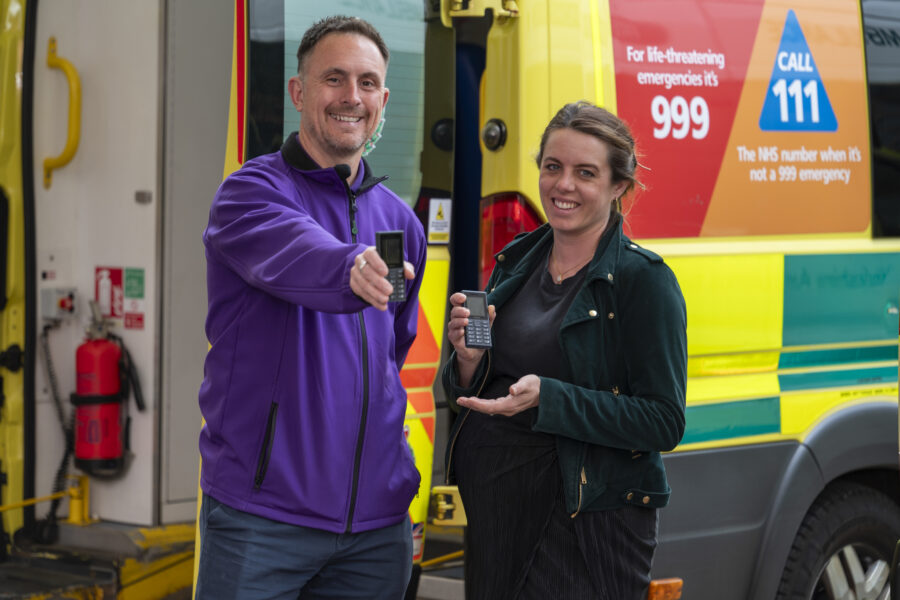
An initiative started at Leeds Teaching Hospitals NHS Trust and funded by Leeds Hospitals Charity is aiming to give a mobile phone to every person who is homeless or at risk of homelessness who presents at the Trust’s emergency departments.
The phones provide a key point of contact for arranging follow-up appointments, engaging with street outreach support, and improving personal safety. They also contain contact information for services and charities that vulnerable people may benefit from.
Laura Finch is a Royal College of Emergency Medicine Advanced Clinical Practitioner in the Emergency Department and the driving force behind the initiative.
She said: “Working in the city’s emergency departments you see first-hand how homeless people are forced to live – you see what their lives have become and what they’re subjected to. Society does not work in their favour, and they need help if they’re to have any chance of improving their lives.
“Many of the vulnerable people who we see in our emergency departments are regulars,” said Laura. “They simply don’t have the means to get out of their situation – the odds are stacked against them. Often, they end up being trapped in a vicious cycle of antisocial crime, short prison sentences, and homelessness. If you’re homeless, you’re also more likely to be assaulted. It’s a desperate situation.”
“Phones give people choice and autonomy – they’re incredibly empowering.”
During the pandemic, rough sleepers were given mandatory housing as part of the Government’s ‘Everyone In’ initiative, but after the emergency support ended, many regions across the UK saw a surge in homelessness. In Yorkshire and the Humber, the number of deaths of homeless people nearly doubled between 2022 and 20231 – often, these deaths can be from treatable health conditions.
Laura became frustrated with the volume of re-attendances to the Emergency Department she was seeing in Leeds, and felt she could do very little in her position to change things.
Laura tried to think of other ways she could help, and in 2023, inspiration struck. She decided to apply for a small grant from Leeds Hospitals Charity, to fund a pilot project over 2023-24 to trial donations of cheap mobile phones to homeless people presenting at the emergency departments.
“Many of us take mobile phones for granted, but it’s only when we don’t have one that we realise how much we depend upon a phone for daily life,” Laura said. “Phones give people choice and autonomy – they’re incredibly empowering.”
She added: “Homeless people are accustomed to having doors shut in their faces – they’re just not used to getting something for free. My hope is that these phones might do something that will change their lives.”
Each phone was a simple Nokia device costing £30, with a prepaid SIM. The device was loaded with contact details for services and charities working in the city which vulnerable people could approach for help. With each phone Laura gave out a small slip of paper, saying that she would be in touch.
Laura called each phone that had been donated during the pilot – and each time someone picked up. This way she gathered feedback about how people were using the phones and whether they were having the impact she desired.
One patient who attended the Emergency Department did not want to discuss her situation in detail but disclosed she was facing domestic abuse and homelessness. She was given a mobile phone and was referred by the team for emergency housing. After leaving the department, the patient used the phone to contact emergency housing herself and, as the referral had already been made, she was offered a place of safety that same night.
Successes like these encouraged Laura to approach Leeds Hospitals Charity for more funding, which she secured thanks to a donation from the charity’s corporate partner Maintel. This has expanded the initiative and, since launching in November 2025, will help continue the project for the next three years. The extra funding allows for around 220 phones to be given out each year.
Thanks to Vodaphone, more than 400 free SIM cards with unlimited credit were gifted to the initiative, which means the charitable funding can go towards purchasing more phones and potentially extending the project further.
Rebecca Baldaro-Booth, Director of Grants and Impact at Leeds Hospitals Charity said: “We are proud to have funded this pilot back in 2023, developing an initiative that provides vital support to patients across our local communities here in Leeds. These mobile phones provide patients with access to street outreach support programmes and other local support networks. It’s also an essential way for Leeds Teaching Hospitals to contact them for follow-up appointments and treatment, ensuring that every patient can access the care and support they need.
“Any help can make a huge difference – it gives hope to someone who has none.”
“We’re extremely grateful to our Corporate Partner, Maintel, whose support has enabled this project to continue for another three years, ensuring we are supporting as many patients as possible.
“Leeds Hospitals Charity is committed to tackling health inequalities across the region, and this project is a powerful example of how charitable funding and corporate support can deliver essential support to patients across our emergency departments.”
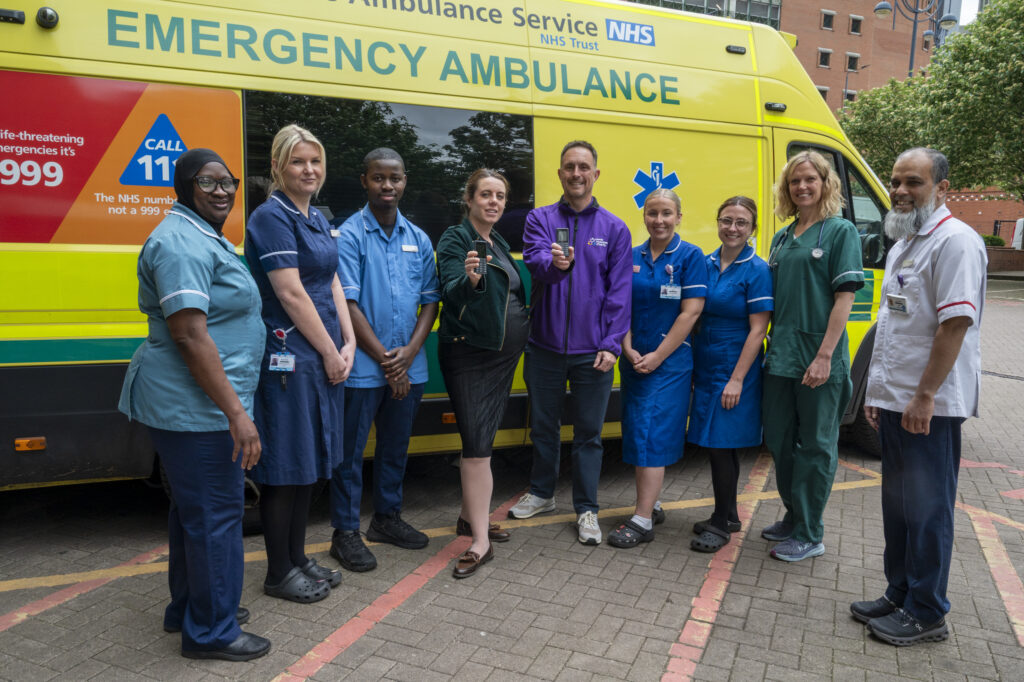
Laura has had to enlist further help to continue the project. Corporate partner events organised by Leeds Hospitals Charity allow interested partner organisations to engage colleagues with the initiative. Five of these partner events have been hosted so far, which provide the opportunity to learn more about the project and allow corporate partners to help out directly by programming the phones with contact information – a job that previously Laura had to do by herself.
During the winter, 85 mobile phones were donated to vulnerable people attending the emergency departments. Small numbers of the pre-loaded devices have also been shared with outreach and support charities – Barca-Leeds, the Health and Homeless Inclusion Team, and York Street GP – allowing more of the phones to get into the hands of people who may benefit from them.
“It’s my hope that these phone donations can go some way in shifting the odds,” she said. “What’s more, this project is both replicable and scalable, so I see it as really being the start of something I hope will benefit many other people.”
Laura has been speaking to healthcare colleagues at conferences, talking about how the project came about. She’s encouraged to think others may go on to replicate the initiative in other parts of the country.
“I’m not expecting this will solve homelessness overnight,” she said, “but I do think any help can make a huge difference – it gives hope to someone who has none.”
1Reported in the Dying Homeless Project 2024 from the Museum of Homelessness (October 2025).