

A collaboration of Leeds researchers and surgeons have successfully delivered a world-first reconstruction of a knee joint using a new innovative bio-material, paving the way for future surgical advancements and quicker recovery for patients.
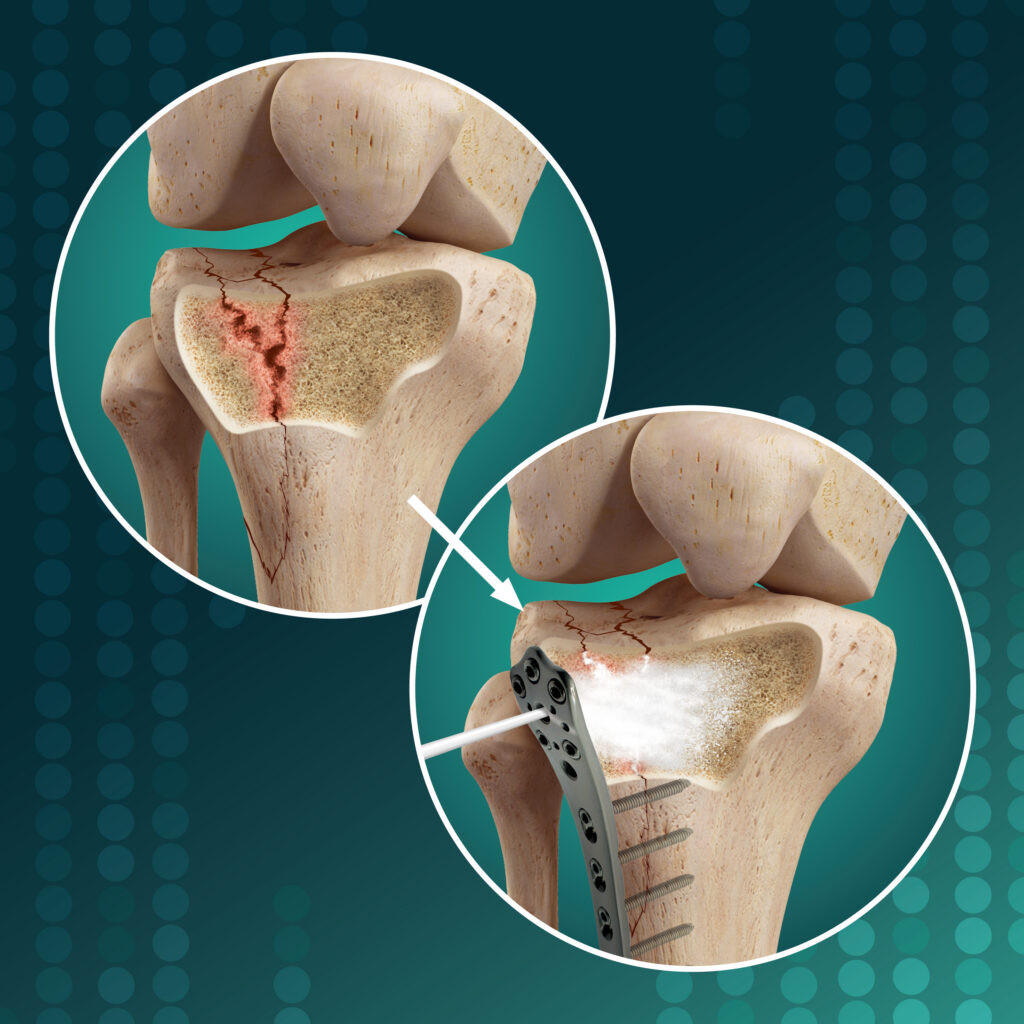
The trial, led by researchers at Leeds Teaching Hospitals NHS Trust and the University of Leeds, supported by NIHR Clinical Research Facility: Leeds and funded by Biomimetic Innovations Ltd, has explored the use of a new synthetic material designed to help repair severe bone injuries. The first procedure of a patient involved reconstruction of a knee joint, following a complex fracture, known as a lateral tibial plateau fracture (split depression injury).
OsStic, is a new material developed by medical device company Biomimetic Innovations Ltd, an affiliate of PBC Biomed. It is injected into gaps and weakened areas within the bone, filling them and providing support at the same time as encouraging the body to grow new bone naturally. The technology could offer surgeons a new way to treat complex fractures and has the potential to improve recovery for patients undergoing major orthopaedic surgery.
Professor Peter Giannoudis MBE, Clinical Professor at the School of Medicine, University of Leeds and Honorary Consultant in the Major Trauma Centre at the Leeds General Infirmary and Principal Investigator of the study, led the study and the surgical team that successfully used OsStic.

Professor Giannoudis said: “The preparation and planning of this procedure brought together a highly skilled multidisciplinary team of surgeons, researchers and clinical specialists. Our patient was admitted to the Major Trauma Unit at Leeds General Infirmary and had a particularly complex fracture that can be extremely challenging to reconstruct and, if not treated successfully, can have a lasting impact on mobility and quality of life.
“By combining advanced surgical expertise with this innovative new technology OsStic, we were able to accurately reconstruct the damaged joint and restore its structural integrity. The procedure was successful and seeing the patient continue their rehabilitation at home just one day after surgery was extremely encouraging.
“Innovations such as this have the potential to transform the way we treat complex fractures, offering surgeons new options where conventional techniques may have limitations and, ultimately, helping patients recover more quickly and return to their daily lives sooner.”
The trial of this new material was made possible thanks to the collaboration between researchers, clinical staff, academics, and support teams based in Leeds. It was underpinned by long-standing close working between researchers at the NIHR Biomedical Research Centre: Leeds’ Surgical Technologies theme, researchers and clinical teams at Leeds Teaching Hospitals including the NIHR CRF: Leeds, and colleagues across the University of Leeds. Over the past year, this collaboration has successfully delivered world-first clinical trials in a wide range of medical specialties including cancer, arthritis, and neurosurgery.

Professor Chris Twelves, Director of the NIHR Clinical Research Facility: Leeds said: “This successful first-in-human trial demonstrates the power of collaboration between the NHS, academia, research infrastructure and industry. By bringing together the expertise of Leeds Teaching Hospitals, the University of Leeds and Biomimetic Innovations, with support from NIHR infrastructure, we have successfully and safely translated a promising innovation from research into improved patient care.
“This achievement is the result of extraordinary teamwork from research nurses, physiotherapists, clinical research fellows, specialty registrars, consultant clinicians and research support staff, all working towards a shared goal. Seeing that collaboration leads to a successful world-first procedure and a quicker recovery for our patient highlights what can be achieved when partners across Leeds work together to drive innovation for patients.”
Paul Burke, Managing Partner of Biomimetic Innovations Ltd, added: “This first-in-human use of OsStic™ represents a major milestone for our company and our mission to bring meaningful solutions to orthopaedic care. We are excited to partner with world-leading clinicians and institutions to evaluate the potential of this technology to improve patient outcomes.”