
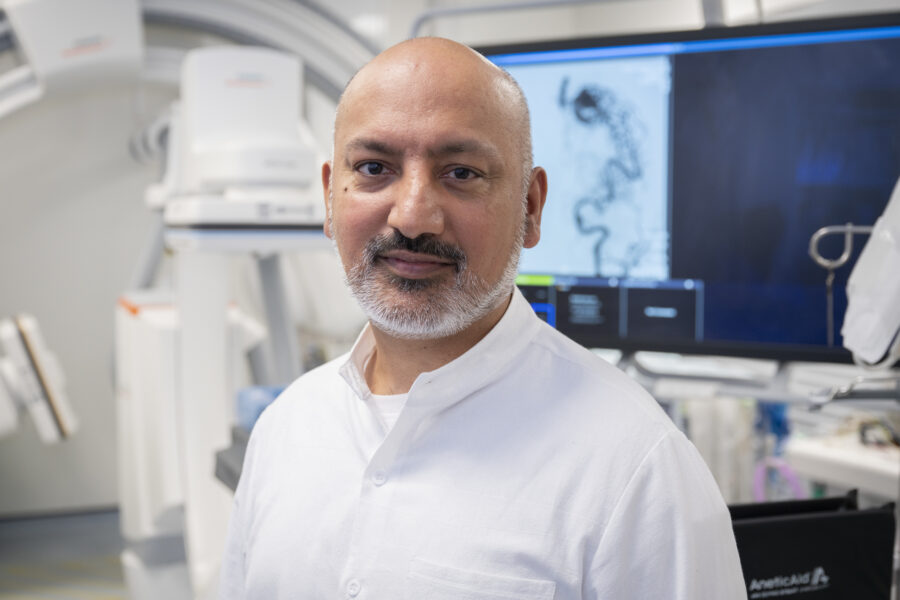
A man from Bradford has become the first patient in the UK to benefit from a groundbreaking new treatment for a disabling and life-threatening arteriovenous malformation (AVM).
After exhausting all viable treatment options over 15 years, Zehair Ayub was offered hope after meeting Leeds Teaching Hospitals Consultant Dr Fathallah Islim, who had completed a fellowship at a centre in Germany involved in the European trial of the innovative treatment.
An AVM is an abnormal tangle of connections between blood vessels where arteries and veins connect directly. This disrupts normal blood circulation, leaving blood vessels susceptible to rupturing and causing life-threatening bleeding. In Zehair Ayub’s case, his AVM was located deep in his brain and had developed a large aneurysm. This was pressing on his visual nerves, which had caused some visual loss and leaving him at high risk of potentially fatal or life-changing brain haemmorrhage.
Zehair was first diagnosed in 2011 and underwent Gamma Knife therapy in Sheffield which was ineffective. In subsequent years, Zehair explored different treatment options but none offered a good chance of success and due to the location of the AVM deep in his brain, surgery was deemed too risky. He continued to live with the AVM experiencing increasingly severe symptoms including seizures, right-sided weakness and deteriorating vision, while knowing a major bleed could occur at any time.
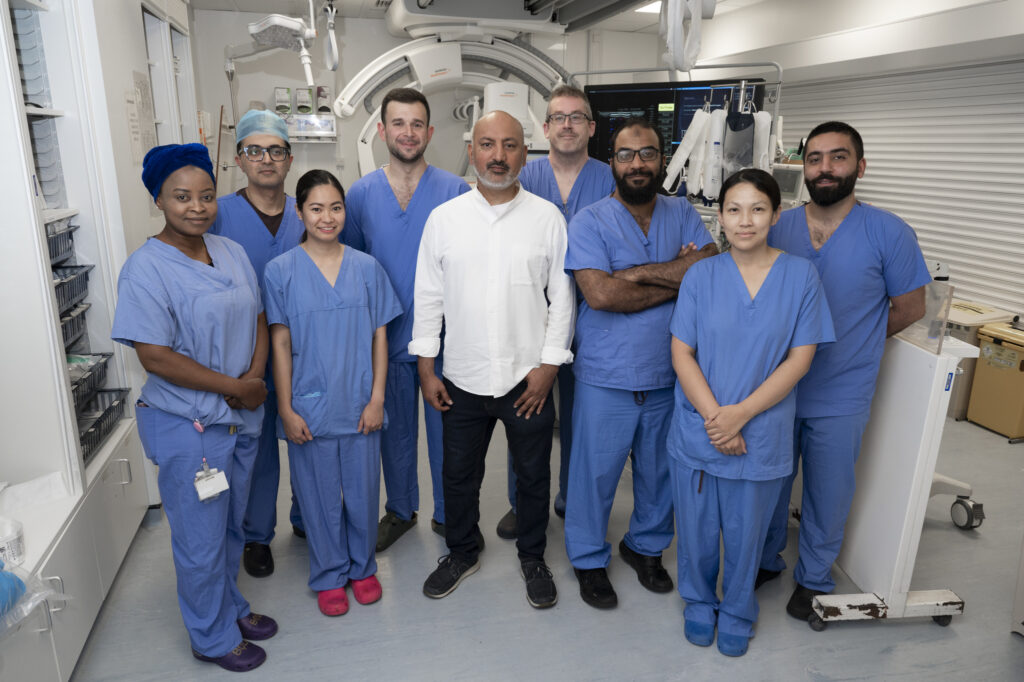
Consultant Interventional Neuroradiologist Dr Fathallah Islim was able to get Zehair special approval for use of ihtObtura on compassionate grounds as the trial was not taking place in the UK.
The trial involved ihtObtura, a novel liquid embolic agent that is injected into the affected blood vessels to close them and prevent blood flowing abnormally through the AVM. Unlike other embolic agents, ihtObtura is no longer visible on scans after a short period of time. This allows doctors to clearly see the blood vessels and accurately guide further treatment, making it possible to provide safe staged treatment of large and historically untreatable brain AVMs. With support from international trial experts who travelled to Leeds General Infirmary, Zehair underwent four rounds of treatment from September 2025 to May 2026. As a result, Zehair’s AVM is now fully closed, the aneurysm is gone and his physical symptoms are significantly improved.
Zehair Ayub said: “When I was diagnosed, I was fit and healthy. I played football and cricket, went to the gym and was always active. Then almost overnight, everything changed. I’d gone from never having heard of an AVM before to being told I had this rare condition and that it could cause a catastrophic bleed. I had a young family and my own business. I just wanted to get back to normal and carry on with my life.
“For 15 years I lived with the AVM, but I was eventually told there were no treatment options left. Everything was getting worse so quickly. My eyesight was failing, my coordination was going, I knew I needed help. Dr Fathallah came along at exactly the right time.
“I knew I was taking a chance on a new treatment, but I had complete confidence in the team. Having experts from Leeds working alongside colleagues from Germany and Spain gave me real reassurance that I was in the best possible hands.”
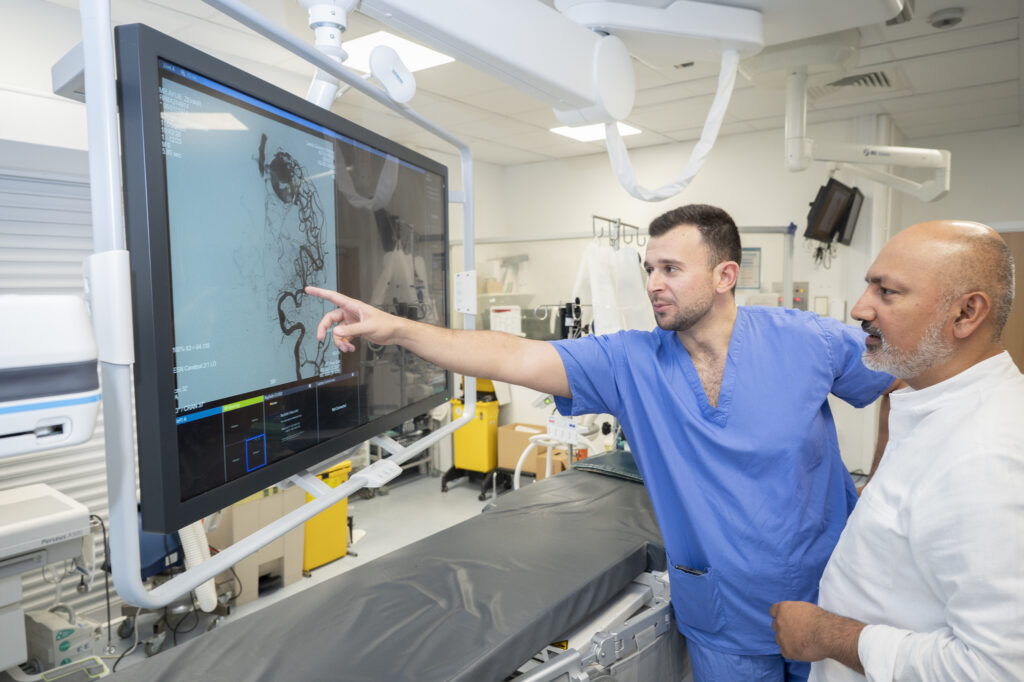
Dr Fathallah Islim said: “Endovascular treatment of brain AVMs is often reserved for untreatable AVMs. The risks are high and daunting for both the clinician and patient. Obtura is a new innovative material that has helped cure Zehair’s AVM and help him get his life back, which made us very happy for him and his family. We are eager to get European and UK approval for use and help other patients in the near future.”
Zehair added: “I’m incredibly grateful to everyone involved. Dr Fathallah and the whole team gave me hope when I thought I’d run out of options. Thanks to this treatment, not only has my own life changed, but I know other patients will benefit from it in the future too.”