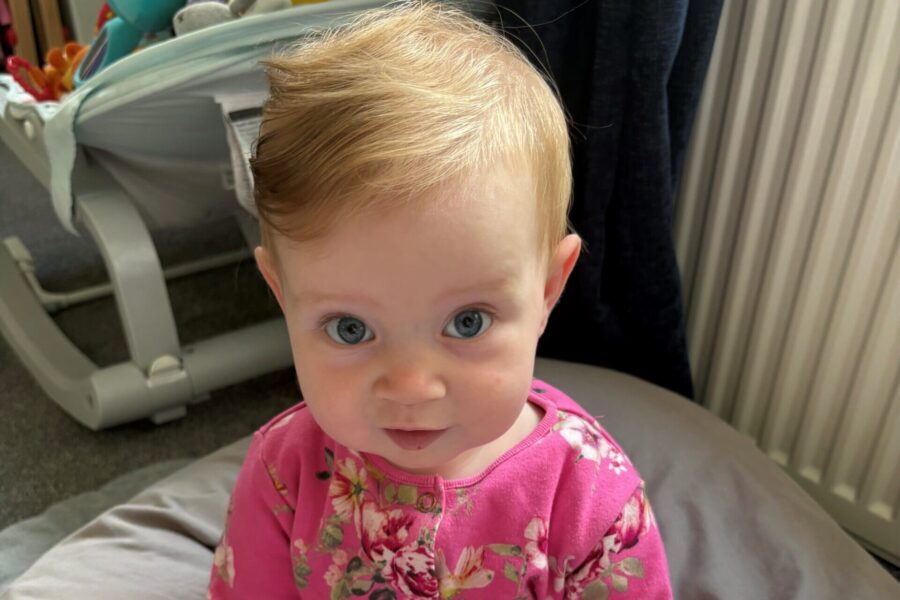
A mum and her baby, whose life was saved while she was still in the womb, recently returned to Leeds General Infirmary to thank the midwives who looked after them.
Jessica Pattinson, from Birstall, West Yorkshire, was 20 weeks pregnant with her second child when she went for a scan last year.
Jessica and her husband Lewis were shocked to learn that the baby was seriously unwell, with fetal hydrops, a condition causing fluid to build up around her body and in her abdomen. She was severely anaemic and her heart was under strain.
Consultants at Leeds Teaching Hospitals NHS Trust suggested that Jessica might have contracted slapped cheek syndrome, otherwise known as parvovirus B19. This is a mild infection but carries a small risk of serious complications for unborn babies.
They did an amniocentesis to test for the virus which showed as positive, therefore providing a cause for the baby’s problems.
“Time wasn’t on our side,” said Jessica. “The baby needed a blood transfusion to cure the anaemia. We had to go to hospital to get a scan in the morning to see if she was still alive.”
They were then transferred to King’s College in London where the baby received a blood transfusion through her heart, while still in the womb.
“They said they had never seen a baby so unwell with it before,” said Jessica. “She was near death’s door.
“We had the procedure and she just started to get better. We were monitored for a couple of hours and then we could go home. Every week through the rest of the pregnancy, the team at Leeds scanned us, and she had an MRI scan to check she hadn’t been affected neurologically.”
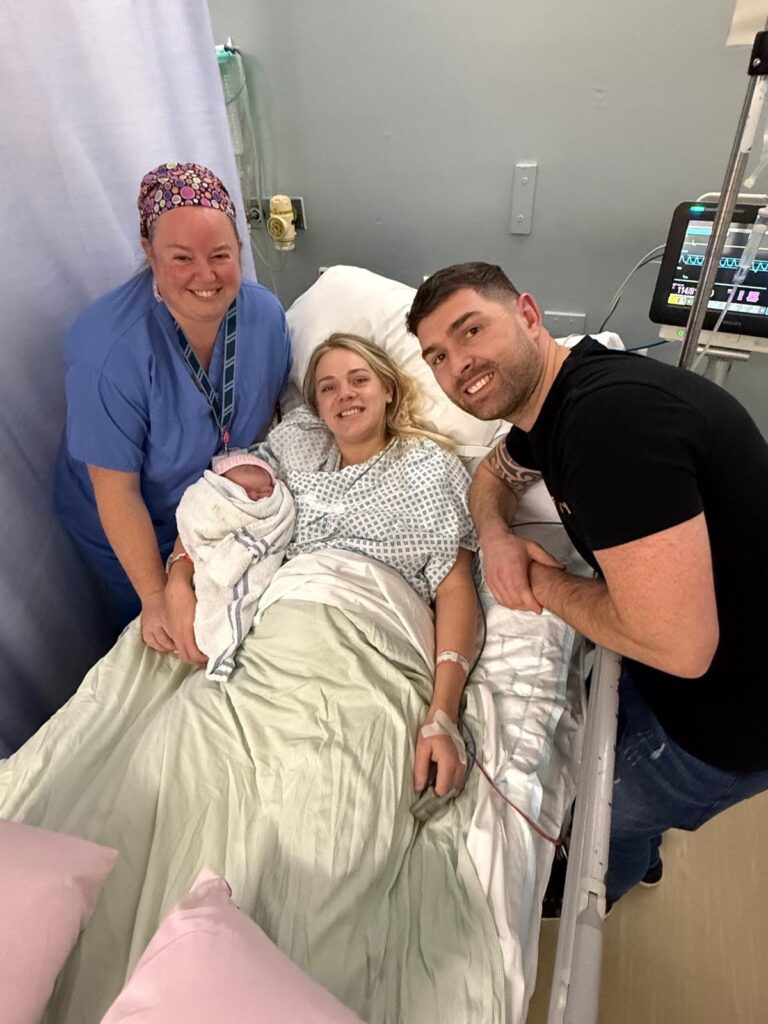
The baby was born safe and well on December 6 last year and named Athena.
“We had a C section at Leeds General Infirmary in week 38 and she was checked at birth,” said Jessica. “There was a neonatal nurse there to check everything. She did have a small leak on the heart but she came out thriving, she weighed 8lb 15oz.”
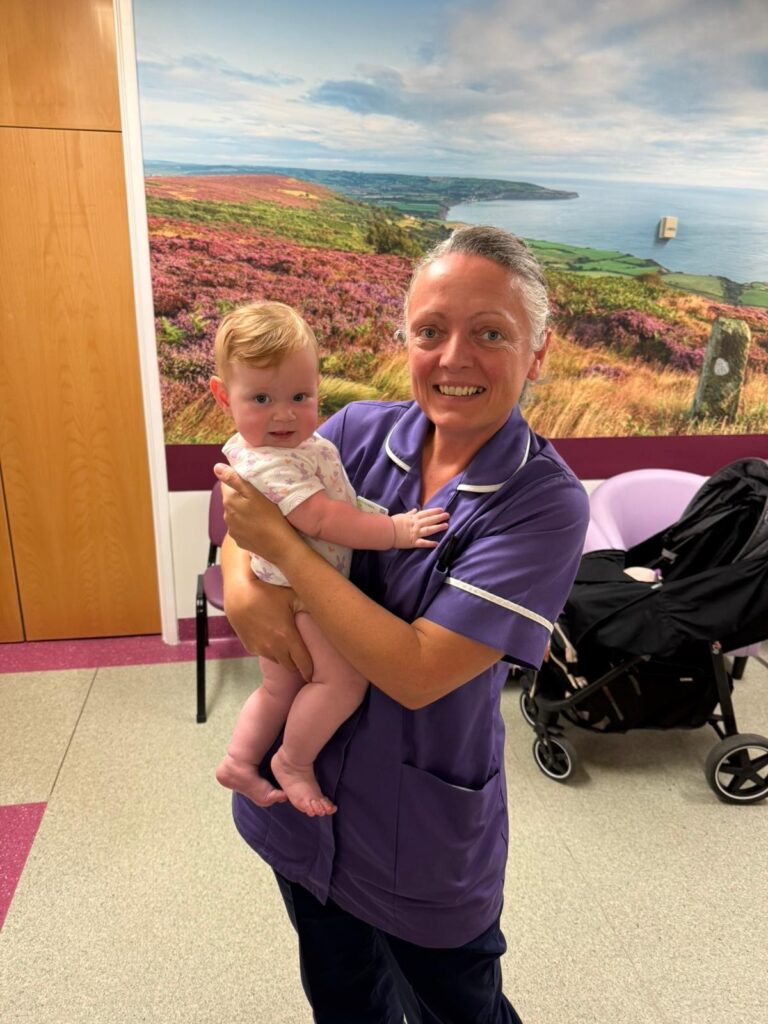
Athena is now nine months old, and Jessica took her back to the Fetal Medicine Unit recently to thank the team.
Jessica said: “They really looked after us at the LGI. The Fetal Medicine Team are a brilliant team. We’re really lucky to have had that care with them. Seeing them every week, they become like part of the family.
“Athena is really well, she’s a content, happy baby, she sleeps well, she’s healthy. We were so lucky to have the scan when we did.”
Jessica now wants to raise awareness of the risks of parvovirus B19 in pregnancy. “It makes me so sad to think that there could be people out there that could be losing their babies because of this virus,” she said.
Common symptoms of parvovirus B18 include a high temperature (37.5°C or above), a sore throat, a runny nose, a headache, mild nausea and/or diarrhoea. In children, a rash often appears on the face and has a ‘slapped cheek’ appearance, but a rash is less common in adults.
The NHS advises that if you are pregnant and come into contact with anyone who is infected with slapped cheek syndrome, you should talk to your GP or maternity care team, who can carry out a blood test. In most cases, the baby is not affected if you have slapped cheek syndrome.
Katherine Ellery, Fetal Medicine Midwife, from Leeds Teaching Hospitals NHS Trust Fetal Medicine Unit, said: “We’re really delighted that Jessica and Athena are doing so well and it was lovely that they came back to the unit to say hello.
“Here in the Fetal Medicine Unit at Leeds General Infirmary, we look after around 1700 women and families each year who have complex pregnancies relating to their baby and complete over 3500 scans.
“Most commonly we see women who are pregnant with a baby that potentially has or has been diagnosed with an abnormality.”
The team is made up of Fetal Medicine consultant obstetricians, specialist midwives and maternity support workers. They perform ultrasound scans at each appointment, provide information on diagnosis, discuss options for further testing and plan future appointments and care. They also perform a range of invasive procedures such as amniocentesis and CVS (chorionic villus sampling), and liaise with wider teams, charities and organisations, referring to other services where indicated.
Katherine said: “Fetal medicine heavily involves counselling and support to families. We work hard to ensure all women and families feel well supported in their journey through fetal medicine.
“We are a department that is not often talked about in maternity care, and we appreciate being referred to us can be a daunting and anxious time. It is our aim to ensure families feel held during their time in fetal medicine and that they know we are here for them if they require support beyond appointments.”