
A patient at Leeds Teaching Hospitals NHS Trust has become the first in the world to receive radiotherapy designed using advanced reirradiation treatment planning tools co-developed by researchers and clinicians from Leeds Teaching Hospitals, the University of Leeds, and radiotherapy software company, RaySearch.
For the first time, clinicians and scientists designing a new course of radiotherapy for patients who have already received this treatment on the same part of their body can make use of advanced radiotherapy tools to more efficiently support their decision making. The first patient in the world to be treated using radiotherapy designed using these new software tools has received a course of five treatment sessions at Leeds Cancer Centre.
Almost half of all people diagnosed with cancer in the UK receive radiotherapy as part of their treatment. If cancer returns, or a person develops a new cancer, they may need radiotherapy again. If this second course of radiotherapy is in the same part of the body as the original radiotherapy, then designing the second course of treatment – known as reirradiation – can be difficult. This is because healthy tissues can tolerate only a limited amount of radiation over a lifetime and exposing them again can increase the risk of long-term side effects, including pain, scarring, nerve damage, organ dysfunction and delayed healing. Until now, radiotherapy software has offered clinicians few tools to support the careful specialist assessment needed to design reirradiation treatments.
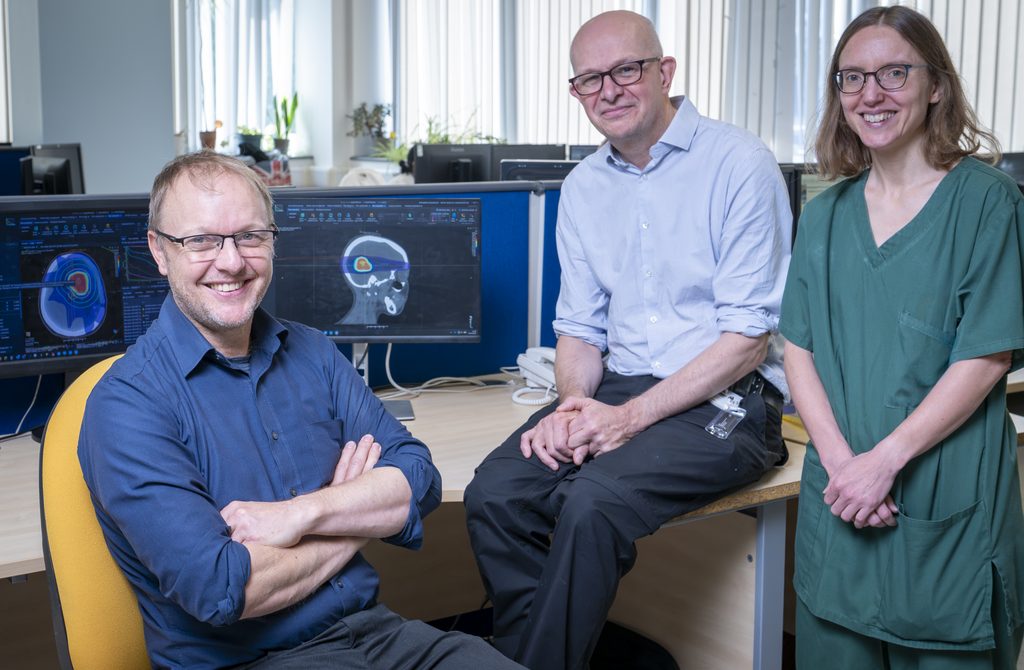
Scientists and clinicians from Leeds Teaching Hospitals and the University of Leeds have spent a decade conducting world-leading research on how reirradiation can be delivered more safely and effectively. Through a long-standing research collaboration with radiotherapy software company RaySearch this work has helped shape a suite of tools that support physics staff when designing more targeted treatment for people who need reirradiation. The tools have now been introduced in the latest version of RaySearch’s treatment planning system, RayStation®, making them available to clinicians and scientists.
The tools calculate the total radiation dose a patient has received across their original course of radiotherapy and their reirradiation treatment, allowing the reirradiation treatment to be designed with detailed consideration of how much radiation the different tissues have already received. They then help clinicians efficiently assess how reirradiation can be delivered safely and effectively, limiting the side effects for areas that may have previously been treated.
John Lilley, Head of External Beam Radiotherapy Physics at Leeds Teaching Hospitals NHS Trust, said: “Accounting for the previous radiotherapy when planning a new course is extremely challenging. Alongside our colleagues from the University of Leeds, we have been working for over ten years on the research that has underpinned the development of these new tools, and I am delighted that they are now available to teams in other hospitals. The tools will also give future radiotherapy trials better information about how changing the way that reirradiation is delivered influences the patients’ outcomes.”
Johan Löf, founder and CEO of RaySearch Laboratories, added: “One of RaySearch’s key strengths is the way we bring together scientific innovation and close collaboration with clinicians to develop advanced software that addresses real clinical needs. This milestone in reirradiation reflects our broader commitment to advancing cancer care and addressing complex treatment needs worldwide.”
Leeds Teaching Hospitals treats 7800 patients with radiotherapy every year and has an international reputation for research excellence in this field. This research has been supported by Cancer Research UK RadNet Leeds, Yorkshire Cancer Research, and the Medical Research Council.
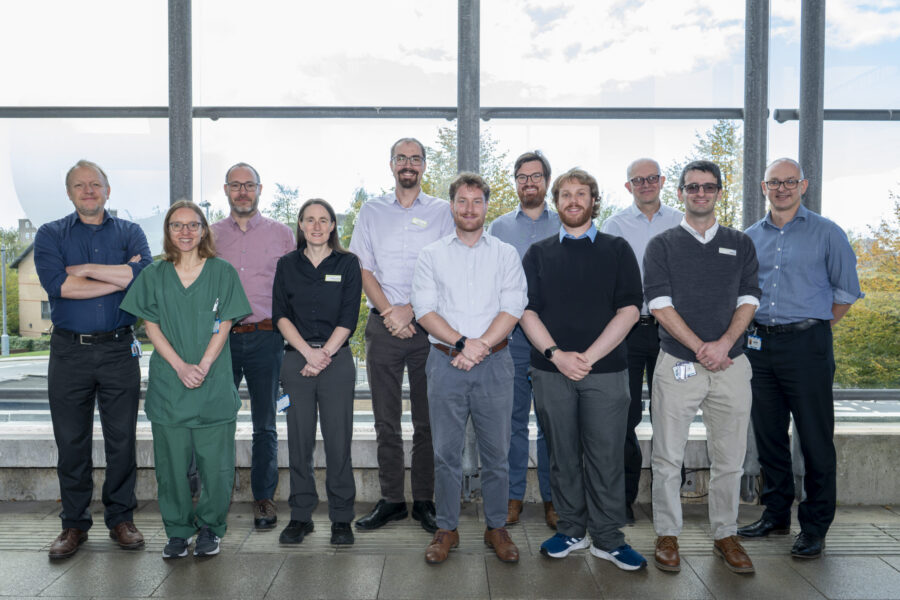
Team photo caption, left to right: Christopher Thompson, Louise Murray, Mike Nix, Becky Lindsay, Jonathan Entwistle, Louis Hollick, Chris Pagett, Chris O’Hara, John Lilley, Michael Biddlecombe, Pete Dickinson.