Leeds Teaching Hospitals NHS Trust (LTHT) is taking part in a pioneering new research study launched today to better understand and prevent childhood lead exposure in the UK.
The Elevated Childhood Lead Interagency Prevalence Study (ECLIPS), co-led by Northumbria University, the UK Health Security Agency (UKHSA) and LTHT, will trial an innovative home-testing model that could transform how lead exposure in children is monitored nationwide.
The study will build on the important work that has taken place across the Trust and throughout the City to raise awareness of lead exposure in children.
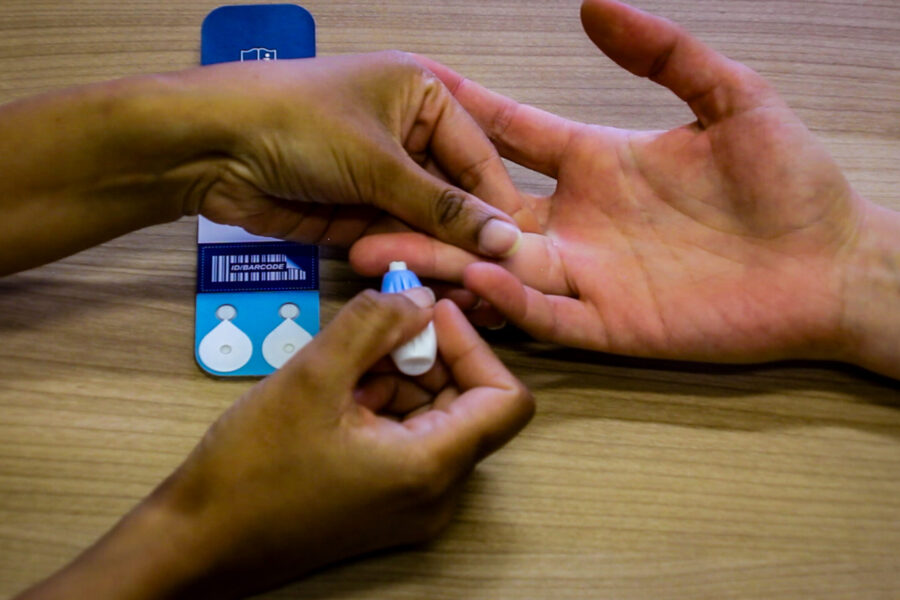
Participating families will use simple finger-prick blood sampling kits at home, alongside collecting soil and house dust samples and completing a short survey to help researchers understand potential sources of exposure.
Around 150,000 households in Leeds will receive letters inviting them to take part. The aim is for 500 children aged 1–6 to take part.
Lead exposure can be especially harmful to young children, with risks including:
• Damage to the nervous system
• Delayed growth
• Hearing loss
• Long-term impacts on social, educational and economic well-being
Leeds was selected as the pilot location for this study as data monitored by the UK Health Security Agency shows that Yorkshire and Humber has reported the most cases of childhood lead poisoning over the past decade. This higher detection rate is attributed to increased testing of children in the area as a result of increased local awareness of the dangers of lead poisoning.
If successful, this home-testing approach could become part of a national screening programme, and may even be adapted to detect other pollutants and diseases. It has the potential to revolutionise how blood lead samples are collected and monitored across the UK.