
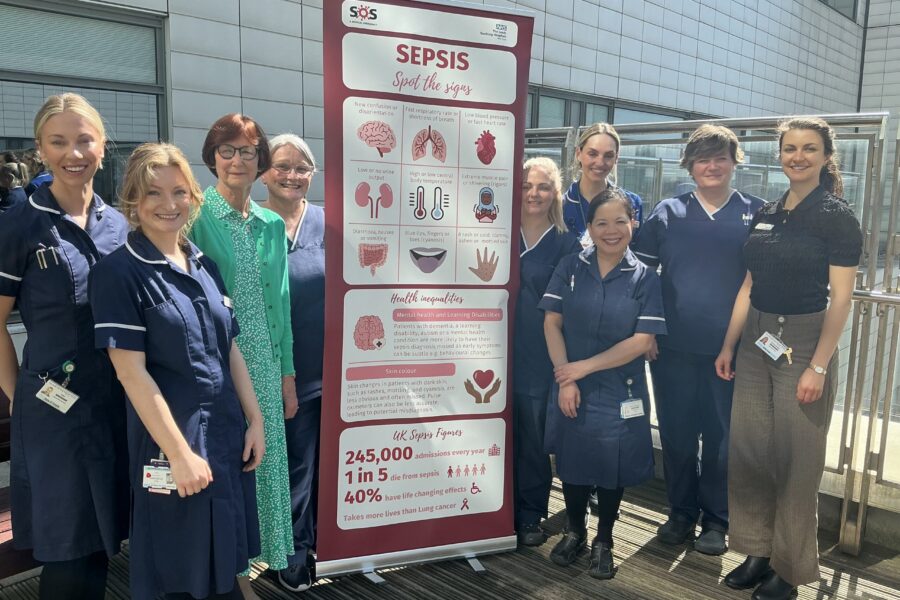
With just under a quarter of a million hospital admissions annually across the UK, recognising early signs of sepsis is vital and we’re doing more to strengthen our efforts to raise awareness and reduce its potentially fatal impact.
As part of this work, Lead Sepsis Nurse Chelsea Farnsworth joined our hospitals just over a year ago. Since taking up the role, Chelsea has been developing and delivering a full and far reaching education programme for colleagues across the Trust.
This includes face-to-face sessions with frontline staff such as clinical support workers and link nurses, equipping them to recognise early signs of sepsis and support patients and families in escalating concerns quickly.
Chelsea, Lead Clinical Nurse, said, “I’m passionate about this, early recognition really does save lives. A few hours can make an enormous difference to a patient’s outcome. I’m the one constantly keeping awareness high, supporting others to feel confident in escalating concerns. Sepsis outcomes improve when teams work together confidently and consistently.”
Chelsea is joined in this campaign by Liz Milner, a Patient Improvement Partner, who volunteers her time to ensure the patient perspective is central to safety improvements. With more than 40 years’ experience as a nurse, and personal experience of sepsis affecting both herself and her family, Liz is passionate about education and early recognition.
Liz contributes to project groups as a “critical friend,” helping teams improve the quality and safety of care. Having trained as a nurse in Leeds in 1969, she remains deeply committed to helping others.
Through its combined approach of dedicated clinical leadership and patient partnership, Leeds Teaching Hospitals is working to ensure that more cases of sepsis are identified early, saving lives through awareness, education and timely intervention.
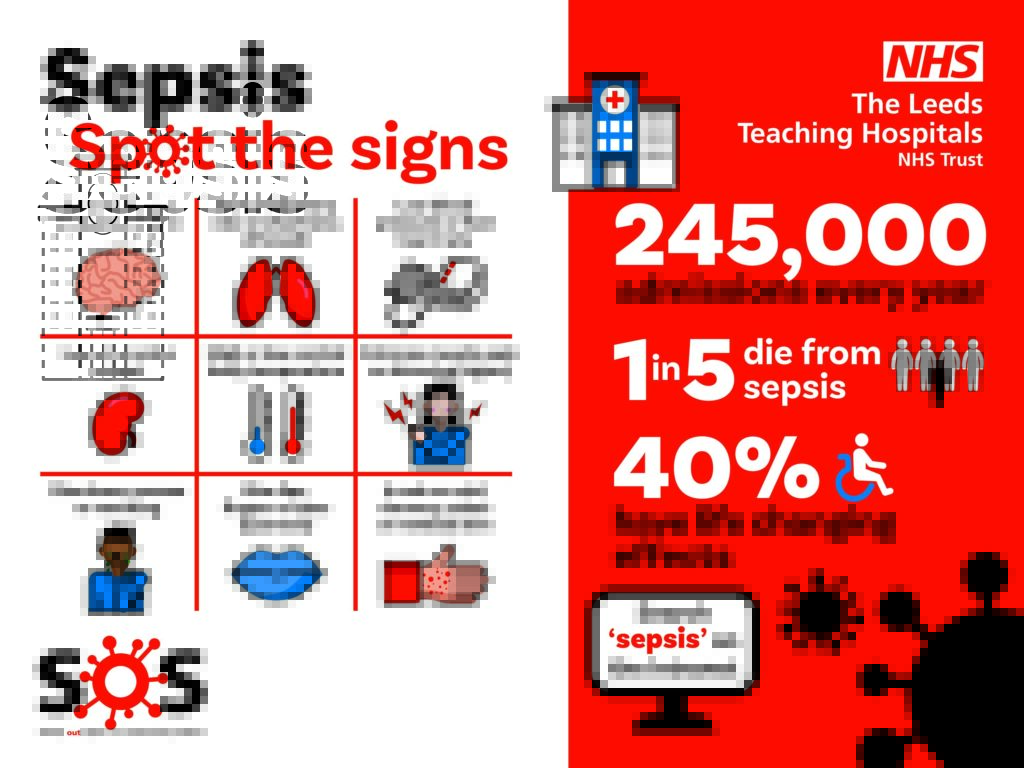
The vital signs of sepsis are:
- Low blood pressure or fast heart rate
- New confusion or disorientation
- Fast breathing or shortness of breath
- Low or no need to go to the toilet
- High or low central body temperature
- Extreme muscle pain or shivering
- Diarrhoea, nausea or vomiting
- Blue lips, fingers or toes
- A rash or cold, clammy. ashen or mottled skin
You can read more about sepsis in the UK Home – The UK Sepsis Trust