Leeds Hospitals Charity has funded specialist clinical roles to strengthen patient care and support services within the centre, which is run by Leeds Teaching Hospitals NHS Trust on the Seacroft Hospital site.
In addition, the MND Association has bolstered its 17-year support for MND services with major investment funding for research and care coordination roles, helping to advance understanding of the disease and improve continuity of care.
Gary Jevon is the new centre manager, and his post is funded by Leeds Hospitals Charity. He was previously Chief Executive of Healthwatch Wakefield, and a programme manager at the West Yorkshire ICB.
He said: “This is a really exciting opportunity to be involved at the beginning of something new and innovative. The Rob Burrow Centre for Motor Neurone Disease has such a high profile, locally and nationally, and I’m keen to play a part in ensuring it provides the best care, holistic support, education and research for the benefit of patients and their families.
“The vision is to make it a globally recognised, international centre of excellence for MND. It’s not just about how we treat MND, it’s about making it a holistic care centre, looking after families and carers, looking at the bigger picture and doing things differently.
“It’s an incredible building and the facilities and new technology are fantastic. This will have a huge positive impact on the sort of care we can offer for people with MND and their families.”
Gary began his career as a radiographer and his first job was in Leeds in the 1990s. “I’ve come full circle,” he said: “There is a fantastic, dedicated team here and it is a privilege to be working with them.”
Sam Oakes has been supporting families affected by MND since 2023 in her role as an MND Family Support Worker – a position funded by the MND Association. Leeds Hospitals Charity is also providing additional funding for resources at the centre to help people with MND and their families.
She said: “My role, alongside the MND Team, is to guide, support, and help people diagnosed with MND and their families balance joy and living in the moment with the inevitable fears and worries that come with an MND diagnosis.
“I think it’s really important that people living with MND aren’t defined by their illness. We take time to learn who they are, what they enjoy, what has shaped their life to date. From their careers, hobbies, and the people who matter most, so their identity continues to shine through.”
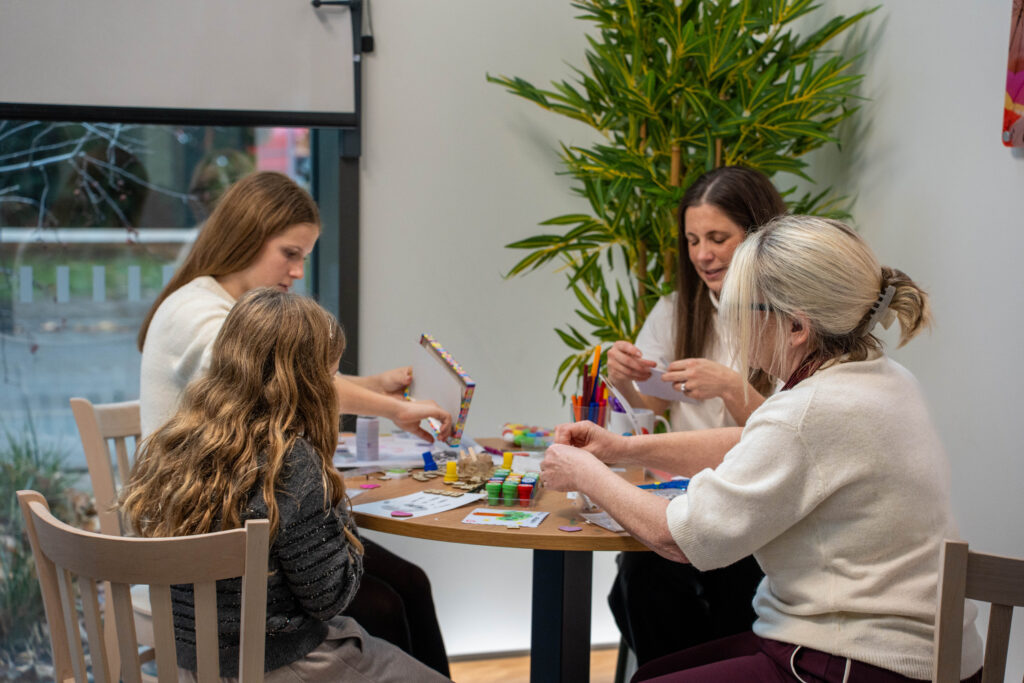
The new centre features a family room, giving children a place to play, craft, or watch TV while spending quality time together. There is also a quiet room, which offers privacy for reflection or sensitive conversations, and memory-making activities, which are funded by Leeds Hospitals Charity.
The MND Association has also funded a new research nurse, to help patients take part in vital trials. Emelda Veraque’s position is part of the charity’s ambitious £7.2 million Research Nurse Network, which will give more people diagnosed with the disease the opportunity to take part in research across the country.
Research nurses provide patients with information about research, identify trials they are eligible for, explain what is involved, and provide ongoing support if they choose to take part.
Emelda, who is an experienced neurology research nurse, said: “I feel incredibly proud to be part of the Rob Burrow Centre and to work alongside the amazing team here.
“It’s inspiring to see research taking place right here in the heart of Leeds funded by the MND Association and I’m excited to support these opportunities to people living with MND and their families.”
Sally Hughes, Director of Services and Partnerships at the MND Association said: “Taking part in research has often been difficult for people diagnosed with MND. Thanks to Emelda and other MND Association Research Nurses across the country, more people with MND are now able to make empowered choices about their involvement in MND research – helping to shape tomorrow’s treatments for this devastating disease.
“While driving forward research for tomorrow, it’s important to support people with MND today. Our four-year funding commitment for health and social care professionals at the centre builds on many years of working in close partnership with the team in Leeds and will improve care coordination and support key services at the new centre, helping to deliver the very best care for people with MND and their loved ones.”
Also in the field of research, Dr Amr Tageldin is a neurology registrar; he is studying for a medical doctorate at the University of Leeds, while still carrying out clinical work and training to be a consultant. His role is funded by Leeds Hospitals Charity.
His research involves using artificial intelligence and magnetic resonance imaging (MRI) to detect clinical features that are found in MND.
“The aim is to help shorten the time to diagnosis,” he said. “The current delay in diagnosis, estimated at between nine and 18 months, puts patients and families in uncertainty and causes delay in accessing care and support they need until they get the diagnosis.”
Rebecca Baldaro-Booth, Director of Grants and Impact at Leeds Hospitals Charity, said: “Following our successful fundraising appeal for the Rob Burrow Centre for Motor Neurone Disease, we’re delighted that thanks to the generosity of our donors, we can continue to support MND patients and their families at the centre for years to come.
“By investing in these two new roles, we’re making sure that people living with MND get the best possible care and holistic support, as well as opening up more opportunities to participate in innovative research that has the potential to transform diagnosis of the condition.”
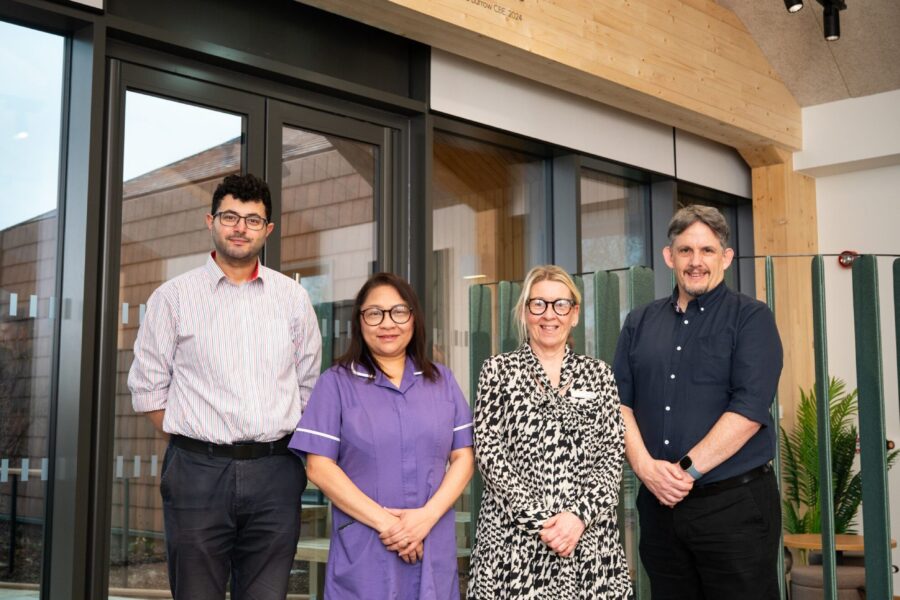
- Top photo above shows, left to right: Dr Amr Tageldin, Emelda Veraque, Sam Oakes and Gary Jevon.