
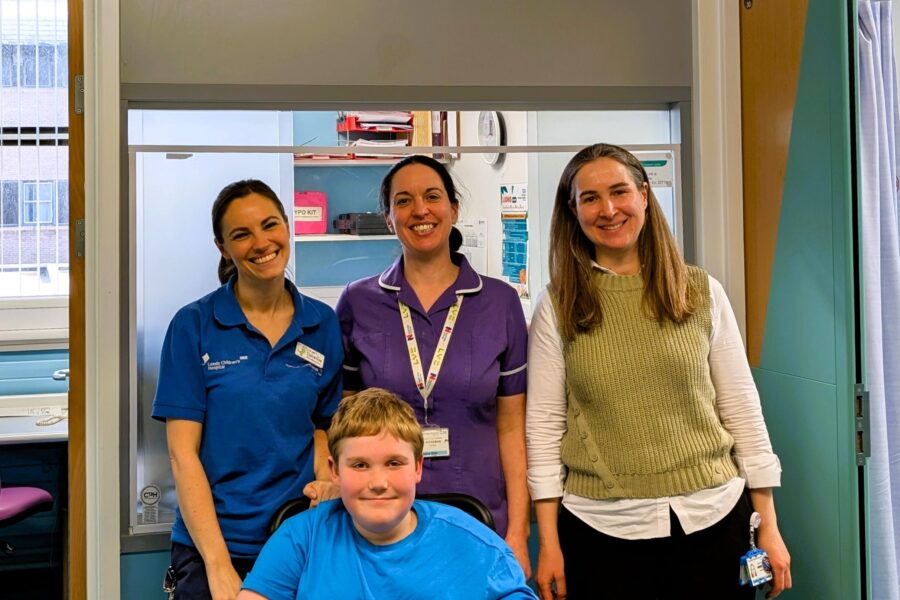
The GUARDIAN trial, which is being run through the NIHR Clinical Research Facility at Leeds Children’s Hospital, is investigating the long-term use of vamorolone in Duchenne muscular dystrophy (DMD).
DMD is a genetic condition that usually affects boys. It causes progressive muscle weakness, with restricted mobility and a shorter life expectancy.
The newly approved treatment aims to help children with DMD maintain muscle strength for longer, whilst reducing some of the most difficult side effects associated with existing medications.
Current recommendations for care include use of anti-inflammatory drugs that supress a patient’s immune system, called corticosteroids. They can delay disease progression but often lead to stunted growth, emotional and behavioural challenges, and other quality-of-life issues that can be difficult to manage at home and at school.
Vamorolone is an alternative corticosteroid recently approved by the National Institute for Health and Care Excellence (NICE). In short term studies, it appears to offer the same benefits as current treatments, slowing decline in motor function but with fewer side effects related to growth, mood, and behaviour.
Dr Anne-Marie Childs, Consultant Paediatric Neurologist and Chief Investigator for GUARDIAN, said: “Having been one of the UK sites to take part in the original clinical trial of vamorolone (the Vision DMD study) we are pleased to see that vamorolone will be available for use in NHS care from April 2025. However, as with all new drugs there are many ‘unknowns’ with vamorolone’s use in clinical practice.
It is, therefore, essential to gather further data on its longer-term effectiveness and side effects which is why the GUARDIAN study is so important for both the UK and the international DMD community. We are delighted to be at the forefront of this work, as chief investigating UK site and the first to recruit to the study.”
David Taylor and Rachel Allen’s son, Edward, aged 9, is taking part in the study. Living in Northallerton, North Yorkshire, Edward uses a powered chair daily to get to school and go on trips with friends and family due to his limited mobility.
David and Rachel said: “By using the powered chair, Edward then has the energy to use play equipment such as swings and slides – something which he loves. Edward is a remarkable, wonderful boy. In daily life we try to ensure that Duchenne does not ‘rule the roost’.”
They added: “Our experience of being on a clinical trial has been fantastic. Regular check-ups with a kind and friendly team are great and he is being cared for brilliantly. It is amazing to think that being on a clinical trial allows Edward to help others in the same position in the future.”
“The staff at Leeds are amazing and they go out of their way to ensure you receive the best care possible. We are really fortunate to live near such a great centre for research!”
The GUARDIAN trial over three years will monitor the benefits of vamorolone as a long-term treatment, particularly in older children with DMD. Assessment will be through physio assessments, blood tests, x-rays and eye tests, and will help guide the selection of the most appropriate treatment options for the condition in the future.
The trial is also taking place in other centres across the UK including Alder Hey, Newcastle and Glasgow, and aims to recruit 80 participants globally, including 15 in the UK, all of whom previously took part in the Vision DMD study.
To learn more about vamorolone and what it might mean for families, you can watch this Patient Focused webinar.