
What and where are the adrenal glands?
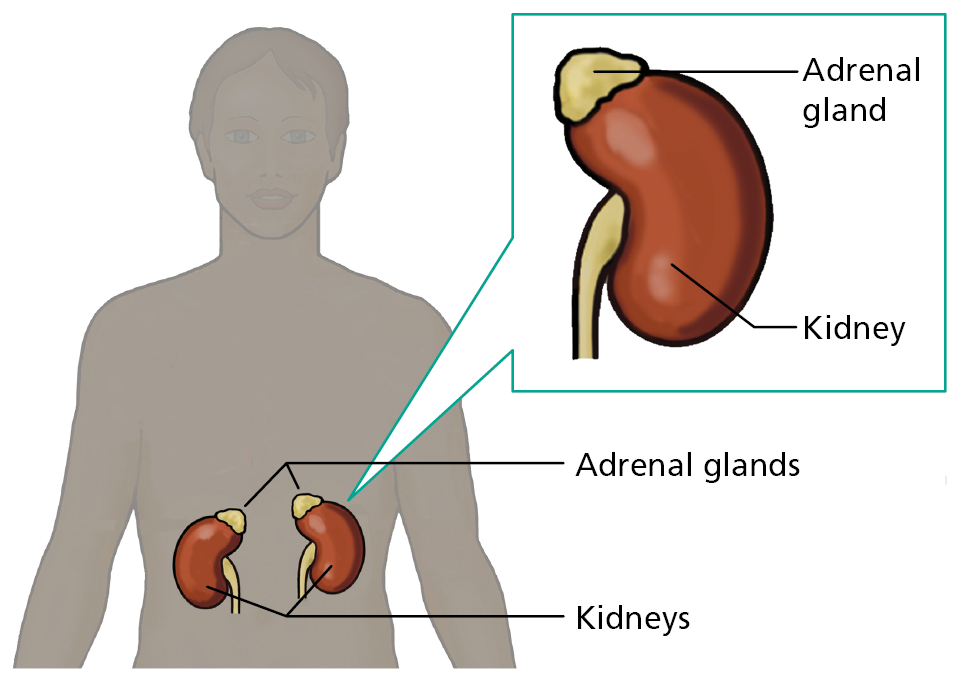
The adrenal glands are two small organs that sit above the kidneys at the back of your abdomen.
They produce several important hormones (chemical messengers) including steroids, adrenaline, sex hormones and those that control blood pressure.
What is an adrenalectomy?
An adrenalectomy is an operation to remove the adrenal gland, depending on the reason for surgery.
What are the reasons for an adrenalectomy?
The main reasons for removing one or both of your adrenal glands are excess hormone production, a change in size, or because of suspected or proven cancer.
1. Overproduction of hormones
- Conn’s syndrome – In this condition, one or both of the adrenal glands produce too much aldosterone, a hormone involved in controlling blood pressure and the potassium levels in the body. This results in high blood pressure and low potassium, requiring medication. If only one adrenal gland is affected, an adrenalectomy can treat this condition. For many patients this can result in stopping some or even all of their blood pressure medication.
- Cushing’s – In Cushing’s syndrome, one or both of the adrenal glands produce too much cortisol, a steroid hormone. This causes multiple symptoms including weight gain, thin skin, easy bruising, and puts patients at increased risk of Type 2 diabetes, high blood pressure and osteoporosis. An adrenalectomy for Cushing’s syndrome is to remove one or both of the adrenal glands and to stop the excess steroid production. Patients may need temporary or life-long steroid replacement following this surgery. If steroid replacement (hydrocortisone tablets) are required, your doctor will discuss it with you prior to surgery.
- Phaeochromocytoma – This is a condition in which the adrenal gland produces excess amounts of hormones called adrenaline and noradrenaline. These hormones affect your heart and blood vessels, causing high blood pressure, palpitations, headaches and sweating. The majority of phaeochromocytomas are sporadic, but up to 30% are hereditary and maybe associated with other endocrine problems including thyroid and parathyroid conditions. You might require genetic testing and if so, this will be discussed with you in clinic.
2. Enlargement of gland
Occasionally one of the adrenal glands can enlarge, even if it is not producing excessive hormones. Sometimes this can be monitored. However, if it continues to grow, becomes symptomatic, or has any concerning features, surgery is recommended to rule out cancer.
3. Cancer
Cancer can start in the adrenal gland or spread there (metastasise) from other cancers from around the body.
- Adrenal cancer – Adrenal cortical cancer is a rare cancer that arises from the adrenal gland. These cancers can produce excessive hormones, most commonly cortisol. Surgery to remove the affected gland is the best chance of cure.
- Metastases – Some types of cancer can spread to the adrenal gland. The most common types include kidney, lung and colon cancers as well as melanoma and lymphoma. If the adrenal is the only site of spread, and the original cancer is well controlled, surgery may be offered to remove the affected adrenal gland.
What are the alternatives to surgery?
1. Overproduction of hormones
If the adrenal glands are producing excess hormones, this can sometimes be controlled with medication. Medication may reduce the symptoms and consequences of excess hormone production, but does not cure the underlying problem and may have side effects.
2. Enlargement of gland
The alternative to surgery could be monitoring with regular scans. There is a risk that the gland will continue to grow and that there may be a cancer within the gland.
3. Cancer
If cancer is within the adrenal gland (either originating or spread from elsewhere) then alternative treatment in the form of chemotherapy may be offered to slow further growth of the tumour. This is unlikely to cure the cancer.
How is adrenal surgery performed?
An adrenalectomy is performed in theatre, under general anaesthetic. There are different techniques available to remove the adrenal gland, and your surgeon will recommend the best approach for you. Laparoscopic (keyhole) surgery uses smaller cuts than open surgery. Therefore, most patients who undergo laparoscopic surgery have less pain and recover quicker post-operatively, than patients who have an open adrenalectomy.
- Laparoscopic anterior adrenalectomy
This is keyhole surgery to remove the adrenal gland through the front (anterior) of the abdomen. Normally the surgeon will make a small hole (approximately 1-2cm) to inflate your abdomen with gas (carbon dioxide). They will then make 2-3 other cuts on your abdomen to insert a camera and surgical instruments to look inside and perform the operation. The adrenal gland is separated from other organs within your abdomen. It is then placed into a small bag and the bag removed through one of the small holes in the abdominal wall. The surgeon will then close the cuts with dissolvable stitches. - Laparoscopic posterior adrenalectomy
An alternative to making cuts in the front of your abdomen is keyhole surgery through your back (posterior). This surgery is typically offered to patients with only moderately enlarged adrenal glands without suspicion of adrenal cortical cancer. It is also a good approach for patients who have had abdominal surgery in the past. Typically, three small holes are made in the lower back. The adrenal gland is then separated from the nearby organs and placed in a bag before removing through one of the cuts. The cuts are then closed with dissolvable stitches as before. - Open adrenalectomy
In an open adrenalectomy the surgeon will make a larger cut either in an L shape or below the rib cage. An open approach is advised in patients with very large adrenal glands, or in those suspected of having cancer. Post-operatively the wound is closed with dissolvable stitches. You will have a catheter (a tube draining urine) placed while you are asleep, which will be left for a 1-2 days after surgery. You will generally be in hospital for a few days longer than those having keyhole surgery.
What are the potential risks?
All surgery carries potential risks.
1. General risks
- Bleeding – any operation has a risk of bleeding, either during or after surgery. The vein from the right adrenal drains directly into the inferior vena cava, the large vein that carries blood back from the lower limbs, whereas the left adrenal vein drains into the left kidney vein. Although the risk of bleeding is rare, if it does occur there can be significant blood loss, and you may require a blood transfusion.
- Infection – any abdominal surgery is associated with a risk of wound, chest or abdominal infection.
- Deep Vein Thrombosis (DVT)/Pulmonary embolism (PE) – patients having a general anaesthetic are at risk of developing blood clots in their legs (DVT) or lungs (PE). To reduce this risk, you will be given compression stockings to wear and are advised to keep active. Injections of blood thinning drugs are recommended in hospital and for four weeks afterwards if it is an open operation.
- Hernias – sometimes the deep muscle layers beneath your wounds can fail to heal completely resulting in bulges called hernias. These sometimes require surgery to repair them.
2. Specific risks
- Damage to surrounding structures – there are multiple organs surrounding your adrenal glands which are at risk of being damaged during surgery. These include your bowel, kidney, pancreas, liver, spleen, gallbladder and diaphragm. If any injury occurs this would require a bigger operation.
- Converting to an open procedure – during keyhole surgery the surgeon may decide to convert to an open operation. This is either because the operation is technically difficult or there are complications.
- Adrenal insufficiency – After one adrenal gland is removed it can take a while for the remaining adrenal gland to produce sufficient steroid hormones. You will usually have a blood test the morning after surgery and if your steroid levels are low, will be started on replacement steroid tablets. If both adrenal glands are removed you will need to take steroid medication for life. This will be monitored under the endocrinology team.
- Subcostal nerve injury – if your surgery has been performed keyhole through the back, the nerve that controls the muscles in the front of your abdomen and the skin sensation in the same area can be damaged. This can cause weakness and bulging of the abdominal muscles as well as numbness to the abdomen and groin area. This normally recovers with time but in some patients can be permanent.
What happens on the day of surgery?
Most patients undergoing an adrenalectomy are admitted on the day of surgery. However patients with a phaeochromocytoma are admitted the day before for intravenous fluid hydration. Occasionally patients are admitted the day before for other reasons.
Prior to surgery you will be contacted by the hospital to confirm your instructions for day of admission, including time of arrival to hospital, where you need to go, and when to stop eating and drinking. Unless directed, you should continue to take any regular medication.
On the day of the surgery, you will be seen by the surgeon who will explain the surgery again. If you haven’t signed a consent form before, you will be asked to complete it on the day. You will also be seen by an anaesthetist who will discuss the general anaesthetic with you.
If you have any more questions it is important you ask them.
After the operation you will wake up in the recovery area, also known as PACU (Post Anaesthetic Care Unit). Here, specially trained nurses will monitor your recovery from surgery with regular checks of your breathing, heart rate and blood pressure as well as your wound. When you are well enough, you will be moved either to the ward or the High Dependency Unit for closer observation.
You will normally be able to eat and drink once you are awake, unless the surgeon has given specific instructions. Usually, family and friends can visit the evening of surgery.
What happens after surgery?
Following surgery, you will require on-going monitoring and will have blood tests the following morning. Depending on the reason for your surgery, you may stop or change medications afterwards.
When will I go home?
This depends on the type of operation that you have had and the reason for surgery. Most patients will go home 1-3 days following laparoscopic surgery or 3-7 days after open surgery.
Sometimes it is necessary to stay in hospital longer. Reasons for this may be other medical problems, monitoring of blood tests or social reasons.
Wound care after discharge
Your wound has a dissolvable stitch under the skin and is covered with dressings. These allow you to take showers after your operation and you can then pat the wound dry.
You should avoid soaking your dressings and swimming is not advised for at least four weeks after surgery.
If you are concerned about any swelling or redness to the wound after discharge from hospital you can call Ward J23 (0113 206 9123) or J84 (0113 206 9184) day or night for advice. Alternatively, you can see your GP.
When will I be seen in clinic?
The majority of patients will be seen in clinic four weeks after discharge from hospital. Sometimes the appointment date will be given to you prior to leaving the ward, if not you will receive this through the post.
When can I go back to work/normal activity?
Most patients are well enough to return to work 4-6 weeks after laparoscopic surgery. If you have had open surgery you will likely need longer (approximately 8-12 weeks). During this time, it is important to take things gently.
It is advisable not to drive for at least one week after laparoscopic surgery and longer after open surgery. Your insurance company may have specific limitations.
Further information
Please consider how the benefits and potential risks of surgery might affect you as an individual including your occupation and/or hobbies.
For further information please contact your medical team.
Further information can be found on the following websites:
www.amend.org.uk
Association for Multiple Endocrine Neoplasia Disorders