
Injuries to the leg are very common. Symptoms vary from person to person, but you are likely to have some discomfort and reduced movement in the injured leg.
Some common symptoms that can be easily managed are:
- Pain: Use painkillers regularly, for as long as you need to. This is much more effective than just taking painkillers when the pain is bad. If the painkillers are not helping speak to a pharmacist or your GP.
- Swelling: Swelling is normal following injury, it will gradually improve. Moderate exercise of the injured part of your leg with periods of rest will help control swelling.
- Difficulty taking weight through your leg: You will need to increase your activity levels gradually over the next few weeks as pain allows.
You are likely to have a cast, walker boot or splint on your injured leg. You will be given advice on when these are to be removed either on the telephone, via information leaflets or in person at fracture clinic.
Fractures and soft tissue injuries normally take 6-8 weeks to heal, but can take longer. Remember to use painkillers as required and rest your injured leg regularly.
Smoking cessation
Medical evidence suggests that smoking increases the length of time it takes for injuries to heal. In extreme cases it can stop the healing process altogether. It is important that you consider stopping smoking, at least during the healing period, to help your recovery.
For advice on stopping smoking and local support available, please go to the website: www.nhs.uk/smokefree or discuss this with your GP.
Activity in moderation
When starting to weight bear fully through your leg do not overload it. Early weight bearing helps increase the speed of healing. Try to walk as normally as possible as this will help with your recovery. Start by walking short distances and gradually increase the distance/activity as pain allows. Pain is not a bad thing; use it as a guide to how much you can do. As the pain eases, start to do more until you regain normal function.
Exercises
Not all of the following exercises will be appropriate to you.
Guidance on the amounts of each exercise you should aim to do are provided, but let pain be your guide and only do as much as you can within the amounts given. Aim to do the exercises three times a day.
Knee
Knee extension – lying
Sit on the floor or a bed with your injured leg straight out in front of you. Gently tense your thigh muscle and try to flatten your knee into the supporting surface.
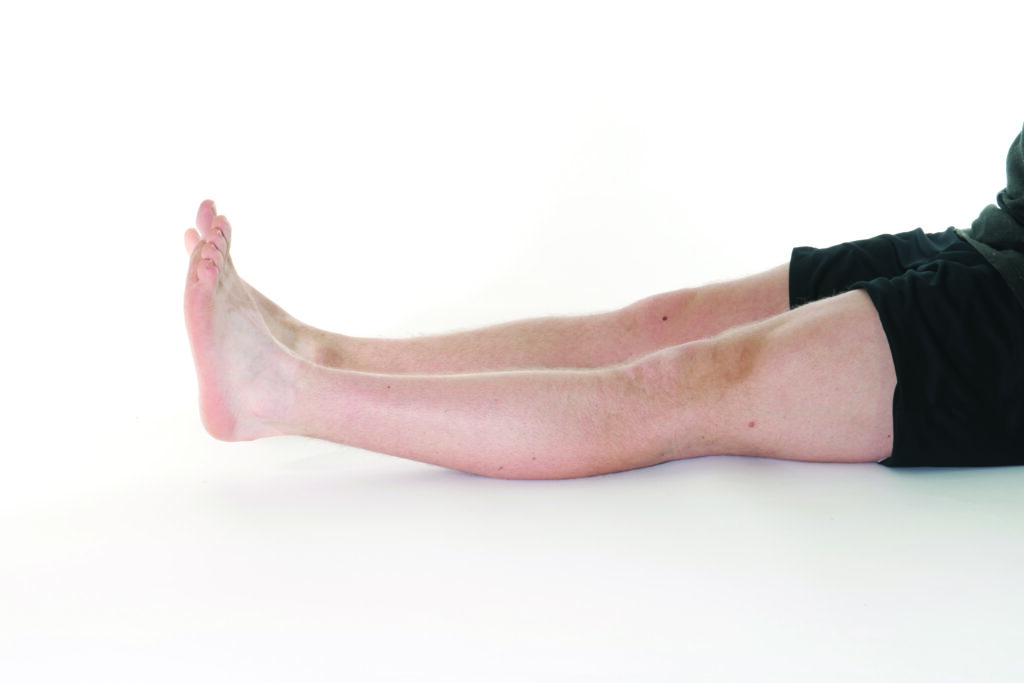
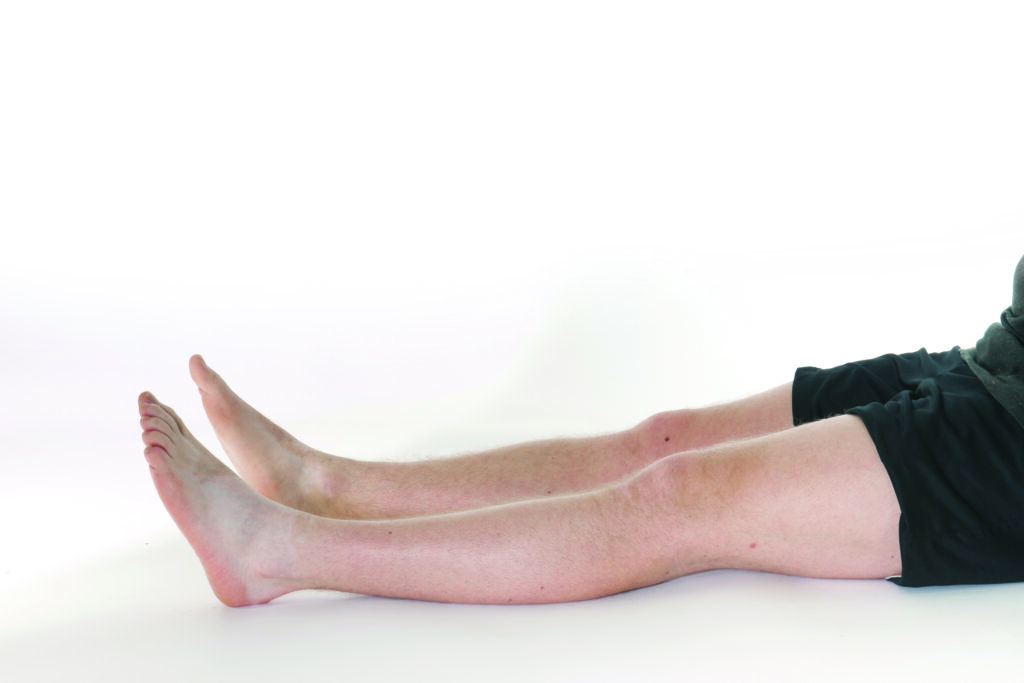
Hold for 10 seconds and repeat 7-10 times
Knee flexion and extension
Lay on the floor or a bed with both legs straight. Bend your injured leg as far as you can then straighten it back out. Bend your leg as far as you feel comfortable.
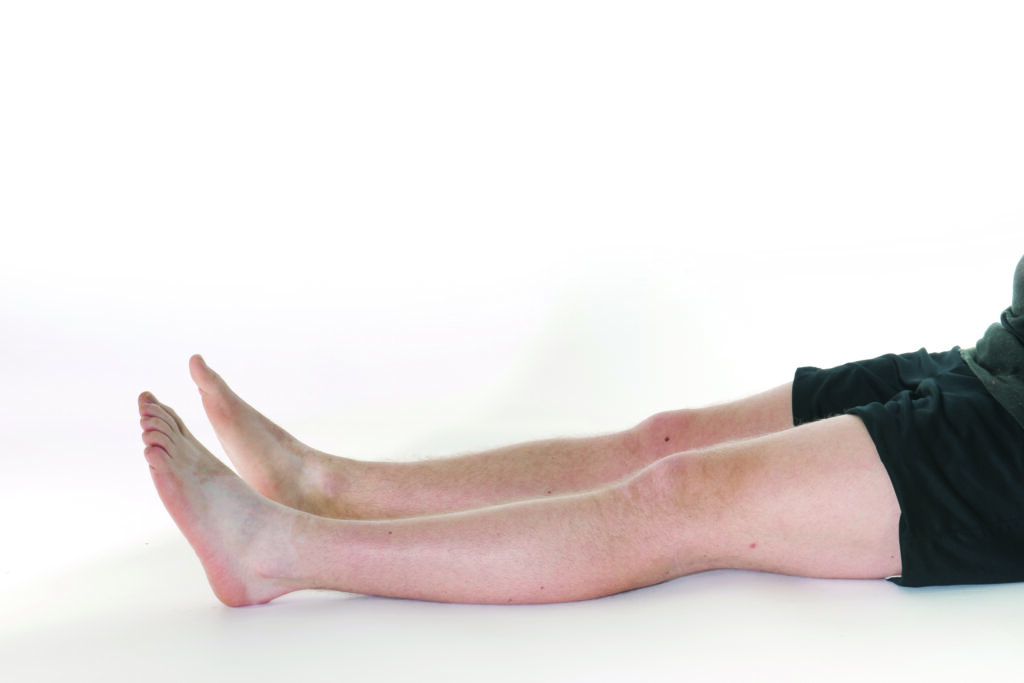
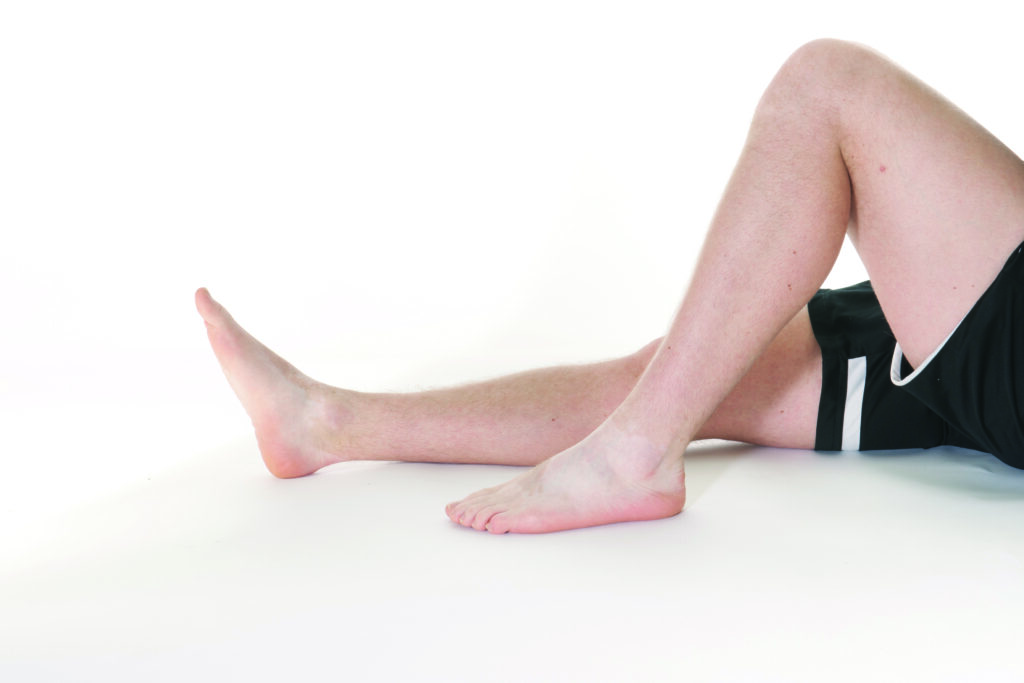
Repeat 7-10 times
Knee extension – sitting
Sit on a chair. Straighten your injured leg as far as you can then bend it back down.
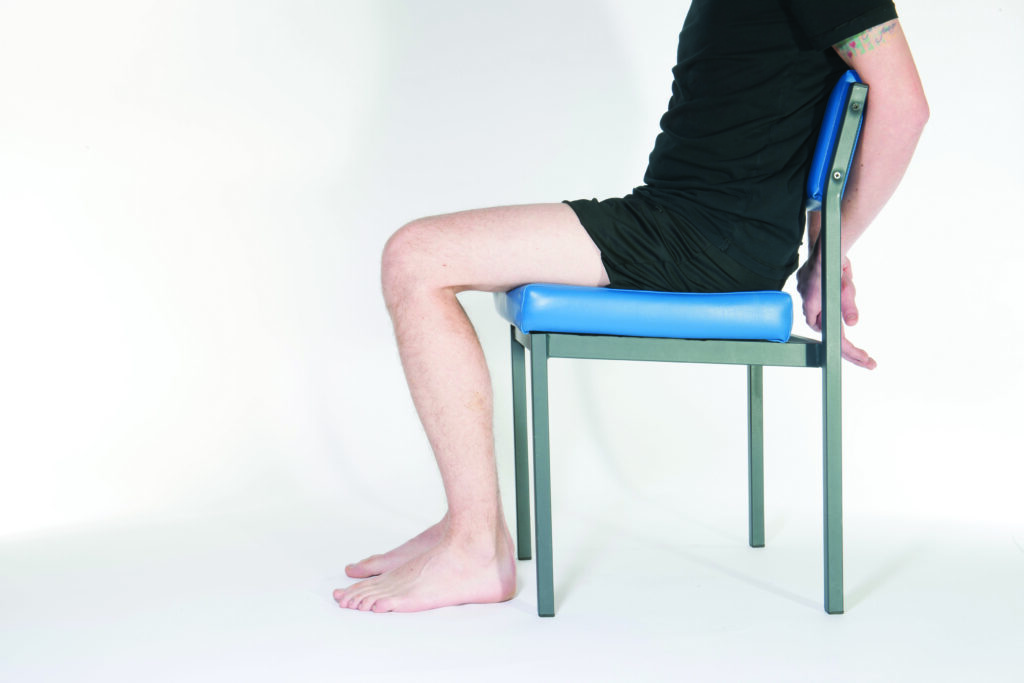
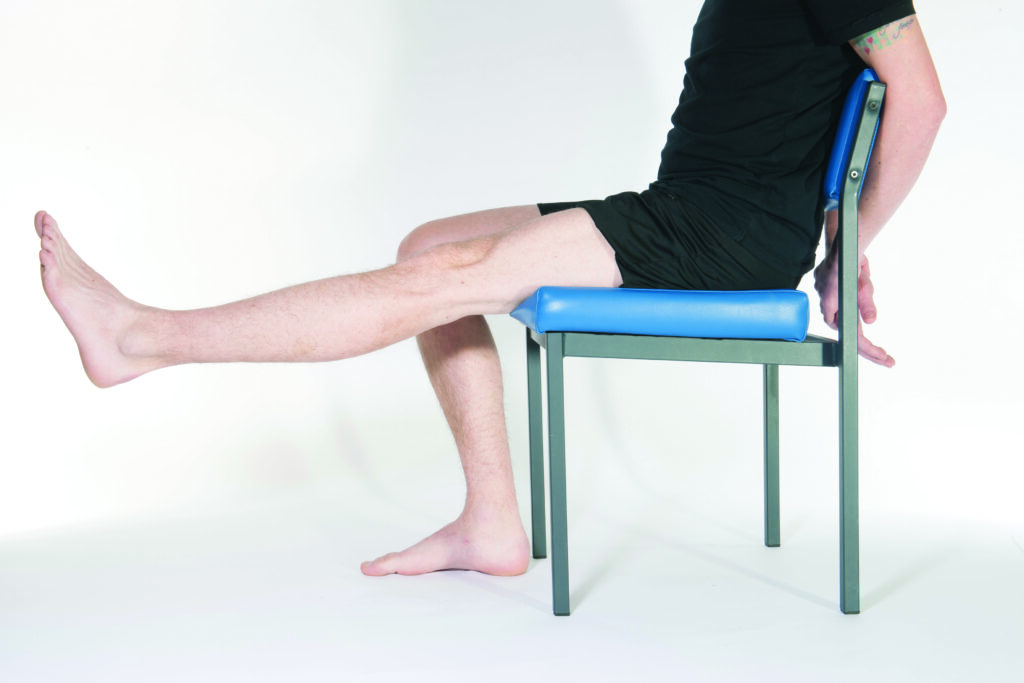
Hold for 5 seconds and repeat 10 times
Ankle
Ankle and foot range of movement exercises
Starting position: sit on the floor or on a bed with your legs straight out and your toes pointing towards the ceiling
- Point your foot up and down within a comfortable range of movement
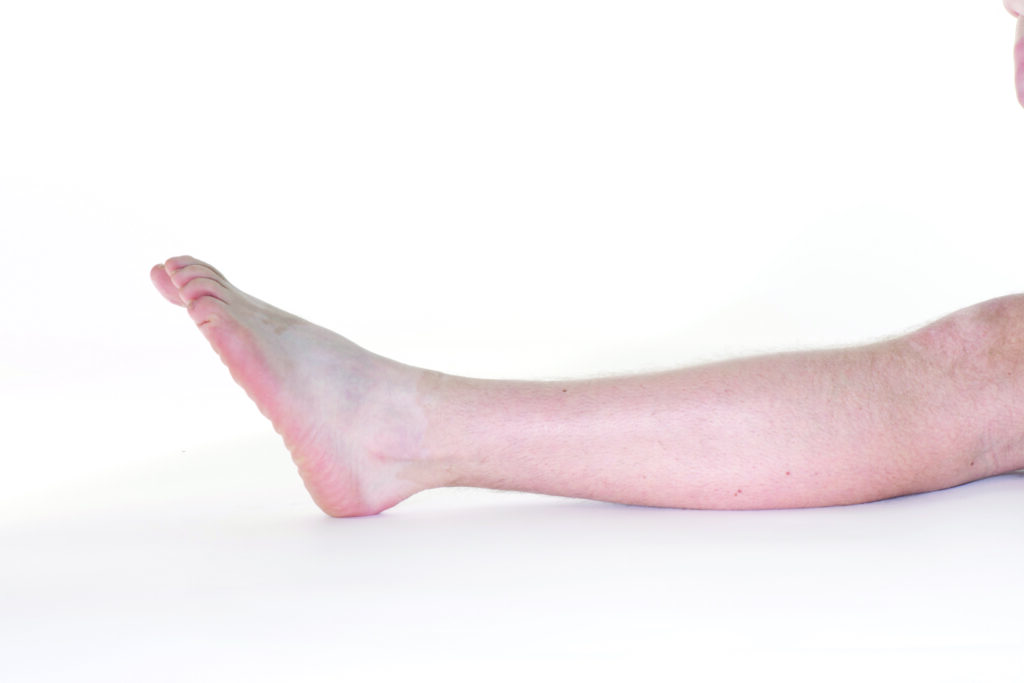
2. Turn your foot inwards so that your toes are pointing towards your other foot and then move back to the starting position.
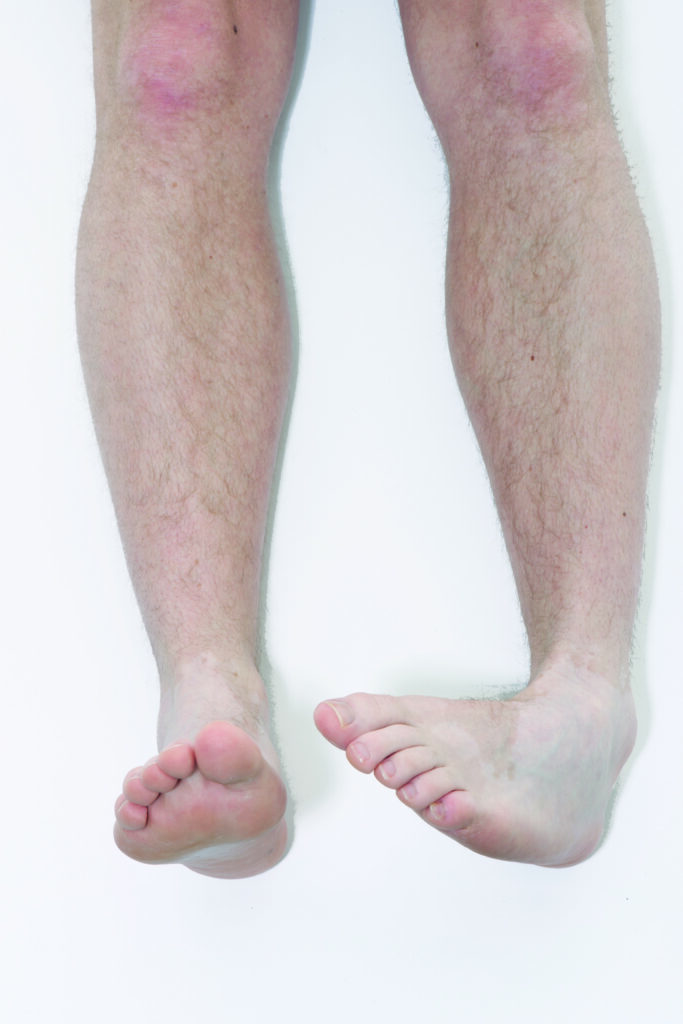
3. Turn your foot outwards so that your toes are pointing away from your other foot and then move back to the starting position.
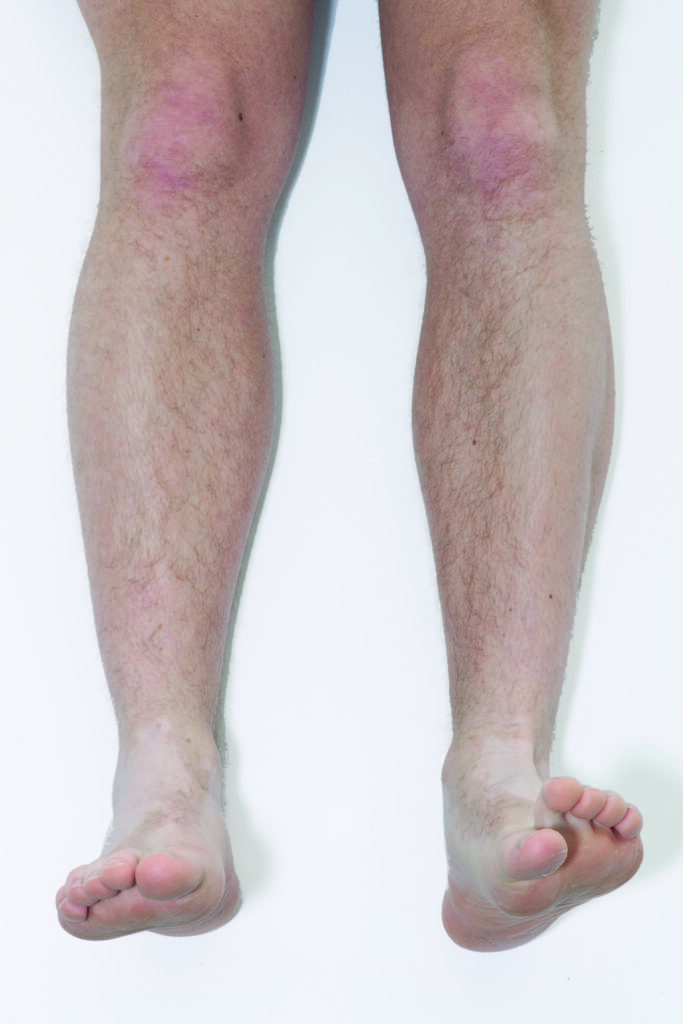
Repeat each of these exercises 10 times
Ankle stretch
Sit with your legs straight out in front of you. Put a towel/bandage around the foot of your injured leg and pull it towards you. You should feel a stretch in the back of your calf.
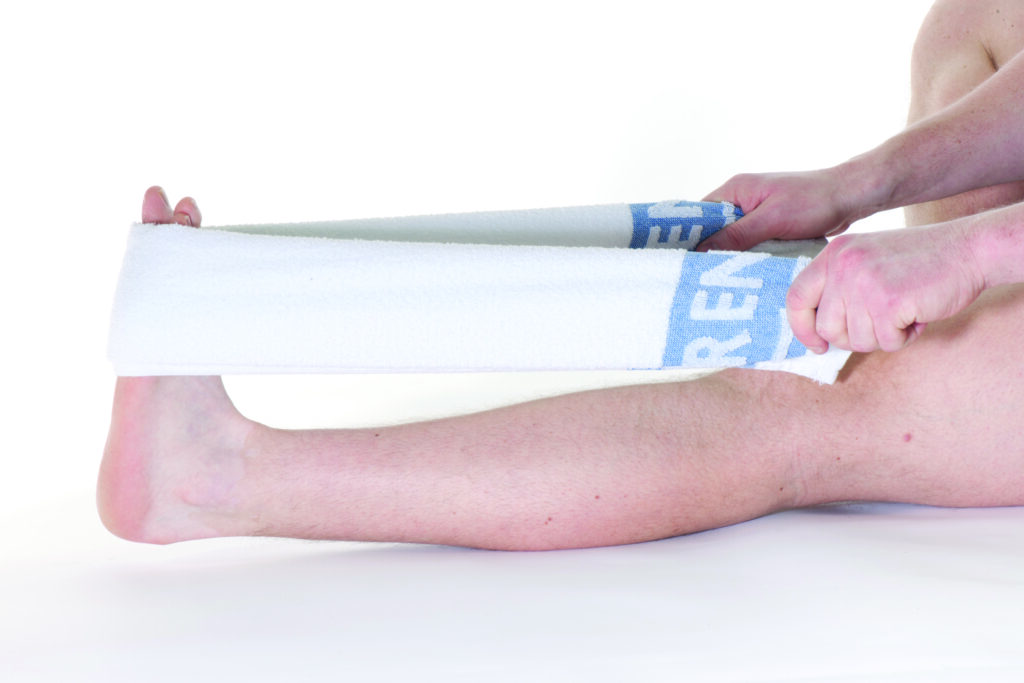
Hold this for up to 30 seconds and repeat 3 times
Advanced knee and ankle exercises
Mini Squat – both legs
Using the back of a chair or a table for support, bend both knees into a squat position and then stand up again. Don’t bend any lower than a normal seated position.
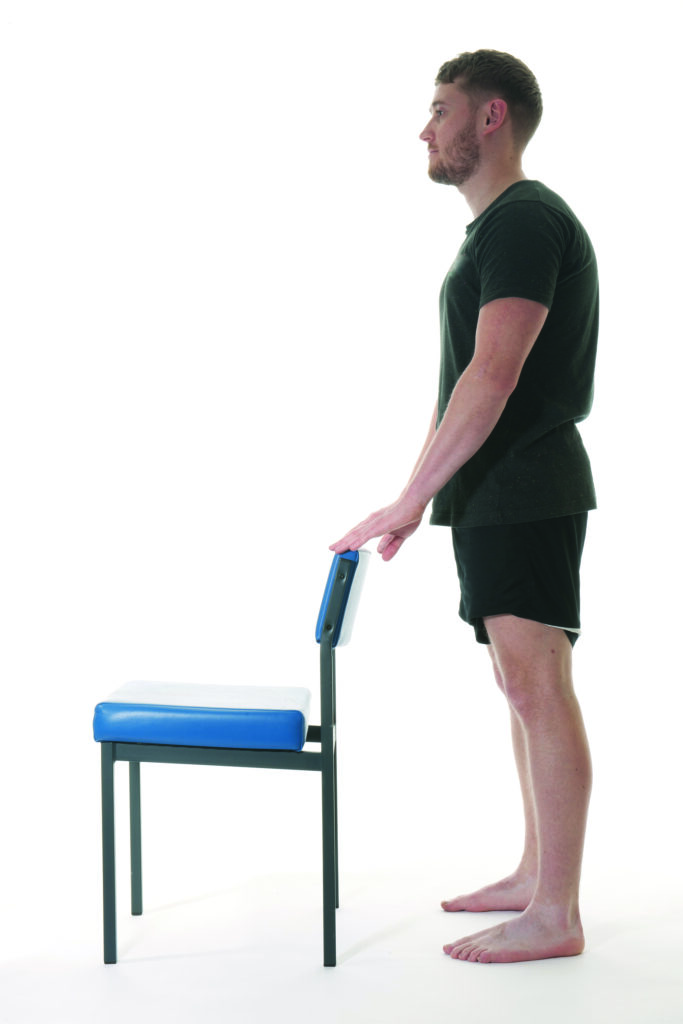
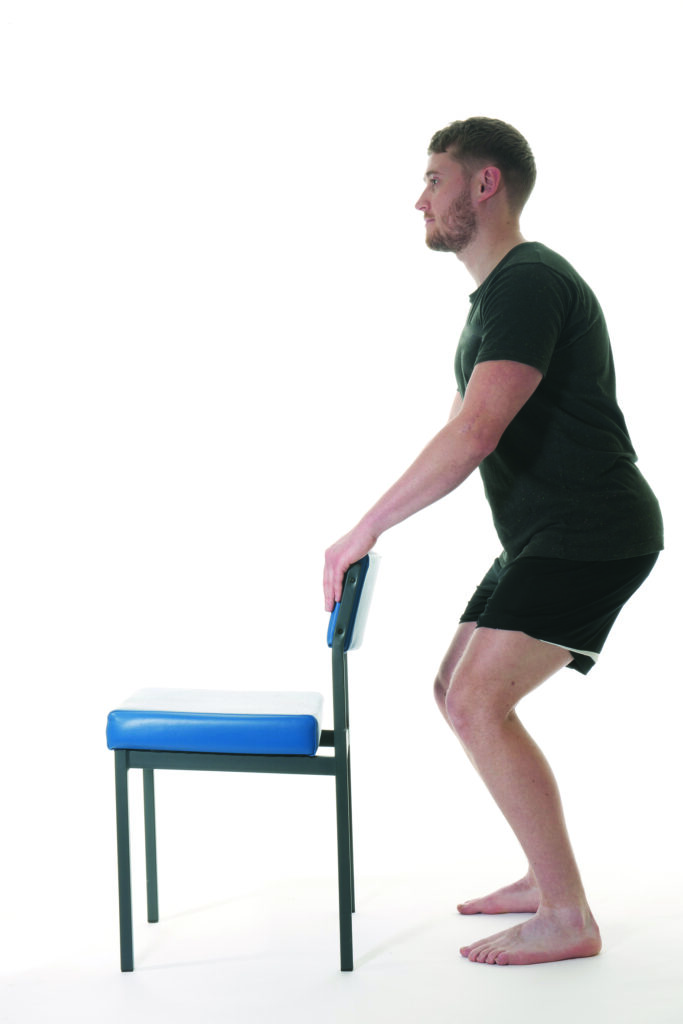
Repeat 5-10 times
Re-developing your balance
Level 1: Hold onto a chair or table for support and practice standing on your injured leg for up to 30 seconds.
Once you have achieved this move to level 2.
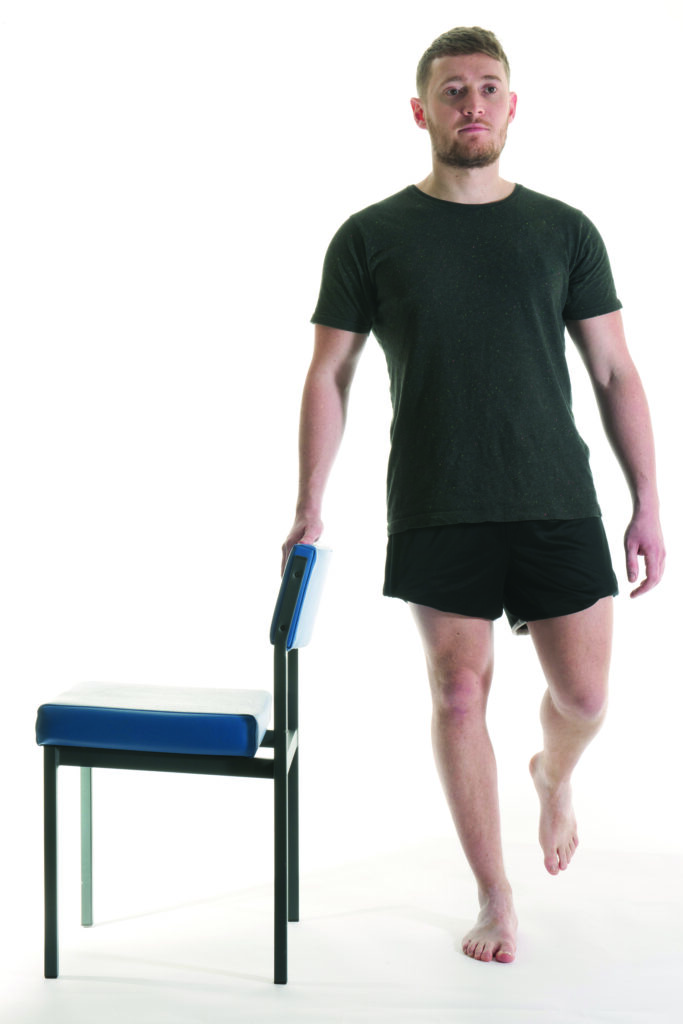
Level 2: Hold onto a chair or table for support and stand on your injured leg. Try to let go of the chair/table and hold for up to 30 seconds.
Driving, work and sport
Return to driving and work will depend on your individual injury, and what your occupation is.
Before starting to drive again you should:
- have sufficient movement and strength in the affected leg to control the pedals in order to drive safely
- be able to perform an emergency stop without hesitation
Ultimately, YOU need to decide when you are fit to drive and YOU should discuss this with the DVLA if in any doubt.
When you return to work you may find that your swelling and discomfort increases. This is normal and is just your body’s response to the increasing demands. Try to have regular rest periods and if possible do lighter or less strenuous duties in the early stages of your return to work.
Before returning to sport ensure that your pain has almost stopped and that the range of movement in both of your legs is the same with equal strength in both. Return to sport should be gradual and you should build up your activity levels over a period of time. For example, start with light jogging and gentle training then build up the amount of exercise over a number of weeks until you feel comfortable to take part in more strenuous activities, including contact sports.