
Each person’s treatment will vary, so the information given is a general guide. The healthcare team looking after you will explain your treatment and the side-effects in detail. If you hear any words or phrases that you do not understand, please ask your doctor or a member of your healthcare team what it means. It does not matter how many times you ask.
If you have any special requirements (physical, religious, cultural, emotional or medical), please inform a member of staff so every effort can be made to meet your individual needs.
What is brachytherapy?
Brachytherapy is a form of radiotherapy where a radioactive source or sources are placed close to or inside the tumour. This results in the treatment area getting a high dose of radiation but the dose to surrounding parts of the body is lower.
Brachytherapy is painless and does not make you radioactive. It is perfectly safe for you to be with other people, including children, throughout your treatment.
What is involved in my treatment?
Your treatment appointments will be booked by the brachytherapy radiographers. An appointment letter containing all appointments will be sent to you. You will be an outpatient for all treatments.
The letter will contain the treatment units phone number, also available at the end of this leaflet, please call this number if you have any questions about your appointments.
Your treatment will be planned specifically for you and is delivered by the HDR treatment Unit.
Who will I meet in the department?
Clinical Oncologist
This is a consultant who specialises in radiotherapy/ brachytherapy. They are responsible for prescribing and supervising your treatment. You will see your consultant, or a member of their team, when your treatment is planned.
Physicist
A medical physicist provides scientific advice to make sure that the oncologist’s prescription is given accurately and safely. They may give advice on which is the most appropriate treatment machine to use and how best to plan your treatment.
Clinical Technologists
To ensure your treatment is delivered accurately customised accessories, such as a wax mould may be required. A clinical technologist is the person who is a specialist in making these customised treatment accessories. Please read the ‘Mould Room’ section of this leaflet for more information.
Students
Please be aware that the radiotherapy department is a training centre for radiographers. Both male and female students may be present on the treatment units, however they are supervised at all times.
If you do not wish students to be present during your treatment please speak to a member of staff. This will not affect your treatment or care.
Planning your treatment
Your first appointment for brachytherapy will be a planning appointment. This will be used to gather all the information we need to accurately plan your treatment.
You may see your clinical oncologist (or a member of their team) at this appointment. This is an ideal opportunity for you to ask questions. If you have not previously consented to your treatment you will be asked to sign a consent form.
The oncologist and radiographers will need to see the area for treatment clearly, please does not wear make-up to cover the area when you come for this and treatment appointments.
The area to be treated will be drawn around using a skin marker. Do not worry if this mark comes off. An individual template of the area will be taken and this will be used by the radiographers during your treatment to accurately position the applicator.
What to bring with you:
- a list of all questions you may have;
- an up-to-date list of all the medications you are taking (including inhalers, sprays, vitamins or herbal products);
- any medication that you may need during your visit;
- something to eat and drink and something to occupy yourself with, as this first visit can be quite lengthy (up to two hours).
Mould Room
You may need a visit to the Mould Room for a Perspex mask or accessories to be made. You will need to wear the mask for treatment to ensure your treatment is delivered accurately.
You may need one or two visits to the Mould Room, these appointments are usually a week apart. After the second visit you may require a CT scan. This will be carried out by the brachytherapy radiographers and will be used by physics to plan your treatment.
There is a leaflet called ‘Having a radiotherapy mask made’ (LN000001) available with more information about masks.
Having your treatment
The procedure involves placing a specifically designed applicator directly onto the treatment area. The applicator in turn will be connected to the treatment unit.
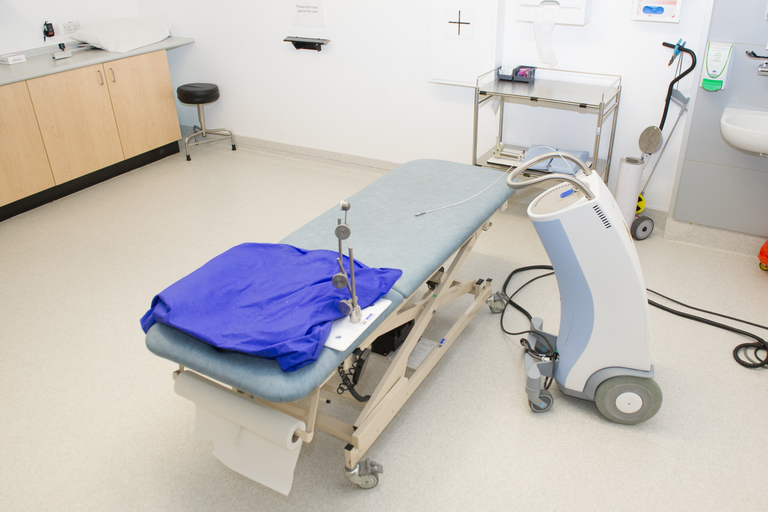
The unit is programmed to deliver a set dose of radiation over a short period of time.
You will be asked to stay still, but you should breath and swallow normally. Treatment times are approx. 10 – 15 minutes long and will be in the treatment room alone during this time. The radiographers monitor you using several cameras and can interrupt the treatment if you move away from the applicator.
The end of your treatment
On the final treatment day the radiographers will chat to you about possible side effects and after care. If it has been requested by the oncologist you may also see them as well.
Side-effects
- You will feel tired.
- Usually the skin reaction starts towards the end of the treatment course and can last for four to six weeks after.
- The reaction may be worse seven to ten days after finishing your treatment course.
- You may notice you the skin in the treatment area is redder, warmer or more sensitive.
- The treatment area may form a scab which will fall off a few times before it heals.
- There is a small risk of cataracts if the area treated is close to the eye (your doctor will let you know if that might be the case).
- In the future, the treated area might look different: Less pigmented, more pigmented, slightly red or you might be able to see fine blood vessels.
- The radiographers will advise you on looking after the treatment area.
- Also see the ‘Skin Care’ leaflet. ‘Skin Care During and After your Radiotherapy Treatment’ (LN005131).
Follow up
Your Follow Up appointment will be 6-8 weeks after you have finished treatment.
Contact us
It is very important that you do not miss treatment days as it may make your treatment less effective. If you feel you are unable to attend for any reason please telephone us so that we can discuss this with you.
Brachytherapy radiographers / HDR Treatment Unit
If you have any queries about your appointment times please speak to the brachytherapy radiographers or contact the HDR Treatment Unit.


General Information
Car parking
When you come for your brachytherapy planning and treatment your car parking is free. On entering the multi- storey car park take a ticket as usual; disabled parking spaced are on Level 0. When exiting, use the left hand lane next to the ticket office. Take your parking ticket and appointment letter to the attendant. They will process your ticket so when you insert it in at the barrier no charge will be made.
If you need assistance or are unable to leave your car, please press the button on the barrier.
Help and support
Research at Leeds Cancer Centre
Leeds Cancer Centre is a major centre for cancer research. You may be asked if you would like to help with some of the clinical studies. You are under no obligation to take part in any trials, and your treatment will not be affected in any way if you do not wish to take part.
If you do take part in a clinical trial you may meet a research nurse or radiographer who will be helping to run the trial.
Further information and support
If you have any questions please ask your hospital team. We all have our own ways of coping with difficulties.
Some people have a close network of family and friends who provide emotional support. Others would rather seek help from people who are not involved with their illness.
The following are also available as sources of information and support that you may wish to use.
Local Support Services
Leeds Cancer Support
Leeds Cancer Support complements care provided by your clinical team. We offer access to information and a wide range of support, in a welcoming environment for you, your family and friends.
We can be found in the information lounges in Bexley Wing and also in the purpose built Sir Robert Ogden Macmillan Centre (behind the Thackray Medical Museum).
Contact details for Leeds Cancer Support
Information Lounge Level -2 Radiotherapy Department

Information Centre Level 1 Outpatients Department
Sir Robert Ogden Macmillan Centre
The Centre is on the St James’s Hospital site and offers a variety of support services including complementary and supportive therapies.
Maggie’s Centre
Maggie’s Centre
If you or someone you love has cancer you may have lots of questions. Maggie’s is a warm, welcoming place where you can meet people who are experiencing similar things to you.
You may also be able to find support groups specific to your needs and get advice and information from their professional staff.
You don’t need an appointment and all support is free.

National Support Organisations
Macmillan Cancer Support
A textphone service for deaf and hard of hearing people.

OUTpatients
A cancer support and advocacy charity for the LGBTIQ+ community.