
Please read this leaflet carefully. It will give you information about decreasing the chance of developing a blood clot during and after your cancer treatment.
If you are living with cancer you will be aware that both the cancer and its treatment are associated with potential complications. One such complication is an increased risk of developing blood clots (also known as venous thromboembolism).
What is Venous Thromboembolism (VTE)?
There are two types of VTE:
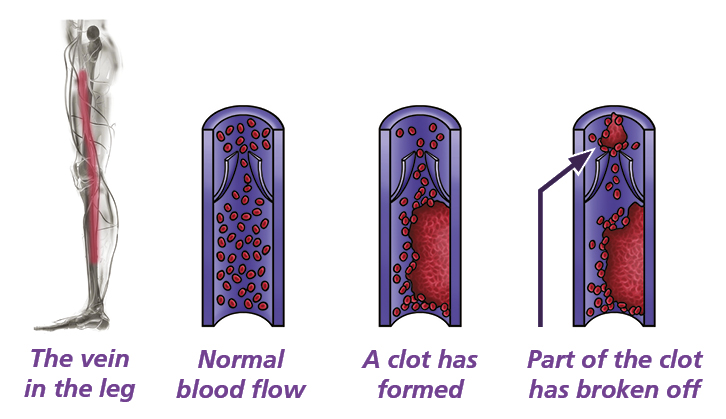
Deep Vein Thrombosis (DVT): a DVT is a blood clot (also known as a thrombosis) that forms in a deep vein, most commonly in the legs but they can also occur in the arms.
Pulmonary Embolism (PE): if all or part of the DVT breaks free and passes through your blood vessels, it can reach your lungs. This is called a PE.
Signs and symptoms of VTE
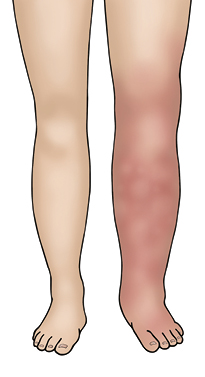
DVT – Symptoms can include swelling, redness/discolouration, warmth and tenderness/pain of the legs that may be worse when standing or walking. Occasionally there are no symptoms except pain.
PE – Symptoms can include coughing, chest pain, breathlessness, blood stained phlegm and collapse.
If you develop any of these symptoms please get medical advice immediately.
Cancer Associated Thrombosis (CAT) is the name for a DVT or PE that develops when you also have cancer. Unfortunately, VTE is common in people with cancer.
There are several reasons why you might develop a VTE when you have cancer, they are detailed below:
Type of Cancer
Having active cancer can increase your risk of developing a VTE. The types of cancer that are most likely to increase your risk of VTE are detailed below:
- Stomach
- Pancreas
- Lung
- Lymphoma
- Gynaecological
- Brain
- Kidney
Cancer treatments
Some cancer treatments can increase your risk of developing a VTE. The types of treatment that are most likely to increase your risk of VTE are detailed below:
- Chemotherapy particularly cisplatin
- Hormone therapy such as: tamoxifen and anastrozole
- Immunomodulatory drugs such as: thalidomide and lenalidomide
- Antiangiogenic therapies such as bevacizumab and sunitunib
- Supportive agents such as erythropoietin and darbopoetin
Other effects
Reduced mobility due to cancer treatments, blood vessel damage from surgery, or having a central venous catheter are other possible risk factors for getting a VTE.
Other risk factors for VTE:
- Past history of VTE’s
- Being overweight
- Reduced mobility (not walking or moving around)
- Combined contraceptives (i.e. the Pill, the contraceptive patch (Evra®) or the vaginal ring (Nuvaring®)
- Hormone replacement therapy (HRT)
- Recent surgery especially on hips or knees
- Age over 60 years
- Pregnancy or given birth in the past six weeks
- Dehydration
- Smoking
- Varicose veins with phlebitis
- A close relative has had a VTE e.g. mother, father, brother, sister, child
- Known thrombophilia (inherited blood clotting disorders)
- Long distance travel of more than four hours within the last eight weeks.
Fortunately, by becoming aware of the signs and symptoms of VTE and always keeping your healthcare providers informed, you can reduce the risks associated with this condition.
How can I help to reduce my risk of developing a VTE?
You can help reduce the risk of developing a VTE by:
- Keeping well hydrated (unless advised otherwise);
- Moving around as much as you can;
- Wearing the anti-embolism stockings or other devices you are given;
- Taking any medication you have been prescribed.
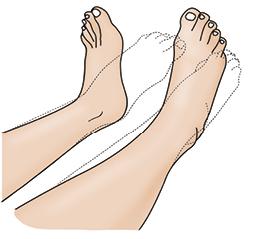
Carry out the following leg exercises (even if you are in bed):
- Lying on your back or sitting, bend and straighten your ankles quickly 10 times.
- Keep your knees straight during the exercise to stretch your calf muscles.
- Try to do this exercise two or three times an hour.
How will hospital staff help me reduce my risk of developing a VTE?
Some of the ways that we try to reduce the risk are:
- Encouraging you to remain as mobile as possible. This may include asking you to regularly perform the leg exercises discussed on the previous page.
- Encouraging you to drink plenty of fluids.
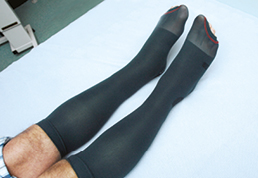
- Giving you elastic stockings to be worn on both legs (these are usually worn after surgery). These encourage blood flow through the legs and reduce the risk of clots. It is important that stockings are the correct size so your legs will be measured to ensure correct fit. You may find them a little uncomfortable and tight at first, but most people get used to them.
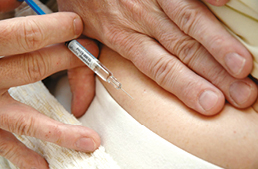
- Giving you a daily injection of a low dose heparin. This medicine thins the blood and makes clots less likely to form. These injections go just under the skin into the fatty layer and are usually given in the stomach, thigh or upper arm. If you are well enough and feel able to give the injections yourself the nursing staff will show you how to inject yourself.
Low dose heparin is made from pork derived heparin sodium. If you have any questions or concerns about this please speak to your nurse, pharmacist or doctor.
There is a risk of bleeding following use of heparin.
You will be assessed for your risk of bleeding. Let the doctors know if you develop unexplained bruises or any bleeding.
If you have any questions about the risk of developing a clot whilst you have cancer and are having cancer treatment speak to your doctor or nurse.
How do I use the elastic stockings?
To ensure the stockings are effective:
- Ensure the stockings are not wrinkled. Otherwise they will dig into the skin underneath and can cause tissue damage.
- Do not turn/roll down the top of the stockings. This may interfere with the blood flow in your legs.
- If you experience tingling or numbness in your legs tell the nurses. This means that the stockings are too tight. The nurse will need to reassess your legs.
- The stockings should be worn day and night while you are immobile.
- You or your nurse should remove the stockings at least once a day to wash and dry your legs. Apply a non-perfumed moisturiser after you dry your legs. Whilst washing your legs look at the skin. If there are any signs of blisters or red marks that do not disappear, particularly on the heels, shin and toes, you should stop wearing the stockings.
What do I do if I develop symptoms when I go home?
If you develop sudden shortness of breath and/or chest pain: Ring 999
If you develop new swelling, tenderness and/or pain of your leg or arm you should ring: 0113 243 3144 and ask for the Oncology Patient Enquiries Bleepholder
Useful sources of information
- Please ask your doctor, nurse or pharmacist for more information.
- NHS choices website for patient information on blood clots
- Thrombosis UK website
- Lifeblood website: The thrombosis charity also has more information
- Anticoagulation Europe website for information on anticoagulation.
- VTE support website