
This leaflet is for anyone who has had a coil inserted into their uterus (womb).
The information in this leaflet is aimed to help you understand how to safely check the position of your coil.
Types of Intra-uterine (within the womb) coils
You will be asked details about your bladder problem and will be given the opportunity to discuss any worries or concerns you have about the test.
Hormonal
- A small plastic T-shape coil, which releases a small amount of a hormone called Levonorgestrel into the womb, which can act to prevent pregnancy. It comes in different sizes.
- Names include: IUS (intra-uterine system) or ‘Mirena’, ‘Levosert’, ‘Kyleena’, ‘Jaydess’, ‘Benilexa’.
Non-hormonal
- A small plastic T-shape coil, which releases a small amount of copper into the womb, which can act to prevent pregnancy.
- Names include: IUD (intra-uterine device) or ‘Copper coil’.
How to check coil threads
There are two threads attached to the bottom of your coil. These threads come down the womb and out of the cervix (neck of the womb). When your coil is correctly in place, these threads will be felt high up in your vaginal canal.
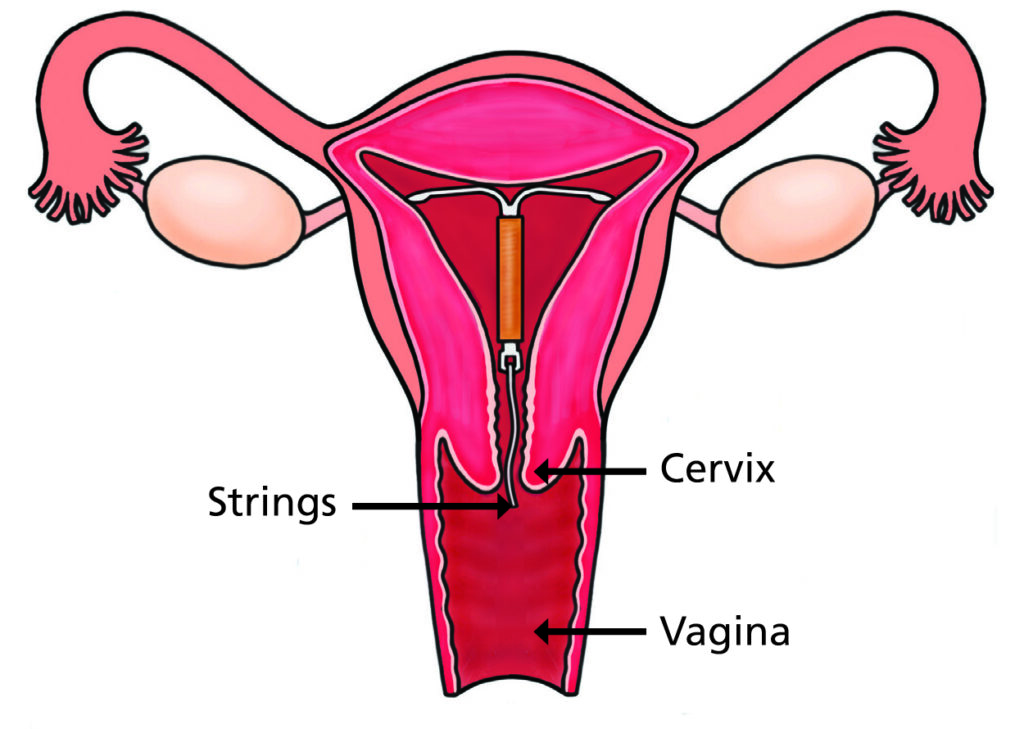
These threads allow you to regularly check that coil is in place. They also make it easier for your doctor or nurse to remove your coil when required. It is important to remember that your coil could stop working if it slips either partially or completely out of place (known as expulsion).
You may not experience any symptoms if this happens, therefore it’s important to check the threads regularly. Occasionally the threads can also curl up within the womb itself, which may make it more difficult to feel them.
How to check coil threads
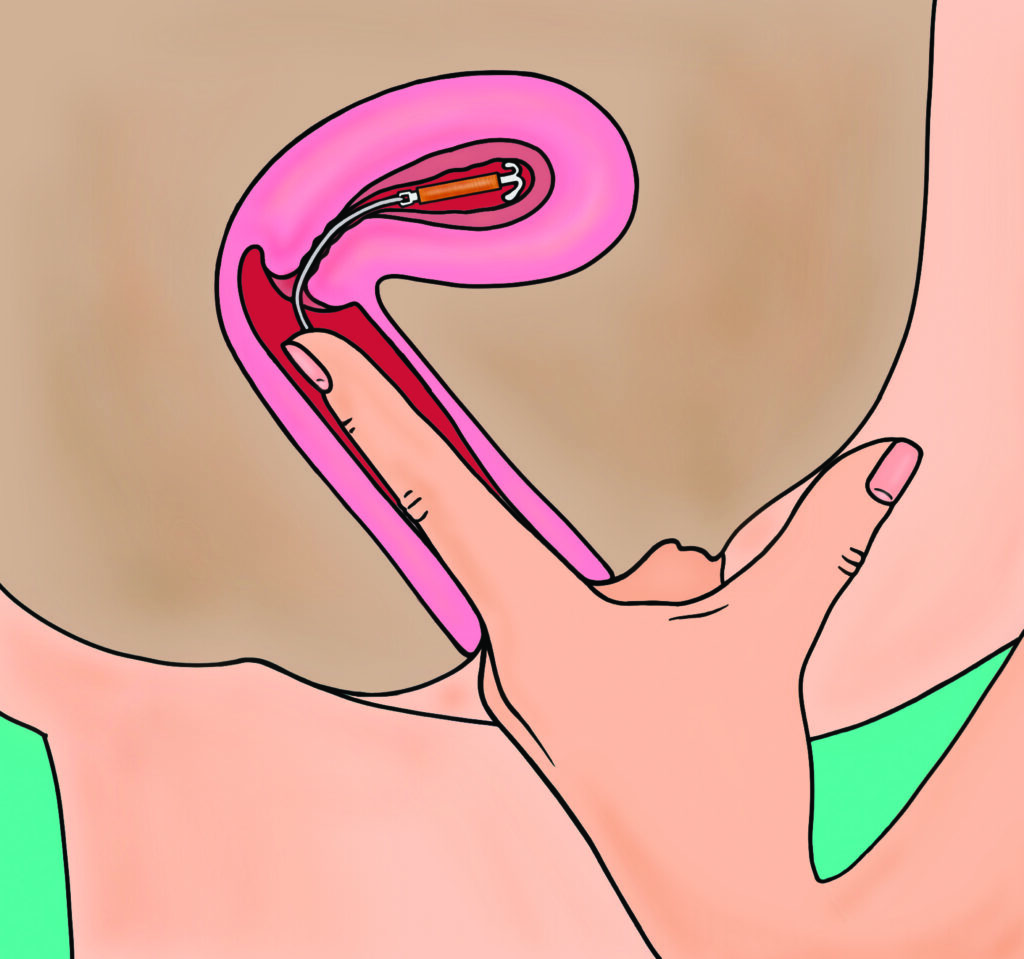
Wash your hands (you may use a small amount of vaginal lubricant on your fingers if required).
Either sit or squat or lie on your back (whichever is most comfortable).
Insert your index or middle finger into your vagina until you touch the cervix (which should feel soft & spongey, like the tip of your nose with a dimple in the middle).
The threads will feel like two small ends of fishing line. If you can feel both the coil threads, then your coil is in place.
If the threads feel longer or shorter than the last time you checked or you cannot feel them at all, then your coil may have moved – contact your GP or local sexual health clinic.
When to check your coil threads
The best time to check your IUD threads is at the end of each period (after your menstrual bleed) as the cervix will be lowest in the vaginal canal, so it is easier to feel.
It is particularly important to check your coil threads every 4 weeks after fitting for the first 3 months.
If your coil is going to move out of place it will most likely do so in the first few months after it has been inserted. If you can’t feel your coil threads, you should check your toilet or pads/tampons/menstrual cup to check that it has not come out. After this initial period, you can now start checking your coil threads regularly every few months.
What to do if you think your coil has moved
- If your coil has moved, it must be put back in place or replaced by a doctor or nurse trained in coil insertions. DO NOT try to push the coil back up into place.
- Contact your GP or local sexual health clinic to make a follow up appointment for an examination. You may require an ultrasound scan or abdominal X-ray to locate the coil if the threads are not seen during the examination.
- If you are using the coil for contraceptive purposes, make sure that you use backup contraception, like a condom or abstain from sexual intercourse until your coil threads have been checked by a doctor.