It will be given to you in addition to the information you will receive from your Clinical Oncologist (who is a specialist doctor in cancer treatment). His/Her team will be caring for you during your treatment. This team will include radiographers and clinical nurse specialists but may also include other specialist health care professionals.
This leaflet also explains the side-effects that you may experience during and after treatment. These effects vary from one person to another, so the information is given as a general guide.
The healthcare team looking after you will explain your treatment and the side-effects in detail. If you have any questions after reading this leaflet, please speak to the team looking after you or ring the numbers at the end of the leaflet.
Staff will make every effort to meet your individual needs or will direct you to the person who can help.
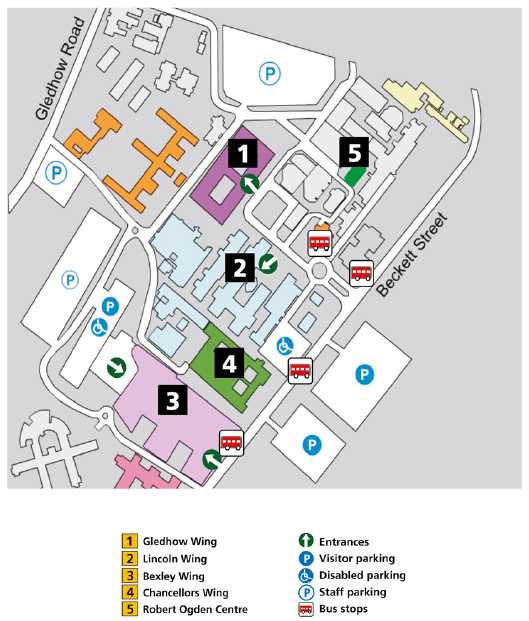
All your radiotherapy planning and treatment will take place in the Radiotherapy Department on Level -2, Bexley Wing, Leeds Cancer Centre, St James’s Hospital, Leeds
(LS9 7TF).
Radiotherapy reception

Please note
Please do not bring any valuables into hospital with you as the Trust cannot accept liability for loss or theft.
What is chemoradiotherapy?
Chemoradiotherapy is the use of anti-cancer drugs (chemotherapy) and radiotherapy given at the same time.
How often is it given?
Our usual treatment involves five weeks of radiotherapy, given daily Monday to Friday however your treatment may not start on a Monday. You will usually come for 25 treatments, but this may vary, in which case this will be explained by your clinical team.
You may need to be treated on a weekend due to a bank holiday and we will let you know if this is the case. Your radiographer will be able to explain the details of your individual radiotherapy appointments.
Your treatment will usually be given as an outpatient.
Pregnancy
It is very important that patients who could become pregnant, are not pregnant at the start of their radiotherapy course. Also, patients should not become pregnant during their radiotherapy treatment, as this can have an effect on the unborn child.
Use an effective form of contraception, for example condoms, coil, depo injection or contraceptive pill.
For more information see the ‘Contraception and pregnancy during cancer treatment’ (LN003721) leaflet.
Please do not hesitate to ask your doctor or nurse if you have any questions or concerns about these issues.
Chemotherapy
Chemotherapy is given as either:
- a number of tablets taken morning and evening 12 hours apart, on the days when you have radiotherapy (not at the weekend);
- or it can be given daily directly into a vein during each weekday of the first and last week of radiotherapy.
Your doctor will recommend which form of chemotherapy is best for you. All chemotherapy is usually given as an outpatient.
Taking your oral (tablets) chemotherapy
An appointment will be arranged for you to attend a nurse led pre-assessment clinic. This appointment will take place a day or two before you begin your treatment.
This appointment is to discuss:
- How to safely take the chemotherapy tablets. You will be able to collect your chemotherapy tablets from the Bexley Wing pharmacy (Level 0) on your way home.
- A holistic (looking at your individual needs) nursing assessment will be carried out.
- You will be advised how to care for your skin during radiotherapy.
- The nursing staff will aim to answer any questions you may have.
Please make sure that you collect your chemotherapy tablets after your pre-assessment visit so that you can start taking them on the morning of your first treatment day.
It is important that you take your medication as prescribed. It will be written clearly on the boxes of tablets how many you will need to take. The pharmacist or nurse will explain this to you.
Wash your hands before and after taking the tablets. Swallow the tablets whole – do not chew them or crush them. If you forget to take your tablets, just take your next dose as normal. Do not take a double dose. The tablets should be stored at room temperature, in a cool dry place. If you have any tablets left, please bring them into the hospital pharmacy. Do not flush them down the toilet or throw them away.
Please keep your tablets safe and out of reach of children.
Please note
Capecitabine (the chemotherapy tablets) can interact with some other medicines and herbal products. Tell your doctor or pharmacist about any medicines you are taking. This includes vitamins (including multi-vitamins), herbal supplements and over the counter remedies.
You need to be particularly careful if you are taking medicines for:
– Gout (allopurinol)
– Blood thinning medicines (warfarin)
– Some antiviral medications
– Medicines for seizures or tremors (phenytoin)
If you are taking folic acid, you need to stop taking this before starting your chemotherapy tablets. Do not start taking it again until after your course of treatment has finished.
Having your Intravenous (IV) Chemotherapy
IV chemotherapy (only used occasionally) is given through a vein in your arm. The team will arrange for you to attend a pre-assessment appointment, which will take about an hour. You will be shown around the Chemotherapy Day Case Unit (Ward 80) where you have your chemotherapy.
On the first day of your treatment you will have a holistic nursing assessment before you begin your chemotherapy.
You can expect to be in the chemotherapy department for approximately two hours on this first day. Otherwise chemotherapy takes about one and a half hours to give.
Radiotherapy
Radiotherapy is the use of high energy X-rays and other types of radiation, to treat cancer. The radiotherapy causes damage to the cancer cells in the treated area. Although normal cells are also affected, they can repair themselves and are able to recover.
Radiotherapy is a local treatment. This means it only affects the part of the body that is treated. You do not feel anything during radiotherapy and you will not be radioactive.
You may hear a buzzing noise when the machine is switched on.
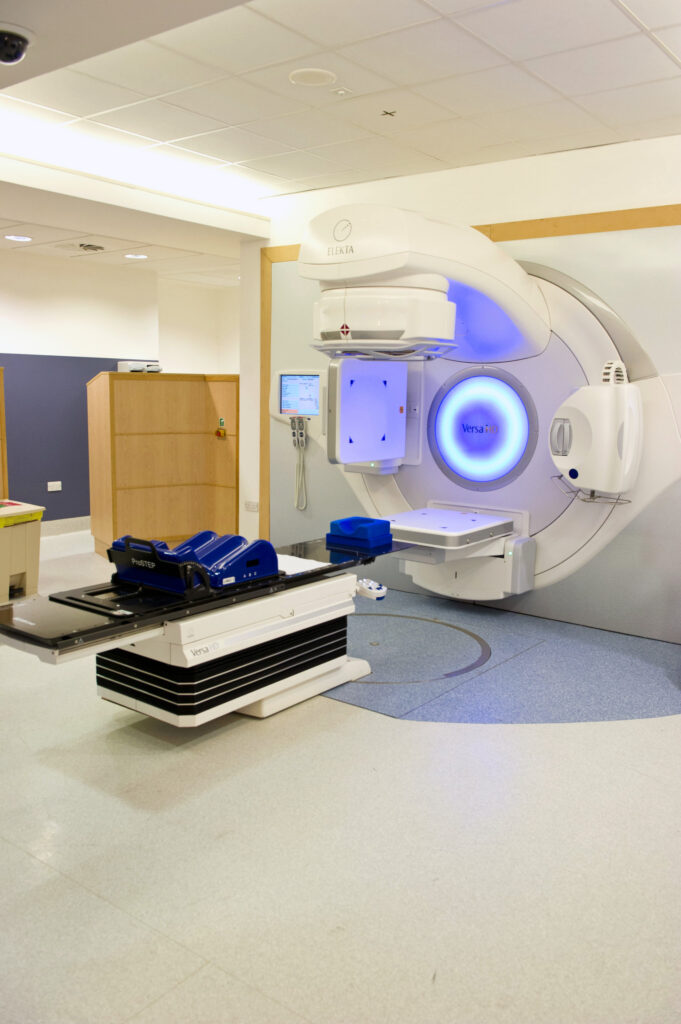
It is perfectly safe for you to be with other people, including children, and anyone who could be pregnant, throughout your treatment. You will have your radiotherapy on a treatment machine called a Linear Accelerator as shown in the photograph. You will see your radiographers at each treatment session, and they will be happy to answer any questions you may have.
Who will I meet?
Therapeutic radiographers
Radiotherapy is given by therapeutic radiographers of any gender. They are highly trained in the accurate planning and delivery of radiotherapy treatment. You will see your radiographers at each treatment session and they will be happy to answer any questions you may have.
Student radiographers
The radiotherapy department is a training centre for therapeutic radiographers. They are supervised at all times. If you do not wish students to be present, please speak to a member of staff. This will not affect your treatment or care.
Others involved in your care
You may meet other staff whilst you are coming for radiotherapy. Everyone you meet will introduce themselves, tell you their job title and explain the role they have in your care.
Visiting us before your treatment
If you would like to visit the radiotherapy department before starting treatment, please call 0113 206 7603. This visit can be very useful as you can find out more information about radiotherapy.
Patient quote:
“I was so pleased to see the machines before my treatment and the staff were so helpful and really put my mind at rest.”
Planning your treatment
Your first appointment for radiotherapy will be a consent and/or planning appointment. Some patients may have already signed a consent form during a previous appointment with the Doctor. Other patients might have a consent appointment with us first, and return another day for the planning appointment. We will contact you by phone with the dates and times of the appointments. Directions to the hospital and transport arrangements will be discussed with you at this point.
Some tests and scans may be needed to help plan your treatment. We will explain which of these you will need when your appointment is made. You may see your clinical oncologist (or a member of their team) at this appointment. This is an ideal opportunity for you to ask questions. If you have not previously consented to your treatment you will be asked to sign a consent form.
This appointment may include:
- Signing a consent form that says you agree to have treatment, (if it has not been done already);
- having blood tests;
- having your height and weight measured (to calculate your chemotherapy dose);
- a nursing assessment; and
- a planning CT scan.
Some people also need an extra test to measure how well their kidneys work.
What to bring with you:
- a list of all questions you may have;
- an up-to-date list of all the medications you are taking (including inhalers, sprays, vitamins or herbal products);
- any medication that you may need during your visit;
- something to eat and drink and something to occupy yourself with, as this first visit can be quite lengthy (up to two hours);
- When attending the hospital always bring spare stoma equipment with you if you have been fitted with a stoma bag.
Radiotherapy planning scan
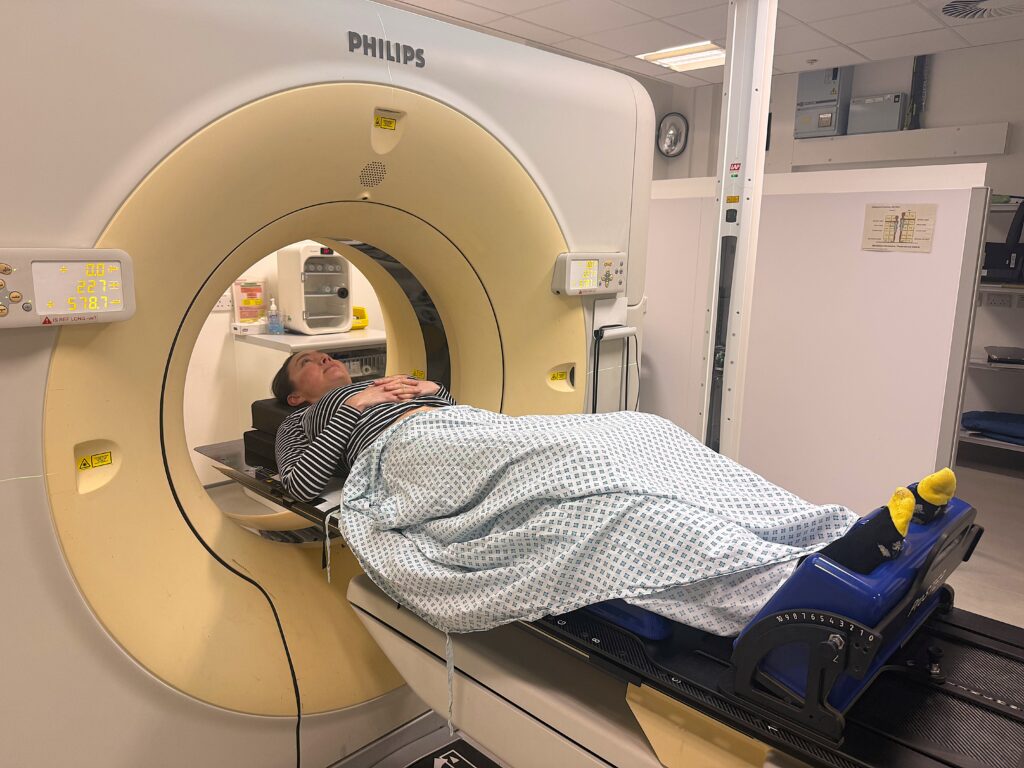
In order to plan your treatment, you will have a planning CT scan. This is done on a machine called a CT scanner, shown in the photo. It allows the images to be sent to the radiotherapy computer planning system. There will be several members of staff present at your scan. This will include therapeutic radiographers, and possibly a dosimetrist (the person who will produce the computer plan for your treatment).
Planning scans are not diagnostic examinations and will not be reported on as such.
The scan appointment usually takes 10-15 minutes. We will ask you to have a comfortably full bladder for your scan and for each treatment. This is to help reduce side-effects to the small bowel. You will be asked to undress from the waist down and will be given a gown to wear.
You will be lying in the position shown in the photo above. It is important that you are comfortable as you will have to lie in this exact same position for your treatment each day. Please tell the radiographers if you are uncomfortable.
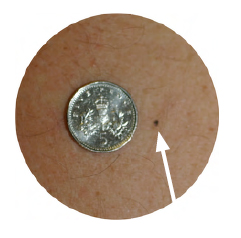
Once you are in position for the scan, the radiographers will draw some marks onto your skin, to use as a reference for treatment.
At the end of the scan (which will usually only take a few minutes) these marks will be replaced by permanent marks (tattoos). They will be used each day for your treatment. It means you can wash without worrying about your marks coming off. These permanent marks will be used each day for your treatment. They help us to reproduce your treatment with accuracy each day.
Following the scan you will receive the times of your first appointments on the treatment machine. The radiographers will talk to you about any further appointments you have.
Contrast (dye)
A special contrast agent, often called a ‘dye’, may be used for your scan to make specific organs, blood vessels and/or tissue types ‘stand out’. This can make it easier for the oncologist to plan your treatment. This contrast is only needed for the planning scan, not each treatment.
The dye is given through a very small plastic tube called a ‘cannula’ into a vein in your arm. You should tell the radiographer if you have any allergies, but they will go over this with you before they use any dye. The radiographers will advise you about drinking plenty of fluid after your injection.
Contrast side effects
You may notice a warm feeling throughout your body and have a metallic taste in your mouth. You may also feel as if you have passed urine (had a wee). This will pass very quickly. There is a slight risk of an allergic reaction to the injection, such as a skin rash. However, it very rarely leads to other complications. The staff in the radiotherapy department are highly trained to manage any complications and again the risk is very small.
You will be able to drive and go to work after your scan.
MRI Planning scan
Sometimes an MRI scan may also be required to help plan your Radiotherapy. This usually takes place on a different day to your CT scan. Because the MRI scanner contains a large magnet, we need to ask you some questions, before you go in to the scanner room. to make sure that it safe for you. You will need to remove any items that contain metal for the scan.
You will lie in the same position that you will have your treatment in. We will give you some earplugs and headphones to wear as the scanner can be quite noisy. The MRI scan can take up to an hour.
Having your radiotherapy
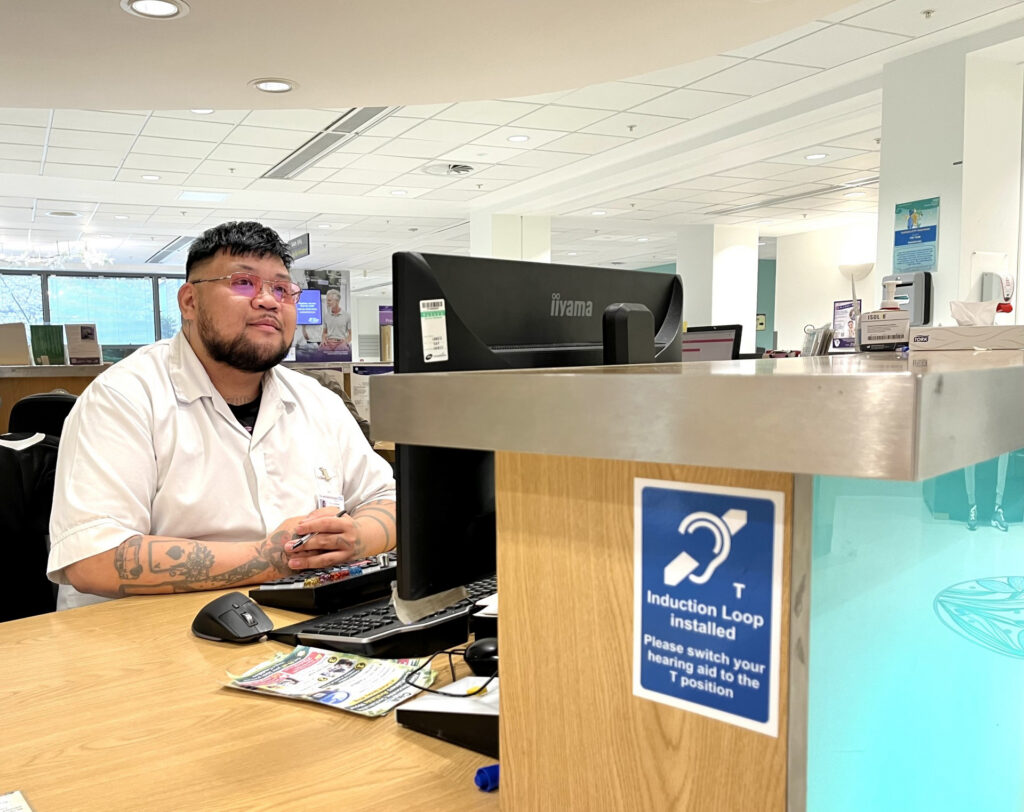
When you arrive for your treatment you should go to the main radiotherapy reception desk at the entrance of the radiotherapy department. On the first occasion you will be given a list of all your appointments. You will also be escorted to the waiting area for your machine. The radiographers will explain what will happen and answer any questions that you may have.
Treatment is usually given daily, Monday to Friday however your treatment may start on any day of the week. Whenever possible you will be treated at the time of day that suits you, but this cannot always be arranged or guaranteed. There may be occasions when you may have a longer stay in the department or be asked to attend at a different time, for example to see your oncologist.
You may need to undress and put on a gown; the radiographers discuss this with you when you first attend the department.
The radiographers will position you, and adjust the treatment couch and machine to the correct positions.
For the first few treatments and also intermittently during treatment we will also take images to check the accuracy of the treatment. This will take a few more minutes.
These images do not monitor your condition but are purely for treatment accuracy.
You will be asked to stay as still as possible during the treatment but you should breathe and swallow normally. Once you are in the correct position the radiographers will leave the room to switch on the machine. You will only be alone for a few moments at a time. The radiographers will be watching you on a closed-circuit TV (CCTV) monitor during treatment.
The CCTV camera is not recording or saving any images. There is also an intercom system so the radiographers can talk to you. If you would like to listen to music during your treatment, please let us know.
The treatment only takes a few minutes but you will be in the treatment room for about 10-20 minutes. The machine stops automatically after your prescribed dose of treatment has been given. The radiographers can stop the machine at any time if needed. The treatment machine makes a buzzing sound when switched on. You do not feel anything.
The radiographers may need to come in and out part way through each treatment.
After the treatment is complete the radiographers will come back into the room and help you off the couch. Your treatments will generally be on the same machine. However, there may be days when this machine is being serviced. In that case your treatment will be in a different room.
Important
During the treatment course, please tell the radiographers how you are feeling. If you have any problems or questions, please let them know.
It is very important that you do not miss treatment days as it may make your treatment less effective. If you feel you are unable to attend for any reason please telephone us so that we can discuss this with you. If you have any queries about your appointment times please discuss these with the radiotherapy coordinators on your treatment unit.
For appointment queries please telephone the radiotherapy reception desk 0113 206 8940 for further advice.
Your Clinical Oncology team will see you once a week in the radiotherapy review clinic (Princess Royal Suite) to see how you are getting on. They will also monitor any side-effects you may be experiencing. You can expect to be in the department longer than usual on these days.
On some days the radiotherapy department may be busy and there may be a delay before your treatment. We will keep you informed of any delays over 30 minutes. Please see the delay boards in the waiting areas. It may be a good idea to bring something to eat and drink with you. This includes any supplement drinks you have been asked to have and any medication you may need. Bexley Wing also has a variety of places where food and drink can be bought during the day.
Please ask your GP for further prescriptions for on-going medication after finishing your treatment.
Side effects
Side effects can be divided into short term (acute) effects which happen during or soon after treatment, and long term side effects occurring months or years later.
Some side effects are common, whilst others are rare. The area and amount of treatment given to you will affect which side effects are most likely to happen to you. Both chemotherapy and radiotherapy can be responsible for causing side effects. Your oncologist will discuss this with you.
If you develop any radiotherapy side effects you will be given advice and support by your healthcare team. Below is a list of side effects along with how likely it is for that particular side effect to occur.
Here are some definitions to help you:
- Common – More than 10 in every 100 (more than 10%) people will develop this side effect.
- Occasional – Between one and 10 in every 100 (1 to 10%) people will develop this side effect.
- Rare – Less than one in 100 (less than 1%) people will develop this side effect.
However, please be aware that each patient can react differently to treatment. You may experience side effects at different times and to varying degrees, compared to other patients having the same treatment.
Short term side effects
Most side effects are common and are temporary.
Side-effects tend to build up from about the second week of treatment. They will be at their worst at the end or just after the treatment course.
They generally last a number of weeks or months after the treatment has finished.
Radiotherapy side effects
Tiredness (fatigue)
Common
Nearly all patients having chemoradiotherapy will feel tired. Be prepared to take things easy during treatment and allow for extra rests.
Fatigue usually improves in the weeks to months after treatment. Try to continue with some of your normal routines and activities if possible. If you are struggling with tiredness you should let your key worker / clinical nurse specialist know.
Rare
Whilst some tiredness is common it is rare for you to stop being able to do day-to-day tasks.
Things you can do to help with tiredness include:
- Gentle exercise can help reduce the symptoms of fatigue.
- Having enough to drink can prevent tiredness from dehydration.
- Small meals or snacks eaten more often than three times a day may be easier to face.
- Try to get a good night’s sleep where possible, a daytime nap may help.
- Try to ‘pace’ yourself, listen to what your body is telling you, rest if you need to.
- Little and often is the rule of thumb.
- For more advice please refer to the Macmillan booklet ‘Coping with Fatigue’.
Bowel problems
Radiotherapy includes treating some of your normal bowel as well as the cancer. It can cause inflammation, swelling and soreness of the bowel lining. Chemotherapy may also cause a change in your bowels. These side-effects usually start in the second week of treatment and sometimes get worse as the treatment continues.
Common
- Diarrhoea (i.e. more liquid poo, that is passed more often). If you have a stoma you may need to change or empty your bag more often.
- Needing to get to the toilet quickly (urgency).
- Bleeding or mucus loss from the back passage.
Occasional
- Abdominal (tummy) bloating and discomfort.
- Feeling of fullness in the back passage or pain (particularly if your tumour is low down).
Things you can do to help with bowel side effects include:
- If you need to open your bowels (have a poo) four or more times more than is usual for you in a day, then tell the radiographers, your doctor or nurse.
- You will be given anti-diarrhoeal tablets to take, called loperamide. If you get diarrhoea you should start taking these as instructed.
- If you have a stoma please make sure you bring spare stoma equipment with you each day.
- If you have pain or discomfort in the back passage (this is called ‘tenesmus’), pain killers can help. These can be tablets, such as Paracetamol. They may be gels/creams that can be applied to the skin around the back passage (such as instillagel).
- Some people feel more confident if they wear a pad in case of leakage.
- It is also helpful to bring any pain medication you may need with you to your appointments.
Skin reaction
Common
The skin in the treated area (around your back passage and groins) starts to redden or darken about 10 days after the start of radiotherapy treatment. It may become dry and itchy.
Sometimes later in treatment it may peel and become weepy.
After any redness or darkening fades, a few people may have pigmentation (a darker coloration) left on the skin. These areas will also be more sensitive to sun light than before. Avoid hair removal where possible, including shaving, waxing, cream and lasers unless advised otherwise by your consultant, nurse or radiographer.
Things you can do to help with skin reaction include:
- Before you go in for your treatment the radiographer will explain what will happen to your skin and how to look after it. They will also give you a leaflet to take home.
- The team will recommend different creams or dressings if you need them. Do not use your own creams in the radiotherapy treatment area as they can make your skin reaction worse.
Princess Royal Suite
If you are concerned about your skin reaction please talk to your radiographers or contact the review clinic nursing staff in the Princess Royal Suite.
Pubic Hair loss
Common
- Only hair in the treated area will stop growing and may fall out. Sometimes hair will not grow back after treatment.
Other side effects from the radiotherapy are less common:
Bladder problems
Your bladder will also be included in the treatment area, as it is very close to the back passage. The following side-effects may therefore happen:
Occasional
- Pain/stinging on passing urine (when you have a wee);
- Passing urine more often;
- Needing to get to the toilet quickly (urgency).
Things you can do to help with bladder side effects include:
- Avoid tea, coffee, alcohol and most concentrated fruit juices, as they can irritate the bladder. (Decaffeinated tea and coffee is however fine) Drinking cranberry juice might help with these symptoms. However, it is also known to cause problems with some medications, for example warfarin. Please check with your hospital team first.
- If it stings when you pass urine, tell the radiographers, your doctor or nurse. You may have a urine infection and so your team will ask you to provide a urine sample.
- Some people feel more confident if they wear a pad in case of leakage.
Chemotherapy side-effects
The chemotherapy drugs used include Capecitabine (oral chemotherapy) or 5-Fluorouracil (IV chemotherapy). These can cause fatigue and diarrhoea as described previously.
Nausea (feeling sick) and vomiting
Occasional
If you have any nausea or vomiting this can be controlled with anti-sickness medication. You will be given this medication to take home when you collect your chemotherapy tablets. Only a small number of patients experience this.
Sore mouth
Occasional
Occasionally you may notice soreness of your lips and mouth. This can be soothed with a mouthwash. Please ask the team if your mouth is sore.
Appetite
Common
Many patients will notice a reduction in their appetite and an altered taste of their food. The combination of nausea, altered taste, loss of appetite and soreness of the mouth may make you not eat or drink enough during treatment. Small snacks eaten more frequently can often be easier to manage than large meals.
In addition to this, diarrhoea increases the loss of fluid from your body. During your treatment it is important to drink plenty of fluid (2-3 litres, or five pints a day).
If you have a stoma it is better to drink things such as non-fizzy isotonic sports drinks, or rehydration drinks rather than water on its own.
There are also several booklets about managing your appetite. These are available from the Information Lounge in Radiotherapy Department, Level -2, or the Information Centre on Level 1 Bexley Wing.
Sensitivity to sunlight
Occasional
Both types of chemotherapy can also cause sensitivity to sunlight. Please use a hat and high factor sun-cream when outdoors.
Sore veins
Occasional
If you are having the IV chemotherapy (5-Fluorouracil) this can cause your veins to become sore and discoloured.
Sore hands and feet
Common
Some patients experience soreness of the palms of the hands and soles of the feet. This is reversible and usually manageable with creams.
Hair Loss
Occasional
It is very unusual to have significant hair loss from the head that is noticeable to other people with this chemotherapy. You may notice more hair coming out when you brush or wash your hair. If you are experiencing significant hair loss and you are worried, let your Clinical Nurse Specialist know.
Life threatening complications
Rarely a patient can die whilst undergoing chemo-radiotherapy.
This is usually due to rare complications of the chemotherapy (Capecitabine or 5-Fluorouracil) as outlined below:
Rare
Infection, bleeding and anaemia: Chemotherapy temporarily reduces the production of various parts of your blood. This can lead to anaemia (which can make you feel tired or breathless), bleeding or bruising. However, this is unusual with this type of chemotherapy. Most importantly, you may have a reduced ability to fight infection. You will be carefully monitored with blood tests during treatment. However, it is important to understand that any feverish illness during treatment can be much more dangerous than normal.
Symptoms to watch out for include:
- shivering when others are warm,
- uncontrollable shaking, or
- suddenly becoming a lot more unwell than you were before, perhaps over just a few hours.
You are advised to have a thermometer at home and to ring the hospital for advice if you become unwell. Please check your temperature before you ring.
An uncontrolled infection in someone with a reduced immune system can be very serious (and even life-threatening in rare situations). Please ring for advice – even out of hours – if you are worried.
Oncology Patient Enquiries’ Bleep Holder
Ask for the Oncology Patient Enquiries’ Bleep Holder.

Sensitivity to chemotherapy
Occasional
There is also a very small proportion of the population who are more sensitive to capecitabine toxicity generally. They can get much more severe side-effects. Recently, we have introduced a blood test before you start treatment that aims to identify the majority of such individuals. It is called a DPD deficiency test. It is actually rare to have toxicities in the first week or two of treatment. Any significant diarrhoea, mouth soreness or illness at that point should be reported straight away if it occurs. You should stop taking the tablets and ask for help straight away if this happens.
Chest pain
Occasional
In a small number of patients capecitabine and 5-Fluorouracil can cause chest pain and tightening across the centre of the chest. This is known as ‘angina’. You should seek urgent medical advice by calling 999. You must do the same if you develop unusual, persistent chest pain, especially if if there is also shortness of breath. If you are taking capecitabine, you must stop taking your capecitabine tablets.
Skin reaction
Rare
Very rarely (less than one in ten thousand patients treated) Capecitabine has been shown to cause a severe and sometimes fatal allergic condition. It leads to blistering and breakdown of the skin. This condition may also cause eye problems and have effects on the internal organs. Sometimes we stop chemotherapy part way through treatment if a patient develops significant side effects.
Long term side effects
The long term side effects depend upon the specific treatments you have. They are due to a combination of the chemoradiotherapy and the type of surgery needed.
Surgery
Your surgeon will advise you on the most appropriate surgery for you. The type of surgery you have will determine the long term side effects you may experience.
Your surgical team will discuss these with you. Many people will have a stoma, which can be permanent or temporary (to allow the bowel to heal).
Long term side-effects from surgery include:
- changes in your bowel habit, once the temporary stoma has been reversed,
- changes in how your bladder works and,
- impotency (being unable to attain and maintain an erection).
Long term side effects of pelvic radiotherapy
Radiotherapy can cause some scarring changes to the normal healthy tissues around the tumour treated with chemoradiotherapy. This can lead to long term side effects months and years after treatment. There are investigations and treatments we can recommend to help support you if you develop any of these problems.
Bowel problems:
If you undergo surgery where the bowel is joined up again, there is an increased risk of opening your bowels more often each day. If you have a permanent stoma then it may be more active than if you had not had radiotherapy.
Common
- Permanent change in bowel habit – having your bowels open more often in a 24 hour period.
- Urgency to get to the toilet or a need to open your bowels as soon as you feel the desire.
Occasional
- Occasionally the urgency to open your bowels can be associated with not being able to control it. (Also called ‘faecal incontinence’). This may cause soiling of clothing, or leakage.
- Long term pain or discomfort in the back passage.
Things you can do to help with bowel side effects include:
Review your food and drink habits: After radiotherapy you may find that you pass wind more often and have less control of when this happens. There can be many reasons for this:
- eating too many vegetables (see below);
- food containing starch and dietary fibre;
- some medication used to regulate bowel habits.
Foods that may cause wind include:
- pulses (such as peas, beans and lentils);
- vegetables from the brassica family (such as brussels sprouts, cabbage and artichokes);
- onions;
- high-fibre food such as bran;
- fizzy drinks.
If you are finding excess wind, urgency or diarrhoea a problem please ask your clinical nurse specialist for advice.
Bladder problems
Common
Needing to pass urine more often, including passing urine at night.
Occasional
Not being able to control your bladder as well – causing dribbling and leakage.
If you are finding any urinary symptoms a problem please ask your clinical nurse specialist for advice.
Other things that may help you with bladder and bowel side effects:
Macmillan toilet card
If you want to go to the toilet more often, or you feel that sense of ‘urgency’, you can get a Macmillan toilet card. It can be shown to staff in shops, pubs and other places.The card allows you to use their toilets without you being asked awkward questions. You can get the cards from your radiographer or the information lounge in the radiotherapy department.
Pelvic Floor Exercises
You may have a more urgent need to use the toilet and difficulty in holding your bladder or bowels. This is because radiotherapy affects the muscles in your pelvic floor which are used when controlling your urges to pass water or stools. Doing pelvic floor exercises 3-4 times per day will help to strengthen these muscles and improve these side effects.
Please ask your nurse specialist for more information.
Sexual function
Intercourse (sex) is safe during treatment. If you are engaging in vaginal or oral sex, you or your partner must use a condom or protection. This is because small amounts of chemotherapy can appear in semen (sperm) and other bodily secretions. Please do not engage in receiving anal sex during radiotherapy treatment and for at least two months afterwards.
Sexual problems (people registered female at birth)
Common
Menopause and Infertility
Chemotherapy and radiotherapy should not be given in pregnancy because of the potential harmful effects on the baby. If you have the potential to become pregnant, appropriate contraception is vital. We would recommend that you continue contraception for one year after your treatment has finished.
If you have not gone through the menopause, this treatment can bring forward your menopause. It can also cause infertility so you will no longer be able to have children. You may notice your periods becoming irregular during or after treatment. If you have not completed your family, please discuss this with the doctor before starting treatment. We can refer you to a specialist to discuss the storage (freezing) of eggs or embryos, which could potentially be used in future.
The symptoms of early menopause can include:
- hot flushes and sweats
- vaginal dryness
- passing urine more often
- lower interest in sex
- tiredness and difficulty sleeping
- dry skin
- aches and pains
- mood swings, poor concentration, lower confidence and changes in memory.
Irregular periods
You may also notice your periods becoming irregular during or after treatment. However, you should continue to use contraception during your treatment and for one year after your treatment has finished. Since both chemotherapy and radiotherapy may harm an unborn child it is very important to avoid pregnancy during treatment.
Vaginal dryness and tightness
You may also experience vaginal dryness and pain during intercourse. Your vagina may also become narrower following treatment. These side-effects can be reduced by using a vaginal dilator (which we will give you), lubricating jelly or resuming sexual intercourse if you wish. A member of the team will discuss this with you.
They will give you a dilator pack and our information leaflet ‘Using Dilators after Pelvic Radiotherapy / Brachytherapy’ (LN000024).
Advice on hormone replacement therapy is also available.
Low sex drive
Fatigue and anxiety associated with treatment can affect sex drive. This may only recover slowly after treatment.
Things you can do to help with the above mentioned sexual side effects include:
- If you are finding any sexual side effects a problem please ask your clinical nurse specialist for advice.
- With your hospital team and your GP you can consider hormone replacement therapy to improve menopausal and vaginal symptoms and low sex drive.
- For vaginal symptoms, regular vaginal dilator use with lubricating jelly is a good place to start. You will be given advice on this.
Sexual problems (people registered male at birth)
Common
Infertility
If infertility is not caused by treatment it can affect the quantity and quality of sperm production. This can lead to increased rates of abnormality in children that are conceived during or after treatment. You are advised to use contraception for one year after treatment.
If you would like to have children in the future, please discuss this with your doctor before starting radiotherapy. We may be able to arrange storage (freezing) of your sperm. This can be used at a later time if needed.
Erectile problems and changes in ejaculation
There is an increased risk of impotency (being unable to attain and maintain an erection) if you have received radiotherapy. If this is a problem, then you should discuss it with your GP or hospital team. They may recommend a medication treatment or you may be referred to a specialist clinic. Your ejaculation experience may also change, including dry (no fluid) or painful ejaculation.
Low sex drive
Fatigue and anxiety associated with treatment can affect sex drive. This may only recover slowly after treatment.
Things you can do to help with the above mentioned sexual side effects include:
- If you are finding any sexual side effects a problem please ask your clinical nurse specialist for advice.
- With your hospital team and your GP you can consider the use of medications to help with erectile problems (such as Viagra) and further investigation of your symptoms.
Skin
Common
- If you undergo complete removal of your back passage and anus after radiotherapy, the bottom wound may be slow to heal. This can also be a problem even if you do not have radiotherapy.
- Your skin may become dry and less supple, and sometimes you can develop darker skin and small broken veins. Treated skin will be more sensitive to sunlight.
- The radiographers will advise you at the end of your treatment, but using barrier creams can help.
Cancers caused by the radiotherapy
Rare
When you have had radiotherapy there is a risk that a new cancer can develop many years later caused by the treatment. However, this is rare. Accurate information on this is not available and the benefits of the treatment far outweigh any potential risk in the future. If you are at all concerned then please speak to your medical team.
Bone health (Pelvic insufficiency fractures)
Occasional
- There is an increased risk of fractures of the bones in the pelvis after radiotherapy. These are usually “hairline” (very thin) and treated with painkillers.
- If you have any new bone pains, please discuss these with your GP and hospital team.
For further information about late effects of pelvic radiotherapy and peer support, you may wish to contact the Pelvic Radiation Disease Association.
Pelvic Radiation Disease Association
Facebook: PRDAUK

Nutrition
It is important that you are well nourished and drink plenty of fluids during your treatment. This is to keep you healthy and to help your body to heal.
How well you can eat and drink varies, depending upon where the cancer is and on the details of your treatment.
If needed, we will refer you to one of our specialist dietitians.
For further information and advice on tiredness, diet, pelvic floor exercises etc., please go to the Macmillan website (www.macmillan.org.uk/cancer-information-and-support/), where you will be able to find their leaflets.
They currently cover topics such as:
- Pelvic Radiotherapy Late effects
- Managing bowel changes after treatment
- Pelvic floor exercises after treatment
- Side effects of treatment to the female pelvic area
- Side effects of treatment to the male pelvic area
- Coping with fatigue (tiredness)
After your Chemoradiotherapy
Most people will have an operation at around 8-14 weeks after finishing chemoradiotherapy. This is to give time for the tumour to shrink down. Before an operation you will have scans (usually a CT and MRI scan). These scans will be arranged by your local hospital and your team will advise you when they will happen. This is usually between 6-10 weeks after finishing your chemoradiotherapy.
The scans will be discussed at your local cancer meeting (MDT) and a plan made for your operation date. Some patients will have a ‘complete response’ where their tumour completely disappears after chemoradiotherapy. This happens in around 15% of patients (three in every 20 people treated). In this case you will be offered the opportunity to have ‘active surveillance’ (close monitoring) rather than an operation. Your team will discuss this with you in more detail if you are in this position.
Research at Leeds Cancer Centre
Leeds Cancer Centre is a major centre for cancer research. You may be asked if you would like to help with some of the clinical studies. You are under no obligation to take part in any trials, and your treatment will not be affected in any way.
If you do take part in a clinical trial you may meet a research nurse or radiographer who will be helping to run the trial.
Further information and support
If you have any questions please ask your hospital team. We all have our own ways of coping with difficulties. Some people have a close network of family and friends who provide emotional support. Others would rather seek help from people who are not involved with their illness.
The following are also available as sources of information and support that you may wish to use:
Clinical Nurse Specialists (CNS)
Your CNS is available to discuss any aspect of your treatment with you. You will be seen by a CNS (this is normally your Colorectal Nurse) before your treatment. This is to offer support and advice about the practicalities and effects of your treatment and answer any questions you may want to ask.
Your CNS will also assess and discuss any physical, psychological, social, occupational and spiritual needs that you may have. They can refer you to other services if needed, for instance, benefits advice.
You should be given a ‘key worker’ as a contact for support through your treatment; this is usually your Colorectal Nurse.
Macmillan Specialist Radiographer and Macmillan Radiotherapy Nurse Specialist
Sometimes people need more help if they are feeling depressed, very anxious or are having problems with their treatment. If this is the case you may benefit from seeing the Macmillan radiographer or nurse specialist. Your oncologist, radiographer or nurse can refer you at any point before or during your treatment.
Local Support Services
Leeds Cancer Support / The Sir Robert Ogden Macmillan Centre
Leeds Cancer Support complements care provided by your clinical team. We offer access to information and a wide range of support, in a welcoming environment for you, your family and friends.
We can be found in the information lounges in Bexley Wing and also in the purpose built Sir Robert Ogden Macmillan Centre (behind the Thackray Medical Museum).
The Sir Robert Ogden Macmillan Centre
The Centre is on the St James’s Hospital site and offers a variety of support services including complementary and supportive therapies.

Maggie’s Centre
If you or someone you love has cancer you may have lots of questions. Maggie’s is a warm, welcoming place where you can meet people who are experiencing similar things to you.
You may also be able to find support groups specific to your needs and get advice and information from their professional staff. You don’t need an appointment and all support is free.
National Support Organisations
Macmillan Cancer Support
A textphone service for deaf and hard of hearing people.

Bowel Cancer UK
Independent charity dedicated to raising awareness of bowel cancer and improving quality of life to those affected by the disease. Provides a lot of information and other links.
OUTpatients
A cancer support and advocacy charity for LGBTIQ+ community.
Stopping smoking
Hospital Contact Numbers
Most queries during treatment can be addressed to nursing staff or the radiographers. If required, they will contact the medical team on your behalf. However, during office hours, you may also wish to contact the ward where you have been treated or our chemoradiotherapy nurse specialist.
Ward 93
Ward 96
Ward 97
Ward 98
Princess Royal Suite
Day Case Unit
Transport office
Oncology Patient Enquiries’ Bleep Holder
At other times, including weekends and Bank Holidays, contact St. James’s University Hospital and ask for the Oncology Patient Enquiries’ Bleep Holder.
This is particularly important if you fear you may have an infection whilst on chemotherapy.
Car Parking
When you are coming for radiotherapy planning and treatment your parking is free in the on-site multi-storey car park. Please ask for more information at the radiotherapy main reception desk.
Hotel Bexley Wing
Patients having radiotherapy or chemotherapy sometimes use the hotel if they have a long way to travel. The hotel is located on the 8th floor of Bexley Wing and offers 19 twin rooms and one single room. All have en-suite, tea and coffee making facilities, a mini fridge, towels, hairdryer and digital television. There are two rooms with wheel chair access and a wet room. Patients are able to stay free of charge. There is a charge for relatives if they are staying in their own room.
Meals can be purchased (at breakfast and lunch) if you are able to make your way to the restaurant in the Bexley atrium. At other times you will need to have something you have brought from home or purchased. There is a very small fridge for your personal use. There are no staff after 3.45pm until the next morning in this facility.
Hotel Co-ordinator
For further details please contact the Hotel Co-ordinator.
How to find us

St James’s University Hospital – site plan