
Introduction
This page is written for people who have a chromosome inversion and for members of their family. It is intended to explain what a chromosome inversion is and what this means for individuals and members of their family.
What are genes and chromosomes?
Genes are the unique set of instructions that make each of us individual. There are thousands of different genes, each carrying a different instruction. If a gene is altered (or ‘mutated’), it can cause a genetic condition or disease.
Genes lie on tiny structures called chromosomes. Humans have 46 chromosomes in each cell and they come in pairs numbered 1-22, one copy of each chromosome comes from each biological parent. The final pair are the ‘sex chromosomes’ and they determine our biological sex at birth.
What are chromosome inversions?
Chromosome inversions can be inherited, so sometimes several members of a family will have one. This is because occasionally a chromosome will break in two places and the piece which is broken rejoins upside down.
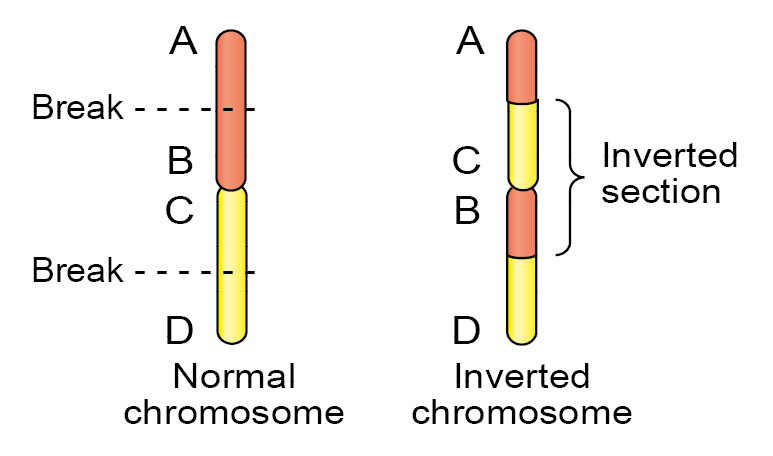
This is called a chromosome inversion and is shown in the diagram.
A person with a chromosome inversion will have one normal chromosome and one chromosome with the inversion.
Usually having a chromosome inversion causes no health problems because no chromosome material or genes are extra or missing. It does not really matter which order the genes are in as long as they are all present.
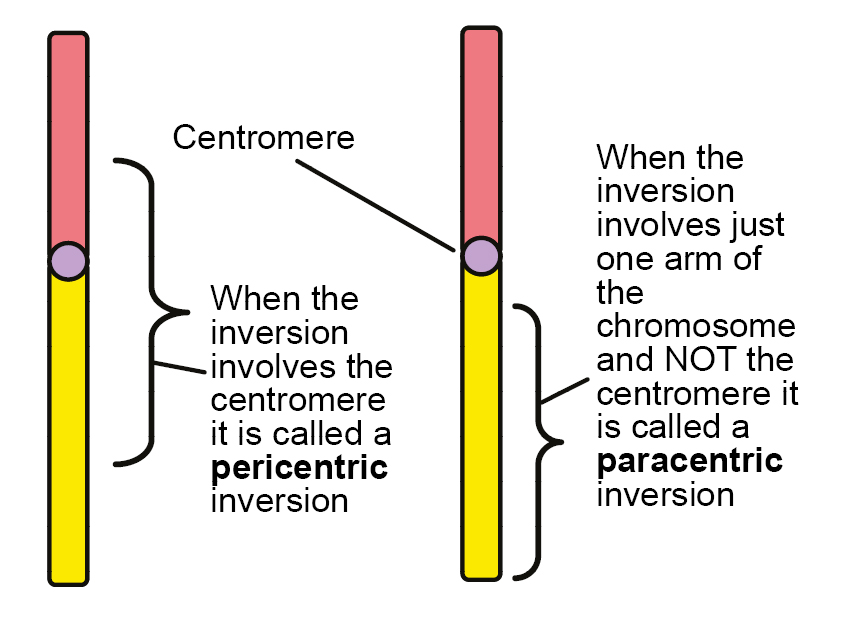
Chromosome inversions can be called pericentric or paracentric. This depends on whether the inversion involves just one arm of the chromosome or both arms including the centromere.
Chromosome inversions can cause problems when people have children.
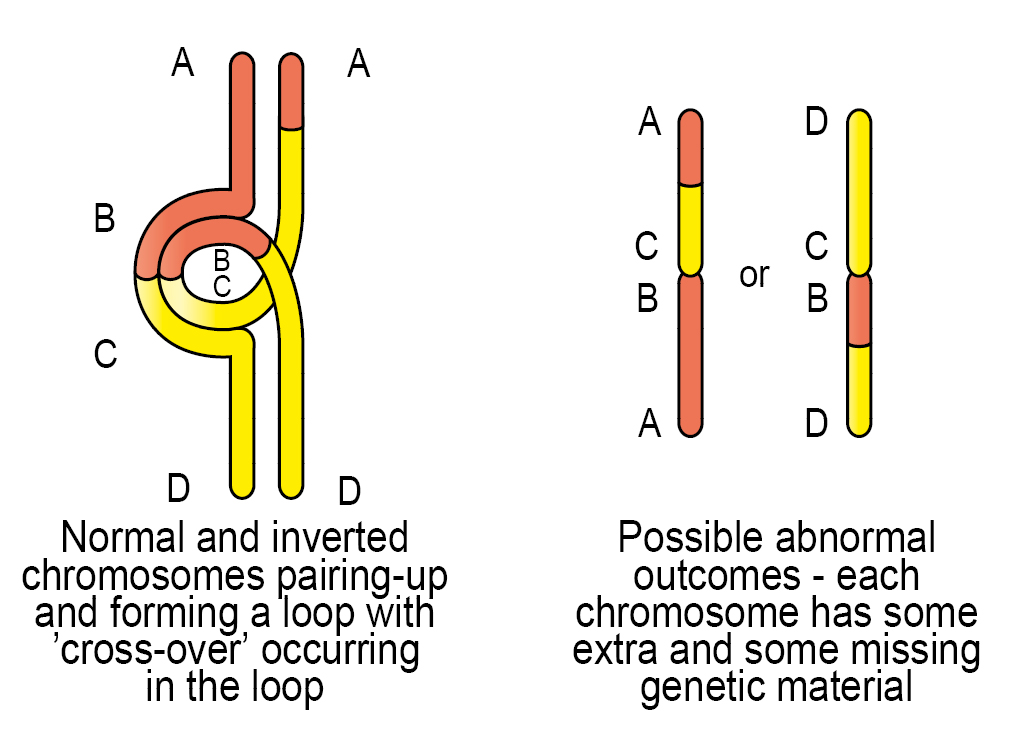
During the formation of eggs/sperm it is necesary for the chromosomes to line up in their pairs and then divide. Each egg or sperm will only contain one chromosome from each pair. During this process, it is normal for chromosome pairs to exchange genes. This is called a crossover.
Sometimes during this process an imbalance in the number of genes will occur. When they separate, both chromosomes will carry extra copies of some genes while other genes will be missing. This is illustrated in the diagram below.
What happens when a person with a chromosome inversion has children?
One of three things might happen:
- The parent with an inversion passes on their normal chromosome in the egg or sperm. The baby will have a completely normal chromosome pattern with the correct number of genes in the correct order.
- The parent with an inversion passes on their chromosome with the piece which is inverted. The baby will inherit the inverted chromosome. However, because the correct amount of genetic material is present the baby has no related health or development problems.
- The baby could inherit a chromosome which is carrying an incorrect number of genes. This may result in a miscarriage. A child who is born with either too much or too little genetic material will usually have health problems and physical/learning disabilities. It is very difficult to predict what problems a baby might have.
It is not possible to predict which of the three events is likely to occur in any particular pregnancy. However, tests are available in pregnancy to see if a baby has inherited the correct amount of chromosome material or not. The tests are called amniocentesis and chorionic villus sampling (CVS).
For more information
If you need more information please contact your local Genetics Department. If you live in the Yorkshire region please visit our website: