
Introduction
You may have been told that you, or a member of your family, have what is known as a chromosome translocation. A translocation is a re-arrangement of the chromosomes (or genetic material) in the cells of the body.
Most people have never heard of a translocation, and can feel worried if told that they have (or may have) one. We hope that this information will help to explain what this means, and answer some of your questions.
Genes and Chromosomes
To understand what a translocation is, it is helpful to understand something about genes and chromosomes. Genes are the unique instructions which make each of us an individual. There are thousands of different genes, each carrying a different instruction.
Genes lie on tiny structures called chromosomes. People usually have 46 chromosomes in each cell, which are arranged in 23 pairs. Boys usually have the sex chromosomes XY and girls usually have the sex chromosomes XX.
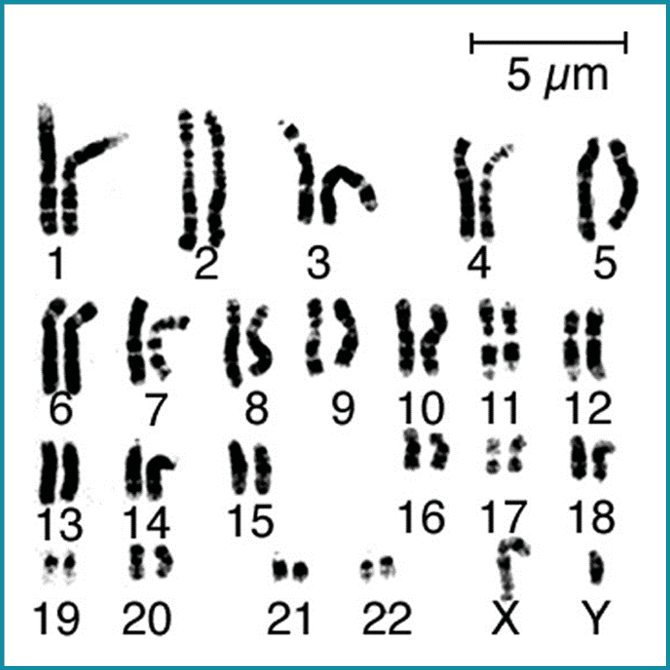
One of each pair of chromosomes is inherited from our mother in the egg and the other is inherited from our father in the sperm.
It is important that we have the correct amount of chromosome material, as the genes (which control the way we grow and develop right from when we are conceived) are found on the chromosomes. Having some part of a chromosome missing, or having an extra part of a chromosome, can therefore result in a problem with normal development and lead to physical disabilities and learning difficulties in a child.
What is Translocation?
A translocation is a rearrangement of chromosomes.
Sometimes, when cells are dividing during the formation of the egg or the sperm, or in the very early development of the baby, one or more parts of the chromosomes can break off and then rejoin, but in a new location which can be on a different chromosome. This can cause a translocation.
There are two main types of translocation:
A Reciprocal Translocation
This occurs when two fragments break off from two different chromosomes and “swap places”.
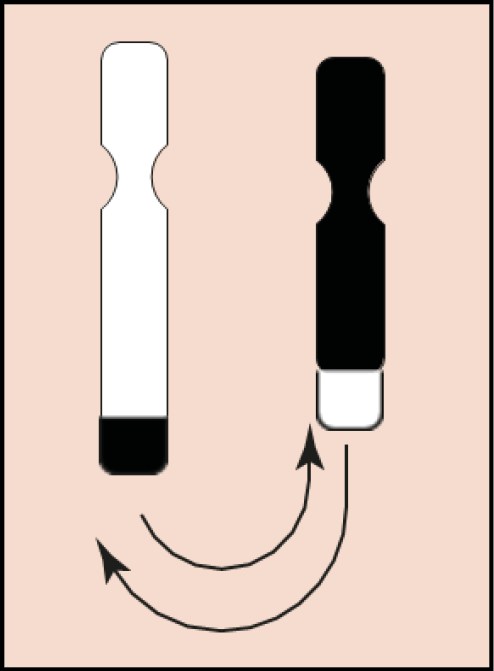
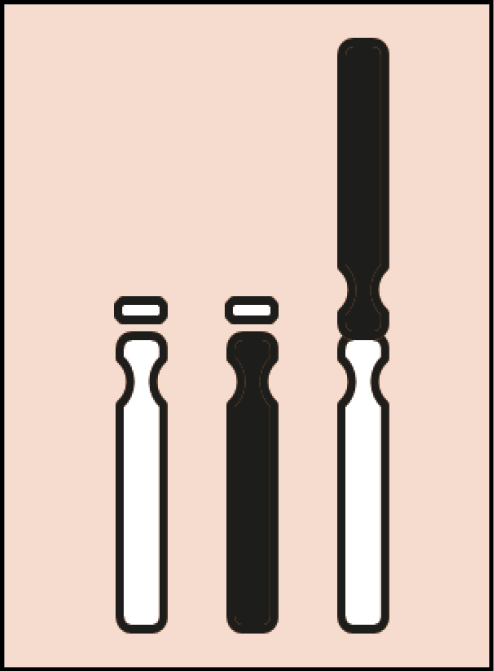
A Robertsonian Translocation
This occurs when two whole chromosomes become “stuck together”.
Why do translocations happen?
Although about 1 person in 500 has a translocation, we still do not really understand why they happen. We know that chromosomes seem to break and rejoin quite often, and it is only sometimes that this leads to problems. Translocations first happen in either the egg or the sperm cell before they
join together, or shortly afterwards. These changes are totally out of our control and are unlikely to be caused by anything that happens during a pregnancy. Translocations can also be inherited.
To understand why translocations can be important, it is helpful to understand the difference between BALANCED and UNBALANCED translocations.
Balanced translocations
In both examples shown in the previous pictures, the chromosome material has been rearranged but no chromosome material has been lost or gained. This is known as a balanced translocation and does not usually affect the health of the person who carries it.
The only time it is important to them is when they come to have children, when a pregnancy can inherit what is called an unbalanced form of the translocation.
Unbalanced translocations
If a parent carries a balanced translocation, it is possible for a child of theirs to inherit a rearrangement of the chromosomes in which there is an extra piece of one chromosome and/or a missing piece of another chromosome. This is known as an unbalanced translocation.
Having too little or too much chromosome material can result in health problems and disability. An unbalanced translocation can cause serious problems in the development of a baby who inherits this kind of rearrangement. The seriousness of the problems a baby has will depend on the specific chromosome translocation involved.
If a parent has (‘carries’) a balanced translocation, will he/she always pass it on to their children?
NO. There are several outcomes in each pregnancy, as listed below:
- A pregnancy may inherit a ‘typical’ set of chromosomes.
- A pregnancy may inherit the same balanced translocation as the parent. In this case the child would be expected to be a healthy carrier, like their parent.
- The pregnancy may sadly end in a miscarriage, usually due to unbalanced chromosomes disrupting the development of the pregnancy.
- A pregnancy may inherit an unbalanced translocation, and the child will be expected to have problems with their learning and development and potentially structural abnormalities in some of the organs because of this.
Can tests be carried out during pregnancy?
YES. If one parent has a chromosome translocation then it is possible to test a pregnancy to find out whether the pregnancy has inherited the usual amount of chromosomes or an unbalanced arrangement of chromosomes.
Two tests are available (usually only one is required):
An amniocentesis test
- Possible from around 15 weeks of pregnancy. This test has an associated additional miscarriage risk of around 0.5%.
A chorionic villus sample (CVS) test
- Usually possible from around 11-12 weeks of pregnancy. This test has an associated additional miscarriage risk of around 0.5-1%.
When considering testing during a pregnancy, it is helpful to think about whether the results of the test would change your feelings about continuing the pregnancy. This is something that can be discussed further with you in your Genetics appointment. Your Genetic Counsellor team would support you in whatever decision you choose. There is no way of altering the chromosome make up in a pregnancy to ‘fix’ an unbalanced translocation.
If you carry a chromosome translocation, there is also potentially the option of considering pre-implantation genetic testing (PGT). You can discuss the potential options available to you for a pregnancy in more detail at the genetics clinic, ideally before a pregnancy is conceived.
How can someone find out if they carry a balanced translocation?
A simple blood test is all that is needed. A small amount of blood is taken, and some of the blood cells are examined in a genetics laboratory.
Should other family members be told about the translocation?
If a balanced translocation is found in a family then other relatives may also carry the same translocation.
If anyone in the family already has children, and/or is likely to have children in the future, it is usually sensible for them to be told about the translocation in the family. This gives them the opportunity to have a blood test to see if they also carry the translocation and to consider the implications for themselves and their family.
Can someone who carries a translocation still be a blood donor?
YES. A translocation is NOT a disease, and is not something that can be ‘caught’ from other people. It can only be passed from parent to child. Having a translocation should not stop you from giving blood if you want to do so.
Should children who carry (or may carry) a balanced translocation be told about this?
A child who inherits the same balanced translocation as their carrier parent will have the same increased chance of having a child with problems when he or she comes to have a family of their own.
Each child is different, so there is really no one time when they ‘should’ be told that they do (or may) carry a translocation. It is probably sensible to leave this until they are old enough to be able to understand without being too worried by it. However, it is usually best for people to learn about the translocation well before having a family of their own.
It is important to be aware that a genetic test in pregnancy can tell us whether the pregnancy has inherited the usual amount of chromosomes or an unbalanced arrangement of chromosomes. If the pregnancy has inherited the usual amount of chromosomes; we will not know whether the pregnancy has inherited the ‘typical’ set of chromosomes or whether the pregnancy has inherited the balanced translocation. To determine this, the child will need to have a blood test when they are older (typically in adulthood) to determine if they have inherited the translocation in the family.
And finally……some important notes to remember
- A balanced translocation of the chromosomes does NOT usually affect the health of someone who carries it. The only time it is important is when planning/having a family.
- It is important that children who carry, or may carry, a translocation know about it before they plan to have children of their own.
- People can feel guilty if a balanced translocation runs in their family. It is important to remember that it is no-one’s fault, and that no-one has done anything to cause it to happen.
- Sometimes passing on information about translocations can be difficult for families. There may be concerns about how this news will be received or fears about the future. Other families are not very close and find communication a challenge. It may be helpful to talk to someone from the genetic counselling clinic about how to approach family members, and which relatives in particular may need to know.
For more information:
If you need more information please contact your local Genetics Department. If you live in the Yorkshire region please contact:
