
The Advanced Kidney Care Nurse Specialist Team
You can leave non-urgent messages on an answer machine out of hours.


Introduction
The aim is that with this information you will be able to make the best decision to suit your individual needs.
As a team we are here to support the decisions you make and are available to answer any questions throughout your treatment.
If you are attending the low clearance clinic but live or intend to move outside the area covered by the Leeds Teaching Hospitals Renal Unit, you will be referred to your local centre for any renal replacement therapy you choose.
Low Clearance Clinic
The Low Clearance Clinic is an outpatient clinic for patients whose kidney function has deteriorated to a level of 18%, or below.
The kidney function percentage is worked out by taking a blood sample and doing a test known as a GFR – Glomerular Filtration Rate.
This clinic offers support from –
Renal, Palliative, Care of the Elderly & Medicine Consultant Doctors, Clinical Nurse Specialists, Dieticians, Transplant Coordinators, Psychologists and Social Workers.
You may have been referred to the clinic because
- Whilst attending the Nephrology clinic your kidney function has gradually got worse
- You have a failing Transplant
- During a recent appointment with your GP, or other Doctor, they have noticed your kidney function is failing quickly.
Advanced Kidney Care Nurse Specialists
The Advanced Kidney Care Nurses are here to help you understand the information given to you in clinic.
We are able to explain your future options, and support you and your family with your decision about the treatment you may choose.
Individual sessions with the kidney care nurse specialists are arranged so you have time to make an informed choice about your treatment.
The information sessions can be held in the hospital or in your own home. It is recommended for a family member or friend to be with you, as there may be a lot of information, and you may have a lot of questions.
The kidney care nurse specialists attend the Low Clearance clinics, and are also happy to deal with queries over the phone between appointments.
Kidneys – How do they work, what do they do?
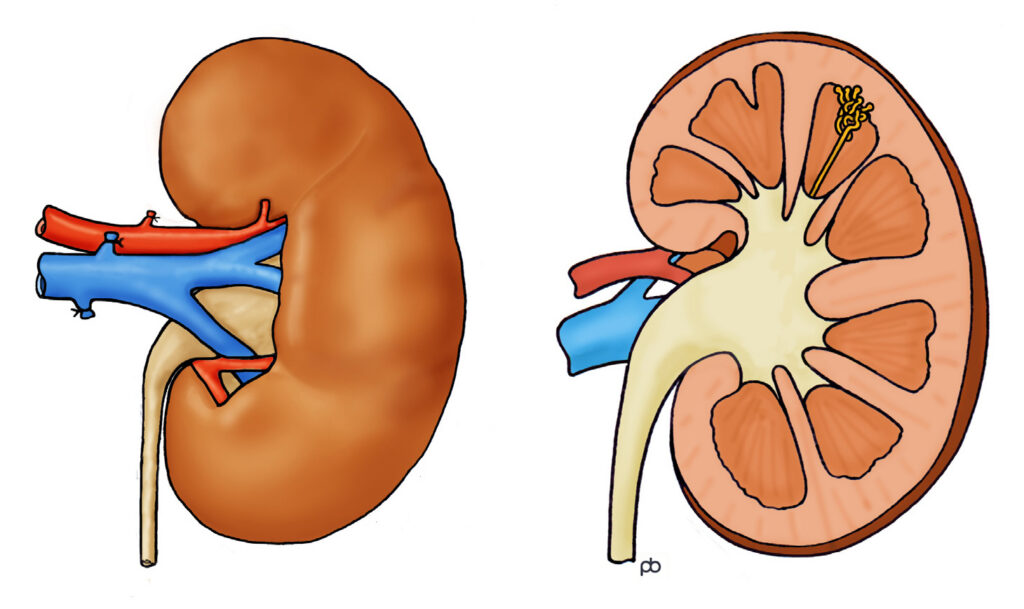
Most people have two kidneys, bean shaped organs about 12cm long, 6cm wide and 3cm thick and weigh around 150g (6oz) – about the size of a fist. Each kidney weighs about 150 grams and lie deep inside the body and sit under the lower ribs at the back.
The left kidney is located slightly more superior than the right kidney due to the larger size of the liver on the right side of the body.
Normal healthy kidneys:
- Clean waste products from the blood (e.g. from food and medications)
- Remove excess fluid
- Help to control blood pressure
- Help to make red blood cells
- Produce Vitamin D for healthy strong bones
- Maintaining chemical balance in the blood.
What can you do?
You will be given advice to help you to feel as well as you can, for as long as you can. Treatments are individual and specific to your needs, some of these include:
- You may be prescribed diuretic medication (water tablets). These make your kidneys work harder at producing urine, which will help with fluid retention (swelling).
- You may have medications prescribed to correct the chemical imbalance in your blood.
- If you have high blood pressure, take your prescribed blood pressure medication as recommended, as it is important to have good control of your blood pressure. High blood pressure can damage the kidneys.
- Anaemia management – you will be monitored and given treatment as required (see anaemia section).
- Your doctor may prescribe a vitamin D tablet if your levels are low.
- If you are diabetic, maintain good control of your blood sugar levels.
- Eat a healthy, low salt diet. The dietician will give advice on your dietary intake.
- Maintain a healthy lifestyle. Exercise regularly. Stop smoking, and drink only in moderation.
- Have a yearly flu jab at your GP Practice.
- Have a course of Hepatitis B vaccinations in the renal clinic.
Anaemia management
Renal anaemia is caused when poorly functioning kidneys are unable to make enough of the hormone erythropoietin (EPO) which is responsible for increasing the number of red blood cells that you produce. It is very common for patients in the low clearance clinic who have reduced kidney function to require treatment support for anaemia.
Anaemia can cause symptoms of tiredness and lethargy, so treatment is helpful. The Renal team will regularly review your blood results, and if your Haemoglobin is below 100 g/L treatment will be prescribed.
You may be prescribed:
- A replacement Erythropoietin – this is usually called Aranesp, and is regularly given as an injection at home
- Intravenous Iron – given at hospital, as an outpatients
Your blood results will be looked at by the staff, and adjustments will be made depending on your individual needs. The advance kidney care nurse specialist team will contact you at home when changes are made and will organise the delivery of the required dose of Aranesp. If you need to have intravenous Iron they will organise a date for you to attend clinic to receive this.
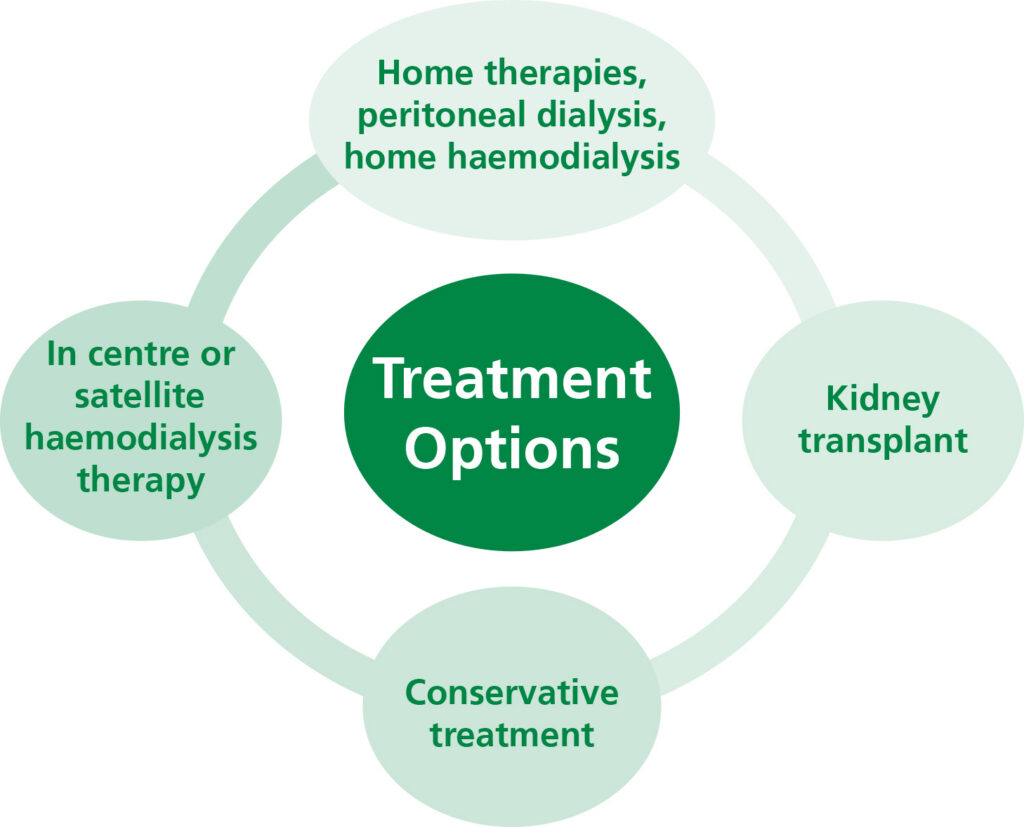
Treatment options
As your kidney function gets worse, we will give you information to help you plan for the future as more treatment may be needed.
There are four options:
- Kidney Transplant
- Haemodialysis
- Peritoneal Dialysis
- Conservative Management
This booklet provides an introduction to these options. The advanced kidney care team can discuss information in more depth with you to make sure you get the treatment of your choice, and to allow us to plan for any procedures you may need.
Kidney transplant
A kidney transplant is an operation to remove a kidney from one person (the donor) and implant it into another (the recipient).=
A kidney transplant is regarded as the “Gold Standard” of treatment options for failing kidneys. A successful kidney transplant will give you a better quality of life.
If you would like a kidney transplant, it is important to consider your general health and lifestyle in preparation so:
- If you smoke, please try to stop. If needed you can get support from www.nhs.uk/better-health/quit-smoking/, or ask our staff or your GP
- Please do not take any drugs that have not been prescribed by medical or nursing staff, as some herbal remedies or recreational drugs can be harmful to people with reduced kidney function
Not everyone is suitable for a kidney transplant, for a number of different reasons. The doctors will assess if you are suitable for transplantation, and would then refer you to the transplant co-ordinators.
There are two types of transplant:
- Live Donor Transplant. A healthy living donor – usually a family member or friend offer to give you one of their kidneys.
- Deceased Donor Transplant. You would be placed on the national transplant register, to receive a kidney from someone who has died and wants their kidneys to be used to help others. The average waiting time is three years, but this depends on the availability of kidneys, and whether the kidney is a good match with you.
The Transplant Co-ordinators can offer more information and answer any questions.
Live Donor Transplant Co-ordinators
Renal Recipient transplant Co-ordinators
Haemodialysis
Haemodialysis is a method of filtering the blood to remove toxins and fluid. It is performed via a machine and artificial kidney/dialyser. It usually takes four hours, three times a week.
What is required for haemodialysis?
There are different ways of connecting to a haemodialysis machine, but most commonly a fistula is formed at the wrist or elbow, which involves joining a vein and artery together under the skin. This is usually performed under a local anaesthetic where you remain awake.
It then takes around 6 – 8 weeks before the fistula is ready to be used for dialysis. The purpose of the fistula is to make the veins in the arm bigger and stronger than usual, so that two needles can be inserted for dialysis.
If the surgeons are unable to form a fistula they may insert an artificial graft which is connected to an artery and a vein and the dialysis needles can then be inserted into the graft
Sometimes it is necessary to have dialysis using a line (a flexible tube) that is inserted into a vein in your neck. This is normally used until your fistula or graft is ready, or if there are any problems with it.
When would I have haemodialysis?
The main days and times are:
Monday, Wednesday, Friday – Morning, Afternoon or Evening
Tuesday, Thursday, Saturday – Morning, Afternoon or Evening
Each dialysis treatment takes around four hours although this can sometimes be longer or shorter.
You will be allocated an appointment time – on the same day and at the same time each week. However, this is subject to change in order to accommodate new patients.
Where can I have haemodialysis?
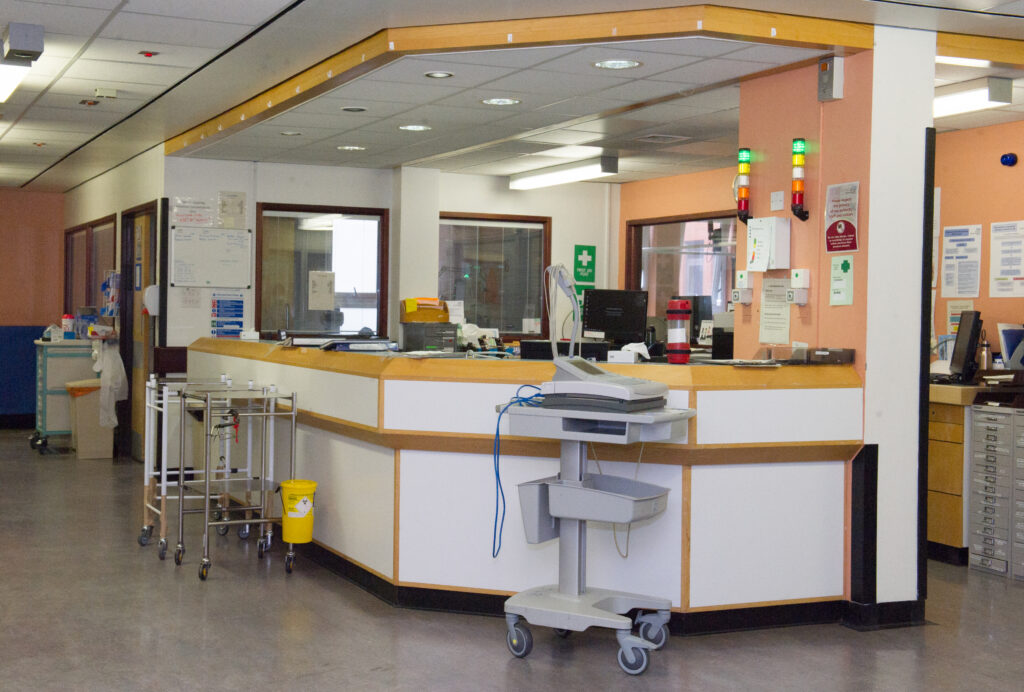
- Main unit:
St James’s Hospital (Ward J48) Leeds. - Satellite units:
Leeds –
Seacroft Hospital R&S ward
Seacroft Hospital B ward
Beeston Medical centre
West Yorkshire –
Halifax
Huddersfield
Dewsbury
Pontefract
These smaller (satellite) units offer the opportunity to have dialysis closer to home and are nurse led.
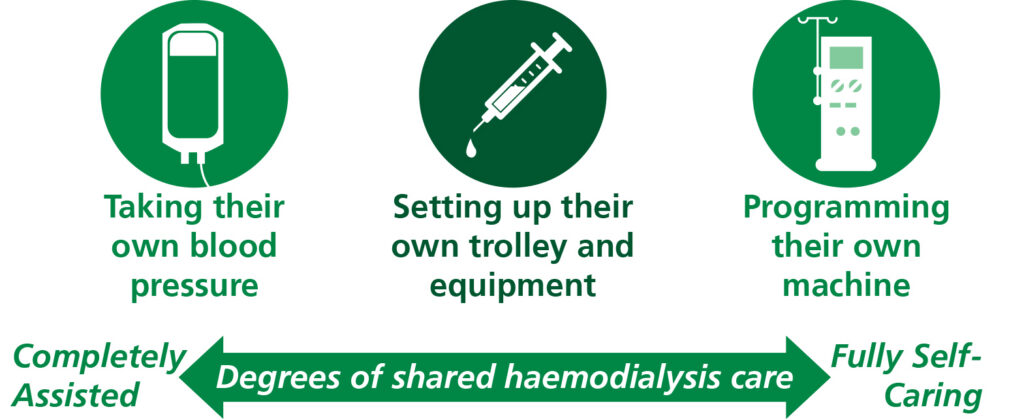
Shared care
All patients receiving renal replacement therapy are encouraged to participate in any aspect of their treatment. The aim is to encourage, support and educate you to be more involved in your treatment options. This will enable you to gain a better understanding of your condition and treatment, and help you to grow in confidence. You can assist in as much or as little of your dialysis care in the unit as you wish, with support from your dialysis team. This may include simple tasks such as weighing yourself, to putting yourself on a dialysis machine.
Patient quote
“It gave a better insight into my treatment and illness. That in turn gave me the power to take more control of my treatment, and the knock on effect of that gives me more confidence, and more freedom to live my life.”
Home haemodialysis
There is also the option of haemodialysis at home. This requires a suitable area in your home and ideally you should have a helper to assist you, but this is not always necessary. The specialist nurses for home haemodialysis, based at Seacroft Hospital, would provide training and support you once at home.
Patient quote
“I feel better and dialysis fits around me not me fitting around dialysis.”
Holidays – Dialysis away from base
Holidays are important to most people and we hope to do everything that we can to help make this possible and the process smooth so that you can enjoy your break away from your home life and daily commitments. It is important that you are established on dialysis and that you have had a review with your Consultant before arranging a holiday.
Due to infection reasons, it may not be possible to travel to all destinations. Not all dialysis units are able to take ‘holiday’ patients due to their own patient’s needs.
We will need as much notice as possible if you are planning a holiday. If you thinking of holidaying in the UK or Europe we will require at least four weeks’ notice and eight weeks for anywhere else. The more notice given, the more chance there will be of space being available at your destination.
(Please do not book your holiday until you have had confirmation that your treatment has been successfully arranged)
When planning a holiday, whether in the UK or abroad, we will help to organise your treatment for whilst you are away.
Peritoneal Dialysis (PD)
What is Peritoneal Dialysis?
Peritoneal dialysis removes the toxins from your blood using a membrane inside the abdomen called the Peritoneum.
The Peritoneum has a good blood supply. Dialysis fluid is drained into your abdomen, and the toxins and water are removed when it is drained back out.
What is required for Peritoneal Dialysis?
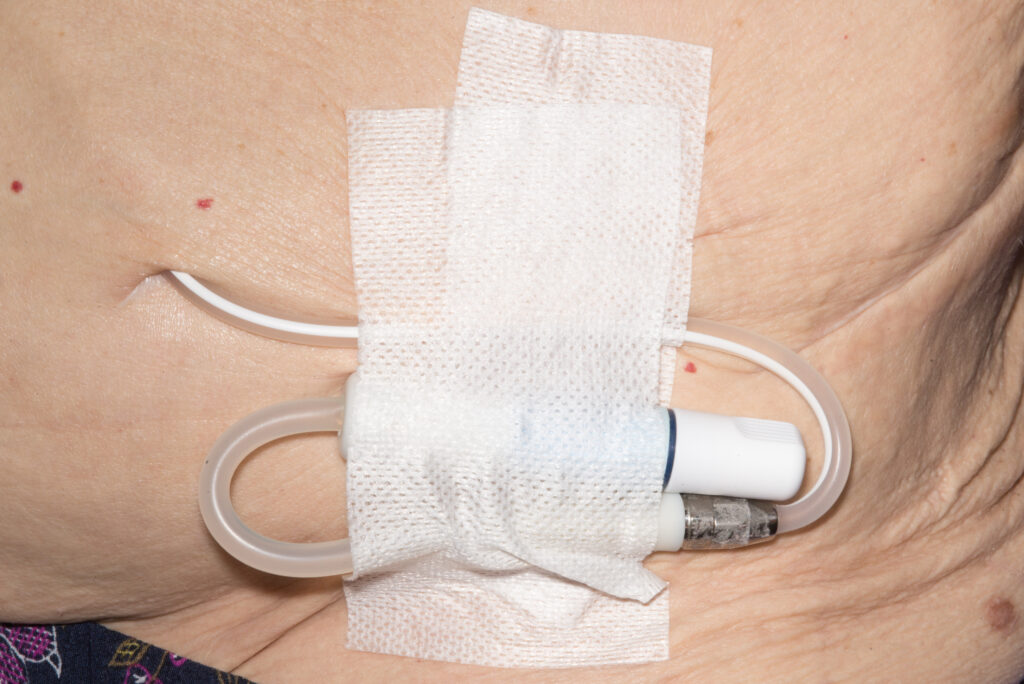
This form of dialysis requires a peritoneal catheter or PD Tube. This is inserted into your abdomen just below the navel (belly button) under a general anaesthetic.
The PD catheter is a soft plastic tube about 20cm / 8inches long. It is essential people look after the tube by having a daily shower and practicing a good hand washing technique.
Where can I have peritoneal dialysis?
PD can be performed anywhere, as long as you have a clean room that is clutter and pet free, which has a clean work surface. This dialysis option is usually performed at home or work, and you can perform it by yourself, or you can be assisted by trained staff who come to your home daily.
The team of peritoneal dialysis nurses will give you training and support- some of which will be at the hospital and some at home. They will also contact you regularly, either by phone or via home visits.
You will also have regular hospital appointments. Prior to starting this treatment you will be offered appointments in the Pre-PD preparation clinic giving you chance to meet the team.
There are two types of peritoneal dialysis
CAPD (Continuous Ambulatory Peritoneal Dialysis)
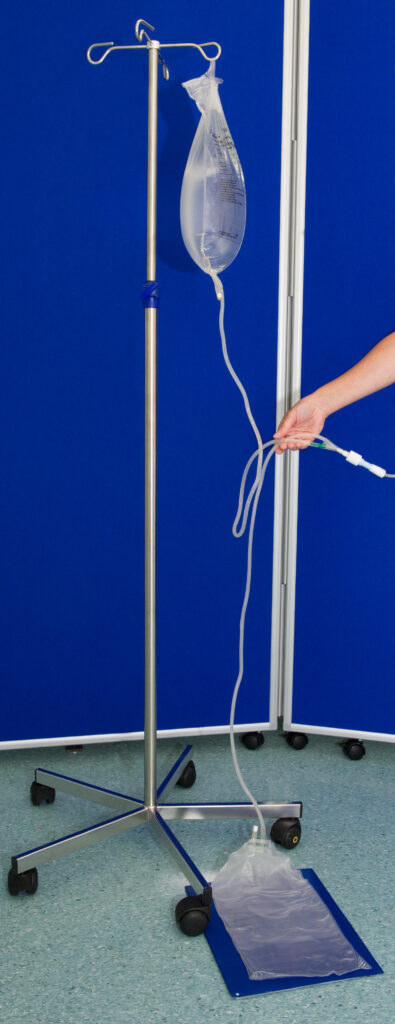
- Your PD Tube is connected to the special dialysis bags. Fluid already in your abdomen is drained out, and then clean fluid drained in (around 1.5-2litres).
- This takes around 30 minutes, and is performed 4 times daily (morning, lunch, evening, bedtime).
- This could be reduced depending on how well your dialysis is working. This is called a
“PD Exchange”. - You do not have to be at home to perform an exchange. They can be done in the car, a friend’s home, or your workplace, as long as you have a clean space.
APD (Automated Peritoneal Dialysis)
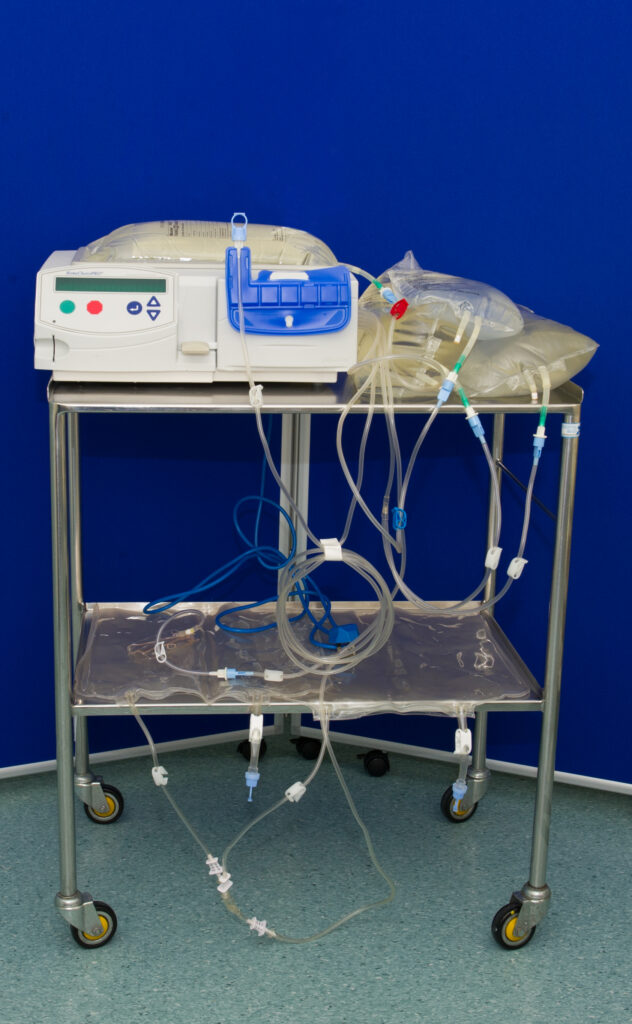
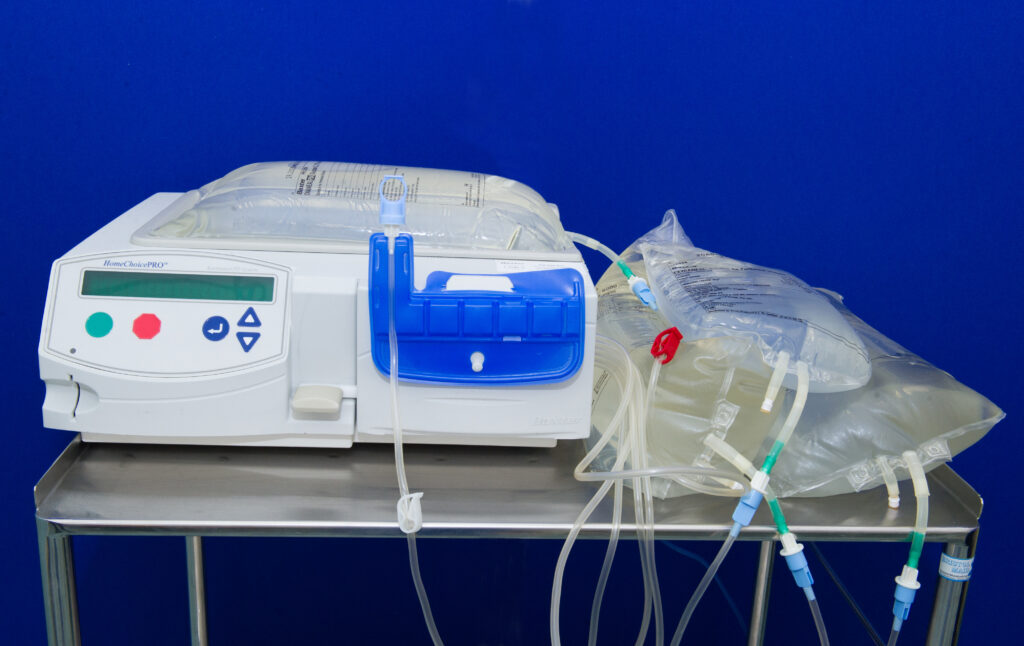
- APD is delivered via a machine called HomeChoice. The machine works overnight for around eight hours.
- The dialysis happens in “cycles” overnight while you are asleep.
- Each cycle consists of a fill, a dwell and a drain out.
- The APD machine is usually in your bedroom, and requires a table / unit with a washable surface, approximately the same height as your bed.
Please note
With both types of PD dialysis you will need to have a place to store the fluid and equipment. This could be a shed, garage, cellar or spare room in the house.
Dimensions of the homechoice machine are:
Height – 13 inches – 33 cm
Width – 20 inches – 51cm
Depth – 24 inches – 61 cm
Holidays
It is possible to travel easily with PD dialysis. The APD machine comes with a case, and is not part of your flight allowance. On a short break, you would take all the equipment needed. For a longer break, you would only need to take the machine, as the fluid will be delivered to your destination – this could be U.K based or abroad (worldwide), cruise ship, caravan or hotel.
Conservative care management
What is conservative care?
This is an alternative to starting dialysis,
letting “nature take its course.” If you are elderly or frail you may choose not to start dialysis, and instead have the symptoms of your kidney failure treated with medicines, anaemia control (Aranesp and Iron injections) and diet.
What might the symptoms be?
As your kidney failure progresses you may experience:
- Excess fluid building up (leg oedema)
- Nausea or vomiting
- Itching
- Tiredness (lethargy)
These symptoms can be controlled to keep you comfortable with medication changes, possibly changes to your diet and support from the multi-disciplinary and community team.
What happens next?
You will continue to be monitored by the renal team. A Consultant Doctor who specialises in renal palliative medicine or the renal nurse specialist will review you regularly in clinic every 2-3 months, where they will manage your symptoms, give support and advice.
You will also be offered the chance to see a medical elderly consultant to discuss your future.
This brings together your expertise about yourself and what is important to you, with the clinician’s knowledge about what is known about the benefits and risks of available options.
During these appointments you may wish to discuss a RESPECT. (Recommended Summary Plan for Emergency Care and Treatment).
You may also wish to make your wishes clear in an Advanced Care Plan (ACP)
Support will also be available in the Community from your G.P, Social worker, Community matron and District and MacMillan nurses.
The Renal Nurse Specialist can also visit patients at home and provide support, aiming to keep you at home, out of hospital and to maintain your quality of life.
When kidney function becomes very low, your health will deteriorate (get worse). As your condition changes staff will discuss your symptoms with you. Medications can be used to keep you comfortable, manage and minimise any discomfort and distress. These symptoms will eventually cause you to pass away.
Whatever the reasons we want to ensure this decision making is guided by your specific wishes and preferences. We recognise that these discussions are difficult and can be emotional and upsetting. You may wish to speak with your family or friends regarding these issues before speaking with the kidney team. You may have religious or spiritual concerns about this decision and we can arrange for you to see a religious advisor if needed.
Questions
Please take time to think about the treatment options available for your kidney failure and how these would fit in with your lifestyle.
Write down your questions below; bring these with you either to your next clinic appointment or your education session with the renal nurse specialists.
Further information – useful websites
Patient Associations
The Advanced Kidney Care Nurse Specialist Team
The Advanced Kidney Care Nurse Specialist Team
What happens to your information?
We collect information about patients from renal units and hospital systems. This statistical information is part of an annual report that helps to educate those who plan, deliver and use services for kidney patients by;
- Identify areas of best practice.
- Support research for the benefits of patients.
- Help patients and health care professionals to make decisions and plan for the future.
- Reveal areas of the country where treatment may not be available.
We do not
- Publish information that could lead to your identity being revealed.
If you wish to opt out of sharing your information please speak to the renal unit staff or you can contact the renal registry by telephone or email.
