
What is Venous Thromboembolism (VTE)?
There are three types of VTE:
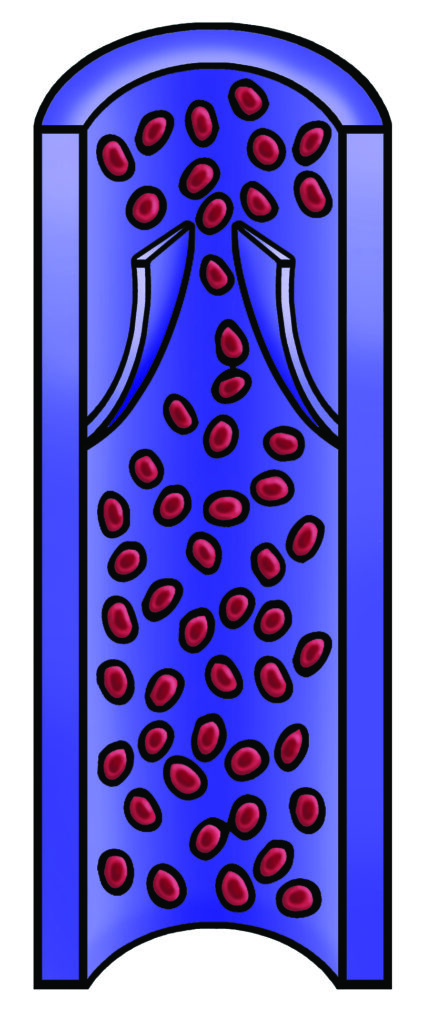
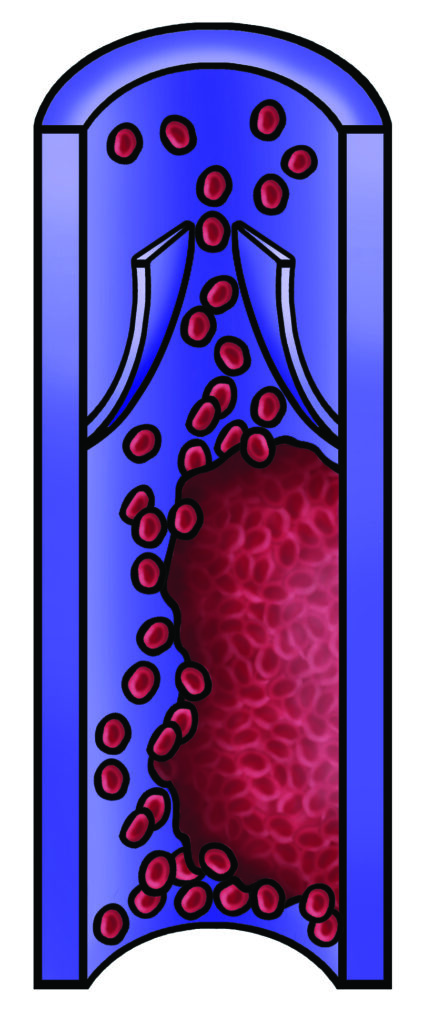
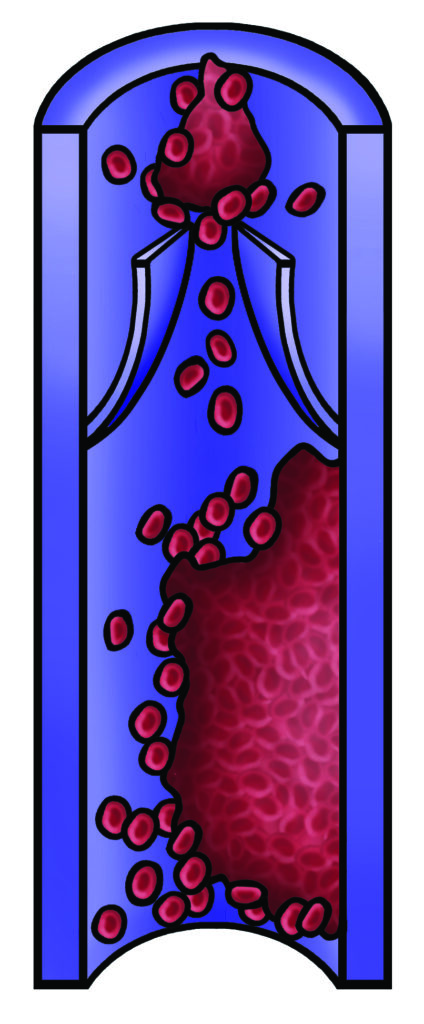
- Deep Vein Thrombosis (DVT): a DVT is a blood clot that forms in a deep vein, most commonly in your leg or pelvis.
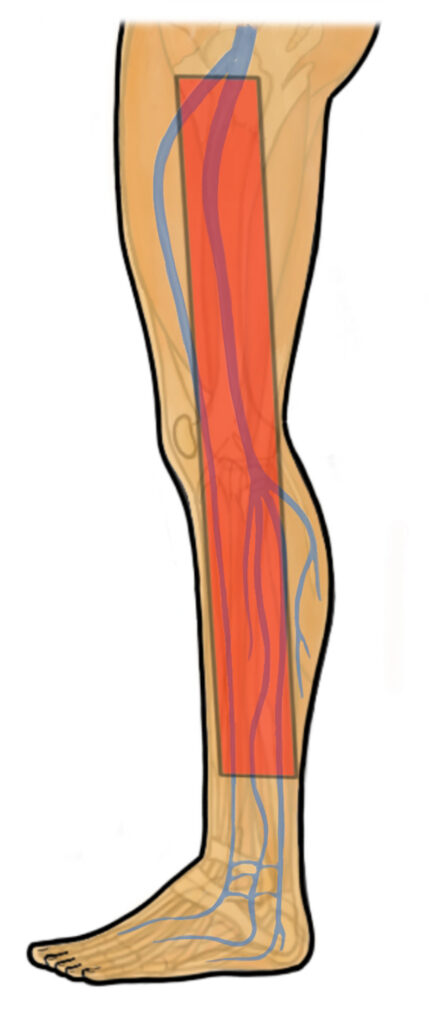
- Pulmonary Embolism (PE): if all or part of the DVT breaks free and passes through your blood vessels, it can reach your lungs. This is called a PE.
- Cerebral Venous Sinus Thrombosis (CVST): this is a blood clot in any of the major veins in the brain
Signs and symptoms of VTE
DVT – Symptoms can include swelling, redness/discolouration, warmth and tenderness/pain of the legs that may be worse when standing or walking. Occasionally there are no symptoms except pain.
PE – Symptoms can include dry cough, chest pain/tightness (especially when breathing in), sudden unexplained breathlessness, blood stained phlegm, feeling very unwell and/or collapsing.
CVST – Commonest symptom is a headache but can also present with: seizures, altered conscious state/drowsiness, one-sided limb weakness. CVST can sometimes lead to a bleed in the brain called subarachnoid haemorrhage which tends to present with a very severe headache.
Maternity Assessment Centre
If you develop any of these symptoms please get medical advice immediately. Diagnosing and treating a DVT reduces the risk of developing a PE. Please contact Maternity Assessment Centre.


Diagnosing and treating a DVT reduces the risk of developing a PE
Are VTE’s common in pregnancy?
The risk of developing a VTE (blood clot) in pregnancy is estimated to be 4-5 times higher compared to a woman who is not pregnant. However certain risk factors will increase this risk further. These include smoking, a BMI over 30, aged over 35, IVF pregnancy, severe sickness associated with pregnancy (sometimes referred to as ‘morning sickness’), recent surgery, ovarian hyperstimulation (a complication of fertility treatments such as IVF).
The risk of developing a VTE in pregnancy and the postnatal period is 1-2 per 1000 births, the risk increases from late pregnancy into the postnatal period where it remains high for up to six weeks after birth. There are lots of reasons why pregnancy can increase the risk of you developing blood clots. For this reason you will be assessed for your individual risk of developing a blood clot. This risk may change during pregnancy and so will be assessed on a regular basis. Depending on your risk score you may be asked to inject blood thinning injections to prevent a VTE in your pregnancy or for ten days or six weeks after delivery if you are found to be at high risk.
While developing a blood clot has no direct effect on your baby during pregnancy, it remains the highest cause of direct maternal mortality in the UK, hence its prevention and treatment is very important.
A VTE can occur at any time during your pregnancy including the first three months so it is important to book for maternity care as soon as you find out you are pregnant and attend all maternity appointments.
Am I at risk of developing a VTE?
You are at increased risk of VTE if you have any of the following:
During pregnancy if you:
- are over 35 years of age
- have already had three or more babies
- have had a previous VTE
- have a parent or sibling who has had a VTE
- have a thrombophilia – acquired or inherited blood clotting disorder that increases the risk of VTE’s
- have a medical condition such as heart disease, lung disease or arthritis – your doctor or midwife will be able to tell you whether any medical condition you have increases your risk of VTE
- have severe varicose veins that are painful or above the knee with redness/swelling
- are a wheelchair user
- are overweight with a body mass index (BMI) of over 30
- are a smoker
- are an intravenous drug user
- are admitted to hospital
- are carrying more than one baby (multiple pregnancy)
- become dehydrated
- are less mobile during pregnancy due to problems such as vomiting or infection
- are immobile for long periods of time, for example after an operation or when travelling for longer than four hours (by air, car or train)
- are unwell from fertility treatment (Ovarian Hyperstimulation syndrome)
- have pre-eclampsia.
After the birth of your baby if you:
- have a very long labour (more than 24 hours)
- have a caesarean section (five times higher risk of a VTE compared to a normal vaginal delivery)
- lose a lot of blood after you have delivered your baby
- receive a blood transfusion.
How can you reduce the risk of VTE in pregnancy?
- Staying hydrated, it is important you drink plenty of fluids.
- Keeping active and mobile as you can
- Maintain a healthy weight
- Stop smoking before pregnancy or during,
- Taking the blood-thinning injection you have been prescribed regularly.
How is a VTE diagnosed in pregnancy?
DVT
If you have signs and symptoms of a DVT your doctor will examine your leg and may recommend a doppler ultrasound scan of your leg to see if there is a DVT. If the scan is negative but you are still experiencing signs and symptoms of a DVT the ultrasound scan may be repeated in 5-7 days.
If there is a strong clinical suspicion of a clot, you may be offered treatment prior to the scan or while awaiting a repeat scan if your symptoms persist. Occassionally you may require more complex investigations which the doctor will discuss with you.
There are no risks with an ultrasound scan of your leg, it is the same as having an ultrasound of your tummy to see your baby.
PE
If you have signs and symptoms of a PE your doctor will examine you. They may then recommend some tests, the tests for a PE include:
- Chest X-ray – this can also show other problems which may be the cause of your symptoms, such as a chest infection.
- CTPA scan (a specialised X-ray), you will need a drip in your arm and an injection of x-ray dye for this test.
- Half dose Q scan (a perfusion scan of your lungs). This also requires a drip in your arm.
- Ventilation-perfusion (V/Q) scan (a perfusion scan of your lungs). This also requires a cannula in your arm.
CVST
If suspected, a CT Venogram or MR Venogram will be arranged – both look at the flow of blood through the veins in your brain.
Are there any risks with having the tests?
Ultrasound is safe in pregnancy.
Radiation is used in the other tests mentioned but in a low dose. There is a theoretical risk that the small amount of radiation used in the tests may cause cancer. However the risk of developing cancer should be balanced against the risk of having a potentially serious PE or clot in the brain.
Risks to your baby:
- Risk from a V/Q scan is approximately one case of childhood cancer from 280,000 scans.
- Risk from a CTPA scan is approximately one case of childhood cancer from 1,000,000 scans. The risk is therefore higherfrom a V/Q scan but still very small.
Risks to you:
CTPA carries a higher risk to you than a scan due to a higher dose of radiation to your breasts. This is associated with small increased risk of developing breast cancer relative to your background risk.
CTPA can show other potential causes of your symptoms such as pneumonia which a V/Q scan would not show.
On balance, the medical team looking after you would reason that the real risk of potential harm to you or your baby if a PE remains undiagnosed outweigh the theoretical risks associated with these tests.
You will have the opportunity to discuss these investigations with your medical team during your admission.
Breastfeeding advice
Breastfeeding should be avoided for 12 hours after a
Q scan. Milk can be expressed before the scan and stored. Milk can also be expressed and thrown away during the 12 hour period, for breast comfort.
Breastfeeding is safe after a CTPA.
What is the treatment for VTE?
If your doctor thinks that you have a VTE, you will be advised to start treatment with a blood thinning injection called low molecular weight heparin this will reduce blood clotting (this is sometimes referred to as “thinning the blood”).
Low molecular weight heparin heparin is derived from pork. It is the safest and most effective drug to prevent and treat blood clots in pregnancy and immediately after. Unfortunately there aren’t any alternatives with the same effectiveness and safety record. Please speak to a doctor or midwife if you would like to discuss this further.
For most people, the benefits of heparin are:
- it prevents the clot getting bigger so your body can gradually dissolve the clot
- it reduces the risk of another VTE developing
- it reduces the risk of long-term problems.
If you are diagnosed with a DVT you will also be prescribed a graduated compression stocking to wear on the affected leg for two years. This helps to maintain blood flow in your leg veins which in turn helps to reduce the risk of long term damage, such as unsightly veins, discolouration and swelling.
What does molecular weight heparin (LMWH) treatment involve?
LMWH is given as an injection under the skin at approximately the same time every day. You (or a family member) will be shown how to give the injections. You will be given a supply of pre-filled syringes which contain heparin, you will be given advice on how to store and dispose of them. You may require blood tests called peak anti X-a to be taken three to four hours after your morning injection to ensure you are on the correct dose of herparin as your pregnancy progresses.
Regular check-ups will be arranged as an outpatient, to reduce the need for you to stay in hospital.
What are the risks of treatment?
LMWH does not cross the placenta and therefore cannot harm your baby. You may get some bruising where you inject, this usually fades within a few days. One or two women in every 100 (1% to 2%) will have an allergic reaction, usually a rash. If you notice a rash after injecting heparin, tell your midwife or doctor so the type of injection can be reviewed.
If you go into labour and are having LMWH injections you have a higher risk of bleeding after your birth.
How long will I need to take need to take LMWH?
Treatment is usually recommended for the remainder of your pregnancy and for at least six weeks after your baby’s birth. The minimum treatment time is six months although you may need to continue for longer.
If you require LMWH during your pregnancy because you have been assessed to be ‘high risk’ but do not have a blood clot, you may need to continue it for six weeks after your baby’s birth.
What should I do when labour starts?
If you think you are going into labour, do not have any more injections. Phone Maternity Assessment Centre (MAC) straight away and tell them you are on heparin treatment. They will give you advice on what to do. Depending when you last had LMWH may affect whether you can have an an epidural or spinal anaesthetic. The anaesthetist will review your individual circumstances and make an individual plan for you, other forms of pain relief will be available.
If an induction of labour or an elective Caesarean section is planned you will be informed when to stop LMWH.
What happens after my baby’s birth?
LMWH will usually be restarted four hours after a Caesarean birth.
LMWH may continue for six weeks after the birth of your baby and possibly longer if a VTE was diagnosed late in pregnancy or after the birth.
After your baby’s birth you will be given the choice to remain on LMWH injections or change to warfarin tablets, an individual plan will be discussed with you.
At this appointment the doctor will:
- ask about your family history of VTE and discuss tests for a condition that makes VTE’s more likely (thrombophilia);
- discuss options for contraception as you should not take any contraception with oestrogen (the ‘combined pill’ or the contraceptive injection);
- discuss future pregnancies – you will usually be advised to have heparin during and after your next pregnancy to prevent developing another blood clot.
Can I breastfeed if I am taking LMWH?
Yes – both heparin and warfarin are safe to take when breastfeeding.
Other oral anticoagulants such as: Apixaban, Rivaroxaban are not recommended in pregnancy or breastfeeding.
If you need to have a V/Q scan after the birth of your baby, breast feeding should be avoided for 12 hours after the scan. Breast feeding is safe after a CTPA.