
This material is designed for patients who may have fears around falling. The following information describes the possible symptoms patients may be experiencing as a result, and how to help manage them.
Fear of falling
It is common to have fears around falling, especially if you have experienced a fall in the past.
After a fall you may find yourself experiencing physical symptoms:
- Pounding heart.
- Headaches.
- Chest, shoulder, or neck pain.
- Feeling dizzy.
- Difficulty breathing.
- Shaky legs.
- Sickness.
- Loss of appetite.
- Butterflies in stomach.
- Tight muscles.
These sensations are the result of anxiety (being worried) which is the body’s natural reaction to a traumatic event, such as falling.
Sometimes being worried about falling can stop us from doing the things we enjoy.
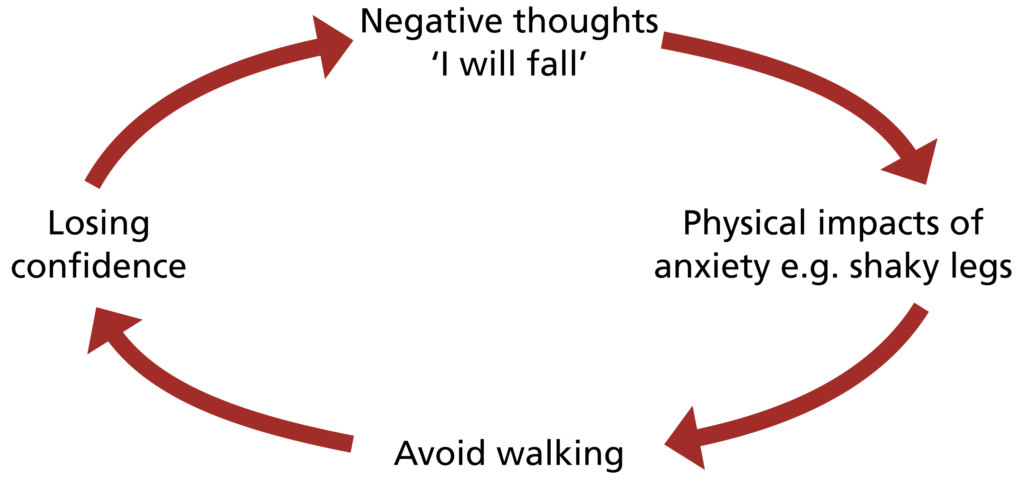
Experiencing these feelings may mean you want to avoid walking, but avoidance can result in losing confidence. It may also lead to negative thoughts such as “If I walk, I will fall and hurt myself”, making it harder to return walking.
What can I do to help myself?
- Practice shifting negative thoughts to more positive ones: Tell yourself “I walked and did not fall” and “I am doing the best I can” – even if you don’t quite believe it yet.
- Practice walking safely: Take deep breaths, use walking aids such as a stick and maintain a good posture; look forward and relax your shoulders. Walking will build up your strength, making it less likely that you will fall.
- Talk with loved ones: Feeling down or lonely at this time is perfectly understandable. Surround yourself with family or friends that you feel comfortable sharing your feelings with.