This information will explain what this procedure involves, the intended outcomes and the possible risks.
What is a Fistulogram and Fistulaplasty?
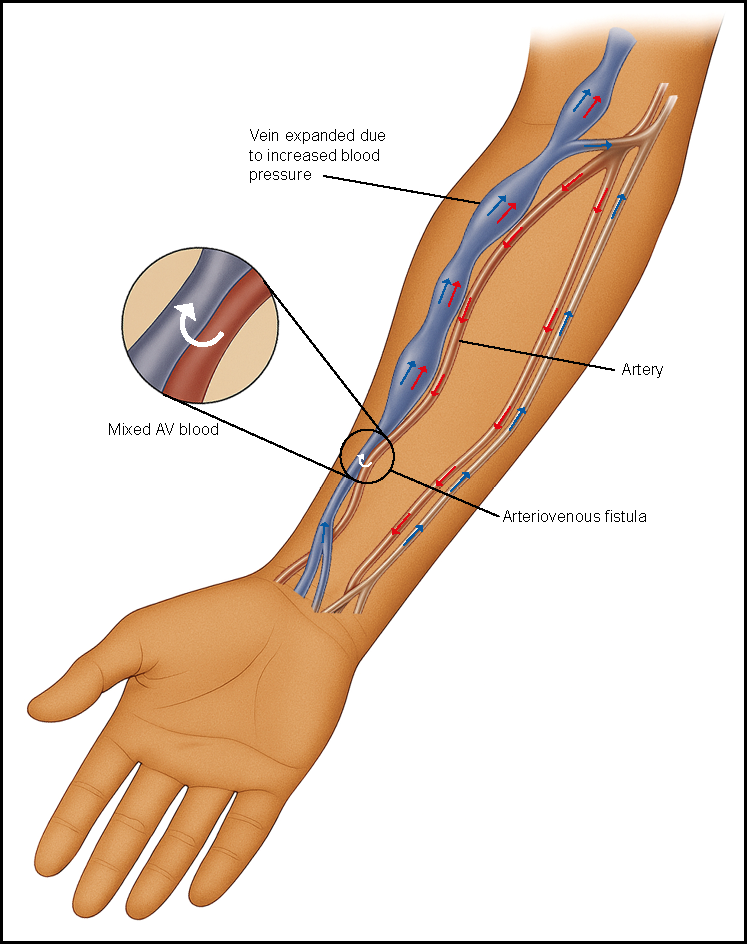
A fistulogram is a special diagnostic X-ray examination designed to show the blood vessels that make up your fistula, whereas a venogram is an X-ray imaging test to look at your veins in the upper and lower limbs of your body. A dye (contrast agent), which usually contains iodine, is injected directly into a blood vessel through a fine tube (catheter). The dye fills the blood vessels and makes them visible on X-ray
Fistulaplasty is a way of treating a narrowing or blockage in a blood vessel which is diagnosed with a fistulogram. A special balloon called an angioplasty balloon is introduced into the area of narrowing inside the fistula. This balloon is inflated from outside the body momentarily and then deflated to improve the narrowing. A completion fistulogram is then carried out to check the result
How do I prepare?
You do not need to fast for this procedure as this is performed under local anaesthesia. If you are taking any blood thinning medications (such as warfarin), these may need to be stopped before the procedure. You will be given instructions about this in the pre-assessment clinic. You may also be given prescription for decolonisation washes and nasal ointment if the doctor is planning to put a stent on your fistula
How is a Fistulogram and Fistulaplasty performed?
Back to topStaff involved
Interventional Radiology (IR) procedures are performed by a multidisciplinary team. The team includes the following key Staff:
Interventional Radiologist (Consultant/Fellow
A doctor specially trained in minimally invasive, image-guided techniques who performs the procedure
Radiology Nurses
Highly trained nurses who care for the patient before, during, and after the procedure. They assist with sedation, monitor vital signs (heart rate, breathing, oxygen levels), and may “scrub in” to assist the radiologist directly.
Radiographers
Experts in imaging equipment who operate the machines to provide real-time guidance for the doctor.
Senior Clinical Support Workers (SCSWs
Assist with the setup of the room, patient positioning, and maintenance of sterile conditions.
What are the risks?
Fistulograms are very safe procedures but there are some risks and complications that can occur. Very occasionally,
- A small bruise can appear at the site of needle puncture.
- Less commonly; ongoing bleeding in this area leads to a short inpatient stay (once or twice in every 100).
- Very rarely damage to the fistula can occur that may require further treatment by the interventional radiologist or a small operation.
- The risk of infection is very low.
Fistulaplasty, like a fistulogram, is very safe but occasionally complications do arise.
- There is a small risk of failure of treatment.
- Sometimes the narrowing in a fistula does not respond well to the fistulaplasty and requires a stent.
- The risk of bleeding is slightly higher than for fistulogram (about 3 in 100 chance).
- There is a small risk that the treatment may damage or even rupture the fistula/vein. If this were to happen, the fistula may fail and could not be used for dialysis. A small operation may be required at the time but more likely a line would be placed and a new fistula fashioned.
- Allergic reaction to contrast dye (mild symptoms like nausea, itchiness and rashes occur in 3%; moderate to severe symptoms such as severe vomiting, bronchospasm occur in less than 1%; risk of death is rare, estimated at 1:170,000)
- X-rays will be used to make images of your body and guide your doctor during the procedure. X-rays are a type of radiation. We are all exposed to low levels of natural radiation as part of our everyday lives and medical x-rays give an extra dose of radiation. Radiation can increase your chances of developing cancer many years or decades after the exposure. The chances of this happening to you as a result of this procedure are considered to be very low.
- It is important to remember that your doctor thinks that the benefits of this procedure outweigh any risks from the radiation. We will make sure that the amount of radiation used in your procedure is as low as possible.
What to expect from this operation/procedure?
Care at home
Your fistula should be ready to use for haemodialysis treatment after the procedure.
Exercise
- Rest and avoid strenuous activity for at least 24 hours.
Work
- You can go back to work as long as you avoid any heavy lifting.
Driving / travel
- You should not drive for 24-48 hours and make sure you have someone with you for the first 24 hours.
Medicines
- You may take pain medications (like paracetamol) for discomfort, but you should only take them as recommended. Your doctor will tell you when you can resume any blood thinning medications if you take any.
Follow-up
- You can expect to have a follow-up scan, usually a ultrasound or a fistulogram, around 6 weeks after the procedure to check the blood flow and assess for any narrowing.
Please seek immediate medical attention
If you experience severe symptoms such as signs of infection (fever, chills, redness, swelling, warmth, or pus at the puncture site); bleeding from the site that doesn’t stop with pressure; severe pain at the puncture site; changes in the arm/leg’s color or temperature, indicating poor circulation; and loss of the “thrill” or vibration in the fistula, which suggests it may be blocked
Contact information
We hope some of your questions have been answered by this information. If there are any questions you would like to ask before you come for your operation, please get in touch via telephone:



How to get to our department
We are located in the Lincoln Wing of SJUH, Ground Floor. Check this link below to see how to get to us:
AccessAble – Your Accessibility Guide Back to top