
What is the Nuchal Translucency (NT)?
The NT is a fluid filled pad at the back of a baby’s neck. This is assessed as part of the pregnancy dating scan between 11 -14 weeks of pregnancy.
If you have opted for the Combined Screening blood test, this measurement is recorded and combined with other information to calculate the chance of your baby having Down’s syndrome, Edwards syndrome and Patau’s syndrome.
If the NT appears increased during the dating scan, it will be measured even if you have opted out of the combined screening test. This is because it can help alert to other health conditions that may affect your baby.
An NT measuring over 3.4mm is considered increased and our specialist screening team will talk to you about what the scan has found and what this means for you and your baby.
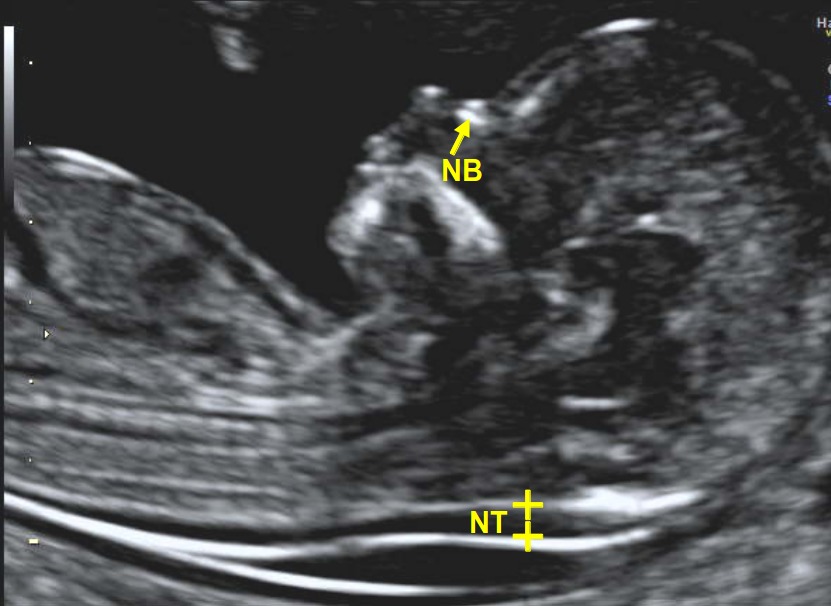
(NB = nasal bone)
What could it mean if the NT measurement is over 3.4mm?
An NT measurement of over 3.4mm could be a normal finding for your baby. An increased NT can be linked with a chromosome (package of DNA) change such as Down’s, Edwards or Patau’s syndrome or a rarer chromosome change. It could also be linked with a structural change to your baby’s anatomy such as a heart condition. There is also a slightly increased risk of miscarriage.
It is important to note that the NT measurement alone cannot definitely tell you if there is a health condition with your baby.
What happens next?
Following your scan you will be referred to one of the Screening Midwives for support. They will discuss the findings from your scan and the options available to you.
The options include:
- No further tests.
- A scan and consultation with a Consultant in the Fetal Medicine Unit at LGI.
- The Combined Screening blood test.
- A detailed heart scan for your baby in the Fetal Echo department at LGI at around 19 weeks.
- An anatomy scan between 18-20 weeks (normally 20 weeks). This will check your baby carefully, looking for any differences that may indicate another health condition. It cannot detect all possible conditions as this is a screening test.
- A diagnostic test may offered, for example Chorionic Villus Sampling (CVS) or an Amniocentesis. Please see our information on amniocentesis and CVS for further details.
Informed consent
This leaflet is provided to supplement verbal information that will be given to you by your healthcare provider (Doctor/ Surgeon/Nurse) as part of the consent process prior to your procedure. Information sharing between you and the clinician is essential to ensure that your decision to consent is fully informed.
Please ask questions if you don’t fully understand or have any concerns about what is proposed. You have a right to be involved in these decisions and should feel supported to do so. Please take the time to consider what is important to you to ensure the information you receive is specific and individualised.


