MRSA stands for Methicillin Resistant Staphylococcus Aureus and is a bacterium from the Staphylococcus aureus family.
What is MRSA?
It is a germ that has gained resistance to some antibiotics that are commonly used to treat infection. This means that in some cases it has become more difficult to treat, as not all antibiotics that are commonly used to treat infection work effectively against it.
MRSA like many germs can live harmlessly on the skin or in the nose. We all carry lots of bacteria and it usually doesn’t cause a problem. But when a person comes into hospital carrying MRSA and has a procedure that involves breaking the skin, then the MRSA can get into the body and may cause an infection.
What do we mean by MRSA screening?
All patients (adults and children) admitted to Leeds Teaching Hospitals Trust will be risk assessed and then may have samples (swabs) taken to see whether or not they are carrying the MRSA germ.
What happens next?
The hospital or your doctor will contact you if the screening shows you are carrying MRSA
PLEASE DO NOT WORRY
If you are told that you are carrying MRSA this does not mean that you are ill. Lots of people carry MRSA on their skin and up their nose. You will be asked to start MRSA decolonisation which is described later.
What happens if I am an emergency admission?
As it takes a few days to get the result of the MRSA screen test, you will be assessed to see if you have a greater chance of carrying MRSA. If you are assessed as having a greater chance of carrying MRSA you will be started on MRSA decolonisation until the result of the screening test is known. Following further assessment you may also be asked to move into a side room until your results are ready.
MRSA Decolonisation
Reducing MRSA on your skin before you come into hospital
You will be prescribed the following products to tackle the MRSA germ:
- A body wash/shampoo that is an antiseptic. It is gentle on the skin and can be used by people with sensitive skin.
- An ointment, which contains an antibiotic. This is for putting inside your nose (both sides).
The products will depend on your age, known sensitivities or allergies. If you have any questions about your treatment please ask your doctor or nurse.
How to use your nasal cream
MRSA can be found in the nose, so you will need to use your cream for the full period of time it is prescribed. Place a small amount (about the size of a matchstick head) on your little finger or cotton bud and apply to the inside of your nose on both sides. Press both sides of your nose together, this will help spread the cream in your nose properly. Once you have completed this it is important that you wash your hands thoroughly.
How to use your body wash
You will need to wash your body using the antiseptic for the full period of time it is prescribed. Any open or infected wounds that you may have will need to be covered with a waterproof dressing or plaster before you start. The body wash should be used undiluted as a liquid soap. Apply it directly to wet skin with your hands or a cloth. Start with your face and work downwards paying particular attention to the areas around your nose, armpits and groin (See step 1). You should avoid contact with your eyes and ears and do not use antiseptic wash inside the body.
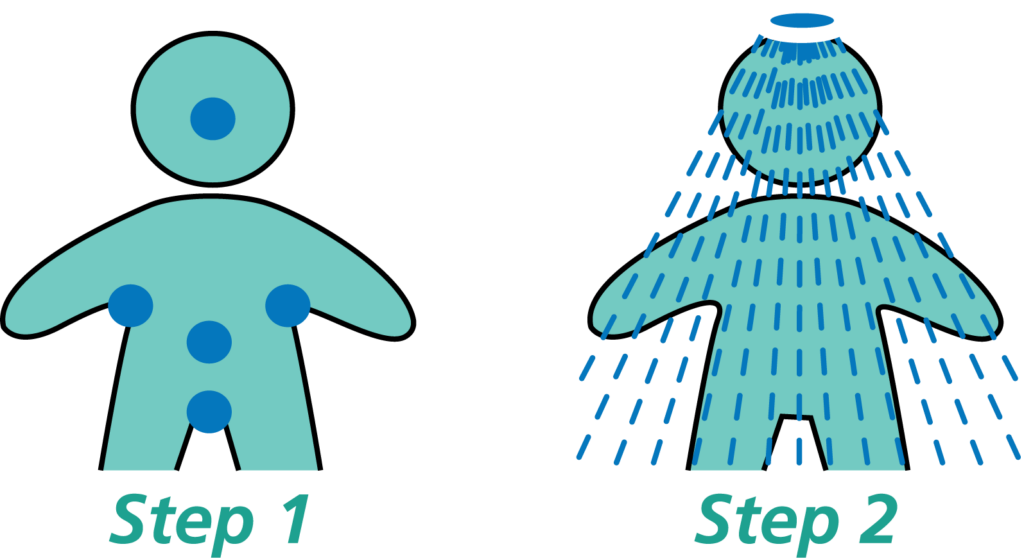
Rinse it off preferably in the bath or by showering (See step 2). After you have given yourself a final rinse dry yourself thoroughly with a clean towel and put on clean clothes.
Back to topHair
You will need to wash your hair at least twice during the treatment. When using the treatment you should start from the top and work down, so you would wash your hair first then move to the face and rest of the body (Follow steps 1 and 2).
Bed Linen and clothing
We encourage you to change all your sheets, pillow cases and towels at the beginning and end of treatment if you are able to.
Will there be any side effects?
The treatment has few side effects, however if you develop a rash or sore skin please stop the treatment and contact you doctor.
What happens at the end of my decolonisation?
Whilst you are an inpatient and once you have completed your decolonisation you may need to be re-screened. This is to check that you are clear of MRSA (if previously positive) and the decolonisation has worked. This is done by taking three sets of swabs. These are taken in the same way as at admission or in pre-assessment clinic. There needs to be three days in between each set of swabs, so during this time you will need to remain in a side room until we have three negative results. Nursing/ Medical staff will keep you informed of your results on a regular basis. This will not affect your discharge.
Family and friends
While MRSA can be passed from person to person, MRSA is not a risk to healthy people and is unlikely to be a problem in the home or at work. You can still continue with your normal day and social activities. You should use your own towel and not share it with others. Remember to encourage your family and friends to wash their hands frequently.
If you, your family or friends have any problems or questions, please don’t be afraid to contact the Leeds Teaching Hospitals Infection Prevention and Control Team. Their contact number can be found on the back of this leaflet.
Further information
You can find out more about MRSA and the use of your antiseptic pack by contacting the department that supplied it or the hospital Infection Prevention and Control Team.
