
What does oligohydramnios mean?
Oligohyramnios is diagnosed when the amount of amniotic fluid (also referred to as liquor) surrounding your baby is lower than the expected normal range. This range changes depending on your gestation.
If there is no measurable amniotic fluid around your baby, this is referred to as anhydramnios. Oligohydramnios and anhydramnios can only be diagnosed following an ultrasound scan.
What is amniotic fluid and what does it do?
During your pregnancy, the baby is cushioned inside a fluid- filled bag (amniotic sac). The wall of the amniotic sac is made up of two membranes which keep your baby safely sealed in the bag of amniotic fluid. These membranes usually open before or during labour, which is commonly referred to as your “waters breaking”.
Amniotic fluid works in many ways to help your baby develop throughout your pregnancy. It:
- Protects your baby from being hurt if you have some trauma to your abdomen.
- Helps your baby’s lungs, digestive system, muscles, and bones to develop.
- Protects your baby against infection.
The baby in the womb
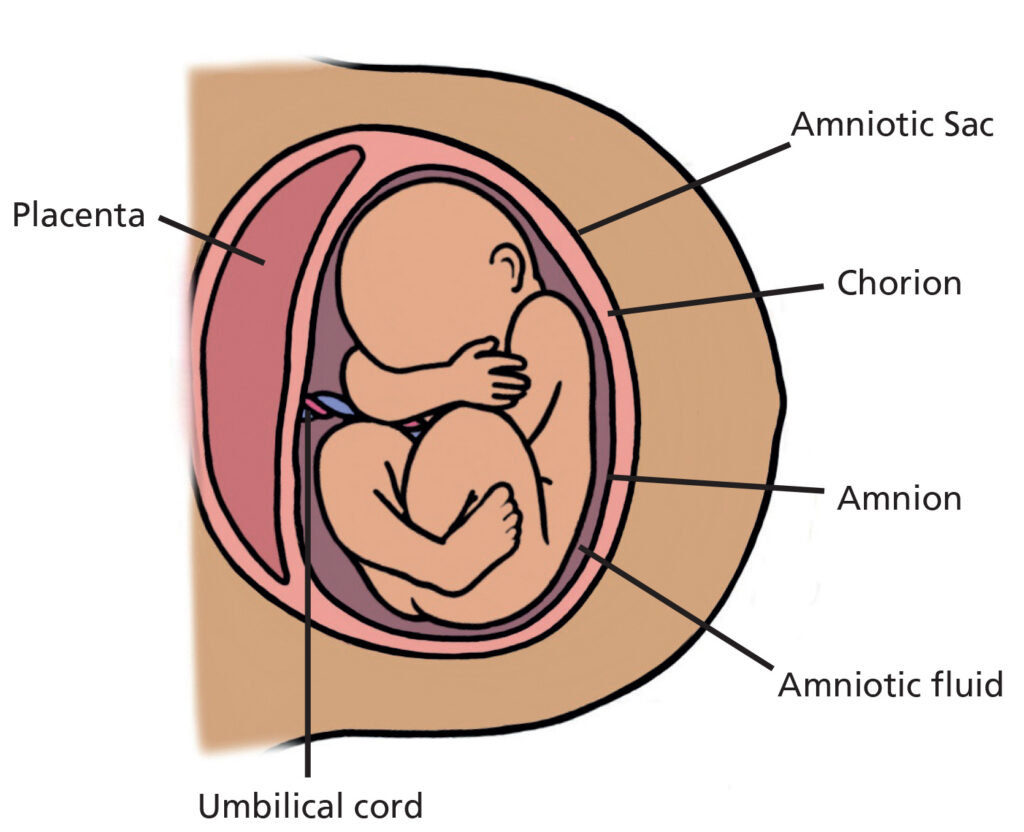
What is a normal level of amniotic fluid?
The range of normal amniotic fluid changes a little depending on your gestation. Your sonographer or doctor will measure an estimated amount of amniotic fluid in your uterus by measuring the depth of fluid pockets during the ultrasound scan.
In general terms, if the deepest pocket of fluid in the uterus is less than 2cm then this is considered lower than normal.
Why has this happened?
There are several potential causes of oligohydramnios at an early point in pregnancy (less than 24 weeks):
- Problems with the baby’s urinary tract, meaning the production or flow of urine is inhibited.
- Ruptured membranes (your “waters breaking”).
- A difficulty with the function of the placenta.
What does it mean for the pregnancy?
Your doctor will explain the possible implications for your baby. This depends on a number of factors, including the possible underlying cause, the degree of oligohydramnios and the gestation that it is first identified. An unexpected finding of oligohydramnios late in pregnancy is unlikely to be significant for your baby.
However, significantly reduced or absent amniotic fluid before 24 weeks gestation can have consequences for the development of the baby’s lungs, and the baby’s limbs and joints may not move well after delivery. Sadly, some of these babies may not survive.
If your amniotic fluid level is low because your membranes have ruptured before 24 weeks gestation there is also a risk of miscarriage and of developing an infection.
If a significant kidney abnormality is present this may also be a concern for the long-term outlook for the baby.
If the lack of fluid is due to poor placental function, the baby is also likely to be very small and therefore at risk of complications because of poor growth.
What do I do next?
Your local hospital will discuss your case and may refer you to the Fetal Medicine Unit at Leeds Teaching Hospitals for a specialist scan and discussion. Depending on these findings you may be offered further tests and future appointments for scans.
Where else can I find help?
Be sure to ask questions of the doctor supplying you with this leaflet and make a note of any questions you would like to ask at your Fetal Medicine Unit appointment. Your local hospital will also have a specialist midwife who you will be able to contact for further discussion.
Another helpful charitable resource is Antenatal Results and Choices: