

Your child has been diagnosed with a simple finger or hand fracture. This means there is a break in one of the bones of the finger or hand, that is expected to heal without the need for further treatment or intervention. There may be some ongoing pain and swelling and reduced movement of the finger or joints for a number of weeks. The below advice is what to expect during their recovery and when you would need to request further clinical review.
First three weeks
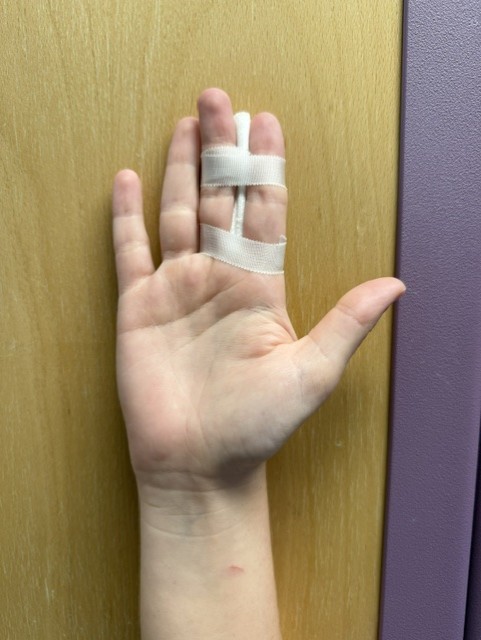
You should have been shown how to buddy strap the fingers to best support the fracture and this should be worn all the time for the first three weeks.
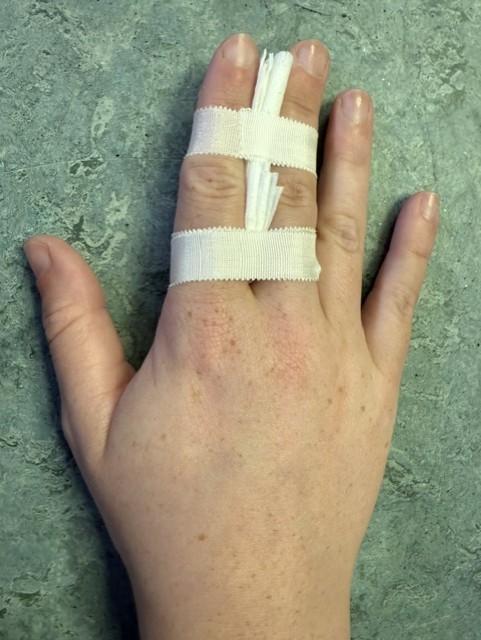
Ensure that you check the skin between the fingers every day ensuring it is not broken or sore.
During this time your child’s fingers may be swollen. Encourage them to elevate their hand on pillows when sitting or laid down, to help this improve. You can also use a cold compress or ice (wrapped in a tea towel) to help with swelling, for no more than 10 minutes at a time, 2 to 3 times per day.
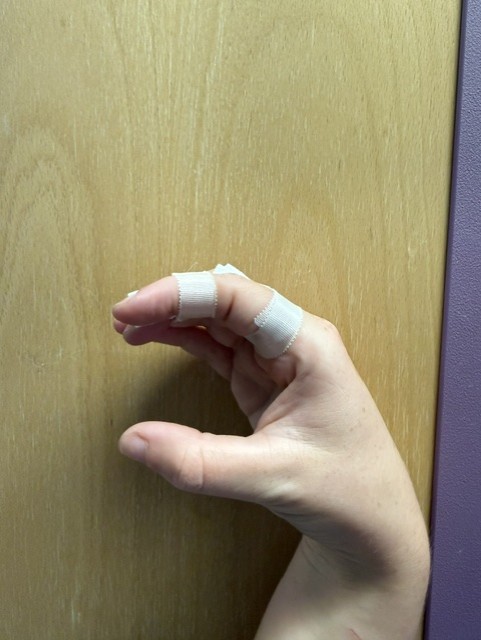
You should encourage your child to bend and straighten their fingers – even while they are being buddy strapped to help with swelling and improve their return to normal movement.
Your child is safe to go to school immediately after a simple finger or hand fracture but may require some support with written work if the affected finger is on their dominant hand. Your school should be able to facilitate this. Your child should not undertake any contact sports (including PE), or rough play (trampolining, bouncy castles) in the first three weeks, following a finger fracture.
Weeks three to six post injury
Your child does not need to wear the buddy strapping all the time but it is recommended when they are in school or likely to bang or knock the finger. They should continue to buddy strap up until four weeks, gradually reducing the amount of time it is being strapped.
When you stop the buddy strapping – there may be some mild increased discomfort when they start to return to normal activities, and this can be managed with simple over the counter pain relief, such as Paracetamol and Ibuprofen.
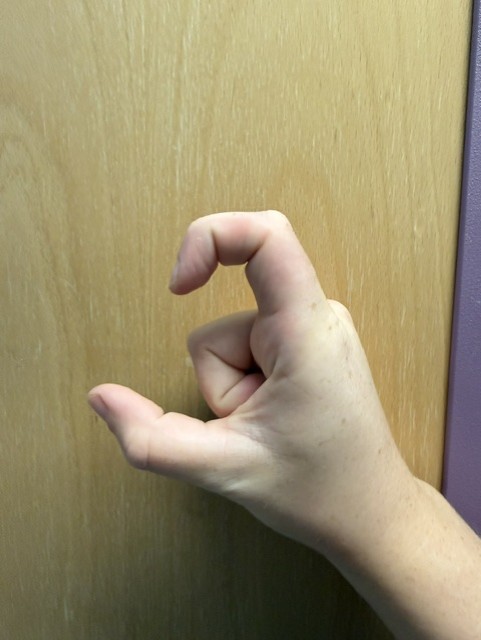
You should encourage your child to bend their fingers, making a fist and fully straightening their fingers repeating at least 10 times three to four times per day. If they struggle with this, then they can use the other hand to help the finger stretch into the palm.
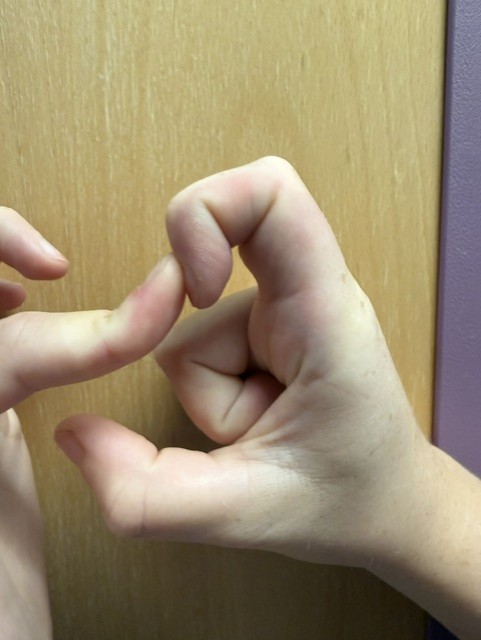
Your child may return to some mild activities like swimming, or exercise, which will not cause stress on the hand but should continue to avoid ball sports or contact sports until at least four to six weeks, following the injury.
If there is no pain and your child’s hand movement has returned to normal after four weeks, they can return to their normal sporting or leisure activities. If they have ongoing pain or are not using their finger as normal, they should not return to sporting or leisure activities.
Some children can take longer than six weeks to return to normal but if overall they are improving, this should reassure you that their finger movements will return to full with the above exercises.
If after six weeks, your child is still having significant pain, swelling or is struggling to bend or straighten their fingers, you should contact the Emergency Department Administration team for a follow-up appointment to be arranged.
General Advice – including when to return to Paediatric Emergency department or seek follow-up
Offer your child simple pain relief regularly for the first two to three days after injury, and then as they need it thereafter. This may include Paracetamol and / or Ibuprofen given as directed by the bottle / packet instructions.
If there is swelling keep your child’s arm in the sling provided and ensure it is elevated above the level of the heart. This should be continued when sat or laid down using pillows. A sling should not be worn when in bed or asleep.
Your child’s finger may look different to before the injury for several months afterwards. This is due to healing of the fracture and the development of callus as the bone heals. It can give the appearance of the joints or parts of the finger having a new or different lump to normal. This usually improves over time and rarely causes any pain or change in how they will function and use the finger.
If you child develops the following you should return immediately to the Paediatric Emergency department for review:
- Severe pain not being managed by simple over the counter pain relief.
- The tip of the affected finger becomes pale, discoloured and / or cold to touch compared to the others.
- There is no sensation to the tip of your child’s finger.
- The skin between the fingers has broken down.
Emergency Department Administration team


You will need to arrange a follow-up appointment if:
- After six weeks, your child cannot make a fist or straighten their finger, or wiggle all fingers independently at the joints.
- When your child bends their finger, it moves in a different direction to the rest of the fingers when making a fist.