
You have received this leaflet because you have had a diagnosis of pelvic inflammatory disease (PID). It will explain what PID is, how you can get it and how it is treated / followed up.
What is PID
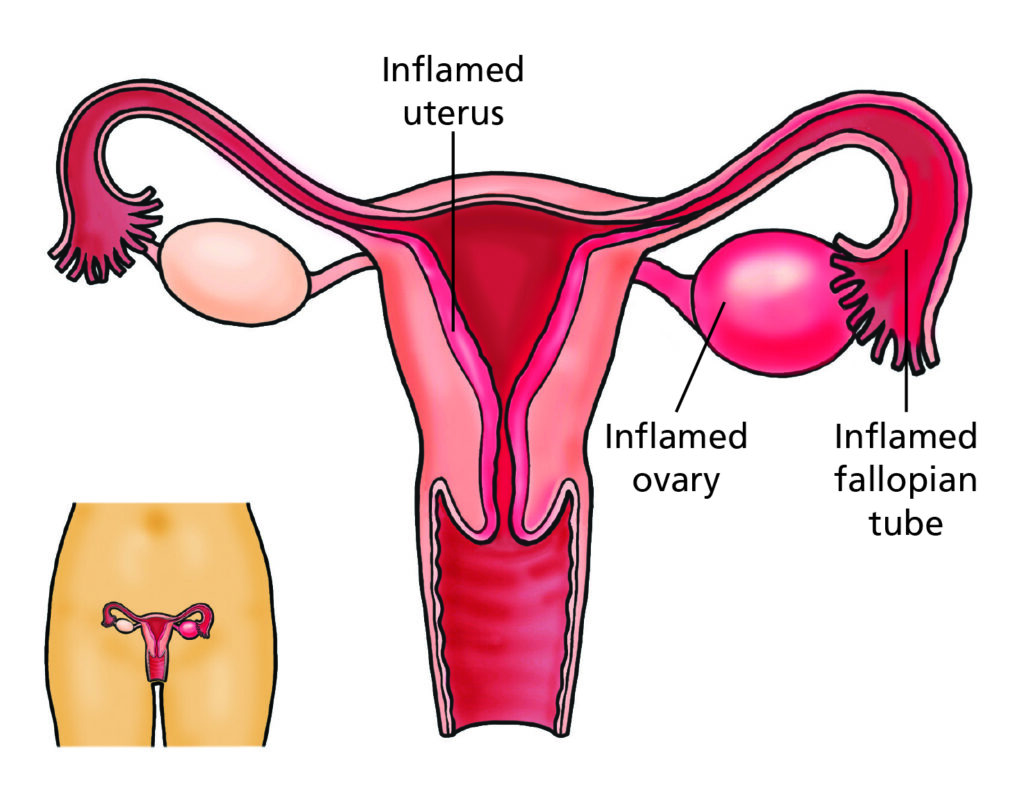
Pelvic Inflammatory Disease (PID) is a condition where there is an infection of your reproductive organs: uterus (womb), fallopian tubes, ovaries and surrounding tissues. The infection normally starts in the vagina and cervix (neck of the womb) and moves upwards to infect the other organs.
What causes PID?
PID is usually caused by bacteria (bugs or germs). The most common bacteria in the UK to cause PID are chlamydia and gonorrhoea. These bacteria are sexually transmitted infections (STIs).
Sometimes PID can happen without having an STI. This is because normal bacteria found in the vagina can move through the cervix (neck of womb) into the other reproductive organs to cause infection. This process can happen spontaneously or it can happen in the following situations:
- During childbirth.
- After a miscarriage.
- After a termination of pregnancy (abortion).
- After a hysteroscopy- camera test where a thin probe is inserted into your womb to view the womb cavity.
- After being fitted with an intrauterine device (IUD or coil).
- If you have previously had PID or an STI.
- Occasionally PID happens after having appendicitis.
How common is PID?
In the UK you have a 1 in 50 chance of developing PID if you are sexually active. It is most common between the ages of 15 and 24.
What are the symptoms of PID?
You may find you have no symptoms. For example, 70-80% of Chlamydia cases have no symptoms at all. Therefore PID can go unnoticed for years.
You may find, however, you have symptoms which may indicate PID such as:
- A change in vaginal discharge.
- Irregular periods, bleeding between periods or having heavier periods than usual.
- Pain in the lower part of the abdomen (tummy), which may spread to the legs. This may range from mild to severe.
- Pain when passing urine.
- Pain or discomfort when having sex.
- A high temperature (over 38°C).
- Feeling sick or vomiting.
These symptoms aren’t always caused by PID but it is important to be investigated and, if necessary, to get treated to reduce the chance of developing complications of PID.
What are the complications of PID?
If PID is not treated promptly it can cause serious long term problems, which include:
- Long term pelvic or abdominal pain. This can be persistent or come and go.
- Infertility (difficulty in getting pregnant). This is due to damage to fallopian tubes.
- Having an ectopic pregnancy (where a pregnancy commonly implants in the fallopian tube instead of inside the womb). The risk of ectopic pregnancy is higher if you have a history of PID.
- Pelvic abscess – This is where the pelvic organs collect pus. This may require drainage.
How is PID Diagnosed?
There is no single test that can diagnose PID.
In most cases it is diagnosed by asking you questions about your symptoms, performing an examination including an internal vaginal examination and taking vaginal swabs as part of an STI screen.
If PID is suspected you will be offered treatment before the vaginal swab results come back to avoid delay.
Vaginal swabs
Vaginal swabs are taken from your vagina and cervix (neck of womb). It takes between 48-72 hours for the results to be processed by the laboratory.
If the vaginal swabs come back with a positive result then you and your GP will be informed either by phone or by letter. You should be treated with a course of antibiotics which can be prescribed by your GP or the acute gynaecology unit.
If the vaginal swabs come back with a negative result you may still have an STI and PID. That is because although swab tests are good at detecting infection they are not perfect. If you have already been prescribed a course of antibiotics it is important to finish your treatment even if the swab result is negative.
Pregnancy test
If you are of reproductive age (puberty to menopause) you will be offered a pregnancy test. If the result is positive you will be prescribed antibiotics that are known to be safe in pregnancy.
Urine sample
You will be offered a urine test to check for a urine infection.
Pelvic ultrasound scan
This is sometimes done if you have severe PID or you do not appear to be improving after taking antibiotics for a period of time. It may also be done if your doctor feels that there may be another cause for your symptoms.
Laparoscopy
Laparoscopy (keyhole surgery) is occasionally performed if you have severe PID and do not appear to be improving after taking antibiotics for a period of time. If this is offered to you the doctor will discuss it with you before your operation.
How is PID Treated?
Mild and Moderate PID
Most cases of PID are easily treated with a mixture of antibiotics to cover the most likely bacteria. This usually involves a single injection followed by tablets for 2 weeks. It is important to complete the treatment to minimise the risk of long term complications. None of the antibiotics given interfere with hormonal contraception such as the ‘pill’ or ‘mini-pill’.
Pain relief
You may need pain relief medication such as ibuprofen (do not take if you are allergic to aspirin) or paracetamol if required.
Severe PID
If you have severe PID you will normally need to be admitted into hospital for initial treatment for monitoring and intravenous (into the vein) antibiotics.
Sometimes a pelvic abscess (pus within the pelvis) is found and this needs to be drained as part of your treatment. Drainage is usually performed under ultrasound scan guidance. Occasionally it is performed through surgery.
Points to remember while being treated for PID
Avoid having sex until you have finished your course of treatment and your partner has been screened and treated.
If your symptoms (pain/ fever/ sickness) get worse or do not get better within 3 days of starting your antibiotics you should call your GP for an assessment.
If your swab results come back positive for an STI you will be contacted by a member of staff from the acute gynaecology unit to ensure you are on the right treatment.
If you are found to have an STI we will offer you a referral to Leeds Sexual Health Clinic for follow up.
Sexual Partners
Sexual partners should be encouraged to see their GP or a sexual health clinic for testing. It is recommended that sexual partners are treated with antibiotics for 7 days even if they do not have symptoms.
You should avoid having sexual intercourse while you are being treated for PID. This is normally for a minimum of 14 days.
Prevention of PID
It is not always possible to prevent PID. However, the risk of getting an STI can be reduced by using barrier contraception such as condoms.
Informed Consent
This leaflet is provided to supplement verbal information that will be given to you by your healthcare provider (Doctor/ Surgeon/ Nurse) as part of the consent process prior to your procedure. Information sharing between you and the clinician is essential to ensure that your decision to consent is fully informed.
Please ask questions if you don’t fully understand or have any concerns about what is proposed. You have a right to be involved in these decisions and should feel supported to do so. Please take the time to consider what is important to you to ensure the information you receive is specific and individualised.
Further information and support
Your GP
- Contact your local GP if you require further support or advice.