
Your Doctor has recommended that you have a Per-Oral Endoscopic Myotomy (POEM). This page will explain the procedure and what to expect on the day of your procedure. If you have any further questions, please telephone the department or discuss them with a member of staff on the day of your procedure.
What is Achalasia?
Achalasia is a rare condition of the oesophagus (gullet) characterised by difficulty in swallowing, chest pain, regurgitation and weight loss.
These symptoms occur because:
- The muscles in the oesophagus (gullet) contract in an uncoordinated manner reducing the ability to squeeze food down the oesophagus (gullet), and
- The lower oesophageal sphincter (a muscular ring at the bottom of the food pipe) fails to relax stopping food from dropping into the stomach.
As a result, the normal passage of food into the stomach is prevented and food builds up in the oesophagus (gullet), like a blocked hosepipe (see image below).
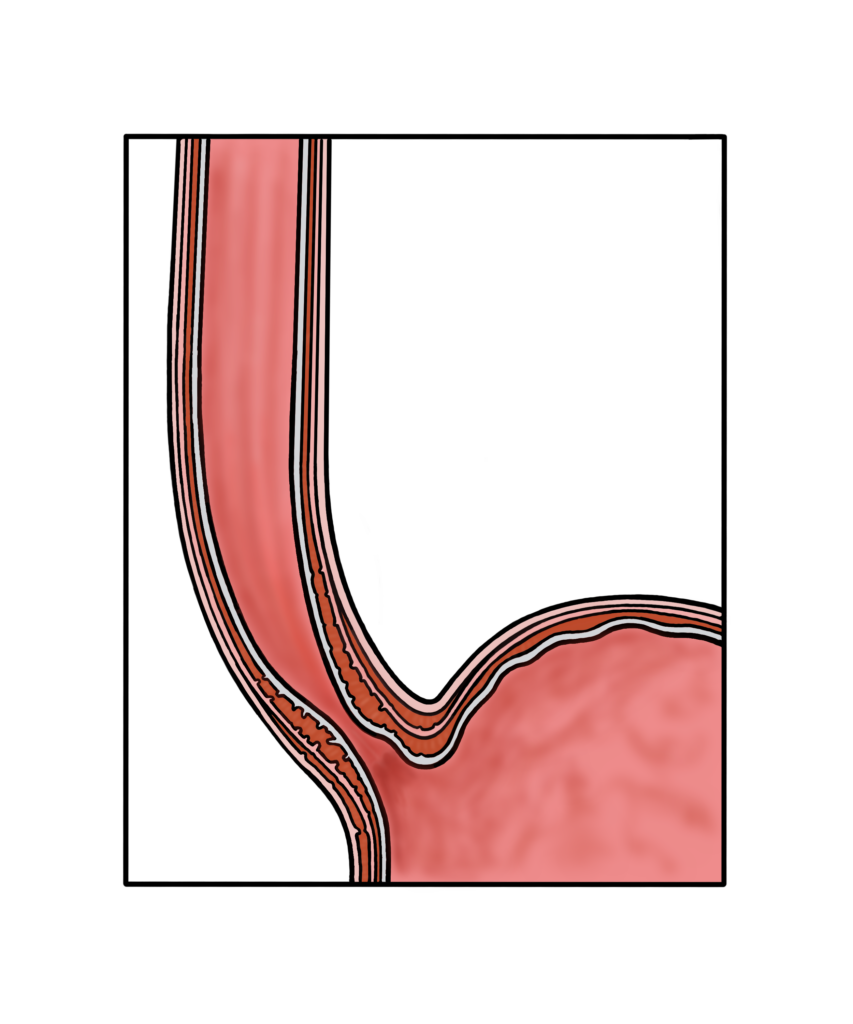
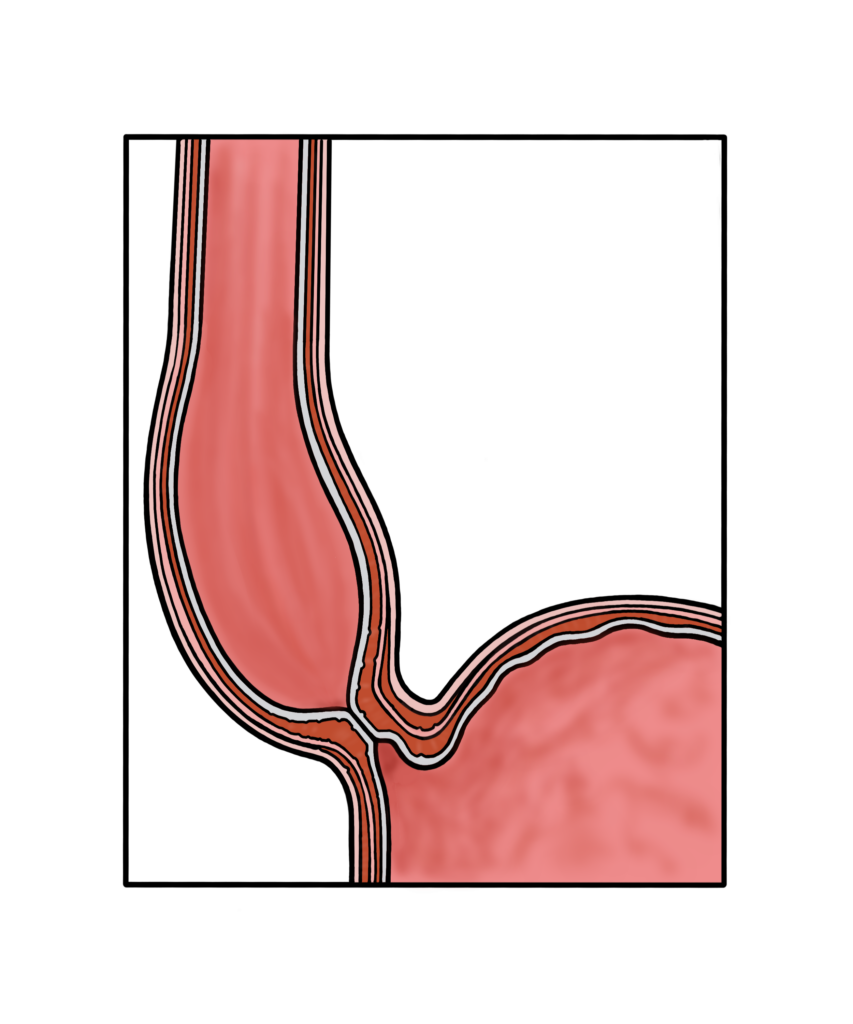
The condition is caused by a loss of nerves in the oesophagus (gullet) but the reason why this happens is unclear. Achalasia is a long-term condition which cannot be cured. There are treatments which can improve symptoms.
What is a Per-Oral Endoscopic Myotomy (POEM)?
The term POEM stands for Per-Oral (through the mouth) Endoscopic (camera) Myotomy (splitting of the muscle), POEM.
It is a minimally invasive procedure used to treat spastic disorders of the gullet such as Achalasia.
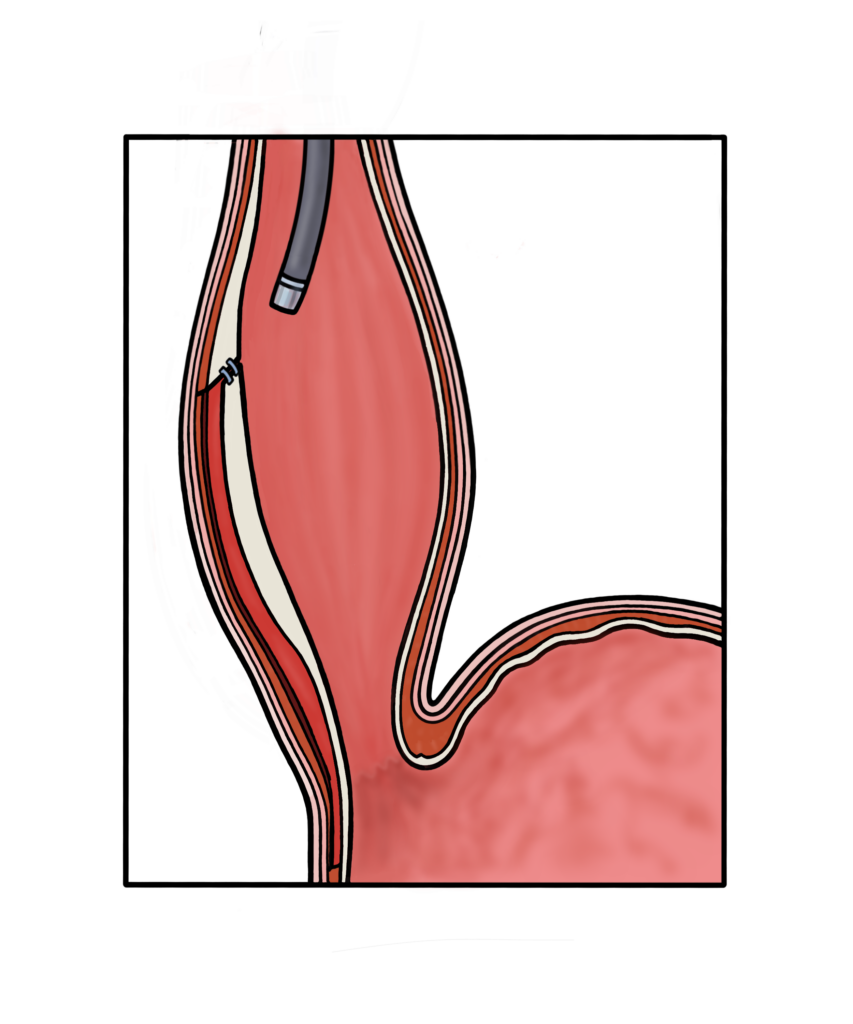
The aim of the procedure is to cut the muscle layer in the lower part of the oesophagus (gullet), which will allow food to pass into the stomach more easily.
To do this, a gastroscope (flexible camera) is passed through the mouth and into the oesophagus (gullet), and using equipment passed through the gastroscope, a small cut is made into the wall of the oesophagus (gullet). The wall of the oesophagus is made up of three muscle layers, a small cut is made in the oesophagus (gullet) wall and a tunnel is created between the layers. The gastroscope is then inserted into the tunnel and heads towards the sphincter at the bottom of the oesophagus. We then cut the inner muscle layer at the bottom of the oesophagus (gullet) which makes it relax. The camera is then removed from the tunnel and the first cut (at the top of the food pipe) is closed using endoscopic clips to reduce the risk of food leaking into the tunnel. The second cut is not closed as this is how the symptoms of achalasia are relieved.
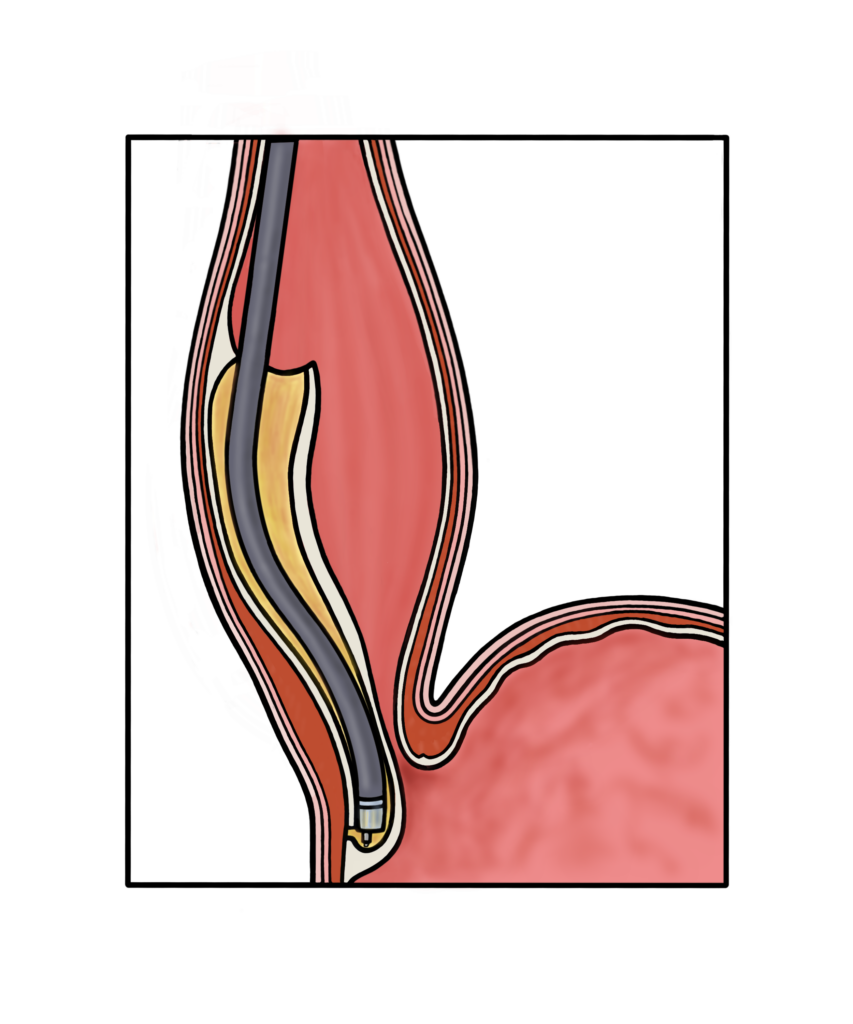
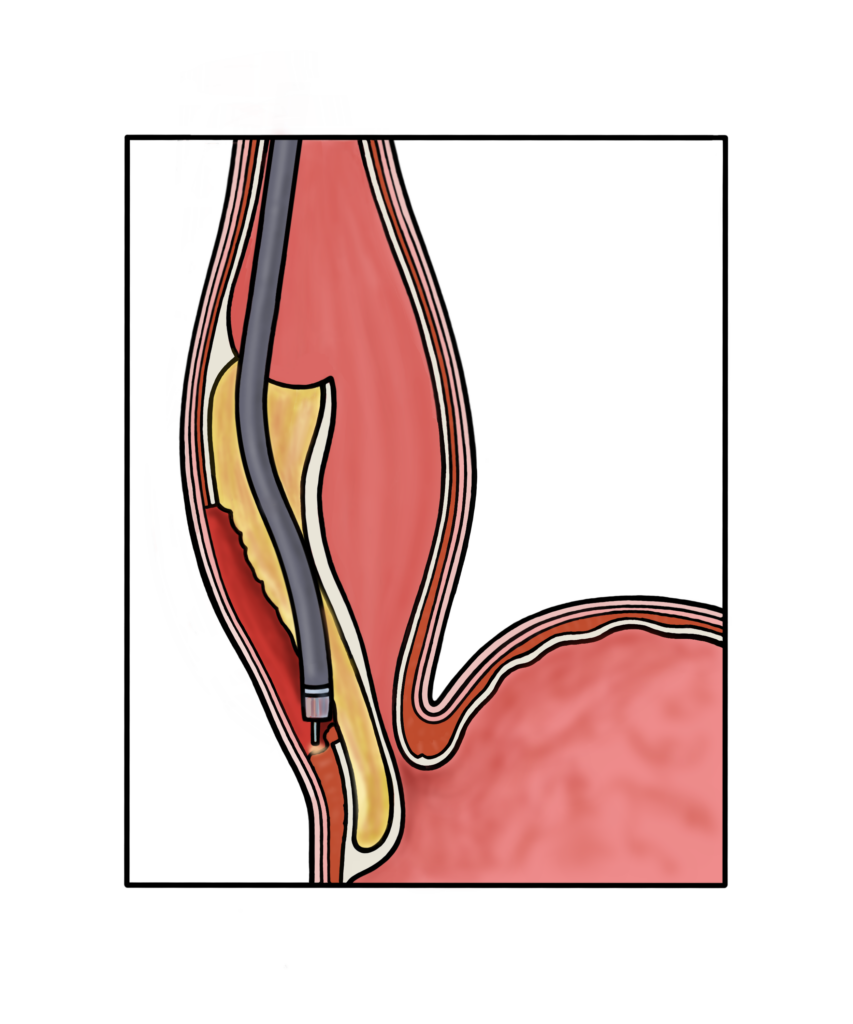
What are the benefits of having a POEM?
The main advantage of performing a POEM is to avoid surgery and therefore, an external surgical scar. The other advantage is that due to its easy access, the muscles can be cut much further up in the gullet and also more selectively than in surgery reducing post-procedure complications.
What are the alternatives to having a POEM?
There are several alternative treatment options for achalasia, which may have already been discussed with you:
- Medication – medications such as Nifedipine or Nitrates, which relax the lower oesophageal sphincter have been used in the past; however, these treatments are no longer considered effective for achalasia and cause side-effects such as dizziness, flushing and fainting.
- Botox injection – during an endoscopic (flexible camera) procedure, botulinum toxin (Botox) is injected through a catheter needle into the lower oesophageal sphincter and because Botox temporarily paralyses muscles, it causes the lower oesophageal sphincter to relax allowing the passage of food. The benefit of this procedure is that it is very quick and is often performed with minimal sedation; however, long-term results are not very good. Botox wears off quickly and frequently, repeat treatments are needed. Repeated Botox injections can make other treatments for achalasia more difficult. For these reasons, Botox is usually reserved for patients who are elderly and for those who cannot have the alternative treatments for achalasia.
- Pneumatic dilation – this procedure involves inflating a balloon that is passed through an endoscope (flexible camera) to stretch the muscular ring in the lower oesophagus (gullet). It is a very effective treatment but often needs multiple dilations to achieve the desired effect. Dilation is associated with approximately 2% – 8% risk of perforation (tear) of the oesophagus and a risk of bleeding.
- Heller myotomy and fundoplication – this is a surgical procedure that can be performed via ‘keyhole’ or ‘open’ surgery. It involves making a cut to the lower oesophageal sphincter and is usually completed in conjunction with an anti-reflux surgery (fundoplication). It has similar symptomatic improvements to POEM with a slightly lower risk of reflux following the procedure. If you wish for further information on this procedure, you can discuss this with a surgeon.
What are the risks of having a POEM procedure?
POEM is a safe procedure and serious complications are rare. The most common side-effects following POEM is a sore throat for a day or two and / or acid reflux which can be controlled with acid suppressant medication. Less commonly, you can experience rare reaction to the anaesthetic drugs used for anaesthetic and / or damage to crowned teeth or bridgework.
There are known adverse effects from the intravenous drugs administered during the procedure, ranging from mild and common to rare and serious. These include: headaches, nausea, fainting, depression of respiratory and nervous system, which may result in aspiration pneumonia, anaphylaxis and coma. Although these serious complications are rare, they are more common in patients with deeper sedation and / or general anaesthesia.
Rare complications include mediastinitis. Mediastinitis (infection within the chest) capnoperitoneum (gas leakage in the tummy), capnomediastinum (gas leakage in the chest) and pneumothorax (extremly rare incidents where lung gas leakage ruptures the lung wall. presents as a severe chest pain with a fever and is managed with antibiotics in the drip for a few days. To reduce the risk of occurring, antibiotics may be administered during the procedure. Carbon dioxide and water are used during POEM to inflate the oesophagus (gullet) to give good views of the muscles. Occasionally, this gas can escape into the tummy or underneath the skin and cause a crackling sensation when the skin is pressed, most notably around the neck and eyes. This usually resolves on its own over a few days.
Lastly, another rare complication is a leak from the entry point where the endoscopic clips are placed. This is very rare and is usually identified by the tests that are performed the day after the procedure. It is usually managed conservatively and very rarely requires further endoscopic procedures.
The two more serious risks are bleeding, during, or after POEM and perforation (making a hole) of the oesophagus (gullet).
Bleeding: this is usually minimal unless you take medication to stop blood clots from forming. Examples of such medications include: Aspirin, Clopidogrel (Plavix), Dabigatran, Edoxaban, Ticagrelor, Dipyridamole (Persantin), Warfarin, Heparin, Rivaroxaban (Xarelto), or Apixaban (Eliquis). In most cases, bleeding following POEM will settle on its own without the need for intervention. If the bleeding does not stop, it can be managed using the gastroscope (flexible camera) without resorting to an emergency operation. If there was bleeding, you would be advised to stay in hospital for an extra few days to make sure the bleeding does not restart. Late bleeding can happen for up to two weeks after the procedure – see the end of this page for how to recognise late bleeding following your POEM.
Perforation: perforation (making a hole) during POEM can happen but the risk is small. If your oesophageal wall is perforated, it can be managed in two ways:
- It may be possible to close the perforation completely using endoscopic clips, in which case, the recovery is usually very quick and will not affect your discharge home.
- Very rarely, an emergency operation may be required to surgically repair the site of the perforation if endoscopic closure is not possible.
What preparation will I need?
All POEM procedures must be performed on an empty stomach. Your appointment letter will tell you when you need to stop eating and drinking, and also dietary modifications that are required for the procedure. This is very important. We may have to cancel the procedure if we find food in the oesophagus or stomach as this can make views with an endoscope poor and increases the risk of the procedure.
Five days before the procedure:
Stop taking all solid foods and have a liquid only diet. A liquid diet consists of any clear liquids as well as food the consistency of nutritional supplement drinks and blended soups.
The day of the procedure:
You must not drink anything for four hours before your procedure.
Do I keep taking my tablets?
You must keep taking any essential tablets unless your doctor tells you specifically not to.
If you are diabetic, this should have already been highlighted by your referring doctor and you should receive additional information within the post of what to do with your medications and how to prevent hypoglycaemia (low blood sugars).
- Please telephone the Endoscopy Unit if you have sleep apnoea or are taking tablets that prevent blood clots and have not been given instructions about what to do about them. Examples include: Aspirin, Clopidogrel (Plavix), Ticagrelor, Dipyridamole (Persantin), Dabigatran, Edoxaban, Warfarin, Heparin, Rivaroxaban (Xarelto), or Apixaban (Eliquis).
What should I bring on the day?
Please bring any medications that you take or you may require whilst in the department such as GTN spray, inhalers and insulin. Please also bring a list of all the medications you take.
An overnight bag will also be needed as you will be staying in hospital following the procedure. Please do not bring valuables to the department or wear lots of jewellery. Please also ensure that you remove nail varnish as this interferes with the signal received from equipment we use to measure your oxygen levels.
Will I be asleep for the procedure?
Yes, you will be completely asleep. The POEM procedure will be carried out under a general anaesthetic (GA). This is because the procedure normally takes 1-2 hours and requires you to be as still as possible. Before your procedure, you should be seen in clinic by the team performing your POEM and also attend a pre-assessment clinic where you will be assessed for fitness for a general anaesthetic.
What will happen on the day of the procedure?
When you arrive at reception in the Endoscopy Unit, your personal details will be checked. The assessment nurse will collect you and take your medical history, discuss and explain the procedure and take your blood pressure and pulse. You will be asked for your consent form (supplied with this leaflet). This will be attached to your notes and taken to the procedure room. Please make sure that you have read this through before you come for your procedure as when you sign your consent form you will be agreeing that this is a procedure you want.
Remember, you can change your mind about having this procedure at any time. The endoscopist will discuss the consent form with you. There may be a wait before you have your POEM as we may need to confirm that a bed is available for you after your procedure. The nursing staff will keep you informed about when a bed may be available for you.
The doctor who will be performing your POEM will meet you before the procedure. You will be able to ask any questions and discuss any worries you may have. The anaesthetist will also see you in the Endoscopy department before the procedure and will discuss the general anaesthetic with you.
Please note: every effort will be made to see you at your appointment time; however, due to hospital inpatient emergencies, delays may occur. The endoscopy staff will keep you informed of any delays.
What happens in the procedure room?
You will be greeted by two nurses who will remain with you during the procedure. The team in the room will complete a checklist to ensure all your information is correct. You will also be asked to remove any dentures or glasses and to lie down on a trolley. A cannula (small plastic tube) will be placed in your vein so that anaesthetic medication can be administered and an oxygen mask will be placed on your face before you go to sleep. Once you are asleep, you will be positioned onto your left-hand side and a mouth guard placed between your teeth before we start the procedure.
Please note: all hospitals in the trust are teaching hospitals and it may be that an endoscopist training to do POEM performs your procedure under the direct supervision of a consultant. Student nurses, doctors or medical representatives involved with the equipment used during the procedure may also be present during your procedure to observe the procedure. If you do not wish them to be present, please inform the endoscopist.
What happens after the procedure?
You will be woken up in the room once the endoscopist has finished and then be transferred to the recovery area. The length of your stay in recovery will be dependent on how you recover from the procedure. The nurse in the recovery room will monitor you during this period. You will be transferred to the ward when you have recovered.
Most patients feel some discomfort in the chest or upper abdomen for a few days following the procedure. You will be provided with painkillers while in hospital should they be required.
If you are not already on one, you will be provided with an acid suppression medication (omeprazole or lansoprazole) to take for at least three months following your procedure. These medications reduce the chances of reflux leading to the cut opening up again.
Will I need to stay in hospital after POEM?
After a POEM procedure, you will usually stay in hospital for one night. The day after the procedure, you may be asked to have a swallow test in the Radiology (x-ray) department to ensure there are no leaks from the oesophagus (gullet). You will be discharged home the day after your procedure if you remain well. You will be able to restart most of your normal medications after the procedure as long as there is no concern about a leakage in the oesophagus. If you are taking blood thinning medications, the endoscopist will decide when it should be safe to restart this medication.
You should arrange for someone to be available to collect you from the ward when you are discharged home.
What can I eat and drink after a POEM?
The diet following your POEM is important to allow the cut in the oesophagus to heal. Not sticking to the diet can result in the cut opening up and causing infection.
First 24 hours:
During the first 24 hours following the procedure, we would ask that you only take small sips of water. A drip will be put up to keep you hydrated while you are in hospital.
Day 1-7:
The day after the procedure, you should be able to start on a liquid diet. If you have been asked to await a swallow test, please remain on sips of water until the results have been reviewed. A liquid diet consists of any clear liquids as well as food the consistency of nutritional supplement drinks and blended soups.
Day 8-14:
After the first week, you can commence on a pureed diet. Unless you are still struggling to swallow, a normal diet can be commenced after two weeks.
When will I get my results?
You will receive a copy of the endoscopy report before your discharge and this will also be sent to your consultant and GP. Following POEM, you will be asked to attend a follow-up outpatient clinic to discuss your response to the procedure. All enquiries regarding outpatient appointments should be directed to your consultant’s secretary.
What should I do if I become unwell after the procedure?
Bleeding or perforations can occasionally present several days after the procedure has taken place. If you experience severe pain in the abdomen (not relieved by passing wind), nausea, vomiting blood, or passing fresh or altered blood (black and tarry) via the back passage, you should go to your nearest Emergency Department and bring a copy of your endoscopy report.
This page has been designed as a general guide to your test. If after reading this you have any questions that you feel have not been answered, please contact the Endoscopy department on the numbers below.
Administration Team: for any enquiry about your appointment including cancellation. Also, contact this number if you require an interpreter or transport.
Administration Team
Monday – Friday, 9.00 am – 4.00 pm

Nursing Team: please contact this number if you would like advice on your medication or any other medical question or worry.
Nursing Team
Monday – Friday, 9.00 am – 4.00 pm