
What is a Percutaneous Transhepatic Cholangiogram and drainage?
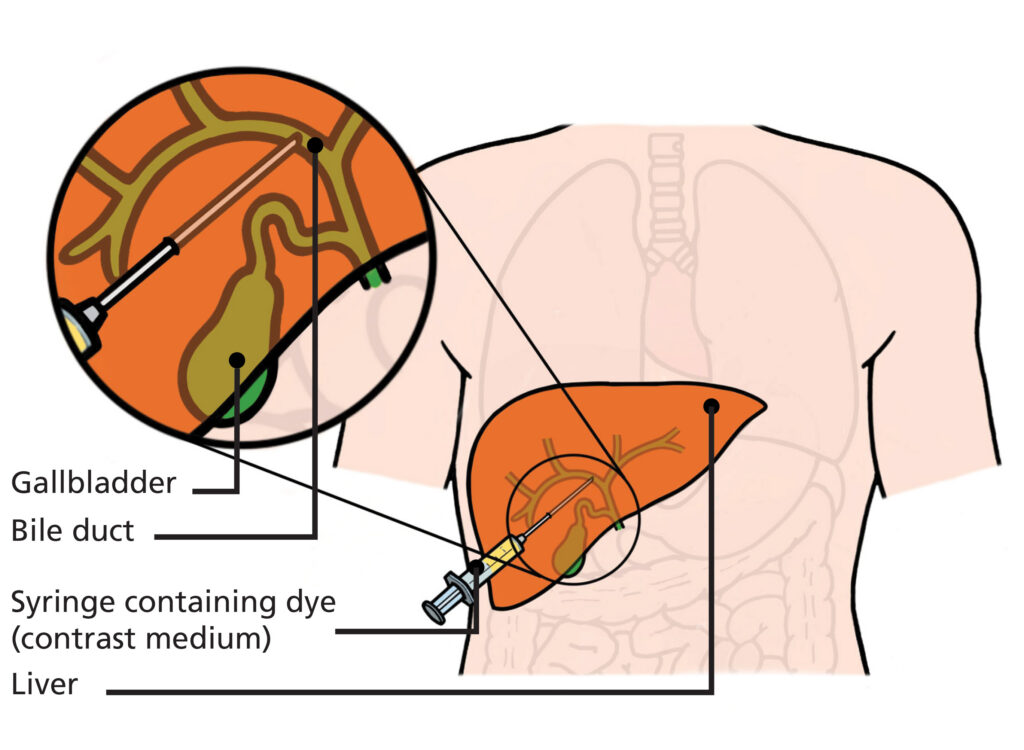
A percutaneous biliary drainage is a procedure in which a small plastic tube (drain) is inserted into the liver through the skin to drain the bile. It is sometimes combined with taking a picture of the bile ducts to see where the blockage might be. This is known as a percutaneous transhepatic cholangiogram (PTC).
Biliary drainages are typically performed because you have become jaundiced (yellow) and extremely itchy. This is because the bile cannot flow normally into the gut and the condition makes you susceptible to infection. The most common reasons for this are gallstones and pancreatic masses, although there are other causes.
How do I prepare?
You may be asked not to eat for six hours before the procedure, although you may still drink clear fluids such as water two hours before your operation. If your blood clotting is abnormal, you may be given special blood transfusions to try and correct this. If you have any concerns about having blood transfusions, you should discuss these with your doctor. If you have any allergies or have previously had a reaction to the dye (contrast agent), you must tell the radiology staff before you have the procedure.
How is a PTC and drainage performed?
Consent
Before the PTC and drainage, the interventional radiologist will explain the procedure and ask you to sign a consent form. Please feel free to ask any questions that you may have and, remember that even at this stage, you can decide against going ahead with the procedure if you so wish.
Anaesthetic
This operation is done under local anaesthetic and often sedation. When the local anaesthetic is injected, it will sting for a short while, but this soon wears off.
Procecedure
You will lie on the X-ray table, generally flat on your back. PTC and drainage usually take about an hour, though every patient is different and some procedures can take quite a bit longer.
You may have monitoring devices attached to your chest and finger and may be given oxygen. The procedure is performed under sterile conditions and the interventional radiologist and radiology nurse will wear sterile gowns and gloves to carry out the procedure. The skin at the side of your abdomen will be swabbed and covered with sterile towels and drape.
Local anaesthetic will be injected into the skin to numb the area. Once the skin is numb, a small needle is inserted into the bile ducts. A small amount of dye (contrast agent) is injected to allow images to be taken of the ducts.
Once the interventional radiologist has enough information, a drain will be left in place and connected to an external drainage bag. When the catheter is placed in the liver, you may get a dull ache in the right shoulder.
What are the risks?
PTC and drainage is a safe procedure, but as with any medical procedure there are some risks and complications that can arise.
- If the bile is infected, although you may be on antibiotics, there is a small risk that infection might be released into your bloodstream, making you unwell for a period.
- There is a risk of bleeding, though this is generally very slight. If the bleeding were to continue, then it is possible that you might need a blood transfusion.
- Very rarely, an operation or another radiological procedure is required to stop the bleeding.
- Allergic reaction to contrast dye (mild symptoms like nausea, itchiness and rashes occur in 3%; moderate to severe symptoms such as severe vomiting, bronchospasm occur in less than 1%; risk of death is rare, estimated at 1:170,000).
- X-rays will be used to make images of your body and guide your doctor during the procedure. X-rays are a type of radiation. We are all exposed to low levels of natural radiation as part of our everyday lives and medical x-rays give an extra dose of radiation. Radiation can increase your chances of developing cancer many years or decades after the exposure. The chances of this happening to you as a result of this procedure are considered to be low.
- In some very rare situations, you might experience some reddening of your skin in the area that was imaged. If this happens, you should contact your clinical team who will be able to give some advice on the simple steps you can take to look after your skin.
- It is important to remember that your doctor thinks that the benefits of this procedure outweigh any risks from the radiation. We will make sure that the amount of radiation used in your procedure is as low as possible.
What to expect from this procedure?
Admission
You will be admitted in the hospital before your operation under hepatobiliary team. Your doctor will arrange:
- Specific and up-to-date blood tests are required to make sure it’s safe to carry out the operation.
- A cannula will be inserted in your arm, and you may need a fluid drip overnight or antibiotics before your operation.
Recovery
You will be taken back to your ward. Ward staff will carry out routine observations including pulse and blood pressure and will also check the treatment site. You will generally stay in bed for six hours, until you have recovered. Once the bile has been drained into the bag, your jaundice (yellow colour) and itching will improve and you will feel much better.
Aftercare
It is likely that you will have a second picture taken of the bile ducts. This will be to check whether after draining all the bile the narrowing or blockage can be opened. This may be with a small plastic tube or metal tube (stent). The doctors looking after you on the ward will be able to discuss this with you.
Care at home
At home post procedure
You may have a small amount of bruising where the catheter was inserted. This is normal and is nothing to worry about. If you notice any swelling or redness around the insertion site, have a temperature or continue to experience pain, please either ring your GP or 111 out of hours or go the nearest Emergency Department.
Contact information
We hope some of your questions have been answered by this leaflet. If there are any questions you would like to ask before you come for your operation, please get in touch.
Interventional Radiology SJUH


Ward 83 SJUH
HPB Nurse Specialists
Your GP or NHS direct
How to get to our department
We are located Lincoln Wing of SJUH, Ground Floor.