
If you have any further questions, please ask the nurses or doctors on the ward or discuss them with a member of the endoscopy staff on the day of your procedure.
What is Insertion of a Pyloric or Duodenal Stent?
The pylorus is the junction between your stomach and small bowel, it opens and closes, allowing food to pass into the small bowel. The duodenum is the medical name for your small bowel. If the pylorus or duodenum becomes narrowed, eating and drinking becomes difficult and food intake can be reduced. Placement of a specially designed metal, mesh-like tube called a stent, across the narrowed or blocked area of the pylorus or duodenum can make it easier to eat and drink as food can pass through the digestive system with minimal
hold-up.
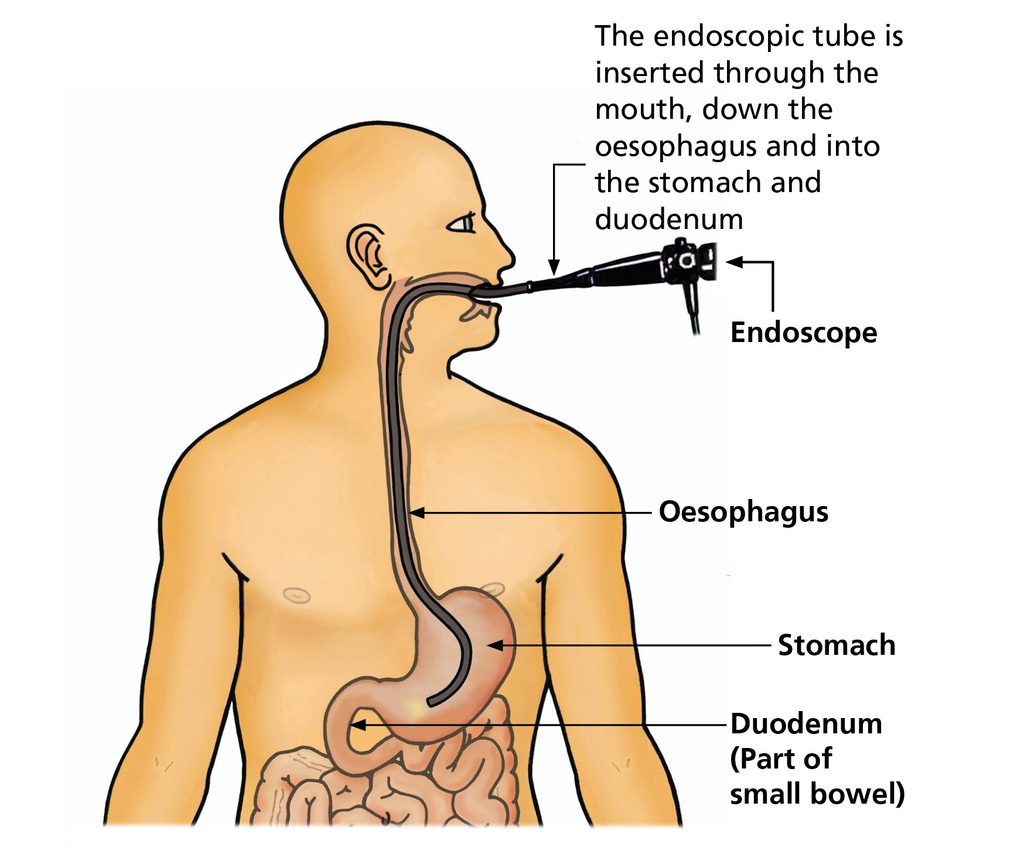
The endoscopic tube is inserted through the mouth, down the oesophagus and into the stomach, a wire is then passed through the gastroscope and across the narrowing in either your pylorus or duodenum. The stent is then placed over the wire into the correct position.
Why am I having a Pyloric or Duodenal Stent Insertion?
Before the insertion of a pyloric or duodenal stent, other tests such as endoscopy (camera test) or a barium swallow (x-ray test of the stomach and bowel), or a CT scan have shown that your pylorus or duodenum has become blocked. Your doctor will have discussed with you the likely cause of the blockage. There are different treatments available for people with a blocked pylorus or duodenum.
A stent insertion has been proposed as the best treatment option for you. You should make sure that you have had the opportunity to discuss your treatment options with your doctor. If you feel uncomfortable about having this procedure carried out, then you can decide against it. Your decision will be fully respected and your doctor will be happy to discuss alternative options.
Will I be asleep for my stent insertion?
A pyloric or duodenal stent insertion is normally carried out under sedation. Sedation is not a general anaesthetic and will not put you to sleep; however, it may make you feel relaxed and possibly, drowsy. A painkiller injection Fentanyl is normally given along with your Midazolam a sedative, which will help you to feel more comfortable during the procedure. Local anaesthetic spray may also be given to numb the back of your throat.
Do I keep taking my tablets?
You must keep taking any essential tablets unless your doctor tells you specifically not to. If you are diabetic, this should have already been highlighted by your referring doctor and you should receive additional information in the post of what to do with your medication, and the steps you need to take to prevent hypoglycaemia (low blood sugar).
Please telephone the Endoscopy Unit if you have sleep apnoea or are taking tablets that prevent blood clots.
Examples include: Aspirin, Clopidogrel (Plavix),Ticagrelor, Dipyridamole (Persantin), Dabigatran, Edoxaban, Warfarin, Heparin, Rivaroxiban (Xarelto), or Apixaban (Eliquis).
What preparation will I need?
The nurses on the ward will prepare you for your stent insertion. A cannula (a thin, plastic tube) will be placed in your arm or hand. This will be used during the procedure to give you sedation. You will be asked not to eat or drink anything before the procedure to ensure that your stomach and duodenum is empty of food and fluids. Patients often need a Nasogastric tube placed for a day or two before the procedure to make sure of this.
You will need to wear a hospital gown and remove any tight clothing for your comfort. You will be asked to remove spectacles, dentures and hearing aids before the start of the procedure. Please inform the nurse or endoscopist about any allergies or reactions to medications you may have had.
What are the risks of having a Pyloric or Duodenal Stent Insertion?
The potential complications of your stent insertion are:
- Perforation: It is possible to cause a tear in the lining of the oesophagus or stomach. The risk of this happening is in the region of 1 – 2%.
- Haemorrhage: It is possible to cause the bowel to bleed. The risk of this is happening soon after the placement of a stent is low, probably below 1%.
- Stent migration: The stent may not remain in place, moving either above or below the narrowing. There is little reliable data on how often this may happen. The risk is probably below 10%.
- Jaundice: Depending on where your stent needs to be placed, it can sometimes compress the bile duct, which opens into the duodenum. If this happens, you may need further procedures to treat this.
- Using sedation can affect your breathing. To reduce this risk, we monitor your pulse and oxygen level during your procedure. If you are at risk of breathing difficulties during the test, the doctor may give you a reduced amount of sedation. This often applies to patients with heart disease and breathing problems such as Asthma and Chronic Obstructive Airways Disease (COPD),
- Other rare complications include damage to loose teeth, crowns or to dental bridgework.
The nurses on the ward and Endoscopy Unit are aware of these complications and will be looking out for them. If you have any concerns about any aspect of the stent insertion, please do not hesitate to ask. Should a complication occur, you may require further treatment, which could include a blood transfusion and / or surgery.
What will happen on the day of the test?
When you arrive at the Endoscopy Unit, your personal details will be checked. The assessment nurse will check your medical history and any allergies. You will be able to ask any questions that you have about the procedure.
What happens in the procedure room?
You will be greeted by two nurses and a radiographer, who will remain with you during your procedure. You will then be asked to remove any dentures or glasses and lay on the x-ray table on your stomach. You will be given some oxygen via a small cannula that sits in your nose. It is routine to monitor all patient’s blood pressure, pulse and oxygen levels during the procedure as sedation is given. Some doctors like to numb the throat with an anaesthetic spray before the procedure starts.
A plastic mouthpiece will then be placed between your teeth to keep your mouth slightly open during the procedure. Sedation will then be given to make you feel comfortable, an injection of a painkiller medication is often given at the same time as the sedation.
To place your stent, a gastroscope (camera) will be passed into the stomach, a wire is then passed through the gastroscope and across the narrowing in either your pylorus or duodenum. The stent is then placed over the wire into the correct position. X-ray guidance is always used to ensure the stent is in the correct position. See the picture on page three.
Please note: all hospitals in the trust are teaching hospitals and it may be that a trainee endoscopist performs your procedure under the direct supervision of a consultant or registrar.
What happens after the test?
You will be transferred to the recovery room after the procedure. You will have your pulse and blood pressure monitored to ensure there have been no complications. You will then return to the ward.
You may experience some discomfort as the stent expands. In the majority of cases, the discomfort resolves within 24 – 48 hours. If you are experiencing any pain, please let the nurses in the Endoscopy recovery room or the ward nurses know as they will be able to organize for you to have further pain relief. Your doctor may prescribe a pancreatic enzyme to help you digest food properly.
How soon can I eat and drink?
You will need to be careful about what you eat to make sure the stent does not get blocked. Duodenal stents take a few days to fully expand so you will be able to gradually increase the amounts and textures of food that you eat.
Most patients will be able to have drinks a few hours after the stent has been placed. These include tea, coffee, water, juice, milk, soup and ice cream.
If you tolerate drinks without vomiting, you can then move onto trying a soft, moist diet for a few days. Remember to chew your food well. Aim to sit upright after eating and avoid lying down for 1 hour after eating food.
Eat smaller meals more often and eat a variety of foods to make sure you get enough nutrients.
Examples of soft foods include:
- porridge or cereal soaked in milk;
- pureed soup (you can add cheese, milk or cream for extra calories);
- eggs (scrambled and omelette);
- soft pasta;
- mashed potatoes;
- rice pudding;
- yoghurt;
- ice cream;
- vegetables (cooked until soft); and
- stewed fruit.
Avoid foods that might block the stent including raw vegetables or vegetables that are hard to digest (sweetcorn, beans, celery), nuts, dried fruit, tough meat, dry cereal, wholegrain pasta or rice.
If you are not sure whether you can eat your preferred foods speak to your doctor, nurse or dietitian.
It may be useful to have small sips of drinks after you have eaten to keep your stent clean but avoid drinking too much with your food as it will fill you up and affect your appetite.
When you are at home, if you have nausea and vomiting, this may be a sign that your stent is blocked. You should contact your GP immediately to arrange for you to return to hospital to have it unblocked. We can sometimes clear the blockage by passing a camera into the stent and clearing the obstruction.
This leaflet has been designed as a general guide to your test. If after reading this you have any questions that you feel have not been answered, please contact the Endoscopy department on the numbers on page 11.
Contact us
Administration Team: for any enquiry about your appointment including cancellation. Also, contact this number if you require an interpreter or transport.
Telephone: 0113 392 0692
Monday – Friday, 9.00 am – 4.00 pm
Nursing Team: please contact this number if you would like advice on your medication, or any other medical question or worry.
Telephone: 0113 392 2585
Monday – Friday, 9.00 am – 4.00 pm