
It will be given to you in addition to the information you will receive from your Clinical Oncologist (who is a specialist doctor in cancer treatment). His/her team will be caring for you during your treatment. This team will include therapeutic radiographers and nurses and may well also include dietitians and speech and language therapists.
The leaflet describes radiotherapy planning and treatment. It also explains the side-effects which you may experience during and after treatment.
Each person’s treatment will vary, so the information given is a general guide. The healthcare team looking after you will explain your treatment and the side-effects in detail. If you have any questions after reading this leaflet, please speak to the team looking after you or ring the numbers at the end of leaflet.
Staff will make every effort to meet your individual needs or will direct you to the person who can help.
All your radiotherapy planning and treatment will take place in the Radiotherapy Department on Level -2, Bexley Wing, Leeds Cancer Centre, St James’s Hospital, Leeds (LS9 7TF).
Radiotherapy reception

Please do not bring any valuables into hospital with you as the Trust cannot accept liability for loss or theft.
What is radiotherapy?
Radiotherapy is the use of high energy x-rays and other types of radiation to treat cancer. The radiotherapy causes damage to cancer cells in the treated area. Although normal cells are also affected, they can repair themselves and are able to recover. Radiotherapy is a local treatment. This means it only affects the part of the body that is treated.
Radiotherapy may be used as the main treatment for cancer of the head and neck region, or in addition to surgery and/or chemotherapy.
When you are having your radiotherapy you do not feel anything and it does not make you radioactive. You may hear a buzzing noise when the machine is switched on. It is perfectly safe for you to be around others, including children and pregnant people, throughout your treatment.
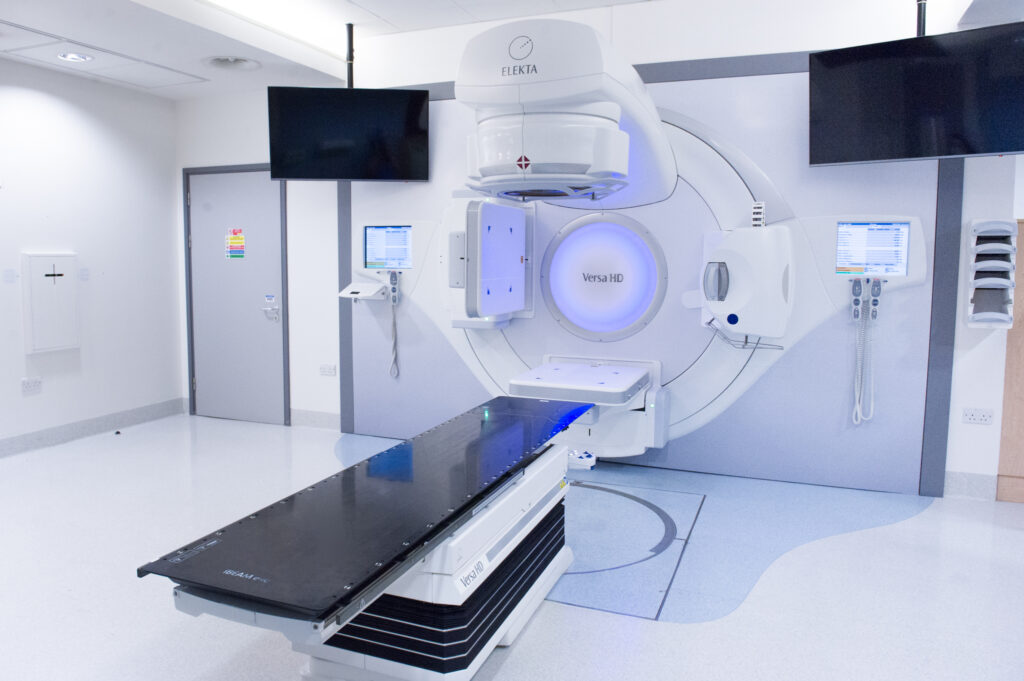
You will have your radiotherapy on a treatment machine called a linear accelerator, as shown here in the photograph. You will see your radiographers at each treatment session, and they will be happy to answer any questions you may have.
Visiting us before your treatment
If you would like to visit the radiotherapy department before starting treatment, please call 0113 206 7603. This visit can be very useful as you can find out more information about radiotherapy.
Patient quote
‘I was so pleased to see the machines before my treatment and the staff were so helpful and really put my mind at rest.’
How often is it given?
Radiotherapy to the head and neck is usually given over four to seven weeks. This is a total of between 20 and 35 treatment days. Treatment is usually given daily, Monday to Friday however your treatment could start on any of these days.
You may need to be treated on a weekend due to a bank holiday and we will let you know if this is the case. Your radiographer will be able to explain the details of your individual radiotherapy appointments.
Whenever possible you will be treated at the time of day that suits you, but this cannot always be arranged or guaranteed. There may be occasions when you have a longer stay in the department or be asked to attend at a different time, for example to see your oncologist.
Who will I meet?
Therapeutic radiographers
Radiotherapy is given by therapeutic radiographers of any gender, who are highly trained in the accurate planning and delivery of radiotherapy treatment. You will see your radiographers at the planning stage and at each treatment session and they will be happy to answer any questions you may have.
Student therapeutic radiographers
The radiotherapy department is a training centre for therapeutic radiographers. They are supervised at all times. If you do not wish students to be present, please speak to a member of staff. This will not affect your treatment or care.
Nursing Review Clinic in the Princess Royal Suite
You will meet the nursing team in the radiotherapy review clinic (Princess Royal Suite). They will be able to advise you about how best to look after yourself during your treatment. You will see them regularly during your treatment course.
Others involved in your care
You may meet other staff whilst you are coming for radiotherapy. e.g. Dietitians and Speech & Language Therapists.
Everyone you meet (including students) will introduce themselves, tell you their job title and explain the role they have in your care.
Important advice before your treatment
Pregnancy
It is very important that people who can become pregnant, are not pregnant at the start of a course of radiotherapy. Also, do not become pregnant during a course of radiotherapy because it can have an effect on the unborn child. Use an effective form of contraception, for example condoms, coil, depo injection or contraceptive pill.
For more information see the ‘Contraception and pregnancy during cancer treatment’ leaflet. Please do not hesitate to ask your doctor or nurse if you have any questions or concerns about these issues.
Smoking
If you are a smoker we very strongly advise you to stop smoking before treatment.
Continuing to smoke during radiotherapy:
- Dramatically reduces the chances of your treatment being successful;
- Increases the severity of the side-effects during your treatment;
- Increases the risk of serious longer term side-effects;
- Increases your risk of developing further cancers in the future.
There are now several ways in which you can receive help to stop smoking.
NHS Quit smoking
You can ask your Clinical Nurse Specialist or GP for local contacts or further support.
Alcohol
Drinking alcohol during your radiotherapy treatment can cause mouth and throat ulcers. It is important not to drink alcohol at all during your treatment.
Dental assessment
If it’s needed, your team will have arranged for you to have a dental assessment with a Specialist Restorative Dental team. They can advise how best to care for your teeth in relation to the treatment. This is free of charge.
Sometimes they may advise that some teeth are best removed before starting radiotherapy. This is to reduce the risk of radiotherapy causing problems with your teeth and jaw bone in the future.
They will make the arrangements for any dental treatment they advise.
Planning your radiotherapy treatment
To allow us to prepare for your treatment, the following need to happen:
- You consent to have treatment
- We make your radiotherapy mask
- Having a CT Planning scan with the radiotherapy mask: we use this scan to plan your radiotherapy treatment.
- You may also need an MRI scan with the radiotherapy mask on, again to help us with the radiotherapy planning.
The above appointments may happen on different days or sometimes they may take place on the same day.
Consent appointment
This may take place at St James’s Hospital in Leeds, or may happen in a different hospital. You will see your Clinical Oncology consultant or a member of their team at this appointment. This is an ideal opportunity for you to ask questions. You will be asked to sign a consent form.
What to bring with you
- A list of all questions you may have;
- An up-to-date list of all the medications you are taking (including inhalers, sprays, vitamins or herbal products);
- Any medication that you may need during any of your visits;
- Something to eat and drink and something to occupy yourself with.
Mould Room (Making a Mask)
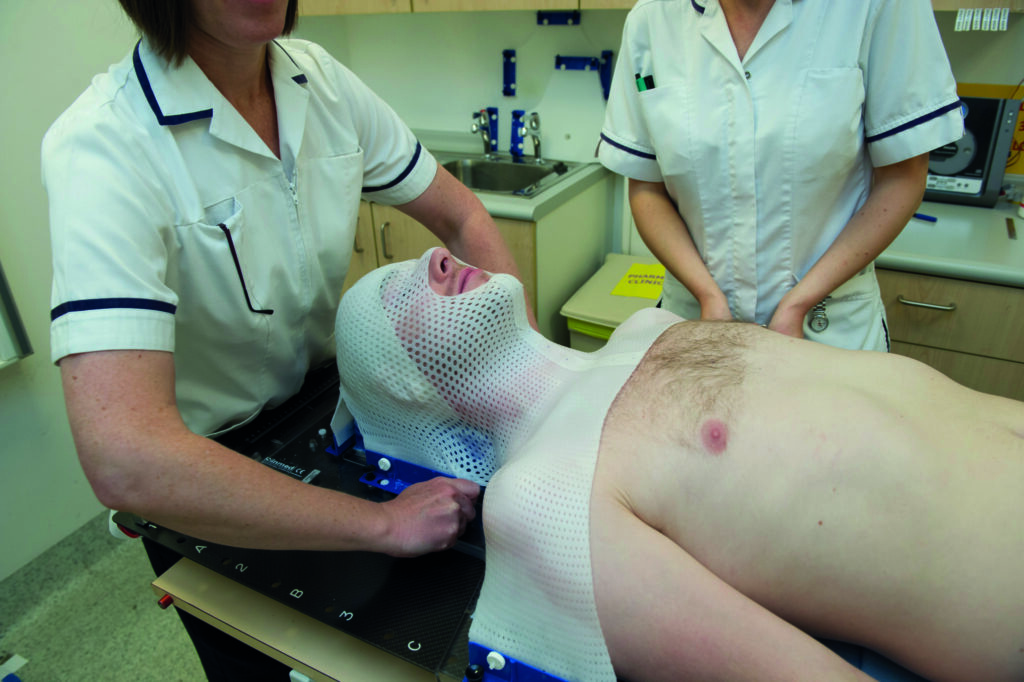
Radiotherapy involves exact positioning of the radiation beam, so you will need to stay very still while you are having treatment. To help you stay still we make a mask for your head and shoulders. You will wear your mask for your planning scan and treatments. There is a leaflet available with more information about the mask-making procedure.
You will be given an appointment to attend the Mould Room where the masks are made. If you have any concerns about the mask, please let your clinical oncologist or a member of their team know. They will help you through it or contact the support team who may be able to help you.
Support team

There is a leaflet called ‘Having a radiotherapy mask made’ (LN000001). Please ask a member of staff if you would like a copy or follow the link above.
Your planning scan
In order to plan your treatment you will have a planning CT scan. This is done on a CT scanner (see photo). The scanner allows the images we take to be sent to the radiotherapy computer planning system.
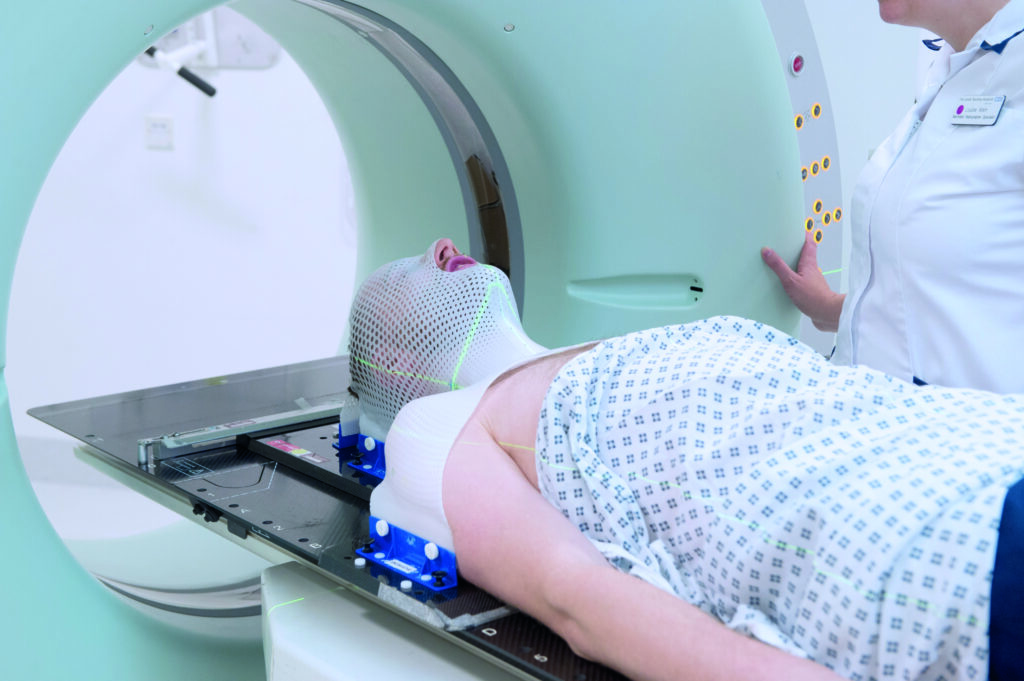
There will be several members of staff present at your scan: radiographers, and possibly a mould room technician and a dosimetrist (the person who will produce the computer plan for your treatment).
Planning scans are not diagnostic examinations and you will not receive a result from them.
The scan will be taken with you lying in the same position with the mask in place as you will have for your treatment.
The radiographers will draw some marks onto your mask and skin, to be used as a reference for your treatment. You will then be scanned, which will only take a few minutes.
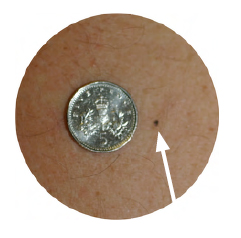
At the end of the scan the skin mark will be replaced by a small permanent mark (tattoo), which is usually on the front of your chest. This permanent mark helps us to ensure you are in the same position each day. It also means that you can wash without worrying about your mark coming off.
Following the scan the radiographers will give you the time of your first treatment appointment. This is most likely going to be a couple of weeks after the planning scan. The radiographers will talk to you about any further appointments you have.
Contrast (dye)
A special contrast agent, often called a dye, may be used for your scan to make specific organs, blood vessels and/or tissue types ‘stand out’. This can make it easier for the doctor to plan your treatment.
The dye is given through a very small plastic tube called a ‘cannula’ into a vein in your arm. You should tell the radiographer if you have any allergies, but they will go over this before they use any dye. The radiographers will advise you about drinking plenty of fluids after your injection.
Contrast side-effects
You may notice a warm feeling throughout your body and have a metallic taste in your mouth. You may also feel as if you have passed urine (had a wee). This will pass very quickly. There is a slight risk of an allergic reaction to the injection, such as a skin rash, but this very rarely leads to other complications.
The staff in the radiotherapy department are highly trained to manage any complications and again the risk involved is very small.
You will be able to drive your car or go to work after your scan.
MRI scan
Sometimes an MRI scan may also be needed to help plan your radiotherapy. This usually takes place on a different day to your CT scan. Before you enter the scanner room we need to make sure it is safe for you. This is because the MRI scanner contains a large magnet.
You will need to remove any items that contain metal for the scan.
You will lie in the same position that you will have your treatment in. We will give you some earplugs and headphones to wear as the scanner can be quite noisy. The MRI scan can take up to an hour.
Having your treatment
When you arrive for your treatment you should go to the radiotherapy main reception desk at the entrance of the radiotherapy department. On the first occasion you will be given a list of all your appointments. You will then be shown the way to the waiting area for your machine. The radiographers will explain what will happen and answer any questions that you may have.
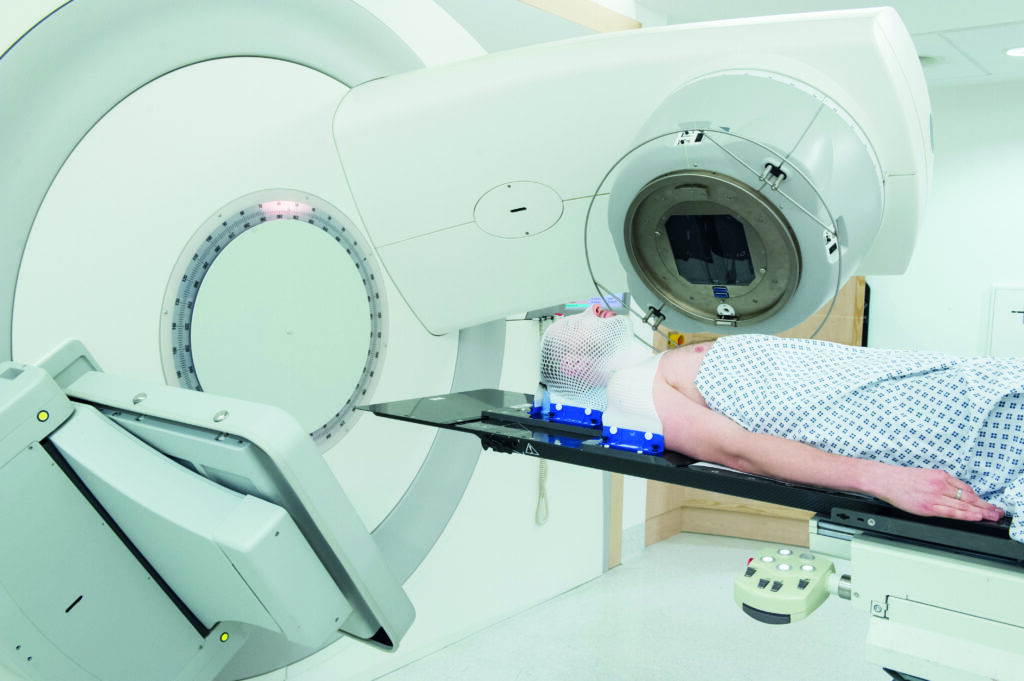
You will be asked to stay as still as possible during the treatment but you should breathe and swallow normally. Once you are in the correct position the radiographers will leave the room to switch on the machine. You will only be alone for a few moments at a time. The radiographers will be watching you on a closed circuit TV (CCTV) monitor during treatment. The CCTV camera is not recording or saving any images. There is also an intercom system so the radiographers can talk to you. There will be music playing, but you can ask for it to be turned off.
The treatment only takes a few minutes but you will be in the treatment room for about 10-20 minutes. The machine stops automatically after your prescribed dose of treatment has been given. The radiographers can stop the machine at any time if needed. The treatment machine makes a buzzing sound when switched on. You do not feel anything. The radiographers may need to come in and out part way through each treatment.
After the treatment is complete the radiographers will come back into the room to take your mask off and help you off the couch.
On some days the radiotherapy department may be busy and there may be a delay before your treatment. We will keep you informed of any delays of over 30 minutes, please see the delay boards in the waiting areas. It may be a good idea to bring something to eat and drink with you. This includes any supplement drinks or medication you have been asked to have.
If you need to use a feeding tube, there is a private room available in the Princess Royal clinic. Here you can take medications, water or feed through your tube whilst you are in the department.
Your treatments will generally be on the same machine. However there may be days when this machine is being serviced and your treatment will be in a different room.
Important
It is very important that you do not miss treatment days as it may make your treatment less effective. If you feel you are unable to attend for any reason please telephone us so that we can discuss this with you. If you have any queries about your appointment times please discuss these with the radiotherapy co-ordinators on the reception of your treatment unit.
Appointment queries
For appointment queries please telephone the radiotherapy reception desk for further advice.
Clinic appointments
You will be seen each week in your consultant’s review clinic and in the nurse-led review clinic. You may also have appointments with the dietitians and speech and language therapists. These clinics are held in the Princess Royal Suite on Level-2 of Bexley Wing.
These appointments help us to check how you are managing your treatment. You will be asked about your diet, swallowing, pain control and any other symptoms that you may have. If you have any problems, please tell your treatment radiographers when you arrive.
Scans during and after treatment
Please note
During your radiotherapy treatment scans are also performed, in addition to the actual radiation treatment. These scans help us to make sure your treatment is delivered exactly how it was planned. They are not the same as diagnostic scans. Therefore they do not give us information about how effective the treatment is.
The effect of radiotherapy on your tumour can take several months. Often lumps may not change very much during a course of treatment but can then shrink in the months afterwards.
Your clinical oncologist will advise on whether you need scans after treatment. If you have not had surgery then they will often recommend a scan 3-4 months after you finish treatment.
Completing your radiotherapy
Once you finish treatment your care is transferred back to your original head and neck team. This includes the local team of specialist nurses / dietitians / speech and language therapists.
They will be in touch to support you soon after treatment. Your clinical oncologist will usually see you back in clinic about 4-6 weeks after finishing treatment. Please ask your GP for further prescriptions for on-going medication after finishing your treatment.
Side-effects
Side-effects can be divided into short term (acute) effects that happen during or soon after treatment, and long term effects occurring months or years later. Some side-effects are common, whilst others are rare. The area treated and amount of treatment given to you will affect which side-effects are most likely to happen to you. Not all of those listed here might be relevant to your treatment. Your oncologist will discuss this with you. If you develop any radiotherapy side-effects you will be given advice and support by your healthcare team.
Short Term side-effects from radiotherapy
Short term side-effects are common and are usually temporary. Side-effects tend to build up from about the second week of treatment and will be at their worst at the end or just after the treatment course. They generally last a number of weeks or months after the treatment has finished.
Expected or common side effects
Skin reaction
The skin in the treated area may start to redden or darken around 10 days after starting your radiotherapy. It may become dry and itchy. Sometimes later in treatment it may peel and become weepy. The skin reaction towards the end of treatment can look quite alarming. This is normal and will heal over a few weeks.
Avoid hair removal where possible, including shaving, waxing, cream and lasers unless advised by your consultant, nurse or radiographer.
Before you start your treatment a radiographer will explain what could happen to your skin and how to look after it. They will also give you a leaflet to take home.
Princess Royal Suite
If you are concerned about your skin reaction please talk to your radiographers or contact the review clinic nursing staff in the Princess Royal Suite.
Tiredness (fatigue)
Nearly all patients having radiotherapy will feel tired. Be prepared to take things easy during treatment and allow for extra rests. Try to continue with some of your normal routines and activities if possible. If you usually work you may find this can help maintain your mood, but you may find it better to reduce your hours or take some time off.
Fatigue usually improves in the weeks to months after treatment. Things you can do to help include:
- Gentle exercise can help reduce the symptoms of fatigue.
- Having enough to drink can prevent tiredness from dehydration. Small meals or snacks eaten more often than three times a day may be easier to face.
- Try to get a good night’s sleep where possible, a daytime nap may help.
- Try to ‘pace’ yourself, listen to what your body is telling you, rest if you need to.
- Pick out the things that you enjoy, and try to accept help with other tasks.
- Little and often is the rule of thumb.
There is a Macmillan information leaflet available about fatigue. If you would like a copy, or support with your fatigue please ask a member of staff.
Sore mouth or throat
General soreness of the lining of your mouth and throat and/or ulcers can develop as you go through treatment. This usually starts 2-3 weeks into treatment.
It can make it more difficult to eat and drink because it might be:
- Painful.
- Too much effort.
- Unsafe if ‘things go down the wrong way’.
Dry mouth
If your mouth becomes dry, sipping water may help. If it becomes a problem please speak to your doctor or nurse.
Important
Do not drink if you have been advised that there is a risk of things going down the wrong way. If you find that you are coughing/spluttering when you swallow or your voice is sounding ‘gurgly’ it might mean that there is a risk of food or drink going down the wrong way. If you notice anything like this then please mention this to a member of your medical team.
Sticky, thick saliva or phlegm (secretions)
You may produce more or thicker phlegm towards the end of treatment which can be uncomfortable and make you want to cough. We may suggest using a nebuliser to help. Drinking soda water can help loosen the secretions.
Taste changes
Foods may become lacking in flavour or bland with some types of treatment. Some patients may also experience a metallic or salty taste when eating and drinking. Taste changes may lead to a loss of appetite. It is therefore important to speak to your Nurse or Dietitian for advice about coping with this. Your sense of taste will generally improve in the months after radiotherapy, although it may never return to normal.
- Loss of appetite
- Weight loss
There is a leaflet called ‘Eating well during your treatment’ (LN000031). For advice on how to add extra energy and protein to your diet. Please ask a member of staff if you would like a paper copy or follow the link above.
Support with nutrition when experiencing side effects
We will give you advice to help you maintain your nutritional (energy and protein) intake. It is important that you are well nourished and drink plenty of fluids during your treatment and avoid losing weight.
Being well nourished can:
- Make you feel stronger and help you cope with treatment better.
- Prevent/reduce weight loss.
- Reduce the risk of developing infection.
- Help you recover and heal quicker after finishing treatment.
It is very likely that eating will not be enjoyable during treatment, but it is still important to try hard to get enough nutrition. If you lose a lot of weight during treatment your mask may no longer fit properly. This could affect the accuracy of your treatment. The radiographers will check for this as they position you for treatment each day. If there are any concerns, you may need a new planning scan and mask.
Your weight and nutritional intake will be checked at the start and regularly through treatment. You may also see one of our specialist dietitians.
When you are part way through treatment, you may need to change to a softer diet which is easier to chew and swallow. We can also prescribe you nutritional supplement drinks if needed.
The impact of side-effects on your eating and drinking may mean that you need to have a feeding tube placed to help support your nutrition and fluid intake. Please see the section on ’Tube Feeding’ for more information.
Other useful leaflets:
- ‘Radiotherapy treatment for Head & Neck cancer – Tube feeding options’ (LN004341). Please ask a member of staff if you would like a copy or follow the link above.
- ‘Nasogastric Feeding during Radiotherapy’ (LN004286). Please ask a member of staff if you would like a copy or follow the link above.
Cough
This can happen when your throat is irritated or there are throat secretions/phlegm.
Loss of voice
If your voice box (larynx) is being treated it can become inflamed. Your voice may become hoarse, husky or disappear completely later in treatment.
Your voice strength will generally return within a couple of months after treatment. Please see the section later on Swallowing and speech.
Hair loss in the treated area
Only hair in the treated area will stop growing and may fall out. Your doctor will tell you if you might lose your hair. Sometimes hair will not grow back after treatment.
Red or watery eyes
If the treated area is close.
Irritation in the lining of the nose or blocked nose
If the treated area is close.
Anxiety, low mood, feeling fed-up or poor sleep
Please speak to your radiographer, doctor, specialist nurse or other members of the team if you are struggling with the above.
Ear discomfort, dullness of hearing
This side-effect can affect each individual differently. Please speak to your doctor or nurse specialist if you develop any ear or hearing problems.
Constipation
Your bowel habit can be affected by changes in your diet and using painkillers. It is important to keep using your painkillers regularly but please let us know if you are having difficulties opening your bowels (having a poo).
Sickness / nausea
If you feel sick (nauseous) during treatment we can prescribe medication to help ease this. Please let a member of your healthcare team know if you feel sick or have been sick.
Mouth infections including oral thrush
It is quite common to get a thrush infection of the mouth during radiotherapy. It can show up as white patches in your mouth and cause soreness. The teams looking after you will look out for it and it is usually easy to treat and clear up quickly.
Less common (less than 10%)
Chest infection
This can happen if food or liquid goes down the wrong way. It is important to tell the radiotherapy team immediately if you are coughing or spluttering after swallowing. This may mean that food or liquid is going into your lungs, rather than your stomach.
Dehydration as a result of reduced oral intake
Swelling of the voice box (laryngeal oedema)
Risk of hospital admission
Lhermitte’s sign
Temporary changes to the spinal cord presenting as a sudden electric shock like sensation on bending the neck. May occur three to six months after treatment.
Rare (less than 1%)
- Risk to life.
Long Term side-effects from radiotherapy
Long term side-effects will depend on the exact details of your treatment. They may happen many months or years after radiotherapy, and may be permanent.
If you are concerned about your risk of developing any of the following side-effects please speak to your consultant or specialist nurse.
Expected or common
Skin changes
The skin may be discoloured (usually darker) or thickened (fibrosis). Three months to a year after treatment your skin can take on a ‘shiny’ appearance. It may also be dry. Look after your skin by using moisturiser every day. Sometimes the skin texture feels a bit thicker or thinner. Telangiectasia or tiny ‘spider’ veins can appear after a year. They are permanent.
Mouth dryness
This may be a problem if your salivary glands were in the area treated with radiotherapy and may be permanent.
Lymphoedema
Fluid may build up under your chin causing swelling; this is called lymphoedema.
Altered taste/smell
This is likely to slowly improve with time after your treatment but may not return completely to normal.
Hair loss in treated areas
This may include hair on your face, chin, or neck.
Swallowing problems
Radiotherapy can affect the muscles needed for swallowing. It is important to do any exercises that we give you to reduce the risk of long term problems. Sometimes a good swallow does not return in the long term after treatment.
Less commonly a feeding tube might be needed in the long term if the swallow remains very difficult.
Weight loss
If you have lost weight during treatment it can be hard to put it back on afterwards. At your follow-up appointments we will check that you are not losing more weight. However, we would not expect you to return to your normal weight within the first six months to one year. After your treatment has finished you may continue to be reviewed by a Dietitian.
Jaw stiffness (trismus)
Radiotherapy may make it more difficult to open your mouth if your jaw is in the treated area. If this is a risk, you will be given jaw opening exercises to do. Doing the exercises regularly will help with this problem.
Dental problems
Radiotherapy and side-effects such as a dry mouth increase the risks of dental decay. You should try to have your teeth checked by a dentist every six months.
Voice changes
Depending on the type and position of your radiotherapy you may experience a change in the quality of your voice.
Underactive thyroid gland
This can happen quite a long time after the radiotherapy. A lack of thyroid hormones can be easily treated with tablets.
Cataracts
This will depend upon the position of your radiotherapy treatment. Your treatment will be planned to keep this effect to a minimum.
Permanent dryness or crusting of nose
(if near the treated area).
Less common (less than 10%)
Effects on your ears
- Ringing in the ears (tinnitus)
- Hearing loss: This may occur due to fluid build-up in the middle ear or due to nerve damage from the treatment.
Depending upon the cause, this may improve with time. Some patients may benefit from hearing aids.
Underactive pituitary gland
This can occur with a few particular types of treatment and may mean that you need to take hormone tablets.
Damage to the bone, cartilage, soft tissues or blood vessels
Depending upon the area treated there may be a small risk of damage to the jaw bone, to the cartilage of the voice box or to the soft tissues and blood vessels of the head and neck. Occasionally surgery may be needed to correct this. Having teeth extracted after radiotherapy to the jaw can increase this risk. Continuing to smoke during or after radiotherapy increases this risk.
Damage to the blood vessels may lead to a slightly higher risk of stroke.
Laryngeal chondronecrosis
Irreversible damage to the voice box.
Increased risk of stroke
Nasal regurgitation / reflux
Visual changes and damage to the eye
Dry eye
Cognitive changes
Radiotherapy to the head and neck area does not usually involve direct treatment of the brain. However about 10 – 20% of patients may experience changes in memory, ability to concentrate (attention) and how they process information. This can carry on beyond the treatment period.
These effects are not yet fully understood. They may be influenced by tiredness, treatment-related stress, sleep disturbance, or small amounts of radiation reaching nearby brain areas. Please discuss any ongoing problems with memory or attention with your hospital team.
Rare (less than 1%)
Damage to the eye/optic nerves
This will depend upon the position of your radiotherapy treatment. Your treatment will be planned to keep this effect to a minimum.
Damage to the spinal cord
The spinal cord is a bundle of nerves passing down your back from your brain, carrying signals to your arms and legs. Your radiotherapy will be planned to spare the spinal cord from excessive doses of radiation wherever possible. Whilst damage to the spinal cord is serious causing permanent weakness, it is also extremely rare.
Damage to the brachial plexus
The brachial plexus is the group of nerves running from the neck to the arm. Damage to these nerves can cause pain, numbness and weakness in the arm. Your radiotherapy will be planned to avoid excessive doses to these nerves, so this side- effect is extremely rare.
Cancers resulting from the radiotherapy
When you have had radiotherapy there is a risk that cancer can develop many years later. However this is rare. Please discuss this with your consultant.
Radionecrosis of the brain
Damage to a small area of the brain which is not repairable.
Risk to life
Mouth care and radiotherapy
The treatment you are having can make you prone to developing a sore mouth. Good mouth care helps to keep your mouth clean and comfortable. These are some tips for looking after your mouth during and after radiotherapy.
During and shortly after radiotherapy
- Clean your teeth and gums as thoroughly as you comfortably can morning and night. You can clean after meals if necessary using a very soft ’baby’ toothbrush. Sometimes during radiotherapy it can become impossible to brush your teeth normally. Once things settle down you will be able to restart. Return to using an adult toothbrush once it is comfortable to do so.
- If you have your own teeth, use fluoride toothpaste to help protect your teeth from decay.
- Use salt water (saline) mouthwashes every four hours during the day and after every meal. You will be given the saline mouthwash at the hospital. Use this mouthwash to swill around your mouth and spit out.
- If you have dentures: Use a pink foam stick to dip into the saline to rub around your gums. Then swill the saline around your mouth, and spit out.
- If your mouth becomes sore it may help to use the saline mouthwashes hourly.
- We may recommend other mouthwashes to use after the saline to protect the lining of the mouth. Do not use mouthwashes bought from the chemist or supermarkets.
- Keep your mouth moist with sips of water.
- If your lips become sore, we may give you a paraffin ointment to rub in to protect them.
- Let us know if you notice any white or yellow patches in your mouth. This can be caused by a thrush infection and can be treated by anti-fungal medication.
- If your mouth is painful avoid foods and drinks that make your mouth sting
(e.g.: Lemonade/orange juice/spicy foods/foods containing chilli/Lemons/Grapefruit/Oranges). - Do not drink alcohol as this will make your mouth sorer.
- If you have dentures you may not wish to wear them if your mouth is sore. Clean your dentures thoroughly after use with a suitable brush and leave them to soak in a fresh solution of Dentural or Steradent.
After radiotherapy
- Continue to use mouthwashes after your treatment has finished until your mouth has fully healed (usually up to a couple of months).
- You should continue to see your dentist for regular check- ups every six months. Once you have recovered from your radiotherapy, you may need specific advice on dental care and treatment from the consultant in Restorative Dentistry.
- A coated tongue is common after radiotherapy. Try brushing your tongue firmly from back to front with a toothbrush 3-4 times a day. You can try leaving crushed pineapple on your tongue for five minutes before brushing it 3-4 times a day.
- A dry mouth is common after radiotherapy. Drink plenty of water regularly. Some people find artificial saliva sprays, gels or lozenges are helpful. Try chewing gum or sucking (sugar-free) sweets.
If you need new dentures after radiotherapy, your healthcare and dental team will advise on the best timing. Dentures can only be made once the radiotherapy reaction in your gums has settled down after treatment.
Swallowing and speech during radiotherapy
Radiotherapy to the head and neck area can sometimes affect your ability to swallow, eat, drink, and speak. These changes may develop gradually during treatment and can vary from person to person.
You may notice that swallowing becomes more uncomfortable or painful. Food and/or drink may feel like it is sticking, or ‘going down the wrong way’. This may indicate an unsafe swallow. Your speech or voice may also change if the treatment affects the muscles and tissues involved.
Speech and Language Therapists (SLTs) can help in assessing and managing swallowing and communication difficulties. You may meet an SLT before starting radiotherapy, or you may be referred during treatment if you experience any concerns.
What can you do to help your swallow?
There are several simple things you can do to help make eating and drinking safer and more comfortable:
- Continue to complete any swallowing exercises advised by your SLT throughout your treatment. These exercises help keep the swallowing muscles active and can support your recovery.
- Take your prescribed medications as directed. If you continue to experience pain or discomfort when swallowing, please inform the nurses as soon as possible.
- Choose softer foods if eating becomes difficult. Moistening food with sauces, gravy, or other liquids may make swallowing easier. You may also be advised to avoid hard or crumbly foods.
- Eat and drink slowly, taking small mouthfuls and allowing yourself plenty of time. Avoid rushing meals.
- Reduce distractions during meals where possible. For example, turn off the television and avoid talking while eating and drinking so you can concentrate on swallowing safely.
- Sit upright when eating and drinking, with your head in a comfortable, neutral position.
Keeping your swallow safe
You may be asked to see a SLT to assess the safety of your swallow. Sometimes, during radiotherapy treatment your ability to protect your airway when you swallow can be affected. You may be at risk of food and/or drink going down into your lungs.
This is called ‘aspiration’ and may cause a chest infection.
If your swallow is unsafe, you may be advised to use a feeding tube (please see the section about Tube Feeding further on in this leaflet).
Please let a member of the team know if you experience any of the following when eating and drinking:
- Coughing
- Choking
- Wet “gurgly” voice
- Food or drink sticking in your throat
For most people, swallowing improves as the side effects of radiotherapy settle after treatment. However, recovery is different for everyone, and some people may continue to experience swallowing difficulties in the longer term. Your SLT will work with you to provide ongoing assessment, advice, and support throughout your recovery.
Speech and voice
As your radiotherapy continues you will notice certain areas of your mouth and throat feel swollen and sore. This can sometimes affect your speech – you may sound a little unclear and people might have more difficulty understanding you.
Your voice may sound hoarse, husky or disappear completely. This is a normal reaction to the radiotherapy causing swelling in your voice box (larynx).
When you have finished your radiotherapy and the side-effects settle, your speech and voice will usually return to normal. You may need to see a SALT after your treatment, to help with your speech.
Tube feeding
With some radiotherapy treatments we know that it is likely you will need tube feeding during radiotherapy. If this is the case or if you already have swallowing difficulties, your healthcare team may discuss tube feeding options before treatment starts.
Tube feeding can either be:
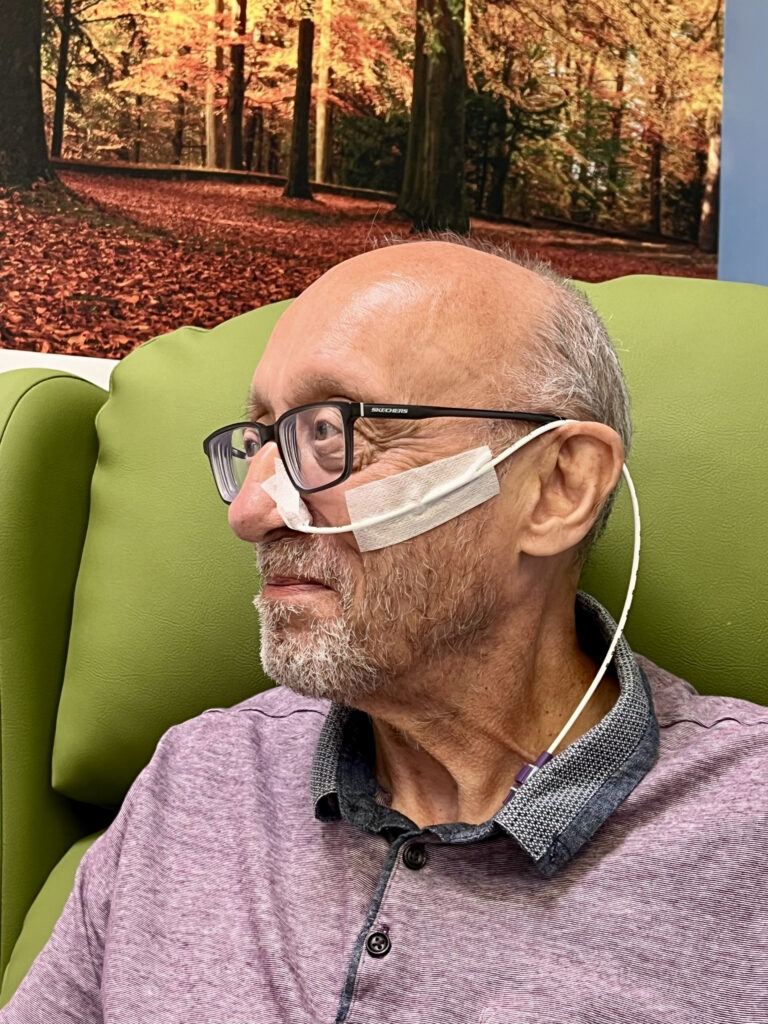
- A thin tube passed through your nose into your stomach – a nasogastric tube (shown in picture 1) or;
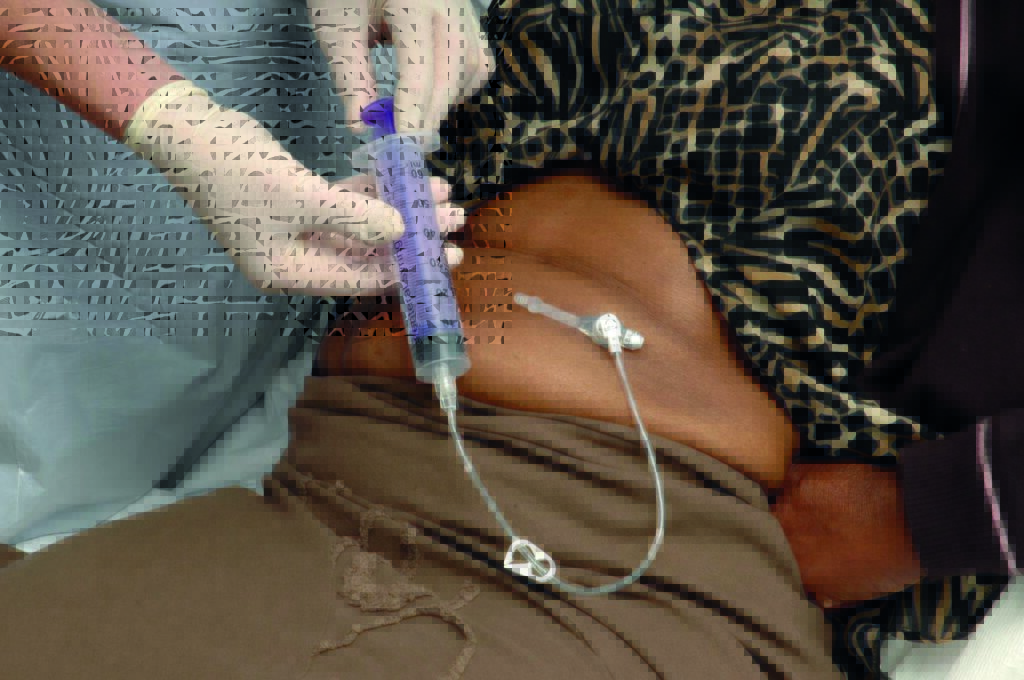
- A tube called a gastrostomy placed directly into the stomach, before treatment starts.(shown in picture 2).
A prescribed liquid feed will be given through the tube to meet your nutritional needs.
We do not usually recommend a gastrostomy tube if we think swallowing problems are less likely to develop during radiotherapy.
If you do develop swallowing problems or you cannot manage enough to eat and drink, we would then recommend a nasogastric tube.
Tube feeding can be started in the outpatient setting (clinic or at home) or it may be that you need an admission to hospital. Your Dietitian or Doctor will discuss with you the most appropriate option. Their decision may depend on other symptoms/ needs for care that you may have. The tube feed needs to be gradually increased and we can teach you and your family to use the feeding tube and equipment.
Tube feeding should be temporary to support you through your treatment and until the side-effects settle after treatment. Both types of feeding tube can be easily removed once you are swallowing safely and you can manage enough nutrition and fluid by mouth. The length of time tube feeding is needed can vary. It can often take 3-6 months for your swallowing to improve as you gradually take more by mouth. A small percentage of patients will need tube feeding in the long term. For information on feeding tubes please ask your doctor, dietitian or clinical nurse specialist.
Research at Leeds Cancer Centre
Leeds Cancer Centre is a major centre for cancer research. You may be asked if you would like to help with some of the clinical studies. You are under no obligation to take part in any trials, and your treatment will not be affected in any way if you do not wish to take part.
If you do take part in a clinical trial you may meet a research nurse or radiographer who will be helping to run the trial.
Further information and support
If you have any questions please ask your hospital team. We all have our own ways of coping with difficulties. Some people have a close network of family and friends who provide emotional support. Others would rather seek help from people who are not involved with their illness. The following are also potential sources of information and support that you may wish to use.
Head and Neck Clinical Nurse Specialists (CNS)
Your CNS is available to discuss any aspect of your treatment with you. You will be seen by a CNS before your treatment. This is to offer support and advice about the practicalities and effects of your treatment and answer any questions you may want to ask. The CNS will also assess and discuss any physical, psychological, social, occupational and spiritual needs that you may have. They can refer you to other services if needed, for instance, benefits advice. You should be given a ‘key worker’ as a contact for support through your treatment; this is usually your CNS.
Macmillan Specialist Radiographer and Macmillan Radiotherapy Nurse Specialist
Sometimes people need more help if they are feeling depressed, very anxious or are having problems with the mask or treatment. If this is the case you may benefit from seeing the Macmillan radiographer or nurse specialist.
Your oncologist, radiographer or nurse can refer you at any point before or during your treatment.
Local Support Services
Leeds Cancer Support / The Sir Robert Ogden Macmillan Centre
Leeds Cancer Support complements care provided by your clinical team. We offer access to information and a wide range of support, in a welcoming environment for you, your family and friends.
We can be found in the information lounges in Bexley Wing and also in the purpose built Sir Robert Ogden Macmillan Centre (behind the Thackray Medical Museum).
The Sir Robert Ogden Macmillan Centre
The Centre is on the St James’s Hospital site and offers a variety of support services including complementary and supportive therapies.


Maggie’s Centre
If you or someone you love has cancer you may have lots of questions. Maggie’s is a warm, welcoming place where you can meet people who are experiencing similar things to you.
You may also be able to find support groups specific to your needs and get advice and information from their professional staff. You don’t need an appointment and all support is free.
OUTpatients
A cancer support and advocacy charity for LGBTIQ+ community.
National Support Organisations
Macmillan Cancer Support
A textphone service for deaf and hard of hearing people is also available.

Changing Faces
A national charity committed to providing help for people with disfigurements.
Mouth Cancer Foundation
A UK charity aiming to support people with mouth, throat and other head & neck cancer.
Alcoholics Anonymous
Stopping smoking – NHS Smokefree service
Car parking
When you are coming for radiotherapy planning and treatment your parking is free in the on-site multi-storey car park. Please ask for more information at the radiotherapy main reception desk.
How to find us

St James’s University Hospital – site map
