
Welcome to the adult Primary Ciliary Dyskinesia (PCD) service for the North of England. Whether you have just been diagnosed with PCD, or are moving over from the paediatric service, you probably have lots of questions.
What is Primary Ciliary Dyskinesia?
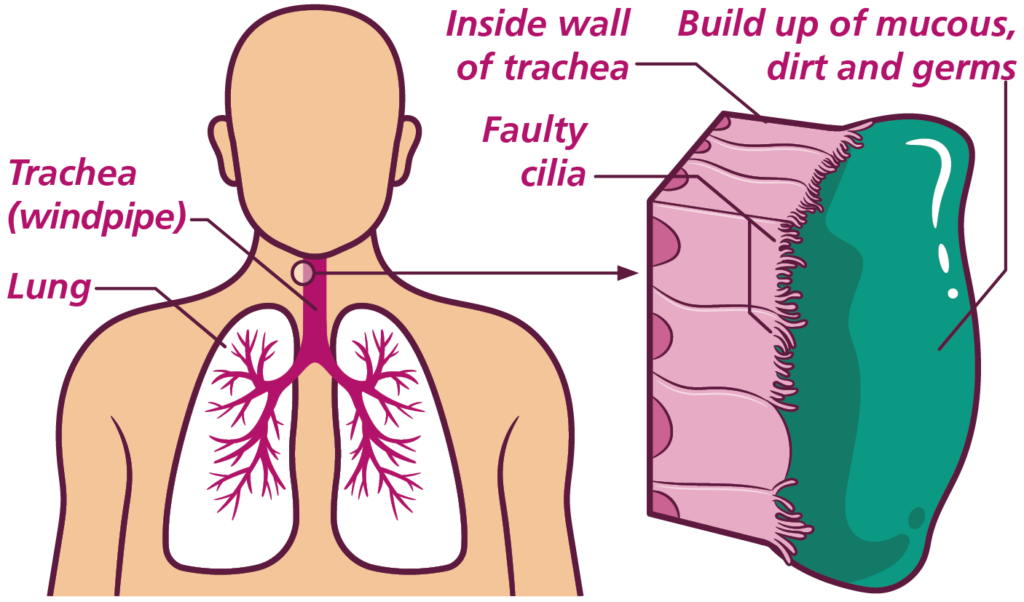
PCD is a rare, inherited disease that affects the microscopic hairs, known as cilia. Cilia help clear mucous, dirt and germs from the lungs, nose and ears. These cells are also involved in the reproductive system and can affect a person’s fertility.
In PCD, the cilia cells do not beat as they should and this can cause repeated chest, ear or sinus infections. If left untreated, this can lead to lung damage known as bronchiectasis.
Some of the signs and symptoms include;
- Productive wet cough (even when well)
- Sinusitis (swelling of the small empty spaces behind cheekbones and forehead)
- Constant runny / blocked nose
- Shortness of breath / wheezing
- Hearing problems
Some people with PCD have their heart on the right hand side of their chest, known as dextrocardia, or all their organs on the opposite side, known as situs inversus.
What is the treatment for PCD?
The aim of treatment is to maintain or improve lung function and minimise lung damage from infections. We do this by;
- Airway clearance:
Our physiotherapist will teach you techniques to help clear mucous from your airways. Regular airway clearance is the best way to reduce build-up of mucous and bacteria that can lead to chest infections. - Exercise:
Regular exercise is good for overall health, but it also encourages deep breathing which can aid with clearing your chest. - Antibiotics:
Your doctor may prescribe antibiotics when you have a chest infection, it is important you take them as prescribed. If you are very unwell these antibiotics may be prescribed as an injection and our nurses will support this treatment.
Occasionally, your doctor may prescribe you an antibiotic to take every day to prevent repeated infections. - Medications:
As well as antibiotics, we may also prescribe other medications such as inhalers.
Many medications can have side effects and we will discuss this with you when you start a treatment. However, if you feel you are experiencing any side effects from your treatment do not hesitate to contact us on the number on the Useful Contacts page.
Managing treatment alongside a busy life can be difficult, but it is important to make time for your health.
Please talk to your healthcare professional if you feel you are struggling with any aspect of your treatment – we are here to help!
Outpatient Clinics
Outpatient clinics are held at Seacroft hospital in Leeds with our specialist PCD team:
Seacroft Hospital
York Road
Leeds Teaching Hospitals
LS14 6UH
Buses travel frequently from Leeds city centre to Seacroft hospital, stopping on York Road.
The following buses travel between Leeds city centre and Seacroft hospital;
56, 64,166, 402, 403, 770, 771, 843, 845
Leeds train station is the closest train station to Seacroft hospital.
If you cannot attend please let us know as soon as possible using the phone number on the Useful Contacts page.
You may meet:
- Specialist nurse
Nurses will check your blood pressure and oxygen levels. They will also take blood tests and arrange courses of antibiotics if needed. - Physiotherapist
Our physiotherapist will go through airway clearance methods and help you choose the right technique for you. They will also discuss your sinus care and exercise, as well as testing your lung function using a machine called a spirometer. - Dietitian
Our specialist dietitian will check your weight and discuss any problems relating to your oral intake and nutritional status. - Doctors
Clinics will be run by our respiratory consultants with a special interest in PCD and respiratory medicine. Doctors will plan your care with you and arrange your next appointment.
We have links with other specialities in the hospitals. If you need further treatment or referring to specialist services this will be discussed with you during your appointment.
Useful Contacts:
The PCD Team
Tel: 0113 206 2054
Email: [email protected]
Administrative support
Email: [email protected]
Leeds Centre for Respiratory Medicine
Web: www.chestmedicine.co.uk/pcd
Further Support
PCD Support UK
A registered charity supporting patients, families and their carers affected by PCD.
Web: www.pcdsupport.org.uk
Ciliopathy Alliance
A registered charity involved in raising awareness and research into diseases caused by ciliary dysfunction; including PCD.
Web: www.ciliopathyalliance.org