
What and where is the thyroid gland?
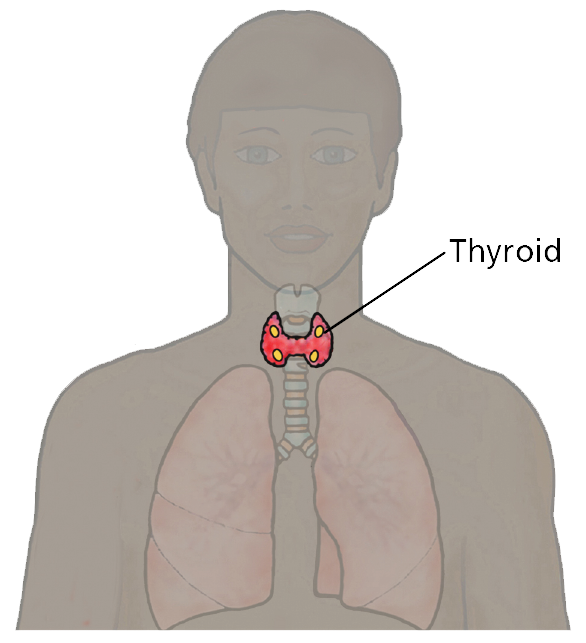
The thyroid is a butterfly- shaped gland found in your neck, in front of your windpipe. Its main job is to produce hormones, especially thyroxine.
Thyroxine helps control your metabolic rate. When the thyroid gland produces excess thyroxine, everything works too quickly. This is called an overactive thyroid or hyperthyroidism.
An underactive thyroid gland produces too little thyroxine and this slows the body down. The majority of patients undergoing thyroid lobectomy surgery have normal thyroid function.
What is a thyroid lobectomy?
A thyroid lobectomy is a procedure to remove half the thyroid gland from the neck.
What are the reasons for a thyroid lobectomy?
There are many reasons why your surgeon may recommend removal of a thyroid lobe. The most common reasons are:
- Suspicious nodules – nodules within the thyroid are very common but certain features on ultrasound can be suspicious for cancer. Biopsies can often help but sometimes they cannot prove either way whether a nodule is benign (non-cancerous) or malignant (cancer). Surgery is the only way to provide a definitive answer.
- Cancer – when biopsies have proven a thyroid nodule is a cancer, surgery is recommended to remove the thyroid gland. In selected patients only the thyroid lobe containing the cancer needs to be removed.
- Goitre – an enlargement of the thyroid which can cause swallowing and breathing problems due to pressure in the neck and chest. If only one side of your thyroid is enlarged, your surgeon may recommend a thyroid lobectomy to relieve these pressure symptoms.
- Toxic nodule – a small number of thyroid nodules produce too much thyroxine making the patient hyperthyroid. Surgery to remove the lobe containing the nodule will cure this.
- Thyroid cysts – pockets of fluids within the thyroid can sometimes grow large and cause pressure symptoms. These can often be treated with removing the fluid with a needle and syringe (aspiration) but if the cyst refills or there are any worrying features, removing the affected thyroid lobe provides definitive treatment.
What are the alternatives to surgery?
- Suspicious nodules – National and international guidelines advise a diagnostic thyroid lobectomy for all suspicious nodules. For biopsy proven malignant nodules this is a curative procedure. There are some patients who are not fit for surgery, or who decline surgery. For these patients, nodules can be monitored with repeat ultrasound. However, it is important to understand that an ultrasound can only provide limited information about change in size, appearance or the underlying nature of the thyroid nodule.
- Cancer – surgery provides the only definite chance of cure in thyroid cancer.
- Goitre – if a goitre is causing no symptoms and does not look worrying on scans, then surgery may not be indicated. If you subsequently develop breathing or swallowing symptoms then surgery can be reconsidered.
- Toxic nodule – you can be treated with anti-thyroid medication or undergo radioactive iodine treatment to control the overproduction of thyroxine. Surgery provides a definite long-term cure. All treatment methods have benefits and risks and should be discussed with your doctor.
- Thyroid cysts – if the cysts are not concerning on imaging and are not causing any symptoms then you may not require surgery.
How is surgery performed?
A thyroid lobectomy is performed under a general anaesthetic which means you will be completely asleep for the procedure. The thyroid lobe is removed through a horizontal cut in your neck which will be closed with stitches (normally dissolvable) before you wake up.
Rarely patients require a drain (plastic tube) in their neck but this is normally removed the day after surgery.
What are the potential risks?
All surgery carries potential risks but these are generally low in thyroid surgery.
1. General risks
- Bleeding – there is a small risk of bleeding with any surgery. The chance of large blood loss requiring a blood transfusion after thyroidectomy is very low. Occasionally people bleed in their neck after surgery causing swelling (haematoma). Although this is rare, if it occurs patients will need to go back to theatre urgently to stop the bleeding.
- Infection – any surgery carries a risk of wound infection or chest infection but these are both uncommon after thyroid surgery.
- Deep Vein Thrombosis (DVT)/Pulmonary embolism (PE) – patients having a general anaesthetic are at risk of developing blood clots in their legs (DVT) or lungs (PE). To reduce this risk, you will be given special stockings and calf compression devices whilst in hospital and are advised to keep active.
- Scarring – most scars in the neck heal well and are barely visible after a few months. However, some people are prone to developing thickened and bumpy scarring, called keloid. If you have had problems with keloid scarring in the past, it is important to let your surgeon know before surgery.
2. Specific risks
- Damage to recurrent laryngeal nerve – the nerves that control your vocal cords lie behind your thyroid gland, one on each side of the neck. During a thyroid lobectomy the nerve has to be carefully separated from the gland which could result in damage leading to changes in your voice, swallowing and breathing. The chance of permanent damage to the nerve is very low (less than one in 100 patients). Approximately five in 100 patients will notice a temporary change to their voice that lasts a few weeks or months due to bruising or stretching of the nerve. Occasionally patients notice subtle voice changes even without evidence of nerve damage.
- Swallowing problems – following thyroid surgery some patients experience temporary trouble with swallowing. This usually improves with time.
- Further surgery – if cancer is found within the thyroid lobe once it is examined under a microscope, you may require further surgery to remove the remaining thyroid lobe if it is felt it will reduce your chance of recurrence. This is not advised for all cancers. This will be discussed at your post operative appointment.
- Risk of needing thyroid replacement tablets (levothyroxine) if the other lobe cannot compensate. At the first post-operative clinic appointment, the function of your remaining thyroid lobe is checked by a blood test. If this shows that the remaining lobe is not making enough thyroid hormone, or is struggling to do so, you might be started on levothyroxine.
What happens on the day of surgery?
Patients having a thyroid lobectomy are usually admitted on the day of their operation.
Before your surgery you will be contacted by the hospital to confirm your instructions for the day of admission including time of arrival to hospital, where you need to go and when you must stop eating and drinking.
On the day of the operation you will be seen by the surgeon who will explain the procedure again. If you haven’t signed a consent form before, you will be asked to sign it on the day. You will also be seen by the anaesthetist who will discuss the anaesthetic with you. If you have any further questions at this time, it is important you ask them now.
Your operation will take between 1-2 hours to be performed. After the procedure you will wake up in the recovery area, also known as PACU (Post Anaesthetic Care Unit). Here, specially trained nurses will monitor your recovery from surgery with regular checks on your breathing, heart rate and blood pressure as well as your wound. When you are well enough, you will be moved to the ward area.
You will normally be able to eat and drink once you are awake enough unless the surgeon has given specific instructions.
What happens after surgery?
Following surgery, some patients may be discharged on the same day, if day case surgery has been discussed with you in clinic. Many patients will remain on the ward overnight for on-going monitoring. You will be reviewed on the ward round by the medical team before being discharged home.
If you were taking any medications for an overactive thyroid prior to surgery, these will stopped before you are discharged home.
Wound care after discharge
Your wound is closed with a dissolvable stitch and protected with skin glue and a Steri-Strip. You can have a shower after the operation and pat the wound dry. You should avoid soaking your dressings and swimming is not advised for at least two weeks after surgery.
The Steri-Strips can be removed from your wound after a week. You may notice the ends of the stitches, sticking out from either end of your wound. After two days these can be trimmed by yourself or left until review in clinic by your surgeon.
If you are concerned about any swelling or redness to the wound after discharge from hospital you can call Ward J23 (0113 206 9123) or J84 (0113 206 9184) day or night for advice. Alternatively, you can see your GP.
When will I be seen in clinic?
Most patients will be seen in clinic four weeks after discharge from hospital. Sometimes the appointment date will be given to you prior to leaving the ward but it is more likely you will receive this through the post or via text message.
Please contact Ward J23 on telephone number: 0113 206 9123 if you have not been offered an appointment within four weeks of your operation.
When can I go back to work/normal activity?
Patients are generally well enough to return to work two weeks after surgery. It is advisable not to drive for a few days after surgery and to review your car insurance policy for specific limitations. If you require a sick note for work, please let the team know during your admission.
Further information
Thyroid surgery is a common operation performed regularly with relatively few risks.
Please consider how the benefits and potential risks of surgery might affect you as an individual including your occupation and/or hobbies. We are always happy to discuss this with you in detail.
Further information can be found on the following websites:
www.baets.org.uk
British Association of Endocrine and Thyroid Surgeons
www.btf-thyroid.org
British Thyroid Foundation
www.amend.org.uk
Association for Multiple Endocrine Neoplasia Disorders