

What is a Toddlers Fracture?
A toddlers fracture is a fracture of the main bone in the lower leg (tibia). It happens in younger children usually from nine months to four years old and is often caused by a sudden twisting motion. It is a type of spiral fracture.
The main symptoms of a toddlers fracture are pain and not wanting to put weight as normal throughout the injured leg. You may have seen your child cry and fall over at the time of the injury, but there is often not an obvious incident prior to the injury.
These fractures will usually heal very well and are managed with painkillers, rest and sometimes immobilisation in the form of a walker boot or Cast.
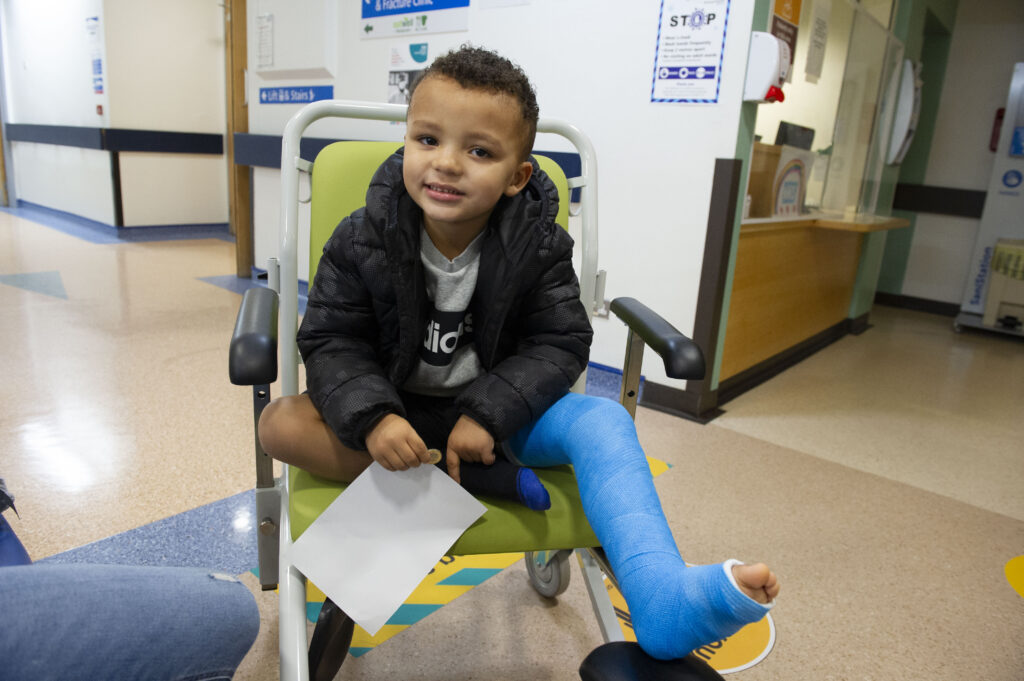
Management of a Toddlers Fracture
In the Emergency Department your child will have been seen and examined by one of the clinicians, we will have given painkillers and sent them for x-rays. The X-rays do not always show the fracture but in this case the initial management would be the same as if the fracture was visible on X-ray.
These injuries are usually very stable. Your child may not need a cast if they can put any weight through the injured limb after painkillers, even if we see a fracture on the x-ray. This is safe for the child and helps reduce the chance of complications associated with casts such as skin damage, and will help to encourage your child to walk sooner.
Depending on how well your child can mobilise in the ED and the X-ray appearance will determine whether we use a plaster cast, walker boot or no immobilisation for the period between attending the ED and being reviewed in clinic.
During this time before clinic you should keep your child comfortable by giving them regular painkillers such as paracetamol and ibuprofen. This is especially important in the first few days after injury. You should also try and encourage your child to rest.
As the leg heals your child will be more comfortable and will start moving around more, they will being to put weight through it more and more as they feel able to.
Will my child need to be seen again?
As a stable injury your child may not need a further face to face review. If they have a confirmed toddlers fracture on x-ray they will be managed with a cast or walker boot and direct discharge advice (see below).
If they have no fracture evident on X-ray they will be booked into the ED Returns clinic in 10 days time for review. If they stop limping prior to this review and have no on going symptoms then you can call and cancel this appointment and be discharged from follow up.
If they have evidence of bone healing on review in clinic and are still limping then they will be given immobilisation as needed and the direct discharge advice below.
If there is no evidence of bone healing at clinic review and they are still limping then you child will likely get a face to face review by one of the Paediatric Emergency Medicine Consultants.
Direct Discharge Advice
- Cast or Boot should be used for three weeks – and then removed at home
- Initially there may still be some pain/limp/change to walking – this should settle within 5-7 days. Simple painkiller should be given to help with this
- If ongoing pain, limp or altered walking following this you should call the Orthopaedic nursing team on 0113 392 8570 to discuss and book into Paediatric fracture clinic for review.
When should you return to the Emergency Department?
- Your child develops an unexplained fever
- Your child develops red, hot or swollen joints or the leg starts to look abnormal
- You can’t manage your Child’s pain at home
Soft Cast removal
Dear Parent/Guardian,
Your child has had a broken bone and requires to be in a “soft cast” for a few weeks until the bone has healed.
What is soft cast?
“Soft Cast” is a particular type of plaster cast that is designed to be flexible but strong enough to protect the broken bone whilst it is healing.
Instructions after application of a soft cast
- If the fingers/toes become swollen, painful, blue, numb, pins & needles or cold, report to the A&E Department, Minor Injuries Unit or your own Doctor at once.
- Elevate the limb for the first 48 hours or as instructed.
- Keep all joints not enclosed in the plaster moving freely especially fingers/toes.
- If the plaster is uncomfortable through being too tight, or through rubbing, becomes damaged or broken, telephone the Plaster Room.
- Do not get the plaster wet
- If you have any worries about the plaster contact the Plaster Room
How to remove a soft cast
The doctor in fracture clinic will have explained when the soft cast can be removed safely. This is likely to be 3-4 weeks after the injury. One of the advantages of a soft cast is that it can be removed at home once this time is up by following these simple instructions.
Do not use scissors to remove the cast.
Step 1: Find the end of the soft cast
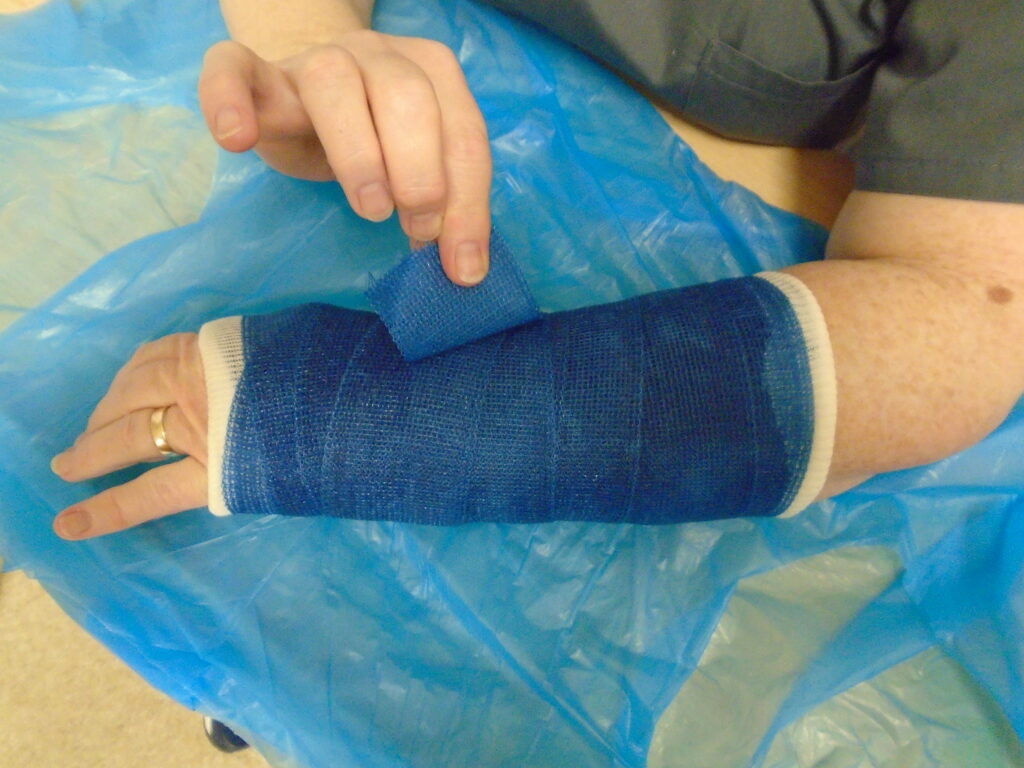
Step 2: Unwind the soft cast
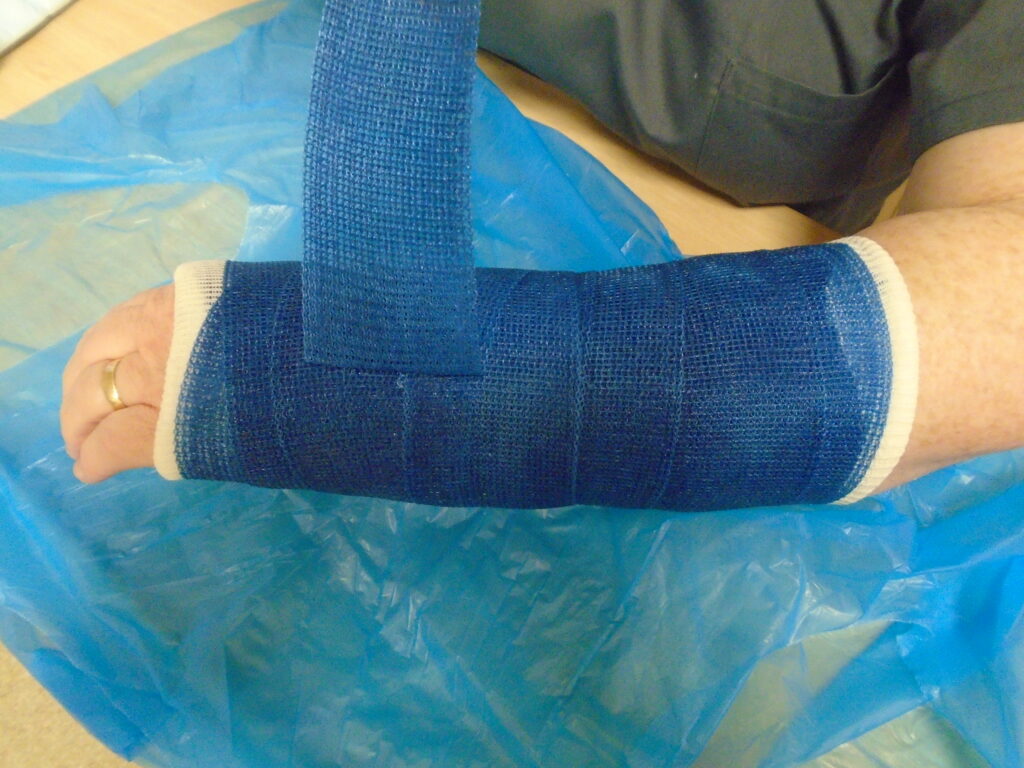
Step 3: Remove the wool layer and the stockinette
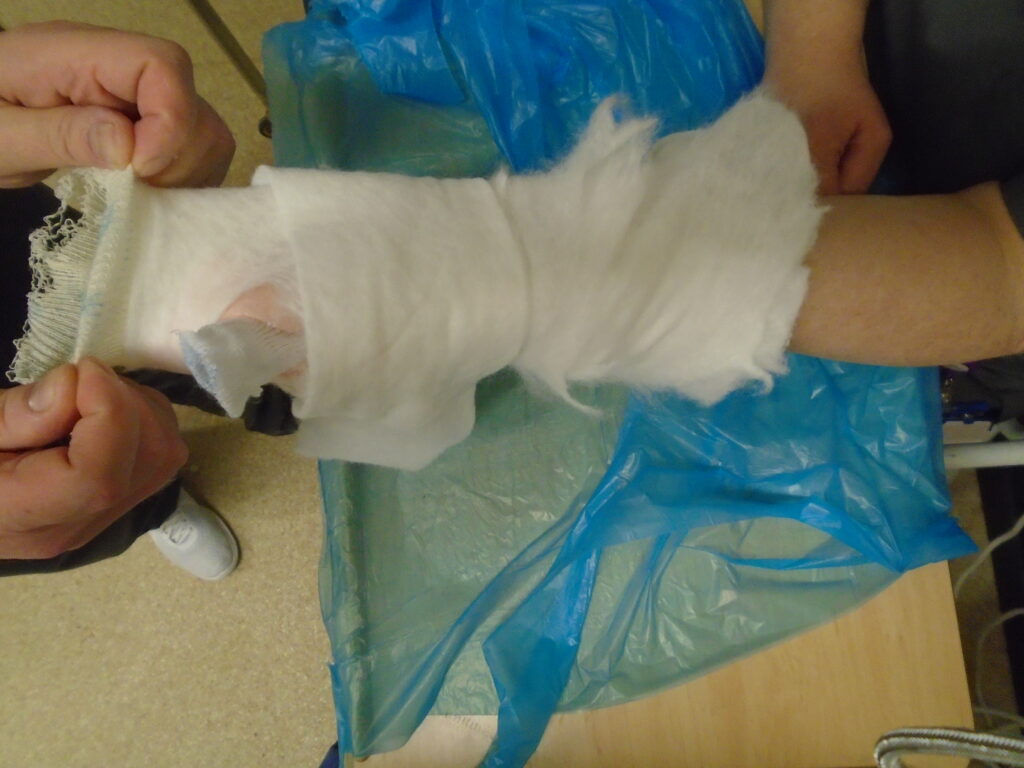
After care
After the removal of the cast, your child may have some stiffness which usually goes away on its own within a few months. Physiotherapy is not necessary but you will be shown exercises to get normal strength and movement back.
We will arrange a video/phone consultation to make sure your child is well and making good progress.
Your child should not play any contact sports for a further four to six weeks.
If you have any questions and or concerns, please contact:
Plaster Room, Leeds General Infirmary
0113 392 5717
Eileen Cullen (Clinical Nurse Specialist)
0792 047 8091
Charlotte Tasker (Clinical Nurse Specialist)
0778 917 4331
Elaine Hubbard (Clinical Nurse Specialist)
0777 166 7761
Saima Rafique (Senior Support Worker)
0113 392 8570