
What is a total penectomy?
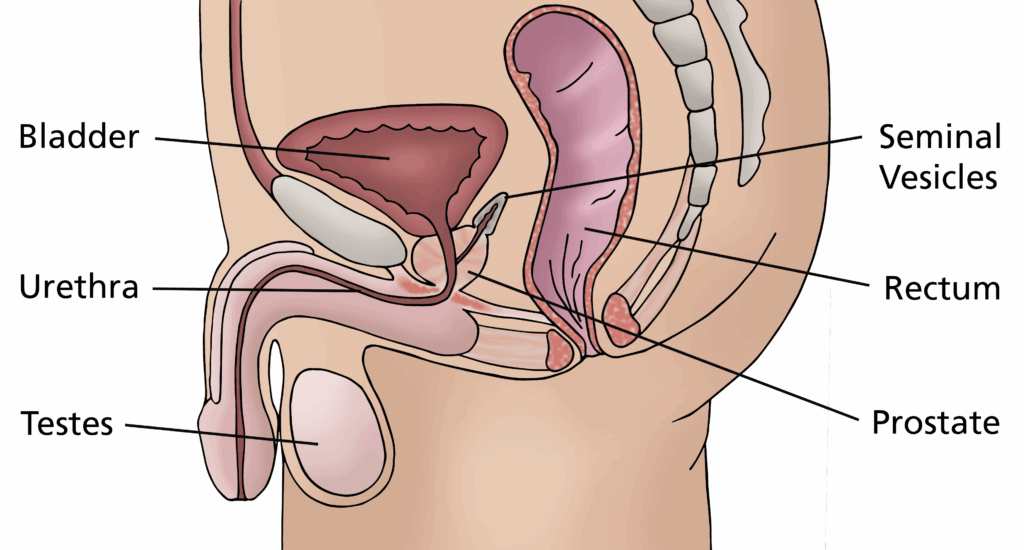
A total penectomy is a surgical procedure that removes the entire penis. This is only done if your cancer is deep into your penis, or is at the base of the penis, which in order to treat your cancer, requires removal.
As part of the surgery, your water pipe will be diverted by creating of a hole behind your testicles. This is called a perineal urethrostomy.
Why is this necessary?
Your doctor has recommended this treatment to remove the cancer that has grown on your penis. This is because other treatment will not be as effective in clearing the cancer.
What are the risks of the operation?
Any surgical intervention can pose some risk. However the majority of patients are unlikely to experience them.
The potential risks may include:
- Infection
- Bleeding / bruising
- Swelling
- Chest infection
- Urinary problems (see below)
- Blood clots in the lower legs (DVT)
- Blood clots in the lungs (PE).
Mobilising around as early as possible will reduce the risk of these. You may be provided with anticoagulation therapy to thin your blood slightly to reduce the risk. You will also be provided with surgical stockings which will promote venous flow, again reducing the risk. You will be required to wear these for your hospital stay.
As a result of having an operation to remove your penis you will have to pass urine in a seated position. This is because your urethra (water passage) is shortened and there will be a small opening behind your scrotum. This will not affect the control over your bladder.
Pre Assessment
On the day of your initial clinic appointment you may be asked to attend pre-assessment clinic to ensure you are fit for the proposed surgery. During this clinic you will be assessed on your general fitness, a discussion around any existing conditions, and a review of any medications you may currently take.
You will have your bloods taken, an ECG may be performed and sometimes may require an anaesthetic review. This may be carried out on the same day or may require a separate appointment.
The day of surgery
On the day of surgery you will be asked to attend the admission lounge where you will be admitted by a nurse, again they will assess your fitness for surgery, record your blood pressure and prepare you for surgery.
You will get the opportunity to be seen by a member of the surgical team performing the surgery (surgeon / anaesthetist) and discuss the procedure again.
Admission times may vary from the time of your surgery. You may be notified by the nursing staff of a potential time of surgery, however this is not definite.
Your operation
You will be escorted to theatre by a member of the ward staff or theatre staff. Regular safety checks will be made when you enter the theatre department and you will proceed to the anaesthetic room.
The anaesthetist will proceed to administer a general or spinal anaesthetic, depending what is felt to be the best for you.
During a general anaesthetic you will be asleep for the duration of your procedure. For a spinal anaesthetic the anaesthetist will inject medication into your back to ensure you are numb for the duration of the procedure. This can sometime be given with sedation to relax you and make you sleepy.
The surgeon will then proceed with the surgery will remove the shaft and root of your penis. Surgical clips are used to this area. In very rare cases, the scrotum and testes are also removed.
The urethra (water passage) is diverted to come out behind the scrotum (perineal urethrostomy). A catheter with be inserted to drain the urine to allow the wounds to heal. The muscle that keeps the bladder closed is further inside your body; above the root of your penis therefore you will still maintain full bladder control.
After your operation
When your surgery is finished you will be taken to the recovery area where you will be monitored until your condition is stable, at this point your nurse will be called to escort you back to the ward (this may be a different ward to the one you were admitted to).
Painkillers will be offered to you on a regular basis as it is important that you feel as comfortable as possible after the operation.
This dressing will be removed the day after surgery. There may also be a drain (small plastic tube) close to the wound this is often removed before discharge.
The catheter draining urine from your bladder will likely be removed whilst on the ward.
The ward staff will monitor you passing urine before discharge to ensure you are able to do so effectively.
In some cases you may be discharged home with a catheter and arrangements will be made to return to an outpatient clinic for this to be removed.
Discharge Preparation
The ward staff will check your wound regularly, alongside the doctors who will do regular ward round to assess your progress. Once each member of the multidisciplinary team is happy you will be allowed to go home.
We will give you pain killers to take home with you and we would advise you to take them as they have been prescribed for you.
Please do not exceed the stated dose on the pack. Generally, the discomfort will take a few weeks to go away. You may also receive antibiotic therapy prophylactically to minimise the risk of infection.
If you have to go home with the catheter we will arrange for you to see the urology nurse specialist, 7 – 10 days later to have it removed. The ward staff will contact the district nurses near your home, to tell them that you have a urinary catheter. They will help you if you have any problems before your follow up visit to see the nurse specialist.
You will also have tiny metal clips in place which close the wound. These again can be removed either by the nurse specialist when you come back to the hospital for your catheter removing.
If the catheter has been removed before you go home, the practice nurse at your GP practice can remove the clips if you so wish (7 – 10 days after surgery). This can be arranged with the ward staff before you leave the ward.
The nurse looking after you on the ward will give you a clip remover to give to the practice nurse when you see her at the GP Practice.
Your scrotum may appear swollen. This is normal after this surgery and will settle down. However do not hesitate to telephone your nurse specialist if you are worried.
Please make sure you are aware of the plans of clip removal before your discharge!
How will you recover?
Due to the nature of the operation you may find it may impact the way you feel about your body, and may affect your relationship with others. You will find your sex life will change as you are no longer able to have penetrative intercourse.
This can be distressing and may take time to come to terms with. It is advised to discuss this with your partner or close family member. You may find it useful to contact a counsellor or your clinical nurse specialist.
Follow up appointment
Following your surgery you may be asked to return to be seen by the nurse specialist to review your wound 7 – 10 days post operatively, this is to remove the surgical clips to your wound and to ensure you are healing well.
You will later be seen by a consultant in the Paul Sykes Centre 3 – 4 weeks after you go home. If you have any problems or worries before then you can ring the nurse specialist. There is an answerphone service, please leave a message with your name and telephone number and she will call you back. Alternatively you can ring your consultant’s secretary.
Support after a total penectomy
You may find this distressing and difficult time. There is no right or wrong way of coping. Sharing your feelings with your partner or family members may help. If you wish to discuss sexual issues or other problems with someone your urologist or nurse specialist will be happy to discuss this further.
Contact numbers
Victoria Washington – Urology Nurse Specialist:
0113 206 4594 – Monday to Friday 8am – 4pm
Mr. Eardley / Mr Elmamoun Secretary:
0113 206 6994 – Monday to Friday 9am – 5pm
Leeds Cancer Support
Leeds Cancer Support complements care provided by your clinical team. We offer access to information and a wide range of support, in a welcoming environment for you, your family and friends. We can be found in the information lounges in Bexley Wing and also in the purpose built Sir Robert Ogden Macmillan Centre.
Leeds Cancer Support Information Centre
Level 1 Outpatients Department
Tel: (0113) 206 8816 Open from 10am – 4pm.
Information Lounge Level -2 Radiotherapy Department
Tel: (0113) 206 7603 Open from 8.30am – 4.30pm
The Sir Robert Ogden Macmillan Centre
The Centre is on the St James’s Hospital site and offers a variety of support services including counselling, support groups and complementary therapies.
The therapies available include Reiki, relaxation and visualisation, hand and foot massage and many others.
You can just drop in for a coffee and a chat anytime. Open from 10am – 4pm Monday to Friday.
The Sir Robert Ogden Macmillan Centre
Tel: 0113 206 6498 Open from 10am – 4pm.
All the above services can be emailed on:
Health Talk support service
Health talk is an online service where you can find information and support by seeing and hearing patients real life experiences.
In co-ordination with researchers from the Centre for Men’s Health at Leeds Metropolitan University they spoke to 27 men in their own homes. You can explore what these people felt about issues such as symptoms, treatment, body image and sex. We hope you find the information helpful and reassuring.
http://www.healthtalk.org/peoples-experiences/cancer/penile-cancer/topics
Where can I find more Information?
Orchid Male Cancer Support
Website: www.orchid-cancer.org.uk
References:
Orchid male cancer support 2017. Partial Penectomy
Orchid male cancer support 2017. Total Penectomy
The Christie Patient Information Service May 2015 CHR/SUR/600/17.06.08 version 4
Back to top