
What is an Ultrasound guided biopsy of the prostate gland?
The prostate is a gland situated at the base of the urinary bladder. The prostate is usually the size of a walnut but can vary in size between individuals. It produces some of the fluid that carries sperm.
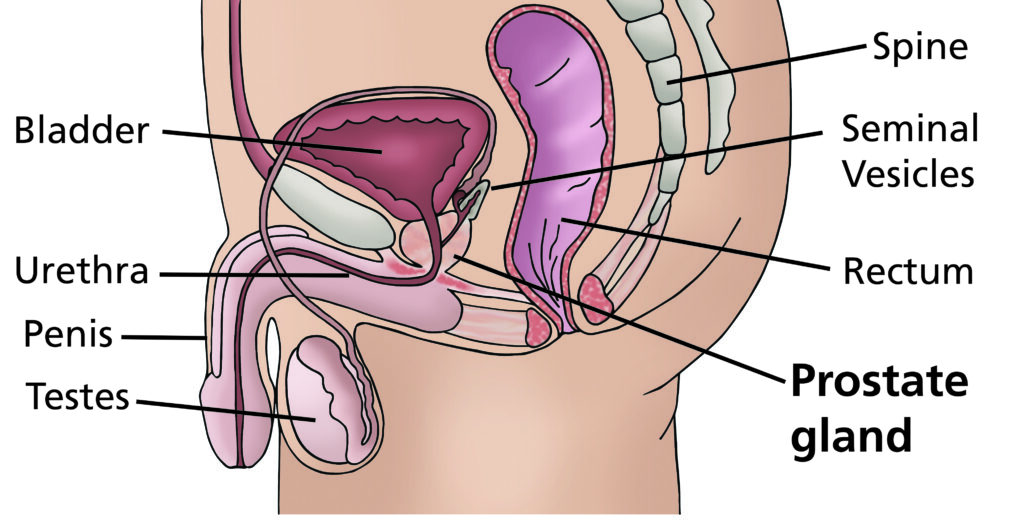
Your doctor has referred you for a biopsy of the prostate to see if there are any cancer cells present within the gland.
This is either because one of your blood tests (PSA) may be elevated, your prostate may have felt abnormal when your doctor carried out a rectal (back passage) examination or you have had an MRI scan which has highlighted a potentially abnormal area within the prostate gland.
It is important to note a raised PSA blood test or an abnormal feeling prostate does not mean you have prostate cancer. The PSA can be raised if you have had a urine infection or if your prostate is enlarged, and the prostate may also feel abnormal if it is enlarged.
Additionally, not all prostate cancers need to be treated. Some small tumours can simply be monitored with regular blood tests, contact with the prostate specialist team at the hospital and possibly further MRI scans and biopsies in the future.
How do I prepare?
You may eat and drink on the day of the biopsy. It is advisable to bring a relative or friend with you on the day of procedure as it is usually not sensible to drive yourself home. Please bring a list of all your medications along with you.
You should have been advised to stop any blood thinning medications such as:
- warfarin
- clopidogrel
- dipyridamole
- aspirin
- rivaroxaban or
- dabigatran
The length of time these medications need to be stopped for is variable so please ask your doctor if the advice is unclear. Please also let us know if you have any allergies to medications.
How is it performed?
Consent
You will see the practitioner performing the biopsy who will explain the procedure and the possible after effects, and ask you to sign a consent form if you are happy to proceed. The procedure will be performed either by a radiology doctor or a sonographer who has been specially trained in performing prostate biopsies.
Anaesthetic
This procedure is done under local anaesthesia. Local anaesthetic injections will sting at the start but will numb the skin after a few seconds.
Procedure
You will then be asked to come to the intervention room. You will then sit on a specially adapted chair with your feet in stirrups. The operator will then place a lubricated ultrasound probe into your back passage which will be used to produce images of your prostate. Before we take any biopsies, we inject local anaesthetic in the skin overlying the prostate and also around your prostate to reduce any discomfort. Guided by ultrasound, biopsies are taken from your prostate through your perineum (the skin between your scrotum and rectum). Depending on individual circumstances, usually up to 20 biopsies may be taken.
We will use a special spring-loaded needle device which makes an audible ‘click’ each time it is activated to take biopsies. At the end of the procedure, your prostate may feel bruised. The procedure takes around 30 minutes to perform.
What are the side effects or risks?
There are some minor short-term side-effects detailed below:
- You may notice blood in urine which may last several days.
- There may be blood in your semen (ejaculate) which can last up to six weeks.
- You may notice a temporary problem with maintaining an erection caused by bruising from the biopsies.
- There are some less common but potentially more serious complications of the procedure:
- You may experience bleeding which makes you unable to pass urine. If this is the case, you may need a catheter inserting into the bladder until the swelling from the biopsy procedure settles down. This usually takes days rather than weeks. The risk of infection with this procedure is very low (less than 1%).
What to expect from this procedure?
Admission
You will arrive in Bexley Interventional Ultrasound as day case, we will clerk you in, gather some data and you will be asked to undress and put on suitable hospital gown. The procedure will be again explained to you by the radiologist or sonographer, you may be able to ask any further question that you may have.
Recovery
Light pressure is applied for a few minutes to the region where the needle was placed to prevent bleeding. You can usually go home right after your biopsy.
Aftercare
We advise you to drink plenty of fluid at home, and try to avoid caffeine and alcohol as these may irritate the prostate. It can take up to two weeks for the results of the biopsy to come through. Your urology doctor or one of the specialist urology nurses will be in touch with your results either by phone, letter or appointment.
Care at home
After the biopsy, you will generally be discharged with specific instructions to rest, and limit physical activity to prevent bleeding.
- Exercise – take it easy and avoid strenuous activity for at least 24 hours.
- Work – you can go back to work as long as you avoid any heavy lifting on your work
- Driving/travel – you should not drive for 24 hours and make sure you have someone with you for the first 24 hours.
- Medicines – you may take pain medications (like paracetamol) for discomfort, but you should only take them as recommended. Your doctor will tell you when you can resume any blood thinning medications if you take any.
- Follow-up – Your urology doctor or one of the specialist urology nurses will be in touch with your results either by phone, letter or appointment.
Important
Please seek immediate medical attention if you experience severe symptoms such as signs of infection (fever, chills, redness, swelling, warmth, or pus at the puncture site); bleeding from the site that doesn’t stop with pressure.
Contact details
We hope some of your questions have been answered by this leaflet. If there are any questions you would like to ask before you come for your operation, please get in touch.
Bexley Interventional Ultrasound


- Your GP or NHS direct (Telephone 111)
- Telephone 999 for life-threatening emergency
How to get to our department
We are located in the Bexley Wing of SJUH, Level 0, Radiology Department (in front of Costa Coffee).