

This page is for parents who have a child with uveitis and for young people who have developed uveitis.
This page explains what uveitis is, how it affects the eye, what treatments can be used, and how the eyes are assessed.
We hope it answers some of your questions, but the doctors and nurses who know you/your child are very happy to answer any more questions you may have.
What does Uveitis mean?
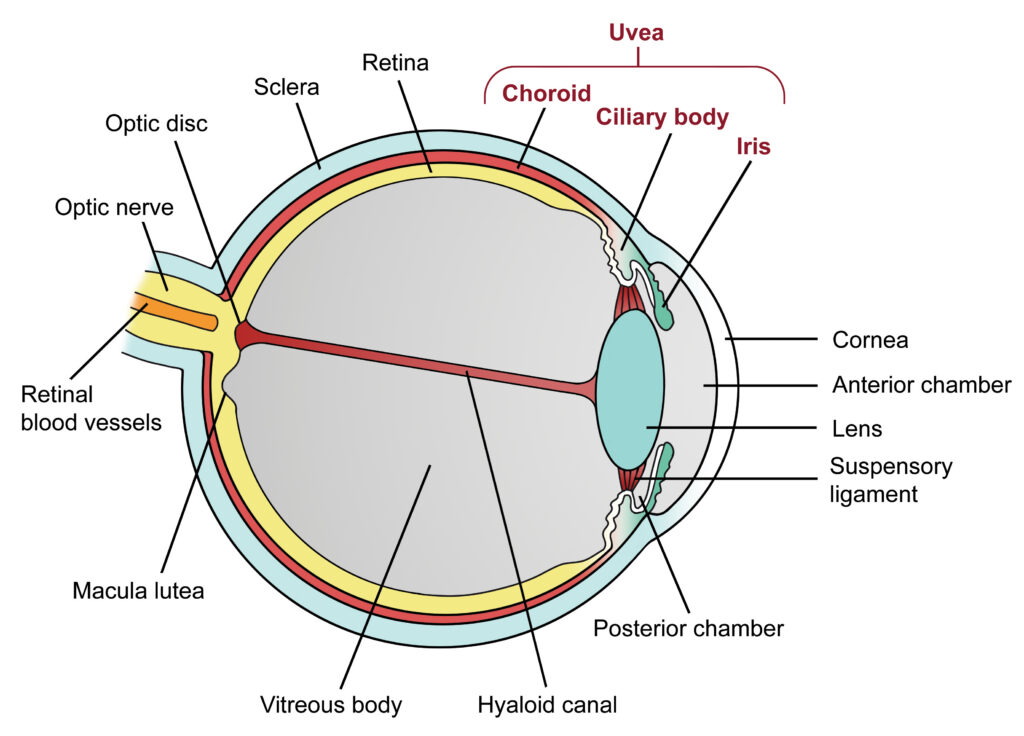
The term uveitis means there is inflammation of the uvea, the inside of the eye. Uveitis can affect different parts of the eye and can be caused by infection of the eye. On this page we are talking about uveitis caused by the immune system irritating the eye (non-infectious uveitis).
Depending on where the inflammation occurs, the uveitis is categorised into:
- Anterior uveitis: affecting the front chamber of the eye (the most common form and associated with Juvenile Idiopathic Arthritis). This is also known as iritis.
- Intermediate uveitis: affecting the middle section of the uvea.
- Posterior uveitis: affecting the rear of the uvea.
- Panuveitis: affecting all three parts of the uvea
Why have I / has my child developed uveitis?
Most children and young people who develop Uveitis have Juvenile Idiopathic Arthritis (JIA). Some children and young people have other medical problems, like inflammatory bowel disease, Sarcoid or Behcet’s syndrome.
Some have no underlying condition: this is called Idiopathic Uveitis and is non-infectious. Non-infectious uveitis is an autoimmune condition where the immune system attacks one or both eyes, causing uveitis.
What checks are done to look for uveitis in JIA?
You/your child should have a first eye check within six weeks of diagnosis of JIA. Eye checks are then continued every four months.
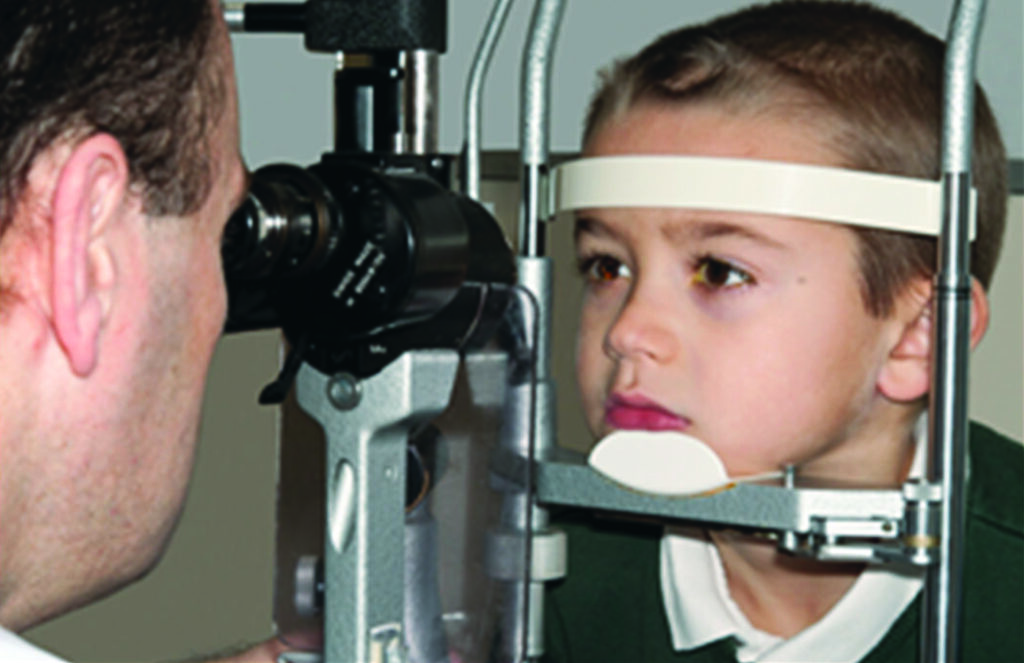
The screening test is very quick but very important. The eye doctor (Ophthalmologist) looks into the eyes to see if there is any inflammation. They use a special piece of equipment called a slit lamp, which is shown in the picture below. This lets the eye doctor see if there are any inflammatory cells floating in the eye. Usually eye drops are not needed and the examination does not hurt at all.
Screening with a slit lamp
How do we treat uveitis?
Whatever the type of uveitis, the aim of treatment is to control the inflammation in the eye with no or minimal use of steroid eye drops or tablets.
Treatment overview
- Uveitis is treated with eye drops or medicines. Generally mild forms of uveitis are treated with eye drops until the inflammation settles down. The standard type of eye drop which is used is a steroid eye drop.
- For a few children and young people where the inflammation settles down quickly, and stays away, this may be all the treatment that is needed.
- Additional treatment is considered if steroid eye drops do not settle down the inflammation quickly, or if the inflammation returns when the drops are stopped.
A number of different medicines can reduce inflammation in the body by damping down the immune system. The medicines may be given as liquids, tablets, small injections or infusions by a drip. These can be very good at treating uveitis and your Doctor or Nurse will discuss these with you if you/your child needs them. The medicines used are generally used to treat JIA as well and the Paediatric Rheumatology Team works with the Ophthalmologist when these medicines are used.
Can uveitis cause damage to the eye?
Uveitis is nearly always a treatable condition, but if left uncontrolled, ongoing inflammation in the eye eventually damages delicate structures of the eye.
If uveitis is very severe, it can lead to several complications which have long-term effects and can lead to reduced vision or complete loss of vision. These include:
cataracts – cloudy material forming inside the lens
glaucoma – increased pressure within the eye
hypotony – reduced pressure within the eye
macular oedema – swelling at the back of the eye
band keratopathy – deposits of calcium within the cornea
When does screening stop?
Uveitis in young children is often symptomless, however as children approach 12 years of age they are old enough to notice any important change in their vision or tell you they have pain, and so the screening programme stops. The screening programme should continue for five years or until your child’s 11th birthday, so long as two years of screening has taken place.
How do you know if there is still inflammation in the eye?
Uveitis may have periods of good control, and periods when the inflammation returns. In many children, particularly the youngest, the eye does not go red, painful, or have any symptoms at all. This is why regular eye checks are an important part of your/your child’s care.
In some children and young people uveitis can cause redness and pain; always ask for advice if your child is complaining of sore eyes, or eyes become very sensitive to light.
Can I / my child develop uveitis after screening stops?
Yes, uveitis does become less likely with time, but is always more likely for someone who has had JIA, even as an adult. You/your child should seek help straight away if there are symptoms such as red or sore eye(s), or there are changes in vision.
Remember inflammation causes damage to the eye if left untreated so regular checks are the best way to protect the eyes.
If uveitis is picked up early it is likely to respond very well to treatment. Screening helps us to identify uveitis as early as possible.
Useful contact details
Rheumatology Specialist Nurse


Paediatric Eye Clinics
Clinics normally run from 09:00 to 12:15 Mon, Tues and Fri.
Please ring the numbers below to check the clinics are running.
When attending clinic please take a ’screening for uveitis in juvenile arthritis’ form with you, which Paediatric Rheumatology will provide.

Eye Casualty
An emergency walk-in service outside of clinic appointments.
(This is a very busy line, so please be patient).
Monday to Friday: 09:00 to 16:30
Saturday and Sunday: 09:30 to 11:00
Out of hours – please use A&E
Eye Casualty
Consultant Paediatric Ophthalmologist
Mr Ashish Kumar
Eye Casualty, Bradford Royal Infirmary
For emergency visits, please first telephone the clinic on the number/s below. The Triage Nurse will then arrange a review if you/your child has been see at the clinic before. If not, you/your child will need to be referred via A&E, your GP or an Optometrist.
Monday to Friday: 09:00 to 16:30
Out of hours – contact your GP emergency service
Eye Casualty, Bradford Royal Infirmary
Consultant Paediatric Ophthalmologists
Miss R Pilling
Calerdale and Huddersfield Ophthalmology
Please first telephone the call cantre on on the number below. The Triage Nurse will then arrange a review if your child has been seen in the clinic before. If not, your child will need to be reffered via A&E, your GP or an Optometrist.
Monday to Friday: 08:30 to 16:30
Saturday: 08:30 to 12:00
Sunday – closed
The Eye Centre, Pinderfields Hospital
For emergency visits, please first telephone the clinic on the number/s below. The Triage Nurse will then arrange a review if you/your child has been see at the clinic before. If not, you/your child will need to be referred via A&E, your GP or an Optometrist.
Monday to Friday: 08:30 to 17:00
Saturday: 08:30 to 12:30
Sunday – closed
The Eye Centre, Pinderfields Hospital
Consultant Paediatric Ophthalmologist
Miss Aabgina Shafi
Eye Clinic, York Hospital
You will be given a ROC (Recurring Ocular Condition) card with contact details when you are seen for screening. Please mention you have one if you need to contact the clinic. For emergency visits, please first telephone the clinic on the number/s below. The Triage Nurse will then arrange a review
Monday to Friday: 09:00 to 17:00
Saturday and Sunday: 09:30 to 14:30
Eye Clinic, York Hospital
Consultant Paediatric Ophthalmologists
Mr Kevin Falzon and Mr R Taylor
Eye Clinic, Scarborough Hospital (also covers Bridlington and East Coast)
For emergency visits, please first telephone the clinic on the number below. The Triage Nurse will then arrange a review